Parris Island Cos
Lactuca sativa 'Parris Island Cos'
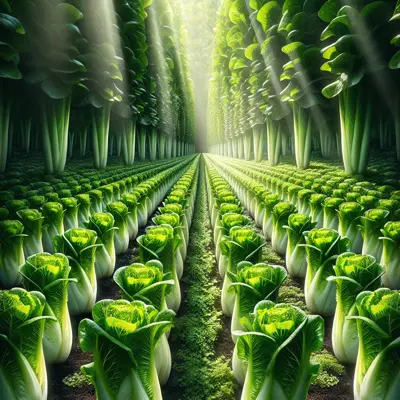
The gold standard romaine lettuce that has been the backbone of American Caesar salads since 1952, developed specifically for hot, humid Southern growing conditions. This heat-tolerant variety produces tall, upright heads with thick, crunchy ribs and dark green outer leaves that blanch to creamy yellow hearts. Known for exceptional bolt resistance and reliable performance, it's the romaine that succeeds where others fail in challenging climates.
Harvest
68-75d
Days to harvest
Sun
Full sun to partial shade
Zones
2–11
USDA hardiness
Height
6-12 inches
Planting Timeline
Showing dates for Parris Island Cos in USDA Zone 7
All Zone 7 lettuce →Zone Map
Click a state to update dates
Parris Island Cos · Zones 2–11
Growing Details
Succession Planting
In zone 7, direct sow Parris Island Cos every 14 days starting around March 1 and keep going through late April. Each planting takes 68–75 days to a full head, so the staggered timing gives you a steady cut rather than 40 heads going bitter the same week. Once daytime highs push consistently above 80°F — usually mid-May here — stop sowing for summer. Lettuce bolts fast in heat, throwing up a seed stalk and turning sharp almost overnight.
Pick back up with a second round starting late August through mid-October. Germination slows below 40°F, so if you're pushing into November, lay a row cover at night to keep soil temps workable. Fall heads on this variety tend to come in tighter and less bitter than the spring ones anyway — the cool nights do something good to them.
Complete Growing Guide
This heat-loving romaine thrives in warm conditions where other lettuces struggle, so delay spring planting until soil reaches 60°F and save succession plantings for early-to-midsummer rather than cool-season slots. The thick ribs and upright growth habit mean Parris Island Cos needs consistent moisture—irregular watering causes splitting and bitterness that undermines its signature sweetness. While this cultivar boasts exceptional bolt resistance for a romaine, extreme heat above 75°F combined with long photoperiods can still trigger premature flowering, so afternoon shade helps in deep South conditions. Watch for aphids congregating in the dense leaf folds typical of upright heads, requiring inspection before harvest. A practical advantage: the 6-12 inch height and self-blanching habit mean you can harvest outer leaves continuously without compromising the creamy yellow heart, extending productivity beyond the standard 68-75 day window if you harvest selectively rather than cutting the whole head.
Light: Full sun (6 or more hours of direct sunlight a day), Partial Shade (Direct sunlight only part of the day, 2-6 hours). Soil: High Organic Matter. Soil pH: Neutral (6.0-8.0). Drainage: Good Drainage, Moist. Height: 0 ft. 6 in. - 1 ft. 0 in.. Spread: 0 ft. 6 in. - 1 ft. 0 in.. Spacing: Less than 12 inches. Growth rate: Rapid. Maintenance: Medium. Propagation: Seed. Regions: Coastal, Mountains, Piedmont.
Harvesting
Harvest Parris Island Cos when heads reach 6 to 10 inches tall with tightly formed leaves and the outer foliage deepens to rich dark green while inner leaves begin yellowing—this combination signals peak crunchiness and sweetness. The head should feel firm and substantial when gently squeezed, with thick ribs that snap cleanly rather than bend. For continuous harvests, remove outer leaves as needed starting at 60 days, allowing the center to keep developing, or cut entire heads at the base for single-harvest yields around day 68–75. Time your main harvest in early morning when leaves are fully hydrated for maximum crispness and crunch that defines this variety's Caesar salad reputation.
Tiny seeds with a dandelion-like tuft (pappus) to aid in wind dispersal.
Color: Brown/Copper. Type: Achene. Length: < 1 inch. Width: < 1 inch.
Harvest time: Summer
Edibility: Leaves can be used raw or cooked in salads, sandwiches, and other dishes. Head lettuce can be stored for 2-3 weeks while leaf and butterhead store for 1-2 weeks.
Storage & Preservation
Store freshly harvested Parris Island Cos in the refrigerator at 32-36°F with high humidity (95-98%). Wrap heads loosely in damp paper towels and place in perforated plastic bags to maintain moisture while preventing condensation buildup. Properly stored heads keep 2-3 weeks, significantly longer than most lettuce varieties due to their dense structure.
For short-term storage, keep unwashed heads in the crisper drawer and wash leaves just before use. Remove any damaged outer leaves before storing. While lettuce doesn't preserve well through traditional methods like canning or drying, you can extend its use by blanching and freezing chopped leaves for cooked applications like soups and stir-fries, though texture will be compromised. The thick ribs can be preserved by lacto-fermenting them like sauerkraut, creating a tangy condiment popular in some Mediterranean cuisines.
History & Origin
Developed by the USDA in the 1950s specifically for Southern agriculture, Parris Island Cos emerged from breeding efforts aimed at creating a romaine variety capable of withstanding the heat and humidity of coastal South Carolina. The variety was introduced commercially in 1952 and named after Parris Island, reflecting its origins in that region's agricultural research programs. While specific breeder attribution remains largely undocumented in accessible sources, the variety represents a deliberate breeding initiative within the USDA's commitment to regional crop improvement, building on the established cos lettuce lineage to produce a heat-tolerant cultivar that would become integral to American salad culture and commercial vegetable production throughout the Southeast and beyond.
Origin: Mediterranean to Siberia
Advantages
- +Heat-tolerant variety specifically bred for hot, humid Southern growing conditions.
- +Exceptional bolt resistance makes it reliable in challenging climates where others fail.
- +Thick, crunchy ribs and creamy yellow hearts deliver excellent texture and mild sweetness.
- +Historic gold standard romaine that's been trusted since 1952 for Caesar salads.
- +Dark green outer leaves with impressive height create visually appealing, upright heads.
Considerations
- -Susceptible to downy mildew, lettuce drop, and bacterial leaf spot in humid regions.
- -Requires consistent moisture and well-draining soil to prevent disease development issues.
- -Vulnerable to multiple pest pressures including aphids, thrips, cabbage loopers, and leaf miners.
- -68-75 day maturity is longer than faster-maturing lettuce varieties available.
Companion Plants
Radishes and carrots are the most practical neighbors for Parris Island Cos. Radishes germinate in 5–7 days and mark your lettuce rows while breaking up the top inch of soil crust; they also pull flea beetles away from young lettuce seedlings, acting as a decent trap crop. Carrots run their roots down past 10 inches while lettuce stays shallow, so there's no real competition — they just coexist without crowding each other out. Marigolds (Tagetes patula) pull their weight too, especially in our zone 7 Georgia gardens where aphids and thrips — both flagged by NC State Extension as common lettuce pests — can get going fast in warm spells.
Broccoli is the one to skip. It pulls nitrogen hard and planting it within 12 inches of lettuce tends to stunt the heads before you realize what's happening. Sunflowers create a different problem: they're allelopathic, releasing root compounds that suppress nearby plants, and at 5–6 feet tall they'll throw enough shade to slow a low-growing romaine considerably. Keep both at least a full bed-width away.
Plant Together
Chives
Repels aphids and improves lettuce flavor while providing natural pest deterrent
Carrots
Deep roots don't compete with shallow lettuce roots, maximizes garden space efficiently
Radishes
Fast-growing, helps break up soil and can be harvested before lettuce needs full space
Marigolds
Repel nematodes, aphids, and other harmful insects while attracting beneficial predators
Nasturtiums
Act as trap crop for aphids and cucumber beetles, drawing pests away from lettuce
Garlic
Natural fungicide properties help prevent damping-off and other soil-borne diseases
Spinach
Similar growing requirements and can provide mutual shading in hot weather
Dill
Attracts beneficial insects like ladybugs and lacewings that control aphids
Keep Apart
Broccoli
Heavy feeder that competes for nitrogen and can shade out lettuce with large leaves
Sunflowers
Allelopathic compounds inhibit lettuce germination and growth, plus excessive shading
Celery
Competes heavily for water and nutrients, similar root depth creates direct competition
Nutrition Facts
Per 100g serving. % Daily Value based on 2,000 calorie diet. Source: USDA FoodData Central (FDC #2346388)
Pests & Disease Resistance
Resistance
Excellent heat tolerance and resistance to bolting and tipburn
Common Pests
Aphids, thrips, cabbage loopers, leaf miners
Diseases
Downy mildew, lettuce drop, bacterial leaf spot
Troubleshooting Parris Island Cos
What you'll see, why it happens, and what to do about it.
Seedlings collapse and die within 7-10 days of going in the ground — stems pinched at soil level, sometimes fuzzy white mold on soil surface
Likely Causes
- Damping off — a fungal complex (commonly Pythium or Rhizoctonia solani) that thrives in cool, wet, poorly drained soil
- Replanting the same bed in lettuce 3+ consecutive years, which lets soil pathogens build up
What to Do
- 1.Pull the dead seedlings and bag them for the trash — don't put them in the compost
- 2.Let the bed dry out between waterings; damping off explodes in soggy soil
- 3.Rotate lettuce out of that bed for at least one season; NC State Extension's IPM framework specifically flags replanting the same crop in the same spot as a setup for this kind of problem
- 4.If you resow, start fresh seedlings in sterile mix and transplant only once the bed has good drainage
Gray-purple fuzzy coating on the undersides of outer leaves, with yellow patches on the upper surface — shows up most in cool, damp stretches of weather
Likely Causes
- Downy mildew (Bremia lactucae) — favored by temps between 45–65°F and high humidity, common in Georgia's early spring and fall windows
- Dense planting that traps moisture and cuts airflow between heads
What to Do
- 1.Strip and trash affected outer leaves as soon as you spot them
- 2.Space plants the full 8–12 inches apart — crowding is how this moves fast through a row
- 3.Water at the base, not overhead, and water in the morning so foliage dries before nightfall
- 4.If it keeps coming back season after season, swap that planting slot to a Bremia-resistant romaine variety
Frequently Asked Questions
How long does Parris Island Cos lettuce take to grow?▼
Can you grow Parris Island Cos in containers?▼
Is Parris Island Cos good for beginners?▼
What does Parris Island Cos taste like compared to other romaine?▼
When should I plant Parris Island Cos lettuce?▼
Why won't my Parris Island Cos seeds germinate in summer?▼
Zone-by-Zone Planting Calendar
| Zone | Indoor Start | Transplant | Direct Sow | Harvest |
|---|---|---|---|---|
| Zone 3 | — | — | May – June | July – October |
| Zone 4 | — | — | April – June | July – October |
| Zone 5 | — | — | April – May | June – November |
| Zone 6 | — | — | April – May | June – November |
| Zone 7 | — | — | March – May | May – November |
| Zone 8 | — | — | March – April | May – December |
| Zone 9 | — | — | February – March | April – December |
| Zone 10 | — | — | January – March | March – December |
| Zone 1 | — | — | June – July | August – September |
| Zone 2 | — | — | May – July | July – September |
| Zone 11 | — | — | January – February | February – December |
| Zone 12 | — | — | January – February | February – December |
| Zone 13 | — | — | January – February | February – December |
Growing Guides from Wind River Greens
Sources & References
External authority sources used in compiling this guide.
See the Methodology page for how this data is sourced, what's AI-assisted, and known limitations.