Angelica
Angelica archangelica
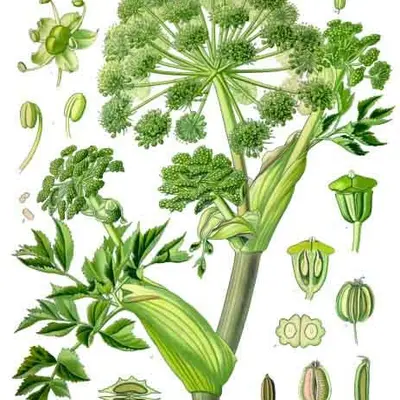
Large, lobed leaves and thick, hollow stems. Leaves and stalks have sweet flavor. Because Angelica is a biennial, flowering begins early spring of the second year. Large, numerous blooms. Seeds are cold-stored to ensure viability. Blooms make a lovely addition to fresh or dried bouquets. Attracts and feeds beneficial insects and pollinators, including bees, parasitic wasps, lady beetles, minute pirate bugs, syrphid flies, and tachinid flies.
Harvest
365d
Days to harvest
Sun
Full sun to partial shade
Zones
5–8
USDA hardiness
Height
3-6 feet
Planting Timeline
Showing dates for Angelica in USDA Zone 7
All Zone 7 herb →Zone Map
Click a state to update dates
Angelica · Zones 5–8
Growing Details
Complete Growing Guide
Light: Full sun (6 or more hours of direct sunlight a day), Partial Shade (Direct sunlight only part of the day, 2-6 hours). Soil: Clay, Loam (Silt), Sand. Soil pH: Acid (<6.0), Neutral (6.0-8.0). Drainage: Moist, Occasionally Wet. Height: 3 ft. 0 in. - 6 ft. 0 in.. Spread: 2 ft. 0 in. - 4 ft. 0 in.. Spacing: 12 inches-3 feet. Growth rate: Medium. Maintenance: Low. Propagation: Root Cutting, Seed. Regions: Coastal, Mountains, Piedmont.
Harvesting
Pale yellow, straw-colored oblong fruit with prominent ridges and pleasing fragrance.
Color: Cream/Tan, Gold/Yellow. Type: Schizocarp. Length: < 1 inch. Width: < 1 inch.
Garden value: Edible, Fragrant
Harvest time: Summer
Edibility: Roots, leaves, seeds, and young stems have a flavor similar to licorice. Seeds and distilled oils are widely used to flavor liqueurs and occasionally foods. Leaves may be used in salads, young stalks may be peeled and used like celery or candied, leaves and roots can be used for making tea.
Storage & Preservation
Angelica roots and stems are best stored in a cool, humid environment at 32–40°F in perforated plastic bags or ventilated containers to prevent rot. Fresh harvested material keeps for 1–2 weeks under these conditions. For longer preservation, drying is the primary method—hang bundles in a warm, well-ventilated space or use a dehydrator at 95–105°F until stems and roots are brittle. Dried angelica stores for a year or more in airtight containers away from light. Freezing works adequately for stems destined for culinary use; blanch briefly before freezing in ice cube trays with water. The roots, being the most valuable part medicinally, benefit from slow drying to preserve their volatile oils and active compounds. Store dried roots separately from leaves and stems to prevent flavor cross-contamination.
History & Origin
Origin: Greenland, Iceland, Europe and Western Siberia, Himalayas
Advantages
- +Attracts: Bees, Butterflies, Pollinators
- +Edible: Roots, leaves, seeds, and young stems have a flavor similar to licorice. Seeds and distilled oils are widely used to flavor liqueurs and occasionally foods. Leaves may be used in salads, young stalks may be peeled and used like celery or candied, leaves and roots can be used for making tea.
- +Low maintenance
Considerations
- -Toxic (Leaves, Roots, Sap/Juice, Stems): Low severity
- -Causes contact dermatitis
Companion Plants
Tomatoes, brassicas, and carrots are the most practical neighbors for angelica. Its volatile aromatic compounds can disorient aphids and cabbage moths hunting for brassica foliage, and NC State Extension notes that mixing plant families this way breaks up pest pressure and buys you more time to respond before damage spreads. Chives and parsley slot into the same bed naturally — they share angelica's preference for consistent moisture and tolerate the partial shade this plant often needs in our zone 7 Georgia summers. Fennel is the one to exclude firmly: it releases allelopathic root exudates that suppress nearby herbs and vegetables, and a plant that takes a full year just to reach harvestable size doesn't need that drag.
Plant Together
Tomatoes
Angelica provides shade and wind protection, while deterring hornworms and other tomato pests
Brassicas
Angelica attracts beneficial insects that prey on cabbage worms and aphids
Chives
Both herbs complement each other and chives help repel aphids from angelica
Parsley
Similar growing conditions and both attract beneficial parasitic wasps
Dill
Both are umbellifers that attract beneficial insects and support each other's growth
Carrots
Angelica's tall structure provides beneficial shade while both attract predatory insects
Lettuce
Angelica provides afternoon shade that lettuce needs in hot weather
Roses
Angelica attracts beneficial insects that help control aphids and other rose pests
Keep Apart
Fennel
Allelopathic compounds inhibit angelica growth and both compete for similar nutrients
Sage
Strong aromatic oils can inhibit angelica seed germination and early growth
Wormwood
Produces allelopathic substances that suppress angelica growth and development
Nutrition Facts
Per 100g serving. % Daily Value based on 2,000 calorie diet. Source: USDA FoodData Central (FDC #172232)
Troubleshooting Angelica
What you'll see, why it happens, and what to do about it.
Seedlings fail to germinate after 3+ weeks, or germination rate is very low
Likely Causes
- Seeds sown without cold stratification — Angelica archangelica requires a period of cold, moist conditions to break dormancy
- Old seed stock — angelica seed loses viability fast, often within 3–6 months of harvest
What to Do
- 1.Use only fresh seed; if you're buying, check the pack date and don't accept anything older than the current season
- 2.Cold-stratify for 4–6 weeks in a damp paper towel inside a sealed bag in the fridge before sowing, or direct sow in fall and let winter handle it
- 3.Sow thickly — even fresh, well-stratified seed rarely clears 70% germination, so plan for thinning rather than hoping every spot fills
Leaves wilting and yellowing in midsummer despite regular watering
Likely Causes
- Heat stress — Angelica archangelica is a cool-climate biennial and falters when daytime temps push past 85–90°F
- Root rot from waterlogged soil during summer rains, which is a real problem in Georgia's heavy clay
What to Do
- 1.Site angelica where it gets afternoon shade — the east side of a trellis or a taller crop works; NC State Extension notes that partial shade is acceptable for herbs and genuinely helps in hot climates
- 2.Mulch 2 inches deep with straw or shredded leaves to buffer soil temperature and hold moisture without drowning the roots
- 3.Work compost into heavy clay before planting and confirm the bed drains freely — standing water after a summer thunderstorm will rot the taproot before you notice anything above ground
Frequently Asked Questions
How long does it take to grow Angelica from seed?▼
Is Angelica good for beginner gardeners?▼
Can you grow Angelica in containers?▼
What does Angelica taste like and how is it used?▼
When should I plant Angelica seeds?▼
Does Angelica attract pollinators?▼
Zone-by-Zone Planting Calendar
| Zone | Indoor Start | Transplant | Direct Sow | Harvest |
|---|---|---|---|---|
| Zone 3 | April – May | June – July | — | July – October |
| Zone 4 | March – April | June – July | — | July – October |
| Zone 5 | March – April | May – June | — | June – October |
| Zone 6 | March – April | May – June | — | June – November |
| Zone 7 | February – March | April – June | — | June – November |
| Zone 8 | February – March | April – May | — | May – December |
| Zone 9 | January – February | March – April | — | April – December |
| Zone 10 | January – January | February – April | — | April – December |
Growing Guides from Wind River Greens
Sources & References
External authority sources used in compiling this guide.
- ExtensionNC State Extension
- BreederJohnny's Selected Seeds
- USDAUSDA FoodData Central
See the Methodology page for how this data is sourced, what's AI-assisted, and known limitations.