Dwarf Blue Curled Kale
Brassica oleracea var. acephala 'Dwarf Blue Curled'
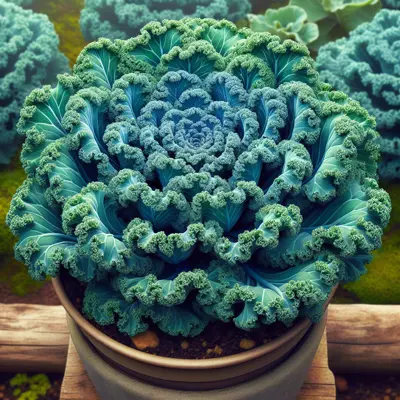
A compact heirloom kale variety dating back to the 1860s, prized for its intensely curled blue-green leaves and sweet flavor that improves with frost. This space-saving variety is perfect for small gardens and containers while still providing abundant harvests of tender, flavorful leaves. The attractive, heavily ruffled foliage also makes it an excellent ornamental edible.
Harvest
55-75d
Days to harvest
Sun
Full sun to partial shade
Zones
6–9
USDA hardiness
Height
10-24 inches
Planting Timeline
Showing dates for Dwarf Blue Curled Kale in USDA Zone 7
All Zone 7 brassica →Zone Map
Click a state to update dates
Dwarf Blue Curled Kale · Zones 6–9
Growing Details
Succession Planting
Direct sow or transplant every 3 weeks starting March 1 in zone 7, continuing through early May. A second succession starting around August 15 — direct-sown into beds just cleared of summer crops — will carry you through November and often into December. Dwarf Blue Curled is cold-tolerant and sweetens noticeably after a hard frost, so the fall planting is worth prioritizing over the spring one if you have to choose.
Stop spring successions once daytime highs are consistently hitting 80°F, which in north Georgia typically lands in late May. Kale won't bolt as abruptly as lettuce or spinach, but heat shifts the leaves toward bitterness and the plants start pushing energy into flower stalks rather than leaf production. The fall window is the more forgiving of the two — cooler nights arrive reliably by late September and give the crop a long, slow finish.
Complete Growing Guide
This heirloom cultivar thrives in cool-season conditions and reaches peak sweetness after exposure to frost, so plan succession plantings from late summer through early fall rather than spring for superior flavor development. Unlike taller kale varieties, Dwarf Blue Curled's compact 10-24 inch frame makes it less prone to wind damage and stretching, though it still requires full sun and consistent moisture to prevent the tender leaves from becoming tough or bitter. The heavily ruffled foliage creates ideal hiding spots for cabbage loopers and flea beetles—scout regularly and consider row covers during establishment. This cultivar is less likely to bolt prematurely than some Brassicas, but prolonged heat or inconsistent watering can trigger flowering, so maintain steady irrigation during dry spells. A practical tip: harvest outer leaves frequently once plants establish at 6-8 weeks, which encourages bushier growth and extends production while keeping foliage at peak tenderness for both eating and ornamental appeal.
Light: Full sun (6 or more hours of direct sunlight a day), Partial Shade (Direct sunlight only part of the day, 2-6 hours). Soil: Clay, Loam (Silt), Sand. Soil pH: Acid (<6.0), Neutral (6.0-8.0). Drainage: Good Drainage, Moist. Height: 0 ft. 10 in. - 2 ft. 0 in.. Spread: 1 ft. 0 in. - 2 ft. 0 in.. Spacing: 12 inches-3 feet. Growth rate: Medium. Maintenance: Medium. Propagation: Seed, Stem Cutting. Regions: Coastal, Mountains, Piedmont.
Harvesting
Dwarf Blue Curled Kale reaches peak harvest readiness when its distinctive blue-green leaves develop their characteristic tight curls and measure 6-8 inches long, feeling tender yet sturdy to the touch. Begin harvesting outer leaves once the plant is established, typically 4-6 weeks after transplanting, using a continuous pick-and-return method that encourages ongoing productivity throughout the season. Pinch or cut leaves at the base rather than pulling, which preserves the compact plant structure. For maximum sweetness, time your main harvest after the first frost, when starches convert to sugars; however, you can begin light harvesting anytime leaves reach usable size. This cultivar's smaller stature means leaves mature quickly, allowing frequent harvests without depleting the plant's vigor.
The fruits dry and split when ripe.
Color: Brown/Copper, Green. Type: Siliqua. Length: > 3 inches.
Garden value: Edible
Harvest time: Fall, Summer
Edibility: The foliage is edible raw or cooked but when cooked can emit an unpleasant odor.
Storage & Preservation
Fresh Dwarf Blue Curled Kale stores best when harvested dry and immediately refrigerated. Remove damaged leaves, wrap loosely in damp paper towels, and store in perforated plastic bags in the refrigerator crisper drawer. Properly stored kale maintains quality for 7-10 days at 32-35°F with high humidity.
For longer preservation, blanch clean leaves in boiling water for 2-3 minutes, shock in ice water, drain thoroughly, and freeze in portion-sized bags for up to 8 months. The heavily curled texture holds up well to freezing and works excellently in soups and smoothies.
Dehydrate whole leaves at 95°F for 12-24 hours to make nutrient-dense kale chips—the compact, curled structure creates perfectly crispy results. Lacto-fermentation also works well with this variety; massage chopped leaves with salt and ferment for 3-5 days for a tangy, probiotic-rich condiment that stores refrigerated for several months.
History & Origin
This heirloom variety emerged from European kale breeding traditions in the nineteenth century, with documented records tracing it to the 1860s, though the specific breeder and originating region remain unclear in horticultural archives. The cultivar likely developed through selective breeding of common kale (Brassica oleracea var. acephala) grown across Northern Europe, particularly in regions with strong brassica cultivation histories. The "Dwarf Blue Curled" designation reflects intentional selection for compact plant habit and intensely frilled foliage—traits valued by both commercial growers seeking space efficiency and home gardeners with limited garden plots. While the exact breeding lineage is incompletely documented, its persistence as a named variety through multiple seed catalogs since the Victorian era confirms its significance within heritage vegetable preservation and suggests sustained recognition of its distinctive cold-hardy characteristics and culinary qualities.
Origin: W. Europe
Advantages
- +Compact size makes it ideal for small gardens and container growing.
- +Intensely curled blue-green leaves provide both ornamental and culinary appeal.
- +Sweet, mild flavor improves noticeably after frost exposure for better taste.
- +Fast maturity in 55-75 days delivers harvests quickly from planting.
- +Heirloom variety dating to 1860s offers reliable performance and seed-saving potential.
Considerations
- -Susceptible to multiple pests including cabbage worms, aphids, and flea beetles.
- -Vulnerable to clubroot, black rot, and downy mildew diseases.
- -Requires careful pest management to prevent damage to tender, ruffled foliage.
Companion Plants
Nasturtiums and marigolds are the two I'd prioritize if bed space is limited. Nasturtiums act as a trap crop for aphids — specifically black bean aphids and Myzus persicae, both of which will find your kale eventually — and they reliably pull those colonies off the brassicas onto themselves. French marigolds (Tagetes patula) do legitimate work against soil nematodes when planted densely for several weeks running; a few scattered plants won't move the needle. In our zone 7 Georgia garden, we start both as transplants in early March so they're already established when the kale goes in.
Dill and chamomile draw in parasitic Braconid and Trichogramma wasps that parasitize cabbageworm and cabbage looper eggs. It's a slow-build benefit — you won't notice it week to week — but over a full season it cuts down how often you're reaching for the Bt. Garlic and onions are worth tucking along the bed edges; their sulfur compounds interfere with the host-finding behavior of aphids moving through the garden by scent.
Tomatoes are the main plant to keep separated from kale. They're heavy feeders and their roots run 18–24 inches deep through the same soil zone kale occupies, so direct competition for water and nutrients is real, not theoretical. Pole beans fix nitrogen, which sounds like it should help, but they actively inhibit brassica development — keep any bean trellis at least 3 feet away.
Plant Together
Nasturtiums
Acts as trap crop for aphids and cabbage worms, repels cucumber beetles
Marigolds
Repels cabbage moths, aphids, and other brassica pests with strong scent
Dill
Attracts beneficial wasps that parasitize cabbage worms and aphids
Onions
Repels cabbage root maggots, aphids, and flea beetles with sulfur compounds
Garlic
Natural fungicide properties, repels cabbage loopers and root maggots
Lettuce
Makes efficient use of space as ground cover, doesn't compete for nutrients
Carrots
Deep taproot breaks up soil for shallow kale roots, different nutrient needs
Chamomile
Improves flavor of brassicas and attracts beneficial insects
Keep Apart
Tomatoes
Compete for similar nutrients and may stunt kale growth
Strawberries
Kale can inhibit strawberry growth and both attract similar pests
Pole Beans
Can shade dwarf kale and compete for nitrogen despite bean's fixing ability
Nutrition Facts
Per 100g serving. % Daily Value based on 2,000 calorie diet. Source: USDA FoodData Central (FDC #168421)
Pests & Disease Resistance
Resistance
Good cold tolerance, moderate disease resistance
Common Pests
Cabbage worms, aphids, flea beetles, cabbage loopers
Diseases
Clubroot, black rot, downy mildew
Troubleshooting Dwarf Blue Curled Kale
What you'll see, why it happens, and what to do about it.
Tiny irregular holes punched through leaves, worst on young seedlings in early spring or fall
Likely Causes
- Flea beetles (Phyllotreta spp.) — small, shiny, jumping beetles that feed aggressively on brassica seedlings
- Seedlings transplanted or direct-sown into warm soil above 60°F, which stresses plants and slows the growth that would outpace damage
What to Do
- 1.Cover transplants immediately with row cover (Reemay or similar) and seal the edges — flea beetles are fast and will find any gap
- 2.Side-dress with a balanced compost to push growth; a plant putting on an inch of new growth per week can outrun light flea beetle pressure
- 3.If pressure is severe, spinosad-based sprays applied in early morning before pollinators are active will knock populations down
Leaves chewed to the midrib or riddled with ragged holes, green or pale caterpillars visible on leaf undersides
Likely Causes
- Imported cabbageworm (Pieris rapae) — the larva of that white butterfly you see fluttering around the garden
- Cabbage looper (Trichoplusia ni) — slightly larger, moves with a characteristic looping gait
What to Do
- 1.Spray Bt (Bacillus thuringiensis var. kurstaki) directly on affected leaves; it only works on actively feeding caterpillars, so check every 5–7 days and reapply after rain
- 2.Hand-pick egg masses — pale yellow ovals on leaf undersides — before they hatch
- 3.Row cover from transplant through the season prevents adult butterflies from laying on the plant at all, which is the most reliable long-term fix
Gray-purple fuzz on leaf undersides, with yellow patches on the upper surface that have no clean edges
Likely Causes
- Downy mildew (Peronospora parasitica) — a water mold, not a true fungus, that thrives in cool, humid conditions and spreads fast in wet springs
- Planting at less than 8-inch spacing that traps moisture and cuts airflow
What to Do
- 1.Remove and bag affected leaves immediately; do not compost them
- 2.Thin plants to at least 8 inches apart and mulch the soil surface to reduce splash — the spores move through water
- 3.Switch to drip irrigation or stop overhead watering after 2 p.m.; wet foliage overnight is the fastest way to push this disease through a bed
Frequently Asked Questions
How long does Dwarf Blue Curled Kale take to grow?▼
Can you grow Dwarf Blue Curled Kale in containers?▼
What does Dwarf Blue Curled Kale taste like?▼
When should I plant Dwarf Blue Curled Kale?▼
Is Dwarf Blue Curled Kale good for beginners?▼
How do you wash Dwarf Blue Curled Kale properly?▼
Zone-by-Zone Planting Calendar
| Zone | Indoor Start | Transplant | Direct Sow | Harvest |
|---|---|---|---|---|
| Zone 1 | April – May | June – July | June – July | August – September |
| Zone 2 | April – May | June – July | May – July | July – September |
| Zone 11 | January – January | January – February | January – February | February – December |
| Zone 12 | January – January | January – February | January – February | February – December |
| Zone 13 | January – January | January – February | January – February | February – December |
| Zone 3 | March – April | May – June | May – June | July – October |
| Zone 4 | March – April | May – June | April – June | June – October |
| Zone 5 | February – March | April – May | April – May | June – November |
| Zone 6 | February – March | April – May | April – May | June – November |
| Zone 7 | February – March | April – May | March – May | May – November |
| Zone 8 | January – February | March – April | March – April | May – December |
| Zone 9 | January – January | February – March | February – March | April – December |
| Zone 10 | January – January | February – March | January – March | March – December |
Growing Guides from Wind River Greens
Sources & References
External authority sources used in compiling this guide.
See the Methodology page for how this data is sourced, what's AI-assisted, and known limitations.