Yellow Crookneck Summer Squash
Cucurbita pepo var. torticollia
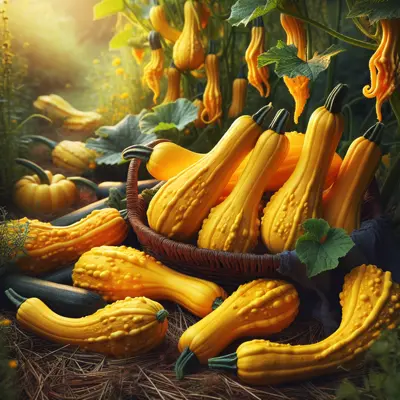
A prolific summer favorite that embodies the abundance of warm-weather gardening with its curved neck and bumpy, golden skin. This fast-growing bush variety produces tender, mild-flavored squash continuously throughout the season when harvested young. Its distinctive shape and reliable production have made it a garden staple for generations.
Harvest
50-65d
Days to harvest
Sun
Full sun
Zones
3–11
USDA hardiness
Height
1-3 feet
Planting Timeline
Showing dates for Yellow Crookneck Summer Squash in USDA Zone 7
All Zone 7 squash →Zone Map
Click a state to update dates
Yellow Crookneck Summer Squash · Zones 3–11
Growing Details
Succession Planting
In zone 7, direct sow Yellow Crookneck every 3 weeks starting around April 15, and make your last sowing by June 15 — that's roughly 3 plantings. The UGA Vegetable Garden Calendar specifically flags a third squash sowing in May as worthwhile. Staggering the plantings means a single vine borer hit or powdery mildew outbreak doesn't take out your whole crop at once.
Stop new sowings once daytime highs are consistently above 90°F; germination drops off and plants that do establish will hit peak squash bug and vine borer pressure right at their most vulnerable stage. A June 15 cutoff gives your last planting enough time to reach the 50-65 day harvest window before late-summer heat and pest pressure stack up together.
Complete Growing Guide
Yellow Crookneck thrives in full sun with consistently warm soil—wait until nighttime temperatures stay above 60°F before planting, as this heat-loving variety grows slowly and may rot in cool, wet conditions. Plant seeds directly into rich, well-draining soil amended with compost, spacing plants 24-36 inches apart to allow the bushy growth room to sprawl. This cultivar is particularly susceptible to powdery mildew in humid climates, so ensure excellent air circulation and water only at soil level to keep foliage dry. Watch for squash vine borers and cucumber beetles, which target this variety aggressively—use row covers on young plants and inspect stems regularly. The key to continuous production lies in harvesting while fruits are still tender and 6-8 inches long; allowing even one mature squash to remain signals the plant to slow flowering and production. Unlike some sprawling varieties, Yellow Crookneck's compact bush form actually makes frequent harvesting easier, so check plants every 2-3 days once fruiting begins.
Light: Full sun (6 or more hours of direct sunlight a day). Soil: High Organic Matter, Loam (Silt). Soil pH: Neutral (6.0-8.0). Drainage: Good Drainage, Moist. Height: 1 ft. 0 in. - 3 ft. 0 in.. Spread: 2 ft. 0 in. - 25 ft. 0 in.. Spacing: 12 inches-3 feet. Growth rate: Rapid. Maintenance: High. Propagation: Seed. Regions: Coastal, Mountains, Piedmont.
Harvesting
Harvest Yellow Crookneck squash when the skin reaches a bright, uniform golden-yellow color and the flesh yields slightly to gentle pressure but remains firm enough to resist puncturing easily. Pick fruits when they are 6 to 8 inches long, as smaller specimens offer the most tender texture and mild flavor; larger squash become tough and seedy. Unlike single-harvest crops, this variety produces continuously throughout the season, so check plants every two to three days during peak growth. The critical timing tip: harvest in early morning when temperatures are cool, as the squash will have better flavor and firmer texture than afternoon-picked fruits. Regular harvesting stimulates additional flowering and prolongs productivity well into late summer.
A type of berry called a pepo that has a hard rind. Fruits may be long or round, large or small, smooth or warty– some have edible flesh and some are too hard or insipid to eat, though the seeds of all are edible. Has a harder, thicker stem compared to other species.
Color: Black, Cream/Tan, Gold/Yellow, Green, Orange, Pink, Red/Burgundy, Variegated, White. Type: Berry. Length: > 3 inches. Width: > 3 inches.
Garden value: Edible, Showy
Harvest time: Fall
Storage & Preservation
Fresh yellow crookneck squash keeps best stored unwashed in the refrigerator crisper drawer for 4-7 days. For counter storage, use within 2-3 days and keep in a cool, dry location away from direct sunlight. Don't wash until ready to use as moisture accelerates spoilage.
For longer preservation, slice into 1/2-inch rounds, blanch in boiling water for 2-3 minutes, shock in ice water, drain thoroughly, and freeze in single layers on baking sheets before transferring to freezer bags. Frozen squash keeps 8-10 months and works well in cooked dishes.
Grated yellow crookneck also freezes beautifully for quick addition to muffins, breads, and casseroles. For canning, follow USDA-approved recipes for summer squash pickles or pressure-can cubed squash. Dehydrating thinly sliced rounds at 125°F creates crispy chips that store in airtight containers for several months.
History & Origin
Yellow Crookneck squash emerged from the broader Cucurbita pepo domestication in Mesoamerica, though its specific lineage and formal breeding history remain poorly documented in horticultural records. Unlike some heirloom varieties with clearly traced origins, the Yellow Crookneck appears to have developed through folk selection rather than deliberate breeding programs, with gardeners perpetuating plants displaying the characteristic curved neck and golden coloring across generations. The variety gained prominence in American gardens by the nineteenth century and became widely available through seed catalogs by the early twentieth century, suggesting its establishment as a recognized cultivar well before modern breeding institutions formally documented such work. Its exact breeder and introduction date remain uncertain, though its enduring popularity indicates deep roots in gardening tradition.
Origin: North America
Advantages
- +Produces abundant yellow squash continuously throughout the warm growing season.
- +Matures quickly in just 50-65 days from planting to harvest.
- +Distinctive curved neck and bumpy skin make it visually appealing and recognizable.
- +Mild, slightly sweet flavor appeals to most gardeners and families.
- +Easy to grow bush variety requires minimal space and maintenance.
Considerations
- -Highly susceptible to squash bugs, borers, and multiple beetle species.
- -Prone to powdery mildew and downy mildew in humid conditions.
- -Requires frequent harvesting when young or becomes tough and bitter.
- -Vulnerable to bacterial wilt and mosaic virus transmitted by insects.
Companion Plants
Nasturtiums and French marigolds are the two worth prioritizing. Nasturtiums act as a trap crop for aphids — the bugs pile onto them and leave the squash alone, and you pull the nasturtium when it gets overwhelmed rather than treating your squash. French marigolds pull double duty: NC State Extension's disease notes specifically recommend a solid planting of them as a nematode-suppression strategy before returning susceptible cucurbit crops to a bed. Radishes tucked near the base can deter cucumber beetles, which the UGA Vegetable Garden Calendar flags as one of the "10 most wanted" pests to watch from May onward in zone 7 Georgia gardens.
Beans fix nitrogen at the root zone — useful for a crop that feeds as heavily as squash does across a 50-65 day growing window. Keep potatoes well away; they compete aggressively for water and nutrients at the same root depth and can host mosaic virus, which spreads to cucurbits easily. Mint looks harmless but spreads by runners and will physically crowd out squash crowns before you notice it's happening.
Plant Together
Nasturtiums
Repels squash bugs, cucumber beetles, and aphids while attracting beneficial predatory insects
Marigolds
Deters squash bugs, cucumber beetles, and nematodes with natural compounds
Radishes
Repels squash vine borers and cucumber beetles, acts as trap crop
Corn
Provides natural trellis support and shade, part of traditional Three Sisters planting
Beans
Fixes nitrogen in soil and completes Three Sisters companion system
Catnip
Strong repellent for squash bugs, cucumber beetles, and other common squash pests
Dill
Attracts beneficial insects like parasitic wasps that control squash pests
Sunflowers
Attracts pollinators essential for squash fruit production and provides beneficial shade
Keep Apart
Potatoes
Compete for similar nutrients and space, may harbor similar soil-borne diseases
Aromatic herbs (mint, sage)
Strong essential oils can inhibit squash growth and development
Brassicas (broccoli, cabbage)
Heavy nitrogen feeders that compete directly with squash for nutrients
Nutrition Facts
Per 100g serving. % Daily Value based on 2,000 calorie diet. Source: USDA FoodData Central (FDC #168040)
Pests & Disease Resistance
Resistance
Moderate resistance, susceptible to powdery mildew and mosaic viruses
Common Pests
Squash bugs, cucumber beetles, squash vine borers, aphids
Diseases
Powdery mildew, downy mildew, bacterial wilt, mosaic virus
Troubleshooting Yellow Crookneck Summer Squash
What you'll see, why it happens, and what to do about it.
Wilting plants with visible orange-and-black insects clustered along stems and under leaves, usually showing up mid-summer
Likely Causes
- Squash bugs (Anasa tristis) — adults and nymphs feed in groups, injecting a toxic saliva that blocks water movement
- Late planting that puts vulnerable young plants right at peak squash bug pressure in July
What to Do
- 1.Check the undersides of leaves every 2-3 days and scrape off the bronze egg clusters — they're laid in neat diamond patterns — before they hatch
- 2.Set out cardboard or boards near the base of plants overnight; squash bugs congregate under them and you can destroy them in the morning
- 3.Start plants as early as soil temps allow (60°F+) so plants are well-established before July pressure peaks, per NC State Extension's IPM guidance on timing plantings around insect migration
Sudden, total wilt of one or more vines despite adequate water — cut the stem near the base and look for sawdust-like frass inside
Likely Causes
- Squash vine borer (Melittia cucurbitae) — the larva tunnels into the main stem and feeds from the inside out
- Eggs laid in late June through July, so plants started after mid-May are most at risk
What to Do
- 1.Slit the stem lengthwise with a sharp knife where you see the entry hole, dig out the larva, then mound damp soil over the cut section — the vine will sometimes re-root
- 2.Next season, direct sow by late April so the plant is past its most vulnerable juvenile stage before borers start laying eggs in July, as NC State Extension recommends for avoiding borers with early planting
- 3.Put out yellow sticky traps starting in late May to catch adult moths and get a heads-up on when they're flying
White powdery coating on upper leaf surfaces, starting on older leaves and spreading fast after mid-summer
Likely Causes
- Powdery mildew — most likely Podosphaera xanthii or Erysiphe cichoracearum in cucurbits — thrives in warm days and cool nights with low leaf wetness
- Crowded spacing under 36 inches that cuts off airflow between plants
What to Do
- 1.Strip the worst-affected leaves and bag them — don't compost them
- 2.Spray remaining foliage with a potassium bicarbonate product or a baking soda solution (1 tablespoon per gallon of water); repeat every 7-10 days
- 3.At season's end, pull all plant debris and turn the bed — NC State Extension's IPM notes make clear that removing cucurbit material disrupts overwintering pathogens and pests alike
Frequently Asked Questions
How long does yellow crookneck summer squash take to grow?▼
Can you grow yellow crookneck squash in containers?▼
What does yellow crookneck summer squash taste like?▼
When should I plant yellow crookneck summer squash?▼
Is yellow crookneck squash good for beginners?▼
Why are my yellow crookneck squash plants not producing fruit?▼
Zone-by-Zone Planting Calendar
| Zone | Indoor Start | Transplant | Direct Sow | Harvest |
|---|---|---|---|---|
| Zone 3 | — | — | June – July | August – October |
| Zone 4 | — | — | June – July | August – October |
| Zone 5 | — | — | May – June | August – September |
| Zone 6 | — | — | May – June | July – September |
| Zone 7 | — | — | April – June | July – August |
| Zone 8 | — | — | April – May | June – August |
| Zone 9 | — | — | March – April | May – July |
| Zone 10 | — | — | February – April | May – June |
| Zone 1 | — | — | July – August | September – August |
| Zone 2 | — | — | June – August | September – September |
| Zone 11 | — | — | January – March | April – May |
| Zone 12 | — | — | January – March | April – May |
| Zone 13 | — | — | January – March | April – May |
Growing Guides from Wind River Greens
Sources & References
External authority sources used in compiling this guide.
See the Methodology page for how this data is sourced, what's AI-assisted, and known limitations.