Red Burgundy Onion
Allium cepa 'Red Burgundy'
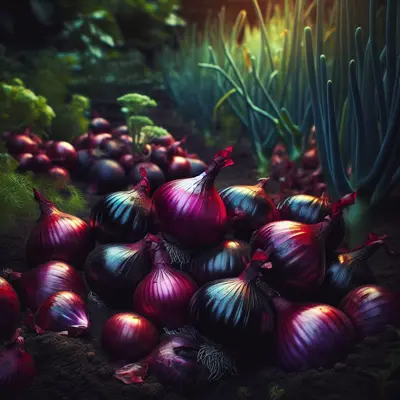
A stunning deep red storage onion that combines beautiful color with excellent keeping qualities and robust flavor. The dark burgundy skin and purple-tinged white flesh make this variety as ornamental as it is functional in the kitchen. Red Burgundy stores for 6-8 months when properly cured, making it ideal for gardeners who want year-round homegrown onions.
Harvest
100-110d
Days to harvest
Sun
Full sun
Zones
5–10
USDA hardiness
Height
12-18 inches
Planting Timeline
Showing dates for Red Burgundy Onion in USDA Zone 7
All Zone 7 allium →Zone Map
Click a state to update dates
Red Burgundy Onion · Zones 5–10
Growing Details
Succession Planting
Red Burgundy is a short-day onion — it starts forming bulbs when day length reaches around 12 hours, so your sowing date directly controls how much leaf mass the plant builds before that trigger fires. More leaves going into bulbing means bigger bulbs at harvest. Direct sow from late February through April in zone 7; anything after early May typically produces undersized bulbs because the plants just haven't had enough time to put on growth first.
A single sowing works fine for most growers, but if you want to spread out the curing workload, put in a first round in late February and a second round 3-4 weeks later. The harvest gap is modest — 2-3 weeks at most — but it keeps you from having 50 onions to cure all at once in July heat. Stop all new sowings once daytime highs are consistently above 80°F; germination slows sharply and any seedlings that do emerge won't reach mature size before the heat pushes them toward premature flowering.
Complete Growing Guide
Red Burgundy Onions require a long growing season of 100-110 days from transplant to maturity, so start seeds indoors 8-10 weeks before your last spring frost to ensure adequate time for bulb development before day length shortens in late summer. These storage cultivars are sensitive to photoperiod and may bolt prematurely if exposed to inconsistent temperatures or drought stress during bulking, so maintain consistent moisture and cool-season conditions (55-75°F ideally) through mid-summer. They prefer well-draining, fertile soil rich in phosphorus and potassium, which enhances both color intensity and storage longevity. Red Burgundy shows good resistance to fusarium and pink root rot, but watch for thrips in dry conditions, as this variety's thin skin offers less protection than yellow onions. The most practical advantage: cure these bulbs for a full 2-3 weeks in a warm, airy location before storage to develop the papery skin that makes their 6-8 month storage life possible—rushing this step compromises keeping quality despite the variety's inherent potential.
Light: Full sun (6 or more hours of direct sunlight a day). Soil: High Organic Matter, Loam (Silt), Sand. Soil pH: Alkaline (>8.0), Neutral (6.0-8.0). Drainage: Good Drainage, Moist. Height: 1 ft. 0 in. - 1 ft. 6 in.. Spread: 0 ft. 6 in. - 1 ft. 0 in.. Spacing: Less than 12 inches, 12 inches-3 feet. Maintenance: Medium. Regions: Coastal, Mountains, Piedmont.
Harvesting
Harvest Red Burgundy Onions when their deep burgundy skins darken to a rich mahogany tone and the outer papery layers feel dry and crisp to the touch, typically at 100–110 days. Watch for the characteristic sign that tops have begun yellowing and falling over naturally, indicating the bulbs have finished expanding. Pull or dig onions carefully to avoid bruising their delicate skins, as any damage compromises long-term storage potential. Red Burgundy is a single-harvest crop rather than a continuous-pick variety, so harvest the entire planting when most bulbs reach maturity rather than selecting individual specimens. Time your harvest for a dry spell to minimize curing time—freshly dug onions cure faster in low humidity, accelerating their transition to storage-ready condition.
Flowers wither and convert to bulblets
Type: Capsule.
Harvest time: Summer
Edibility: The bulb and tops are edible raw or cooked. However, the plant also has poisonous characteristics as noted in the "Poisonous to Humans" section of this record. Toxicity can depend on the age of the person or animal, the age of the plant, the part of the plant ingested, how much is ingested, whether the person or animal has sensitivities or allergies, whether it's eaten raw or cooked, and so forth. Consult with a medical professional for further details.
Storage & Preservation
Cure Red Burgundy onions immediately after harvest by spreading them in a single layer on screens or hanging in mesh bags in a warm (80-85°F), well-ventilated area for 2-3 weeks until outer skins are papery and necks are completely dry. Once cured, trim roots and tops to 1 inch, then store in mesh bags or braids in a cool (35-40°F), dark location with good air circulation.
Properly cured Red Burgundy onions store 6-8 months under ideal conditions. For preservation, slice and freeze in portions for cooking (texture changes but flavor remains), or pickle whole small bulbs in vinegar brine. Dehydrating works excellently – slice thin and dry at 125°F until crisp, then store in airtight containers for up to a year.
History & Origin
Red Burgundy onions belong to the larger family of red storage onions that emerged from European heirloom traditions, particularly those cultivated in France's Burgundy region—the namesake of this variety. While specific breeder attribution and introduction year remain poorly documented in modern seed catalogs, Red Burgundy represents a continuation of long-established French red onion lines selected for deep color, storage longevity, and pungent flavor. These regional French varieties were preserved and distributed through heritage seed networks and commercial seed companies throughout the twentieth century, with Red Burgundy gaining popularity among American home gardeners seeking reliable, flavorful storage onions with ornamental appeal.
Origin: Central Asia and central Persia
Advantages
- +Stunning deep burgundy color adds visual appeal to kitchen and garden
- +Exceptional 6-8 month storage life provides year-round homegrown onion supply
- +Sharp flavor mellows pleasantly when cooked for versatile culinary use
- +Easy to moderate difficulty makes this variety suitable for most gardeners
- +Purple-tinged flesh offers ornamental appeal alongside practical kitchen functionality
Considerations
- -Susceptible to downy mildew and purple blotch fungal diseases in wet conditions
- -Vulnerable to onion thrips and maggots requiring pest management attention
- -Requires 100-110 days to mature, limiting growing season in shorter climates
- -Needs proper curing and storage conditions to achieve full keeping potential
Companion Plants
Carrots are the most practical companion here. Onions deter carrot fly (Psila rosae) with their sulfur compounds, and the effect runs both directions — carrots disrupt onion fly host-finding in return. They also occupy different soil depths: onions root in the top 6 inches while carrots pull water and nutrients from 8-12 inches down, so the two crops genuinely don't crowd each other underground. Lettuce fills a similar slot between rows — shallow-rooted, fast, and gone before the onion bulbs start sizing up in earnest. Marigolds (Tagetes spp.) are worth planting along bed edges; their root exudates suppress soil nematodes, and the sulfurous scent does measurable work against aphid pressure on nearby alliums.
Beans and peas are a harder no than most "harmful" companion pairings. Alliums produce sulfur compounds that inhibit legume root development — NC State Extension flags this as genuinely detrimental, not just mildly suboptimal. You'll see smaller yields from both crops if they're planted within a few feet of each other. Asparagus is the other one worth protecting: since it's a perennial that stays in the same bed for 15-20 years, even moderate suppression from Allium cepa root exudates adds up over time. Give asparagus crowns at least 3 feet of buffer, and plan your onion rows accordingly from the start.
Plant Together
Carrots
Onions repel carrot flies while carrots help break up soil for onion bulb development
Tomatoes
Onions deter aphids, hornworms, and other tomato pests while improving tomato flavor
Brassicas (Cabbage, Broccoli)
Onions repel cabbage worms, flea beetles, and other crucifer pests
Lettuce
Onions provide pest protection without competing for space due to different root depths
Peppers
Onions deter aphids and other soft-bodied insects that damage pepper plants
Strawberries
Onions repel slugs, aphids, and other strawberry pests while conserving space
Roses
Onions repel aphids, thrips, and may help prevent black spot and other fungal diseases
Marigolds
Both plants repel similar pests, creating a strong pest deterrent zone
Keep Apart
Beans
Onions can inhibit bean growth and nitrogen fixation by their roots
Peas
Allelopathic compounds from onions can stunt pea growth and reduce yields
Asparagus
Onions can inhibit asparagus growth and both compete for similar soil nutrients
Sage
Both plants can inhibit each other's growth when planted too closely together
Nutrition Facts
Per 100g serving. % Daily Value based on 2,000 calorie diet. Source: USDA FoodData Central (FDC #170000)
Pests & Disease Resistance
Resistance
Good resistance to pink root and fusarium basal rot
Common Pests
Onion thrips, onion maggot, aphids
Diseases
Downy mildew, purple blotch, bacterial soft rot
Troubleshooting Red Burgundy Onion
What you'll see, why it happens, and what to do about it.
Leaf tips silvering or streaking, tiny black specks visible on foliage, plants stunted by mid-season
Likely Causes
- Onion thrips (Thrips tabaci) — they rasp the leaf surface and feed inside the tight leaf layers, making them hard to spot until damage is done
- Hot, dry spells that stress the plant and favor thrips population explosions
What to Do
- 1.Spray with insecticidal soap or spinosad every 5-7 days, making sure to hit the base of the leaves where thrips shelter
- 2.Keep soil consistently moist — stressed plants draw more thrips and recover more slowly
- 3.Remove and bag heavily infested outer leaves; don't compost them
Gray-purple fuzzy growth on leaf surfaces, leaves collapsing from the tips down, worst after cool wet nights
Likely Causes
- Downy mildew (Peronospora destructor) — spores spread in humid air above 55°F and below 75°F, common in spring plantings
- Crowded beds with poor airflow
What to Do
- 1.Thin to 4-5 inch spacing immediately if you haven't already — airflow is your first defense
- 2.Apply a copper-based fungicide at first sign; reapply after rain per label directions
- 3.Pull and trash (don't compost) any collapsed plants; the spores overwinter in debris
Bulbs turning soft and brown at the neck after harvest, foul smell, rot spreading inward
Likely Causes
- Bacterial soft rot (Burkholderia cepacia or Pectobacterium spp.) — enters through wounds, insect feeding sites, or necks that weren't fully cured
- Harvesting before tops have fallen over naturally, or curing in humid conditions
What to Do
- 1.Stop watering 3 weeks before expected harvest to toughen the skins
- 2.Cure bulbs in a single layer in a dry, shaded spot with good airflow for at least 2-3 weeks before storage — necks need to be completely papery and dry
- 3.Any bulb that feels soft at the neck goes straight to the kitchen or the trash, not into storage with the rest
Frequently Asked Questions
How long does Red Burgundy onion take to grow?▼
Can you grow Red Burgundy onions in containers?▼
What does Red Burgundy onion taste like?▼
When should I plant Red Burgundy onion seeds?▼
Is Red Burgundy onion good for beginners?▼
Red Burgundy vs yellow storage onions - what's the difference?▼
Zone-by-Zone Planting Calendar
| Zone | Indoor Start | Transplant | Direct Sow | Harvest |
|---|---|---|---|---|
| Zone 1 | — | — | June – July | September – September |
| Zone 2 | — | — | May – July | September – September |
| Zone 11 | — | — | January – February | April – December |
| Zone 12 | — | — | January – February | April – December |
| Zone 13 | — | — | January – February | April – December |
| Zone 3 | — | — | May – June | August – October |
| Zone 4 | — | — | April – June | August – October |
| Zone 5 | — | — | April – May | July – November |
| Zone 6 | — | — | April – May | July – November |
| Zone 7 | — | — | March – May | July – November |
| Zone 8 | — | — | March – April | June – December |
| Zone 9 | — | — | February – March | May – December |
| Zone 10 | — | — | January – March | May – December |
Growing Guides from Wind River Greens
Sources & References
External authority sources used in compiling this guide.
See the Methodology page for how this data is sourced, what's AI-assisted, and known limitations.