Peppermint
Beta vulgaris
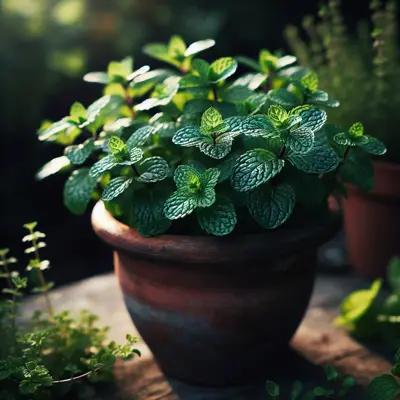
Peppermint is a vigorous herbaceous perennial reaching 24-36 inches tall with dark green, lance-shaped leaves and purple-tinged stems. Mature leaves are ready to harvest at 60-90 days, though plants produce continuously through the growing season. The defining characteristic is its intense, cooling menthol profile with pronounced sweet undertones, making it ideal for tea, culinary applications, and medicinal preparations. More potent than spearmint, peppermint thrives in moist, rich soil and tolerates partial shade, though it prefers 4-6 hours of sun daily. This heirloom variety is notably easy to grow and propagate.
Harvest
60-90d
Days to harvest
Sun
Partial shade to full sun
Zones
3–9
USDA hardiness
Height
12-24 inches
Planting Timeline
Showing dates for Peppermint in USDA Zone 7
All Zone 7 herb →Zone Map
Click a state to update dates
Peppermint · Zones 3–9
Growing Details
Complete Growing Guide
Growing peppermint successfully starts with choosing the right location and containing its aggressive spreading habit. Select a spot with morning sun and afternoon shade, or provide 4-6 hours of filtered sunlight daily. Before planting, prepare your soil by working in 2-3 inches of compost and aged manure to create the rich, moisture-retentive environment peppermint craves.
Since peppermint is a sterile hybrid, you cannot grow it from seed. Start with divisions from established plants or rooted cuttings in early spring after soil temperatures reach 55°F. When transplanting, space plants 12-18 inches apart and immediately install root barriers at least 12 inches deep, or grow in containers to prevent invasive spreading. For container growing, use pots at least 12 inches wide with drainage holes and quality potting mix enriched with compost.
Fertilize monthly during the growing season with a balanced, diluted liquid fertilizer (10-10-10) or side-dress with compost. Avoid high-nitrogen fertilizers that promote excessive leaf growth at the expense of essential oil concentration. Maintain consistent soil moisture but never allow waterlogged conditions, which invite root rot.
The biggest mistake new peppermint growers make is underestimating its spreading nature. Even small root fragments left in soil will sprout new plants. Regularly inspect container edges and remove any runners attempting to escape. Another common error is allowing the plant to flower, which reduces leaf quality and essential oil content. Pinch flower buds as soon as they appear.
Maximize your harvest by implementing a cut-and-come-again approach. Begin harvesting when plants reach 6-8 inches tall, cutting stems back to 2-3 inches above soil level. This encourages bushier growth and prevents the woody stems that develop in older plants. In zones 3-7, mulch heavily before winter to protect roots from freeze damage.
Harvesting
Harvest peppermint leaves when plants reach 6-8 inches tall and stems are still tender and green, typically 60-90 days after planting. The optimal time is mid-morning after dew has dried but before the heat of midday, when essential oil concentration peaks. Look for vibrant green leaves with no yellowing or brown edges, and stems that bend easily without snapping.
To harvest, use clean scissors or pinch stems just above a set of leaves, cutting back to 2-3 inches above soil level. This aggressive cutting encourages bushy regrowth and prevents flowering, which diminishes leaf quality. For continuous harvest, cut no more than one-third of the plant at once, rotating sections every 2-3 weeks. Young, tender leaves at stem tips contain the highest concentration of menthol and offer the best flavor. Avoid harvesting during hot, dry periods when plants are stressed, as this produces bitter, less aromatic leaves.
Storage & Preservation
Fresh peppermint leaves stay crisp for 3-5 days when stored like cut flowers in water at room temperature, or wrapped in damp paper towels in the refrigerator for up to one week. For longer preservation, air-dry whole stems by hanging in bundles in a warm, dry location with good air circulation for 2-3 weeks until leaves crumble easily.
Freeze whole leaves in ice cube trays with water for cocktails and teas, or flash-freeze clean, dry leaves on baking sheets before transferring to freezer bags for up to six months. For the most concentrated flavor, make peppermint oil by gently heating fresh leaves in carrier oil at low temperature for several hours, then straining. Properly stored dried peppermint retains potency for 12-18 months in airtight containers away from light and heat.
History & Origin
Peppermint (Mentha × piperita) is a natural hybrid that emerged spontaneously in European wetlands centuries ago, created when watermint (M. aquatica) and spearmint (M. spicata) cross-pollinated. First formally documented in 1696 by English botanist John Ray, peppermint was initially considered a species rather than a hybrid due to its distinct characteristics and stable traits.
Commercial cultivation began in the late 1700s near London, but the crop suffered from a devastating rust disease that nearly eliminated English production. In 1790, American farmers in New York began growing peppermint commercially, eventually establishing the United States as the world's primary producer. The industry later shifted westward to Michigan, Indiana, and Oregon, where cooler climates and rich soils proved ideal.
Mint has held cultural significance across civilizations, from ancient Greek mythology where the nymph Minthe was transformed into the plant, to medieval monasteries where monks cultivated it for medicinal purposes. Today's peppermint remains genetically identical to those original European hybrids, maintaining its characteristic intense menthol content that distinguishes it from other mint varieties.
Advantages
- +Extremely hardy perennial that survives winters in zones 3-11 with minimal care
- +Highest menthol content among mint varieties, providing intense cooling sensation
- +Natural pest deterrent that repels ants, mice, and aphids when planted around garden borders
- +Produces continuous harvests from late spring through first frost with proper cutting
- +Thrives in partial shade where other herbs struggle, perfect for woodland gardens
- +Requires no fertilizer in decent soil due to aggressive growth habit
- +Self-propagates readily through runners, providing endless free plants for expansion
Considerations
- -Aggressively invasive, capable of overtaking entire garden beds within one season
- -Cannot be grown from seed, requiring purchase of starter plants or divisions
- -Susceptible to mint rust in humid climates, which can devastate entire plantings
- -Requires consistent moisture, wilting quickly during hot, dry periods
- -Essential oil content decreases significantly once plants flower, demanding vigilant deadheading
Companion Plants
Peppermint's main value as a companion comes from its volatile oils — menthol and menthone primarily — which disrupt the host-finding behavior of insects like aphids and spider mites. Planted near tomatoes or brassicas like cabbage and broccoli, the diffused scent makes it harder for pests to lock onto their target plant. It's not a barrier; it works best when the foliage gets brushed occasionally and the mint is close enough to matter, say within 18–24 inches. Carrots and radishes are easy neighbors too — their growth habits (deep taproot, quick underground bulb) don't compete with peppermint's shallow stolons, so neither plant loses much.
The companions to avoid — parsley, cilantro, and chamomile — each cause trouble in a different way. Parsley and cilantro run into direct resource competition: all three plants feed in roughly the same 6–8 inch root zone, and whichever one got established first tends to win. Chamomile is the more counterintuitive case. It has a reputation as a beneficial herb companion, but it produces allelopathic compounds that suppress surrounding plant growth, and most growers who've kept records on it end up moving it to the edge of a bed or giving it its own container.
The bigger practical issue with any peppermint companion planting is the mint itself. Left unchecked, it spreads by underground stolons and can cover 2–3 feet of bed space in a single growing season. Sink a buried pot or a bottomless plastic sleeve 8–10 inches deep around the root zone before you plant it near anything you care about. That one step determines whether peppermint is a useful neighbor or a problem you're pulling out of your tomatoes for the next three years.
Plant Together
Tomatoes
Peppermint repels ants, aphids, and flea beetles that commonly attack tomato plants
Cabbage
Deters cabbage moths, aphids, and flea beetles while improving cabbage flavor
Broccoli
Repels cabbage worms, aphids, and other brassica pests
Radishes
Mint helps deter flea beetles and root maggots that damage radish crops
Carrots
Repels carrot flies and aphids while attracting beneficial predatory insects
Lettuce
Deters slugs, aphids, and flea beetles that commonly damage lettuce leaves
Roses
Repels aphids, ants, and rodents while attracting beneficial pollinators
Marigolds
Both plants repel similar pests and create a strong aromatic barrier against insects
Keep Apart
Parsley
Peppermint's aggressive spreading nature can overwhelm and outcompete parsley plants
Chamomile
Mint's vigorous root system and allelopathic compounds can inhibit chamomile growth
Cilantro
Peppermint's rapid spreading can crowd out cilantro and reduce its seed production
Nutrition Facts
Per 100g serving. % Daily Value based on 2,000 calorie diet. Source: USDA FoodData Central (FDC #173474)
Pests & Disease Resistance
Resistance
Generally disease resistant, occasional rust or powdery mildew in humid conditions
Common Pests
Aphids, spider mites, flea beetles, mint root borer
Diseases
Rust, powdery mildew, verticillium wilt, mint anthracnose
Troubleshooting Peppermint
What you'll see, why it happens, and what to do about it.
Orange or yellow powdery pustules on leaf undersides, with corresponding yellow spots on top — usually showing up mid to late summer
Likely Causes
- Mint rust (Puccinia menthae) — a fungal pathogen specific to the mint family, spreads by windborne spores
- Overhead watering or dense planting that keeps foliage wet for extended periods
What to Do
- 1.Pull and bag affected stems immediately — don't compost them, the spores survive
- 2.Water at the base, not overhead, and cut the planting back hard to about 4 inches to improve airflow
- 3.If rust returns year after year, dig and divide the patch in early spring, replanting clean divisions into a fresh bed at least 12 inches apart
White powdery coating spreading across upper leaf surfaces, starting on older growth and moving toward new tips
Likely Causes
- Powdery mildew — warm days, cool nights, and poor airflow are the typical triggers in a dense mint planting
- Overcrowded runners that haven't been thinned in 2 or more seasons
What to Do
- 1.Cut affected stems back to the ground and discard them; peppermint regrows quickly from the roots
- 2.Thin the bed so individual stems stand at least 12 inches apart — the stolons spread fast and beds choke out faster than most people expect
- 3.A diluted neem oil spray (2 tablespoons per gallon of water) applied every 7–10 days can slow spread on stems you want to preserve
Sudden wilting of individual stems or whole sections of the planting despite adequate water — cut stems show brown discoloration in the center
Likely Causes
- Verticillium wilt (Verticillium dahliae or V. albo-atrum) — a soil-borne fungus that blocks the vascular system and persists in soil for years
- Mint root borer (Fumibotys fumalis) larvae tunneling into crowns and roots, creating entry points for secondary infection
What to Do
- 1.Dig up and discard the affected section — don't replant mint or other susceptible herbs in that spot for at least 3 seasons
- 2.Before assuming disease, check the root zone for tunneling or frass; root borer damage is mechanical and won't respond to fungicide
- 3.Start a fresh planting from certified clean transplants or cuttings taken from healthy stems at least 6 inches above the soil line
Frequently Asked Questions
How long does peppermint take to grow from planting?▼
Can you grow peppermint in containers?▼
Is peppermint good for beginner gardeners?▼
What's the difference between peppermint and spearmint?▼
When should I plant peppermint?▼
How do you keep peppermint from spreading everywhere?▼
Zone-by-Zone Planting Calendar
| Zone | Indoor Start | Transplant | Direct Sow | Harvest |
|---|---|---|---|---|
| Zone 3 | April – May | June – July | — | July – October |
| Zone 4 | March – April | June – July | — | July – October |
| Zone 5 | March – April | May – June | — | June – October |
| Zone 6 | March – April | May – June | — | June – November |
| Zone 7 | February – March | April – June | — | June – November |
| Zone 8 | February – March | April – May | — | May – December |
| Zone 9 | January – February | March – April | — | April – December |
Growing Guides from Wind River Greens
Sources & References
External authority sources used in compiling this guide.
- BreederJohnny's Selected Seeds
- USDAUSDA FoodData Central
See the Methodology page for how this data is sourced, what's AI-assisted, and known limitations.