Stuttgart
Allium cepa 'Stuttgart'
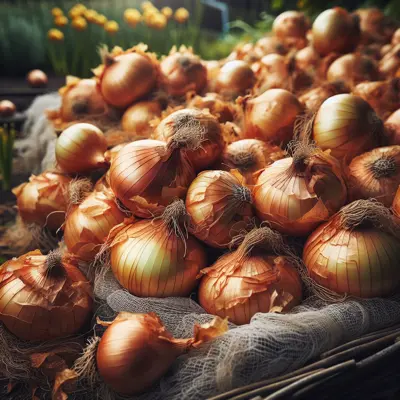
A classic German heirloom onion prized for its exceptional storage life and reliable performance in cool climates. This flat-topped yellow onion develops firm, dense bulbs with crisp white flesh and a pleasantly sharp flavor that mellows beautifully when cooked. Stuttgart's outstanding keeping quality makes it a favorite among gardeners who want to store their harvest through winter.
Harvest
110-120d
Days to harvest
Sun
Full sun
Zones
5–10
USDA hardiness
Height
12-18 inches
Planting Timeline
Showing dates for Stuttgart in USDA Zone 7
All Zone 7 allium →Zone Map
Click a state to update dates
Stuttgart · Zones 5–10
Growing Details
Succession Planting
Direct sow Stuttgart sets or seed every 3–4 weeks starting as soon as soil can be worked in late winter through May in zone 7. Stuttgart is a short-day onion, so timing drives everything: bulb formation triggers when day length hits around 12 hours, meaning late plantings won't size up before summer heat shuts things down. Stop sowing by mid-May — anything going in after that is unlikely to accumulate the 110–120 days it needs before conditions turn against it. If you want onions staggered through fall storage, varying your harvest dates from a single well-timed sowing will get you further than successive plantings will.
Complete Growing Guide
Plant Stuttgart onions in early spring or fall, timing your transplants to mature during cooler months when their German heritage truly shines—they struggle in intense summer heat and may bolt prematurely if exposed to prolonged warmth above 75°F. Space plants 4-6 inches apart in well-draining soil rich in organic matter, as Stuttgart's dense bulb development demands consistent moisture and steady nitrogen through the growing season. This variety resists common onion diseases better than many cultivars but remains susceptible to fusarium basal rot in waterlogged conditions, so ensure excellent drainage. Unlike storage onions that require day-length triggers, Stuttgart matures reliably across latitude zones but won't develop full bulb size if crowded—thin seedlings aggressively. A practical advantage: cure Stuttgart's mature bulbs thoroughly for 3-4 weeks in cool, dry conditions; their firm structure and papery skin develop exceptional storage potential, often lasting 6-8 months in proper conditions, justifying the slightly longer growing season.
Light: Full sun (6 or more hours of direct sunlight a day). Soil: High Organic Matter, Loam (Silt), Sand. Soil pH: Alkaline (>8.0), Neutral (6.0-8.0). Drainage: Good Drainage, Moist. Height: 1 ft. 0 in. - 1 ft. 6 in.. Spread: 0 ft. 6 in. - 1 ft. 0 in.. Spacing: Less than 12 inches, 12 inches-3 feet. Maintenance: Medium. Regions: Coastal, Mountains, Piedmont.
Harvesting
Stuttgart onions are ready to harvest when their characteristic flat-topped bulbs reach three to four inches in diameter and the papery yellow skin develops a deep golden hue with no green undertones. Watch for the telltale sign of maturity: the tops will naturally yellow and fall over, typically around 110–120 days from planting. Harvest all bulbs at once rather than selectively picking, as this allows proper curing and maximizes storage potential. For optimal results, wait until at least seventy percent of the foliage has collapsed before pulling, ensuring the outer skins have fully dried and sealed to lock in those exceptional keeping qualities Stuttgart is renowned for.
Flowers wither and convert to bulblets
Type: Capsule.
Harvest time: Summer
Edibility: The bulb and tops are edible raw or cooked. However, the plant also has poisonous characteristics as noted in the "Poisonous to Humans" section of this record. Toxicity can depend on the age of the person or animal, the age of the plant, the part of the plant ingested, how much is ingested, whether the person or animal has sensitivities or allergies, whether it's eaten raw or cooked, and so forth. Consult with a medical professional for further details.
Storage & Preservation
After curing, Stuttgart onions store exceptionally well in cool (32-40°F), dry conditions with good air circulation. Properly cured bulbs keep 6-8 months in a root cellar, unheated garage, or basement. Store in mesh bags, braided strings, or shallow boxes—never in plastic bags which trap moisture.
For shorter storage, keep Stuttgart onions at room temperature in a pantry for 2-3 months. Avoid storing near potatoes, which release gases that cause onions to sprout.
Stuttgart's firm texture makes it excellent for freezing when chopped—no blanching needed, though they'll lose crispness. These onions also dehydrate beautifully into flakes or powder. For longer preservation, Stuttgart's sharp flavor works well in pickled relishes and chutneys, maintaining good texture through the canning process.
History & Origin
Stuttgart onions emerged from German horticultural traditions during the nineteenth century, developing within the broader European heritage of storage onion cultivation. While precise breeder attribution and introduction date remain poorly documented in English-language sources, Stuttgart belongs to a lineage of German heirloom varieties selected for cold-climate resilience and extended storage capability. The variety likely arose through generations of careful seed saving among German gardeners prioritizing bulb density and keeping quality—traits essential in regions with long, harsh winters. Stuttgart's name references its presumed origin or primary development region in Baden-Württemberg, though definitive historical records distinguishing this cultivar from other Germanic flat onions are limited in available literature.
Origin: Central Asia and central Persia
Advantages
- +Exceptional storage life keeps bulbs fresh through entire winter months
- +Reliable performance in cool climates makes Stuttgart ideal for northern gardeners
- +Flat-topped yellow bulbs are attractive and consistent in size
- +Sharp raw flavor mellows into pleasant sweetness when cooked
- +Easy to grow variety suitable for beginning gardeners
Considerations
- -Susceptible to onion maggots which can devastate underground bulbs
- -Purple blotch and downy mildew diseases require preventive fungicide sprays
- -Long 110-120 day maturity limits growing options in short seasons
- -White rot fungus in soil causes permanent crop loss if present
Companion Plants
Carrots and Stuttgart make a legitimate pairing: Stuttgart's sulfur compounds deter carrot fly (Psila rosae), while carrot tops help mask the scent trail onion fly use to locate their host. Plant them in alternating rows 4–6 inches apart — they don't compete for root space in any meaningful way. Cabbage and broccoli get similar protection; the sharp allium scent disrupts cabbage loopers and aphids trying to land. Roses are a less obvious choice, but the pest-confusion logic holds there too, and Stuttgart's shallow bulbs don't pull water from the same depth as rose roots.
Beans and peas need their own bed, kept well clear. Alliums produce compounds that suppress Rhizobium bacteria — the nitrogen-fixing organisms legumes depend on. The suppression runs both directions, and stunted onion bulbs next to a bean row are a predictable result. Asparagus has a similar incompatibility, compounded by the fact that both crops are long-term bed occupants that end up competing for space year after year.
Plant Together
Carrots
Alliums repel carrot flies while carrots help break up soil for onion bulb development
Tomatoes
Onions deter tomato hornworms and aphids while improving tomato flavor
Cabbage
Onions repel cabbage worms, cabbage loopers, and flea beetles
Lettuce
Onions provide pest protection without competing for nutrients, complementary root depths
Peppers
Alliums deter aphids and spider mites that commonly attack pepper plants
Broccoli
Onions repel cabbage family pests including cabbage root fly and aphids
Roses
Onions help prevent black spot and repel aphids, Japanese beetles, and other rose pests
Strawberries
Onions deter slugs, aphids, and other soft-bodied pests that damage strawberry plants
Keep Apart
Beans
Onions can inhibit bean growth and nitrogen fixation by rhizobia bacteria
Peas
Alliums can stunt pea growth and interfere with their nitrogen-fixing capability
Asparagus
Onions may inhibit asparagus growth and can compete for similar soil nutrients
Nutrition Facts
Per 100g serving. % Daily Value based on 2,000 calorie diet. Source: USDA FoodData Central (FDC #170000)
Pests & Disease Resistance
Resistance
Good resistance to pink root and downy mildew
Common Pests
Onion maggot, thrips, aphids
Diseases
Purple blotch, downy mildew, white rot
Troubleshooting Stuttgart
What you'll see, why it happens, and what to do about it.
Leaves show silver streaking or flecking, tips dying back, bulbs undersized at harvest
Likely Causes
- Thrips (Thrips tabaci) — tiny, hard to see, rasping the leaf surface and transmitting iris yellow spot virus
- Hot, dry spells that favor thrips population explosions
What to Do
- 1.Blast foliage with water early in the morning to knock thrips off — not a cure, but slows them down
- 2.Apply spinosad (follow label timing; it breaks down fast in sunlight) once you confirm thrips with a hand lens
- 3.Keep irrigation consistent at 1 inch per week — water-stressed onions are more vulnerable
Purple or brown oval lesions on leaves, often with a yellow halo, appearing mid-season
Likely Causes
- Purple blotch (Alternaria porri) — a fungal disease that moves in on wet, humid weather above 77°F
- Thrips feeding wounds that give Alternaria porri an entry point
What to Do
- 1.Remove and trash (don't compost) affected foliage as soon as you spot lesions
- 2.Thin to at least 4-inch spacing if you haven't already — airflow matters more than most people expect with Alliums
- 3.Rotate Stuttgart out of that bed for 2-3 seasons; Alternaria porri overwinters in infected debris
Frequently Asked Questions
How long does Stuttgart onion take to grow from seed?▼
Can you grow Stuttgart onions in containers?▼
What does Stuttgart onion taste like?▼
When should I plant Stuttgart onion seeds?▼
Is Stuttgart onion good for beginners?▼
Stuttgart vs Yellow Globe onions - what's the difference?▼
Zone-by-Zone Planting Calendar
| Zone | Indoor Start | Transplant | Direct Sow | Harvest |
|---|---|---|---|---|
| Zone 1 | — | — | June – July | September – September |
| Zone 2 | — | — | May – July | September – September |
| Zone 11 | — | — | January – February | April – December |
| Zone 12 | — | — | January – February | April – December |
| Zone 13 | — | — | January – February | April – December |
| Zone 3 | — | — | May – June | August – October |
| Zone 4 | — | — | April – June | August – October |
| Zone 5 | — | — | April – May | August – November |
| Zone 6 | — | — | April – May | July – November |
| Zone 7 | — | — | March – May | July – November |
| Zone 8 | — | — | March – April | June – December |
| Zone 9 | — | — | February – March | May – December |
| Zone 10 | — | — | January – March | May – December |
Growing Guides from Wind River Greens
Sources & References
External authority sources used in compiling this guide.
See the Methodology page for how this data is sourced, what's AI-assisted, and known limitations.