Calabrese Broccoli
Brassica oleracea var. italica 'Calabrese'
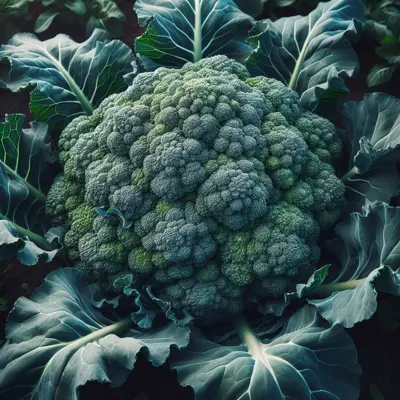
The classic Italian heirloom that gave us the broccoli we know today, originating from the Calabria region. This traditional variety produces medium-sized blue-green heads with excellent flavor and reliable side shoot production after the main head is harvested. A must-grow for gardeners seeking authentic Italian flavor and continuous harvests.
Harvest
60-90d
Days to harvest
Sun
Full sun to partial shade
Zones
6–9
USDA hardiness
Height
10-24 inches
Planting Timeline
Showing dates for Calabrese Broccoli in USDA Zone 7
All Zone 7 brassica →Zone Map
Click a state to update dates
Calabrese Broccoli · Zones 6–9
Growing Details
Succession Planting
In zone 7, direct sow or transplant Calabrese every 3 weeks starting in late March, with your last spring sowing in by early May — once daytime highs are consistently above 80°F, heads push into flower fast and you'll get loose, bitter florets instead of tight crowns. The UGA Vegetable Garden Calendar recommends starting fall brassica transplants in a half-shaded area in August for setting out in September; that second succession is often the stronger one here, since heads mature into October and November when the cold genuinely tightens them up. For fall timing, count back 75 days (mid-range for Calabrese) from your first expected frost to find your transplant date.
Complete Growing Guide
This heirloom thrives with consistent cool-season conditions between 65-75°F, so plant in early spring or late summer to avoid summer heat that triggers premature bolting. Unlike modern hybrids, Calabrese matures reliably within 60-90 days but demands consistent moisture and rich, well-draining soil rich in nitrogen to prevent hollow stems and stunted heads. Watch for cabbage worms and flea beetles, which prefer this traditional variety's tender leaves; row covers during germination offer effective organic protection. The cultivar's defining strength is its exceptional side-shoot production after harvesting the main head—a trait requiring timely main head removal at peak ripeness to stimulate branching. Practical tip: succession plant every two weeks starting in late winter to ensure continuous harvests before summer temperatures spike, as this classic variety loses quality and bolts quickly in heat.
Light: Full sun (6 or more hours of direct sunlight a day), Partial Shade (Direct sunlight only part of the day, 2-6 hours). Soil: Clay, Loam (Silt), Sand. Soil pH: Acid (<6.0), Neutral (6.0-8.0). Drainage: Good Drainage, Moist. Height: 0 ft. 10 in. - 2 ft. 0 in.. Spread: 1 ft. 0 in. - 2 ft. 0 in.. Spacing: 12 inches-3 feet. Growth rate: Medium. Maintenance: Medium. Propagation: Seed, Stem Cutting. Regions: Coastal, Mountains, Piedmont.
Harvesting
Harvest Calabrese broccoli when the central head reaches 4-6 inches in diameter with tightly clustered florets displaying that characteristic blue-green color—the florets should feel firm and compact to the touch, not loose or flowering. Cut the main head in the morning when temperatures are cool, leaving 8-10 inches of stem with several leaf nodes intact, as this cultivar excels at producing abundant side shoots for weeks of continued harvesting. Watch for the florets to begin separating or showing any hint of yellow flowering, as this signals peak ripeness has passed; harvest just before this stage occurs for optimal sweetness and tender texture.
The fruits dry and split when ripe.
Color: Brown/Copper, Green. Type: Siliqua. Length: > 3 inches.
Garden value: Edible
Harvest time: Fall, Summer
Edibility: The foliage is edible raw or cooked but when cooked can emit an unpleasant odor.
Storage & Preservation
Fresh Calabrese heads keep best when stored immediately in perforated plastic bags in the refrigerator crisper drawer, maintaining 95% humidity and temperatures just above 32°F. Properly stored heads remain fresh for 7-10 days, though quality declines after the first week.
For longer preservation, blanch heads in boiling water for 3 minutes, shock in ice water, drain thoroughly, and freeze in airtight containers for up to 8 months. The dense heads freeze exceptionally well and retain good texture when cooked from frozen. Calabrese also ferments beautifully—chop heads and ferment with salt for 3-5 days to create a tangy, probiotic-rich condiment similar to sauerkraut. Dehydrating works well for the stems and smaller florets, creating nutritious additions to soups and stews.
History & Origin
Calabrese broccoli emerged from the Calabria region of southern Italy, where it developed through generations of farmer selection rather than formal breeding programs. The variety represents a critical point in broccoli's domestication history, as it established the modern head-and-side-shoot growth pattern that distinguishes contemporary broccoli from its wild cabbage ancestors. Italian seed catalogs documented Calabrese varieties by the late nineteenth century, though precise breeder attribution and introduction dates remain unclear. The variety's popularity spread northward through Europe and eventually to North America, where it became foundational to commercial broccoli breeding programs throughout the twentieth century. Its reliable productivity and superior flavor made it the template for countless modern cultivars.
Origin: W. Europe
Advantages
- +Authentic Italian heirloom variety with superior sweet and nutty flavor profile
- +Reliable side shoot production extends harvest season beyond main head
- +Medium-sized heads perfect for home gardeners and small families
- +Easy to grow with only 60-90 days to maturity
- +Classic broccoli taste that modern hybrids struggle to match
Considerations
- -Highly susceptible to clubroot in acidic or poorly-draining soils
- -Vulnerable to multiple pests including cabbage worms and flea beetles
- -Requires consistent moisture and rich soil for optimal head development
- -Prone to bolting in hot weather, reducing harvestable quality
Companion Plants
Onions planted 6–8 inches away from Calabrese disrupt egg-laying by cabbage worms and aphids — the sulfur compounds they emit mask the brassica scent that those pests key on. Nasturtiums pull double duty: aphids pile onto them instead of your broccoli heads, and the flowers draw predatory wasps that hunt cabbage loopers. Dill serves the same wasp-attracting function without competing for water, since its roots stay shallow. Keep tomatoes and strawberries well clear — in our zone 7 Georgia garden, both go in around the same window as fall Calabrese transplants, and at that stage broccoli is actively building its crown and cannot afford to lose phosphorus and moisture to faster-growing neighbors.
Plant Together
Basil
Repels aphids and whiteflies, may improve flavor
Marigold
Deters cabbage worms, aphids, and other brassica pests
Nasturtium
Acts as trap crop for aphids and cabbage worms
Dill
Attracts beneficial wasps that parasitize cabbage worms
Onion
Repels cabbage root fly and aphids with strong scent
Lettuce
Grows well in broccoli's shade, efficient space usage
Spinach
Compatible root systems, similar growing conditions
Rosemary
Repels cabbage moths and other brassica pests
Keep Apart
Tomato
Competes for nutrients and may stunt broccoli growth
Strawberry
Both are heavy feeders competing for same nutrients
Mustard
Same family, attracts similar pests and diseases
Nutrition Facts
Per 100g serving. % Daily Value based on 2,000 calorie diet. Source: USDA FoodData Central (FDC #747447)
Pests & Disease Resistance
Resistance
Moderate resistance to clubroot and black rot
Common Pests
Cabbage worms, aphids, flea beetles, cabbage loopers
Diseases
Clubroot, black rot, downy mildew, bacterial soft rot
Troubleshooting Calabrese Broccoli
What you'll see, why it happens, and what to do about it.
Leaves develop angular yellow patches that turn brown; white-gray fuzzy growth appears on the undersides, usually after a stretch of wet, cool weather
Likely Causes
- Downy mildew (Peronospora parasitica) — thrives in temps between 45–65°F with high humidity
- Overhead irrigation or rain with poor airflow between plants
What to Do
- 1.Remove and bag affected leaves immediately — don't compost them
- 2.Switch to drip irrigation or water at the base only, early in the morning
- 3.Space plants at least 18 inches apart next planting to improve airflow; thin any crowded transplants now
Plants wilt and yellow despite adequate water; roots are swollen, club-shaped, or knotted when you pull one up
Likely Causes
- Clubroot (Plasmodiophora brassicae) — a soil-borne pathogen that persists in acidic soil for 20+ years
- Planting brassicas in the same bed season after season
What to Do
- 1.Pull and trash every infected plant — roots and all — do not compost
- 2.Lime the bed to raise soil pH to at least 7.0–7.2, which suppresses clubroot spore germination
- 3.Rotate out of all brassicas (broccoli, cabbage, kale, collards) in that bed for a minimum of 4 years
Small, ragged holes punched through leaves on young transplants, or a shotgun-hole pattern on seedlings within the first 2–3 weeks after setting out
Likely Causes
- Flea beetles (Phyllotreta spp.) — tiny, jumping black beetles that feed hardest on stressed or newly transplanted brassicas
- Transplants set out without row cover during peak flea beetle activity in April–May
What to Do
- 1.Cover transplants immediately with floating row cover (Reemay or similar) and seal the edges with soil — flea beetles can't find what they can't land on
- 2.Apply kaolin clay as a foliar deterrent if row cover isn't an option; reapply after rain
- 3.Keep plants at 1–1.5 inches of water per week — well-established transplants outgrow light feeding damage faster than drought-stressed ones
Frequently Asked Questions
How long does Calabrese broccoli take to grow from seed?▼
Can you grow Calabrese broccoli in containers?▼
What does Calabrese broccoli taste like compared to store-bought?▼
Is Calabrese broccoli good for beginners?▼
When should I plant Calabrese broccoli for fall harvest?▼
How do you prevent Calabrese broccoli from bolting?▼
Zone-by-Zone Planting Calendar
| Zone | Indoor Start | Transplant | Direct Sow | Harvest |
|---|---|---|---|---|
| Zone 1 | April – May | June – July | June – July | August – September |
| Zone 2 | April – May | June – July | May – July | August – September |
| Zone 11 | January – January | January – February | January – February | March – December |
| Zone 12 | January – January | January – February | January – February | March – December |
| Zone 13 | January – January | January – February | January – February | March – December |
| Zone 3 | March – April | May – June | May – June | July – October |
| Zone 4 | March – April | May – June | April – June | July – October |
| Zone 5 | February – March | April – May | April – May | June – November |
| Zone 6 | February – March | April – May | April – May | June – November |
| Zone 7 | February – March | April – May | March – May | June – November |
| Zone 8 | January – February | March – April | March – April | May – December |
| Zone 9 | January – January | February – March | February – March | April – December |
| Zone 10 | January – January | February – March | January – March | April – December |
Growing Guides from Wind River Greens
Sources & References
External authority sources used in compiling this guide.
See the Methodology page for how this data is sourced, what's AI-assisted, and known limitations.