Pink Queen
Consolida ajacis
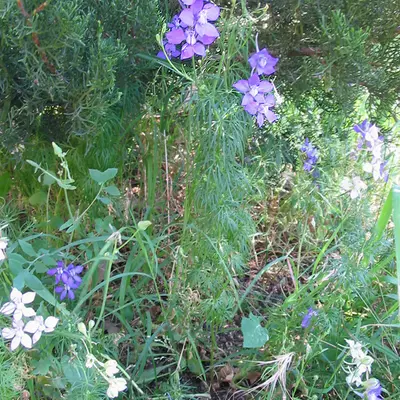
Features tall spires of dense florets. Flowers bloom in shades of light pink with hints of pale green. Plants produce double blooms with a small percentage of singles. 1 1/2-1 3/4" florets on 9-12" flower spikes. Very similar to the QIS™ series in plant height and bloom time. Attracts hummingbirds.
Harvest
80-90d
Days to harvest
Sun
Full sun
Zones
1–11
USDA hardiness
Height
18-36 inches
Planting Timeline
Showing dates for Pink Queen in USDA Zone 7
All Zone 7 flower →Zone Map
Click a state to update dates
Pink Queen · Zones 1–11
Growing Details
Succession Planting
Pink Queen wants cold to germinate well — direct sow in late February or early March while nights are still dropping into the 30s°F. That chill breaks dormancy and you'll see sprouts in 7-14 days. A second sowing around mid-April extends the harvest window, but don't push past that; once daytime highs hold above 85°F, larkspur bolts fast and the spikes get short and sparse. Two rounds spaced 5-6 weeks apart is about all a Georgia spring allows before the heat ends it.
For a fall flush, direct sow in September once soil temps drop back below 70°F. Plants establish as small rosettes, overwinter, and bloom in April — often the strongest stems of the year. Skip transplanting if you can; larkspur has a taproot that resents disturbance, and direct-sown plants reliably outperform anything started in a cell tray.
Complete Growing Guide
Growing Pink Queen (Consolida ajacis) flower. Light: Full sun. Hardy in USDA zones 1 to 11. Days to maturity: 80. Difficulty: Easy.
Harvesting
Pink Queen reaches harvest at 80 - 90 days from sowing per Johnny's Selected Seeds. Expect 1 1/2-1 3/4" at peak. As an annual, harvest continues until frost ends the season.
This is an ornamental variety — not grown for harvest. Enjoy in the garden landscape.
Storage & Preservation
For cut flowers, store "Pink Queen" stems in a cool room (65-72°F) away from direct sunlight with high humidity. Remove lower foliage, change water every 2-3 days, and add floral preservative. Vase life is typically 7-10 days. Preservation methods include: (1) Air-drying—hang bundles upside down in a cool, dark, well-ventilated space for 2-3 weeks to create long-lasting dried arrangements; (2) Silica gel drying—bury flowers in silica gel for 5-7 days to preserve shape and color; (3) Glycerin treatment—place stems in a glycerin-water solution (1:3 ratio) for 1-2 weeks for subtle color variation and extended flexibility.
History & Origin
Pink Queen is open-pollinated, meaning seed saved from healthy plants will produce true-to-type offspring. Listed in the Johnny's Selected Seeds catalog.
Consolida ajacis is an annual flowering plant of the family Ranunculaceae native to Eurasia. It is widespread in other areas, including much of North America, where it is an introduced species. It is frequently grown in gardens as an ornamental for its spikes of blue, pink or white flowers. It may reach a meter in height. Since the aerial parts and seeds of C. ajacis have been found to contain diterpenoid alkaloids, including the highly toxic methyllycaconitine, the plants should be considered as poisonous.
Advantages
- +Tall, dense flower spikes create striking vertical interest in garden beds.
- +Delicate light pink blooms with pale green hints offer unique color palette.
- +Double flowers on most plants provide fuller, more ornamental appearance than singles.
- +Attracts hummingbirds, adding wildlife activity and pollinator support to gardens.
- +80-90 day maturity allows reliable blooms within typical growing season.
Considerations
- -Mostly double blooms means lower seed production for saving seeds.
- -Tall 9-12 inch spikes may require staking in windy locations.
- -Prefers cool weather, may bolt or decline during hot summers.
Companion Plants
Marigolds (French types like 'Lemon Gem' or 'Petite Gold') and Sweet Alyssum are the two worth prioritizing near Pink Queen. The marigolds' volatile terpenes confuse aphids and thrips during the overlap in spring bloom, and at 12 inches tall they stay short enough not to shade larkspur's lower stems. Sweet Alyssum holds the soil between plants and — more usefully — its nectar pulls in parasitic wasps (Aphidius spp.) that steadily work down the aphid colonies larkspur tends to attract. Cosmos and Zinnia are fine row companions too; matched water needs and a similar 18-24 inch spacing mean no one is crowding anyone.
Black Walnut and Eucalyptus both push allelopathic compounds into the soil — juglone from the walnut, cineole from eucalyptus — and either one will suppress germination before you get a single seedling to stand up. Fennel is the third to avoid; in our zone 7 Georgia garden it self-seeds into every open bed and competes aggressively for space, stunting a wider range of nearby annuals than most people expect. Keep it isolated in its own section, not anywhere near a cut-flower row.
Plant Together
Marigolds
Repel aphids, whiteflies, and nematodes while attracting beneficial insects
Lavender
Deters pests with strong fragrance and attracts pollinators
Sweet Alyssum
Attracts beneficial insects like lacewings and provides ground cover
Nasturtiums
Act as trap crops for aphids and cucumber beetles
Petunias
Repel aphids, tomato hornworms, and squash bugs
Catmint
Deters ants, aphids, and rodents while attracting beneficial pollinators
Cosmos
Attract beneficial insects and provide structural support
Zinnia
Attract butterflies and beneficial insects while providing color contrast
Keep Apart
Black Walnut
Releases juglone toxin that inhibits growth of many flowering plants
Eucalyptus
Produces allelopathic compounds that suppress nearby plant growth
Fennel
Inhibits growth of most garden plants through allelopathy
Troubleshooting Pink Queen
What you'll see, why it happens, and what to do about it.
Seedlings collapse at soil level, stems pinched off or rotted right at the crown
Likely Causes
- Damping off (Pythium or Rhizoctonia spp.) — encouraged by cold, soggy soil and poor airflow around seedlings
- Overwatering after germination, especially in heavy clay
What to Do
- 1.Water in the morning so the surface dries before nightfall; back off frequency as soon as sprouts emerge
- 2.Thin to 18 inches apart early — crowded larkspur is an invitation for this
- 3.Direct sow into well-drained soil rather than starting indoors; Pink Queen germinates better with a direct chill stratification anyway
Powdery white coating on leaves and stems, typically appearing once daytime temps push above 80°F
Likely Causes
- Powdery mildew (Erysiphe spp.) — thrives when warm days follow cool nights and airflow between plants is limited
- Planting too densely at less than 18 inches apart, which traps humidity
What to Do
- 1.Remove and bag the worst-affected leaves; don't compost them
- 2.Spray remaining foliage with a diluted mix of 1 tablespoon baking soda per gallon of water plus a few drops of dish soap — apply in the evening, not midday
- 3.Plan your sowing dates so stems are cut and sold before mid-June heat makes mildew inevitable
Distorted new growth with sticky residue on stems and buds, sometimes with ants running up the stalks
Likely Causes
- Aphid colonies (commonly green peach aphid, Myzus persicae) — larkspur's soft spring growth draws them in
- Ant tending, which moves aphid colonies between plants and protects them from predators
What to Do
- 1.Knock aphids off with a firm stream of water from the hose; repeat every 2-3 days until populations drop
- 2.Follow up with insecticidal soap, coating the undersides of leaves where they cluster
- 3.Plant Sweet Alyssum at the bed edges — it draws parasitic wasps (Aphidius spp.) that suppress aphid pressure steadily through April and May
Frequently Asked Questions
How long do Pink Queen flowers last in a vase?▼
Is Pink Queen easy for beginners to grow?▼
Can Pink Queen flowers be grown in containers?▼
When should I plant Pink Queen flowers?▼
What are Pink Queen flowers good for?▼
How far apart should Pink Queen flowers be spaced?▼
Zone-by-Zone Planting Calendar
| Zone | Indoor Start | Transplant | Direct Sow | Harvest |
|---|---|---|---|---|
| Zone 3 | April – May | June – July | June – August | — |
| Zone 4 | March – April | June – June | June – July | — |
| Zone 5 | March – April | May – June | May – July | — |
| Zone 6 | March – April | May – June | May – July | — |
| Zone 7 | February – March | April – May | April – June | — |
| Zone 8 | February – March | April – May | April – June | — |
| Zone 9 | January – February | March – April | March – May | — |
| Zone 10 | January – January | February – March | February – April | — |
| Zone 1 | May – June | July – August | July – September | — |
| Zone 2 | April – May | June – July | June – August | — |
| Zone 11 | January – January | January – February | January – March | — |
| Zone 12 | January – January | January – February | January – March | — |
| Zone 13 | January – January | January – February | January – March | — |
Growing Guides from Wind River Greens
Sources & References
External authority sources used in compiling this guide.
- BreederJohnny's Selected Seeds
See the Methodology page for how this data is sourced, what's AI-assisted, and known limitations.