Gem Squash
Cucurbita pepo var. gemmifera
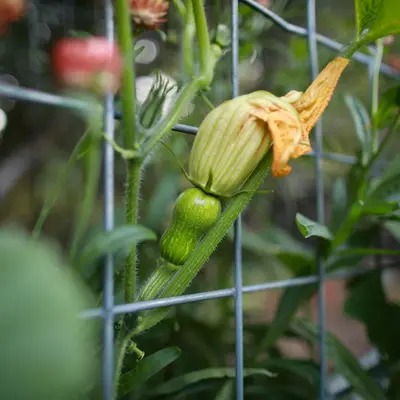
A unique South African heirloom that produces small, round squashes perfect for individual servings and container growing. These charming little squashes start cream-colored and develop beautiful golden-yellow skin at maturity, with sweet, tender flesh that's delicious when simply steamed or roasted whole. Gem squash is prized for its compact size, attractive appearance, and excellent storage capabilities.
Harvest
70-85d
Days to harvest
Sun
Full sun
Zones
3–11
USDA hardiness
Height
1-3 feet
Planting Timeline
Showing dates for Gem Squash in USDA Zone 7
All Zone 7 squash →Zone Map
Click a state to update dates
Gem Squash · Zones 3–11
Growing Details
Succession Planting
Gem squash sets a large number of fruits per plant over a sustained harvest window of several weeks, so you don't need to stagger plantings the way you would with lettuce or radishes. One or two direct sowings — the first in late April once soil temps reach 60°F, and a second in late May — will cover most of a season without burying you at harvest time.
If you want a tighter gap-free supply, spacing those two sowings 3–4 weeks apart works well. Stop sowing by early June in zone 7; a late June planting won't have enough frost-free days to clear the 70–85 day harvest window before first fall frost. NC State Extension also recommends timing early squash plantings so the crop matures before pickleworm pressure builds late in the season — one more reason not to push the last sowing too far into summer.
Complete Growing Guide
Plant Gem Squash seeds directly in warm soil once temperatures exceed 65°F, as this compact cultivar germinates quickly and matures in just 70-85 days, making it ideal for succession planting in shorter growing seasons. Unlike sprawling squash varieties, Gem's dwarf 1-3 foot vines thrive in containers and small spaces, requiring well-draining, fertile soil and consistent moisture during fruit development. This South African heirloom exhibits excellent disease resistance to powdery mildew when given adequate air circulation, though spider mites can trouble plants in hot, dry conditions—mitigate by occasional overhead watering. The primary challenge is premature bolting if plants experience temperature stress or inconsistent watering, which reduces yields. Space plants 18-24 inches apart and mulch heavily to regulate soil temperature and moisture, ensuring the sweetest flavor in these delicate fruits.
Light: Full sun (6 or more hours of direct sunlight a day). Soil: High Organic Matter, Loam (Silt). Soil pH: Neutral (6.0-8.0). Drainage: Good Drainage, Moist. Height: 1 ft. 0 in. - 3 ft. 0 in.. Spread: 2 ft. 0 in. - 25 ft. 0 in.. Spacing: 12 inches-3 feet. Growth rate: Rapid. Maintenance: High. Propagation: Seed. Regions: Coastal, Mountains, Piedmont.
Harvesting
Gem squash reaches peak harvest maturity when the skin transitions from cream to deep golden-yellow, typically weighing 8-12 ounces with a firm exterior that resists thumbnail puncture. Harvest when the squash feels heavy for its size and the stem begins to brown and harden. Unlike sprawling winter squash varieties, gem squash produces continuously throughout the season, so pick mature fruits every 3-5 days to encourage ongoing flowering and fruiting rather than waiting for a single large harvest. A crucial timing tip: harvest in the early morning when squashes are fully hydrated, as this ensures maximum flesh tenderness and flavor; fruits picked during heat stress may develop a mealy texture unsuitable for roasting whole.
A type of berry called a pepo that has a hard rind. Fruits may be long or round, large or small, smooth or warty– some have edible flesh and some are too hard or insipid to eat, though the seeds of all are edible. Has a harder, thicker stem compared to other species.
Color: Black, Cream/Tan, Gold/Yellow, Green, Orange, Pink, Red/Burgundy, Variegated, White. Type: Berry. Length: > 3 inches. Width: > 3 inches.
Garden value: Edible, Showy
Harvest time: Fall
Storage & Preservation
Fresh gem squash stores exceptionally well at room temperature for 2-3 months when properly cured. After harvest, place squash in a warm (80-85°F), well-ventilated area for 7-10 days to harden the skin, then move to a cool (50-55°F), dry location for long-term storage.
For immediate use, refrigerate unwashed squash for up to 3 weeks in the crisper drawer. Once cut, wrap tightly and use within 5 days. Gem squash freezes beautifully – simply halve, scoop out seeds, and freeze raw in freezer bags for up to 8 months. The compact size makes them perfect for blanching and freezing whole for individual portions.
Pickle young, tender gem squash using standard cucumber pickle recipes, or roast mature specimens and puree the flesh for soups and baked goods. The sweet flesh also dehydrates well when sliced thin and dried at 135°F.
History & Origin
Gem Squash emerged as a South African heirloom variety within the diverse Cucurbita pepo species, though detailed documentation of its specific breeder and introduction date remains limited in readily available horticultural records. The variety represents part of a broader heritage tradition of compact, ornamental squashes developed for small-scale and domestic cultivation, particularly valued in southern African gardening communities. Like many heirloom vegetables, Gem Squash's origins are preserved primarily through farmer seed-saving practices and oral history rather than formal breeding documentation. Its characteristics—diminutive size, golden coloration, and storage longevity—suggest selective breeding for practical household use, where individual servings and extended pantry viability were essential considerations for home gardeners.
Origin: North America
Advantages
- +Perfect individual serving size eliminates wasteful large squash prep
- +Beautiful cream-to-golden color transformation makes attractive kitchen display
- +Grows well in containers for space-limited gardeners and patios
- +Sweet, creamy flesh requires minimal seasoning when roasted whole
- +Excellent storage capabilities keep gem squash fresh for months
Considerations
- -Susceptible to squash bugs and cucumber beetles requiring vigilant monitoring
- -Powdery mildew prone in humid conditions without preventative fungicide sprays
- -Relatively low yield per plant compared to standard winter squash varieties
- -Requires consistent moisture and well-draining soil to prevent root rot
Companion Plants
Nasturtiums and marigolds pull their weight here for different reasons. Nasturtiums act as a trap crop for aphids — the aphids pile onto them instead of your squash, and once a nasturtium plant is thoroughly colonized you just pull it and dispose of it. French marigolds (Tagetes patula specifically) produce root exudates that suppress certain soil nematodes, and their scent is thought to confuse cucumber beetles, which are a genuine threat to cucurbits through both direct feeding and bacterial wilt transmission. Neither one is a cure-all, but both do something you can actually observe.
The three-sisters planting — corn, beans, and squash — works because the three crops occupy different niches without much overlap. Corn grows vertically and doesn't shade out the low, spreading gem squash canopy. Beans fix atmospheric nitrogen, feeding the heavy-feeding squash without a bag of fertilizer. The broad squash leaves shade the soil between plants, slowing weeds and cutting moisture loss. Radishes tucked at the bed's edge can pull flea beetles and cucumber beetles toward themselves and away from the main vines.
Potatoes and fennel are both worth keeping at a distance. Potatoes share overlapping pest pressure with squash — cucumber beetles will work both crops — so putting them side by side concentrates your problem in one spot. Fennel is broadly allelopathic and suppresses germination and root development in most neighboring vegetables; it's genuinely difficult to grow near anything else in the kitchen garden and gem squash is no exception.
Plant Together
Nasturtiums
Acts as trap crop for squash bugs and cucumber beetles, repels aphids
Marigolds
Repels cucumber beetles, squash bugs, and nematodes with strong scent
Radishes
Deters squash vine borers and cucumber beetles, breaks up soil
Corn
Provides natural trellis support and creates beneficial microclimate
Beans
Fixes nitrogen in soil, part of traditional Three Sisters planting
Catnip
Strongly repels squash bugs, cucumber beetles, and aphids
Tansy
Repels cucumber beetles, squash bugs, and ants with potent oils
Dill
Attracts beneficial predatory insects that control squash pests
Keep Apart
Potatoes
Compete for space and nutrients, both are heavy feeders with similar root zones
Aromatic herbs
Strong herbs like sage and rosemary can inhibit squash growth and flavor
Fennel
Allelopathic properties inhibit growth of most vegetables including squash
Nutrition Facts
Per 100g serving. % Daily Value based on 2,000 calorie diet. Source: USDA FoodData Central (FDC #168040)
Pests & Disease Resistance
Resistance
Good resistance to common squash diseases
Common Pests
Squash bugs, cucumber beetles, aphids
Diseases
Powdery mildew, bacterial wilt
Troubleshooting Gem Squash
What you'll see, why it happens, and what to do about it.
Wilting during the day even when soil is moist, with no recovery overnight — plant collapses by mid-season
Likely Causes
- Bacterial wilt (Erwinia tracheiphila), transmitted by cucumber beetles feeding on the leaves
- Squash vine borer (Melittia cucurbitae) tunneling inside the main stem
What to Do
- 1.Do the stem test: cut a wilted stem near the base and touch the two cut ends together — if you pull them apart and see fine bacterial threads, it's bacterial wilt and the plant won't recover; pull and trash it
- 2.Check the base of the stem for frass (sawdust-like excrement) and entry holes; if you find a borer, slit the stem lengthwise, remove the larva, and mound moist soil over the wound — it sometimes roots
- 3.Next season, direct sow as early as soil temps allow (at least 60°F) so vines are well-established before vine borers begin laying eggs in July, per NC State Extension IPM guidance
White chalky coating on upper leaf surfaces, usually appearing mid-summer once temperatures stay above 80°F
Likely Causes
- Powdery mildew (Podosphaera xanthii or Erysiphe cichoracearum) — both are common on cucurbits and spread by airborne spores, not water splash
- Dense planting that restricts airflow between vines
What to Do
- 1.Remove the worst-affected leaves and put them in the trash, not the compost pile
- 2.Spray remaining foliage with a diluted baking soda solution (1 tablespoon per gallon of water) or a potassium bicarbonate product; coat both leaf surfaces and repeat every 7–10 days
- 3.Space plants 36–48 inches apart at planting time so air can move through the canopy before mildew gets a foothold
Leaves stippled yellow or bronze, with small orange-brown insects clustered on stems and leaf undersides, plus shiny bronze egg masses lined up along leaf midribs
Likely Causes
- Squash bugs (Anasa tristis) — adults and nymphs pierce plant tissue and inject a toxin that causes stippling and eventual vine collapse
- Egg clusters are routinely overlooked until the population is already out of hand
What to Do
- 1.Scrape egg masses off leaves with a butter knife and drop them into soapy water — catching them before hatch is far easier than managing a full nymph population
- 2.Hand-pick adults and nymphs in the early morning when they're sluggish; drop them into a jar of soapy water
- 3.After harvest, pull all plant material and turn the bed — squash bug eggs overwinter in plant debris, so thorough end-of-season cleanup directly cuts next year's pressure, as NC State Extension notes for cucurbit pest management
Frequently Asked Questions
How long does gem squash take to grow?▼
Can you grow gem squash in containers?▼
What does gem squash taste like?▼
When should I plant gem squash?▼
Is gem squash good for beginners?▼
How do you know when gem squash is ripe?▼
Zone-by-Zone Planting Calendar
| Zone | Indoor Start | Transplant | Direct Sow | Harvest |
|---|---|---|---|---|
| Zone 1 | — | — | July – August | October – August |
| Zone 2 | — | — | June – August | October – September |
| Zone 11 | — | — | January – March | May – June |
| Zone 12 | — | — | January – March | May – June |
| Zone 13 | — | — | January – March | May – June |
| Zone 3 | — | — | June – July | September – October |
| Zone 4 | — | — | June – July | September – October |
| Zone 5 | — | — | May – June | September – October |
| Zone 6 | — | — | May – June | August – October |
| Zone 7 | — | — | April – June | August – September |
| Zone 8 | — | — | April – May | July – September |
| Zone 9 | — | — | March – April | June – August |
| Zone 10 | — | — | February – April | June – July |
Growing Guides from Wind River Greens
Sources & References
External authority sources used in compiling this guide.
See the Methodology page for how this data is sourced, what's AI-assisted, and known limitations.