Hot Pepper 'Aji Amarillo'
Capsicum baccatum 'Aji Amarillo'
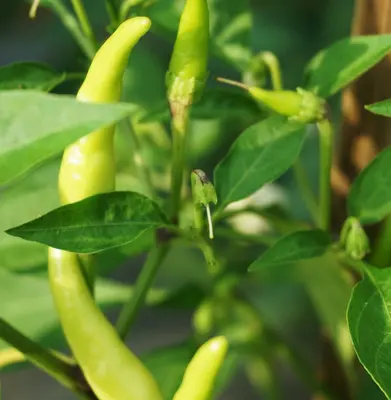
The cornerstone of Peruvian cuisine, this brilliant orange pepper delivers moderate heat with an incredibly complex, fruity flavor that's unlike any other variety. Aji Amarillo peppers are essential for authentic dishes like ají de gallina and papa a la huancaína, offering home gardeners a chance to grow this culinary treasure that's nearly impossible to find fresh in stores. Their unique C. baccatum species gives them a distinctive taste profile that combines tropical fruit notes with warming heat.
Harvest
90-100d
Days to harvest
Sun
Full sun
Zones
3–11
USDA hardiness
Height
1 ft. 0 in. - 3 ft. 8 in.
Planting Timeline
Showing dates for Hot Pepper 'Aji Amarillo' in USDA Zone 7
All Zone 7 pepper →Zone Map
Click a state to update dates
Hot Pepper 'Aji Amarillo' · Zones 3–11
Growing Details
Complete Growing Guide
Light: Full sun (6 or more hours of direct sunlight a day). Soil: Clay, High Organic Matter, Loam (Silt), Sand. Soil pH: Acid (<6.0), Alkaline (>8.0), Neutral (6.0-8.0). Drainage: Good Drainage. Spacing: 12 inches-3 feet. Growth rate: Rapid. Maintenance: Low. Propagation: Seed.
Harvesting
A non-pulpy berry, often with large pockets of air inside containing many seeds. Fruits range in color, shape, and heat level depending on species and cultivar. The most common color is bright red due to the presence of carotenoid compounds. The seeds are round and flat, yellowish in color.
Color: Black, Cream/Tan, Gold/Yellow, Green, Orange, Pink, Purple/Lavender, Red/Burgundy, White. Type: Berry. Length: 1-3 inches. Width: 1-3 inches.
Garden value: Edible, Good Dried, Showy
Harvest time: Fall, Summer
Edibility: Fruits used as a vegetable and spice. Different species and cultivars have different textures, heat levels, and cullinary uses.
Storage & Preservation
Fresh Aji Amarillo peppers keep best in a cool, humid environment between 45-50°F with relative humidity around 85-90%, stored in perforated plastic bags or ventilated containers to prevent moisture buildup and rot. Under these conditions, expect a shelf life of two to three weeks before quality declines. For longer preservation, freezing works excellently—simply wash, dry, and freeze whole or chopped peppers in freezer bags for up to eight months. These peppers excel at drying, developing concentrated sweetness and fruity notes when air-dried or dehydrated at low temperatures; store dried peppers in airtight containers away from light. For traditional Peruvian preparations, fermentation or making ají paste preserves the distinctive tropical flavor while building complexity; fermented pastes last months refrigerated. Canning is possible using proper acid and pressure-canning methods for safety. A unique advantage of this variety: the fruity character intensifies noticeably when dried, making it particularly worthwhile to preserve a portion this way rather than relying solely on freezing.
History & Origin
Origin: Tropical Americas, especially South America
Advantages
- +Attracts: Songbirds
- +Edible: Fruits used as a vegetable and spice. Different species and cultivars have different textures, heat levels, and cullinary uses.
- +Fast-growing
- +Low maintenance
Companion Plants
Marigolds — French marigolds (Tagetes patula) specifically — release thiophene compounds from their roots that suppress soil nematodes, and their scent is thought to confuse the aphids and whiteflies that routinely find peppers. Basil wants the same conditions as Aji Amarillo: full sun, warm nights, consistent moisture. Whether it actually deters insects is debatable, but it won't compete for root space, and it fills the bed without friction. Nasturtiums pull double duty as a trap crop, drawing aphids onto themselves and away from your peppers — plant a few at the bed's edge and check them weekly. Oregano, parsley, and chives are all low-canopy plants that tuck in without shading the peppers or fighting for water at depth.
Fennel is allelopathic to most vegetables and has no place in a mixed bed — keep it in its own container or a separate corner entirely. Black walnut produces juglone, a root toxin that knocks back nightshades; any Aji Amarillo planted within the drip line of a mature walnut will struggle. Brassicas are worth mentioning because they share aphid pressure with peppers — putting them in the same bed just concentrates the target. One practical note from NC State Extension: insect cross-pollination between hot and sweet peppers can load capsaicin into sweet pepper fruit within the same growing season, so if you're also growing sweet bells and care about flavor, put real distance between them.
Plant Together
Basil
Repels aphids, spider mites, and thrips while potentially enhancing pepper flavor
Marigold
Deters nematodes, aphids, and whiteflies with natural pest-repelling compounds
Tomato
Similar growing requirements and can share support structures, mutual pest confusion
Oregano
Repels cucumber beetles and provides ground cover while deterring various pests
Nasturtium
Acts as trap crop for aphids and cucumber beetles, draws pests away from peppers
Carrots
Loosens soil around pepper roots and doesn't compete for nutrients or space
Parsley
Attracts beneficial insects like hoverflies and parasitic wasps that control pepper pests
Chives
Repels aphids and may improve pepper growth and flavor through root interactions
Keep Apart
Black Walnut
Produces juglone, a toxic compound that stunts pepper growth and can kill plants
Fennel
Releases allelopathic compounds that inhibit pepper germination and growth
Brassicas
Heavy feeders that compete for nutrients and may stunt pepper development
Nutrition Facts
Per 100g serving. % Daily Value based on 2,000 calorie diet. Source: USDA FoodData Central (FDC #169394)
Pests & Disease Resistance
Resistance
Good resistance to common pepper diseases
Common Pests
Aphids, spider mites, whiteflies, pepper weevils
Diseases
Bacterial spot, anthracnose, powdery mildew
Troubleshooting Hot Pepper 'Aji Amarillo'
What you'll see, why it happens, and what to do about it.
Sunken, dark, leathery patch on the bottom or side of the fruit — appearing around or after fruit set
Likely Causes
- Blossom end rot — localized calcium deficiency in the developing fruit
- Inconsistent watering or drought stress during fruit development
- High ammonium nitrogen fertilizer interfering with calcium uptake
What to Do
- 1.Water consistently — 1 to 2 inches per week — and mulch heavily to hold soil moisture between rains
- 2.Get a soil test before adding calcium amendments; if levels are genuinely low, work in gypsum at the rate on your test results
- 3.Back off high-nitrogen synthetic fertilizers, especially ammonium-based ones, once fruit is setting
Pale, bleached, or papery white patches on the fruit skin, usually on the side facing the sun
Likely Causes
- Sun scald — direct UV exposure on fruit that lost its leaf cover
- Defoliation from bacterial spot stripping the canopy and leaving fruit exposed
What to Do
- 1.Don't over-prune foliage; Aji Amarillo sets fruit inside the canopy by design — leave it there
- 2.If bacterial spot (Xanthomonas euvesicatoria) stripped leaves early, apply copper-based bactericide at first symptom next season and space plants the full 24 to 30 inches apart to restore airflow
Small, water-soaked spots on leaves and fruit that turn brown and scabby, sometimes with a yellow halo
Likely Causes
- Bacterial spot (Xanthomonas euvesicatoria) — spreads fast in warm, wet weather
- Overhead irrigation splashing soil-borne inoculum onto leaves
What to Do
- 1.Switch to drip irrigation or soaker hoses to keep foliage dry
- 2.Apply copper hydroxide spray at first sign of symptoms; repeat every 7 to 10 days during wet stretches
- 3.Rotate peppers and all other nightshades — tomatoes, eggplant, potatoes — out of the affected bed for at least 2 seasons; NC State Extension's organic management guidance specifically calls out the nightshade family as a rotation unit
Sticky, distorted new growth; small clusters of soft-bodied insects on stem tips and leaf undersides
Likely Causes
- Aphids (commonly Myzus persicae on peppers) — populations can double in under a week under warm conditions
- Whiteflies (Bemisia tabaci) — often co-occur and leave the same sticky honeydew residue
What to Do
- 1.Knock aphids off with a firm stream of water early in the morning — repeat for 3 to 4 consecutive days
- 2.Parasitic wasps and ladybird beetles hit aphid colonies hard; avoid broad-spectrum sprays that wipe them out
- 3.If the population holds, apply insecticidal soap directly to stem tips and leaf undersides — coverage is everything, so coat both surfaces thoroughly
Frequently Asked Questions
How long does Aji Amarillo take to grow from seed?▼
What does Aji Amarillo taste like compared to other peppers?▼
Can you grow Aji Amarillo peppers in containers?▼
Is Aji Amarillo good for beginner gardeners?▼
When should I plant Aji Amarillo seeds?▼
How do you preserve Aji Amarillo peppers?▼
Zone-by-Zone Planting Calendar
| Zone | Indoor Start | Transplant | Direct Sow | Harvest |
|---|---|---|---|---|
| Zone 1 | May – May | July – August | — | October – August |
| Zone 2 | April – May | June – July | — | October – September |
| Zone 11 | January – January | January – February | — | May – July |
| Zone 12 | January – January | January – February | — | May – July |
| Zone 13 | January – January | January – February | — | May – July |
| Zone 3 | April – April | June – July | — | September – October |
| Zone 4 | March – April | June – June | — | September – October |
| Zone 5 | March – March | May – June | — | September – October |
| Zone 6 | March – March | May – June | — | August – October |
| Zone 7 | February – March | April – May | — | August – October |
| Zone 8 | February – February | April – May | — | July – September |
| Zone 9 | January – January | March – April | — | June – August |
| Zone 10 | January – January | February – March | — | June – August |
Growing Guides from Wind River Greens
Sources & References
External authority sources used in compiling this guide.
See the Methodology page for how this data is sourced, what's AI-assisted, and known limitations.
More Peppers
Carolina Reaper
Sweet Pepper 'Carmen'
Ghost Pepper 'Bhut Jolokia'
Scotch Bonnet 'Scotch Bonnet Orange'
Chocolate Habanero
Sweet Italian Pepper 'Marconi Rosso'
Purple Beauty Bell Pepper
Mad Hatter