Romanesco
Cucurbita pepo
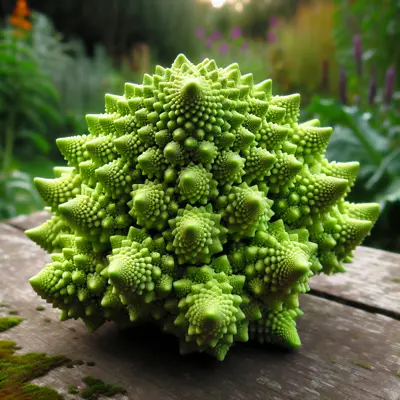
Romanesco is a striking Italian heirloom brassica featuring distinctive spiraling, lime-green heads composed of fractal-like florets that resemble miniature trees. Maturing in approximately 95 days, it bridges broccoli and cauliflower with a sophisticated nutty-sweet flavor profile and tender-crisp texture. Its mild brassica notes and delicate taste distinguish it from heartier cruciferous varieties, making it exceptional for both raw preparations and light cooking. Visually compelling and culinarily refined, Romanesco commands attention on any plate while remaining approachable for gardeners willing to manage its moderate to challenging cultivation requirements.
Harvest
95d
Days to harvest
Sun
Full sun
Zones
3–11
USDA hardiness
Height
1-3 feet
Planting Timeline
Showing dates for Romanesco in USDA Zone 7
All Zone 7 brassica →Zone Map
Click a state to update dates
Romanesco · Zones 3–11
Growing Details
Succession Planting
Romanesco is a one-head-per-plant crop — once you cut the central head, that plant is largely done — but staggering your transplant dates spreads the harvest out. In zone 7, start a first round indoors in February and get it in the ground in April; start a second round in March for a May transplant. That 4-to-6 week gap pushes heads into different windows across the June-to-November season instead of everything maturing in the same two weeks.
Don't push transplants past late May in most zones. Romanesco needs about 95 days to head up, and heads that form during sustained heat above 80°F tend to come in loose and discolored rather than the tight spiral you're after. For a fall crop, count 95 days back from your first expected frost date and work backward to your transplant window.
Complete Growing Guide
This ornamental-edible hybrid demands consistent soil moisture and cool-season timing to prevent premature bolting, so plant in early spring for summer harvest or late summer for fall production, avoiding peak heat periods. Space plants exactly 24 inches apart to allow the distinctive daisy-patterned fruits adequate air circulation, which reduces fungal issues like powdery mildew that this cultivar shows heightened susceptibility to. Unlike standard Brassicas, Romanesco's compact 1–3 foot growth won't shade neighboring plants aggressively, but the tender developing florets attract cabbage moths and flea beetles more readily, warranting row covers during establishment. Water at soil level to minimize leaf wetness and disease pressure. Harvest at 5–8 ounces when heads remain firm and florets haven't begun separating, as this variety stretches and toughens quickly once maturity passes—checking plants every 2–3 days during peak production is essential for capturing optimal texture and that signature nutty-sweet flavor.
Light: Full sun (6 or more hours of direct sunlight a day). Soil: High Organic Matter, Loam (Silt). Soil pH: Neutral (6.0-8.0). Drainage: Good Drainage, Moist. Height: 1 ft. 0 in. - 3 ft. 0 in.. Spread: 2 ft. 0 in. - 25 ft. 0 in.. Spacing: 12 inches-3 feet. Growth rate: Rapid. Maintenance: High. Propagation: Seed. Regions: Coastal, Mountains, Piedmont.
Harvesting
Romanesco reaches peak harvest when the fruit displays its full spectrum of green, orange, yellow, and white coloring with the characteristic daisy pattern fully developed on the stem end. At 5–8 ounces, the fruit should feel firm yet slightly yielding to gentle pressure, indicating tender-crisp maturity rather than tough overripeness. Harvest continuously by picking fruits at their prime rather than waiting for all to mature simultaneously, which extends the productive window across multiple pickings. For best flavor and texture, cut fruits in the early morning after dew dries but before afternoon heat intensifies, as this timing preserves the nutty-sweet character and delicate tenderness that defines this cultivar.
A type of berry called a pepo that has a hard rind. Fruits may be long or round, large or small, smooth or warty– some have edible flesh and some are too hard or insipid to eat, though the seeds of all are edible. Has a harder, thicker stem compared to other species.
Color: Black, Cream/Tan, Gold/Yellow, Green, Orange, Pink, Red/Burgundy, Variegated, White. Type: Berry. Length: > 3 inches. Width: > 3 inches.
Garden value: Edible, Showy
Harvest time: Fall
Storage & Preservation
Store fresh romanesco in the refrigerator crisper drawer wrapped loosely in perforated plastic bags, where it maintains quality for 5-7 days maximum—shorter than regular cauliflower. Don't wash before storing; excess moisture accelerates deterioration of the delicate spiral structure.
For longer preservation, blanch whole florets in boiling water for 3 minutes, then plunge into ice water before freezing. This preserves both the striking appearance and nutty flavor for up to 8 months. Frozen romanesco works excellently in soups, gratins, and roasted vegetable medleys.
Pickling small florets in seasoned vinegar showcases the dramatic spiral patterns beautifully while extending shelf life to several months. The firm texture holds up well to light fermentation, creating an attractive and flavorful addition to antipasto platters. Avoid dehydrating—the unique texture that makes romanesco special is lost in the drying process.
History & Origin
Romanesco represents a modern crossbreeding effort between two distinct brassica and cucurbit lines, developed by Larry Eckler of Niles, Michigan. While detailed documentation of the specific parent varieties and breeding methodology remains limited in public horticultural records, the variety's visual distinctiveness—particularly the striking daisy pattern and multicolored palette—suggests intentional selection for ornamental appeal alongside culinary utility. The moderate-to-challenging difficulty rating indicates Eckler worked with complex genetic traits, possibly drawing from both conventional brassica breeding practices and cucurbit hybridization techniques. The variety's emergence reflects late-twentieth-century trends toward dual-purpose vegetables combining visual interest with flavor complexity, though comprehensive breeding records from Eckler's program are not widely archived in standard seed catalogs or university databases.
Origin: North America
Advantages
- +Striking multicolored appearance with daisy pattern adds visual appeal to gardens
- +Nutty, sweet flavor with tender-crisp texture distinguishes it from standard brassicas
- +Moderate 95-day maturity allows reasonable harvest window in most climates
- +Compact 5-8 oz size suits small gardens and individual servings
Considerations
- -Moderate to challenging difficulty makes it demanding for beginner gardeners
- -Vulnerable to multiple serious diseases including clubroot and bacterial soft rot
- -Requires precise 24-inch spacing and soil management for optimal performance
- -Susceptible to four major pests requiring vigilant monitoring and pest management
Companion Plants
French marigolds (Tagetes patula) are worth planting densely around Romanesco — NC State Extension specifically recommends a solid block of them to knock back soil nematodes, which can stress brassicas just as badly as they hit other crops. Dill draws in parasitic wasps that target cabbage worms and diamondback moths, two pests that will find your Romanesco heads before you do. Nasturtiums work as a trap crop for aphids: plant a few at the bed's edge and the aphids tend to pile onto those first, leaving your heads alone long enough to size up properly.
Fennel is allelopathic to most vegetables and has no business near a brassica bed — keep it 20 or more feet away. Tomatoes compete for the same soil calcium and attract overlapping insect pressure at the same 18-24 inch spacing Romanesco needs, so the math doesn't work. Strawberries share susceptibility to several soilborne diseases common to both families and add nothing useful to the planting.
Plant Together
Dill
Attracts beneficial insects like parasitic wasps that control cabbage worms
Onions
Repel cabbage root flies and aphids with their strong scent
Marigolds
Deter aphids, whiteflies, and other pests while attracting beneficial insects
Nasturtiums
Act as trap crop for aphids and cabbage worms, drawing them away from romanesco
Celery
Repels cabbage white butterflies and improves growth of brassicas
Lettuce
Provides ground cover and efficient space usage without competing for nutrients
Spinach
Compatible root systems and harvest timing, helps maximize garden space
Rosemary
Repels cabbage moths and other flying pests with aromatic oils
Keep Apart
Tomatoes
Compete for similar nutrients and may stunt brassica growth through allelopathy
Strawberries
Both are heavy feeders that compete for nutrients, leading to poor growth
Fennel
Inhibits growth of brassicas through allelopathic compounds
Nutrition Facts
Per 100g serving. % Daily Value based on 2,000 calorie diet. Source: USDA FoodData Central (FDC #747447)
Pests & Disease Resistance
Resistance
Moderate disease resistance, sensitive to temperature fluctuations
Common Pests
Cabbage worms, aphids, flea beetles, diamondback moths
Diseases
Clubroot, downy mildew, black rot, bacterial soft rot
Troubleshooting Romanesco
What you'll see, why it happens, and what to do about it.
Yellow, angular patches on upper leaf surface with grayish-purple fuzzy growth on the underside, appearing mid-to-late summer
Likely Causes
- Downy mildew (Pseudoperonospora cubensis) — spores blow in on wind currents, often arriving from warmer climates in late May or June per NC State Extension
- Infected transplants introducing spores earlier than expected
What to Do
- 1.Remove and bag affected leaves immediately — don't compost them
- 2.Thin plants to the wider end of your 18-24 inch spacing so air moves through the canopy
- 3.Switch to drip or soaker hose; overhead irrigation keeps foliage wet long enough for spores to germinate
Plants wilting and collapsing despite adequate water, with slimy, foul-smelling rot at the stem base
Likely Causes
- Bacterial soft rot — typically enters through wounds, insect feeding sites, or standing water pooling around the crown
- Black rot (Xanthomonas campestris) — enters through leaf margins, moves into vascular tissue, and eventually kills the stem
What to Do
- 1.Pull and trash affected plants — neither soft rot nor black rot should go in the compost pile
- 2.Let the top inch of soil dry between waterings; Romanesco wants 1 to 1.5 inches per week, but a perpetually wet crown is an open invitation
- 3.Rotate this bed out of brassicas for at least 2 seasons — both pathogens carry over in soil and crop debris
Frequently Asked Questions
How long does romanesco take to grow from seed?▼
Is romanesco harder to grow than regular cauliflower?▼
Can you grow romanesco in containers?▼
What's the difference between romanesco and cauliflower?▼
When should I plant romanesco for best results?▼
Why didn't my romanesco form a head?▼
Zone-by-Zone Planting Calendar
| Zone | Indoor Start | Transplant | Direct Sow | Harvest |
|---|---|---|---|---|
| Zone 1 | April – May | June – July | June – July | September – September |
| Zone 2 | April – May | June – July | May – July | August – September |
| Zone 11 | January – January | January – February | January – February | March – December |
| Zone 12 | January – January | January – February | January – February | March – December |
| Zone 13 | January – January | January – February | January – February | March – December |
| Zone 3 | March – April | May – June | May – June | August – October |
| Zone 4 | March – April | May – June | April – June | July – October |
| Zone 5 | February – March | April – May | April – May | July – November |
| Zone 6 | February – March | April – May | April – May | July – November |
| Zone 7 | February – March | April – May | March – May | June – November |
| Zone 8 | January – February | March – April | March – April | June – December |
| Zone 9 | January – January | February – March | February – March | May – December |
| Zone 10 | January – January | February – March | January – March | April – December |
Growing Guides from Wind River Greens
Sources & References
External authority sources used in compiling this guide.
See the Methodology page for how this data is sourced, what's AI-assisted, and known limitations.