Genovese Basil
Ocimum basilicum
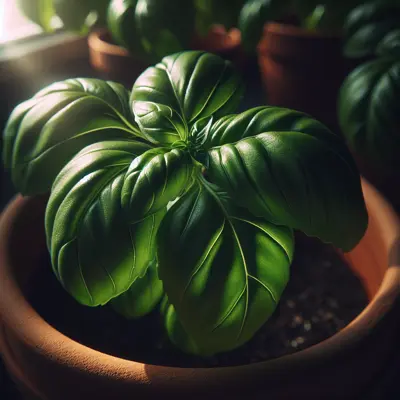
Authentic flavor and appearance. Tall and relatively slow to bolt with large dark green leaves about 3" long. This common strain of Genovese basil can present some variability in leaf shape and plant size. While quite suitable for field and garden, we recommend using a more modern and more uniform variety for greenhouse, container, or hydroponic production, such as Genovese Compact Improved, Aroma 2, Nufar, Dolly, or the Prospera® series. Ht. 24-30".Edible Flowers: Use the flowers in any recipe that calls for basil, or to garnish drinks, salads, soups, pasta, and desserts. Flavor is of intense basil.Also available in organic raw and pelleted seed.
Harvest
68d
Days to harvest
Sun
Full sun to partial shade
Zones
10–10
USDA hardiness
Height
0-3 feet
Planting Timeline
Showing dates for Genovese Basil in USDA Zone 10
All Zone 10 herb →Zone Map
Click a state to update dates
Genovese Basil · Zones 10–10
Growing Details
Succession Planting
Genovese bolts fast once daytime temps push past 85°F — the leaves get bitter, the plant goes to seed, and you lose the harvest window in a hurry. In zone 10, transplant every 3–4 weeks from February through April to keep a rotation of young, vegetative plants coming through the spring. A May or early June transplanting is usually the last productive one before heat-driven bolting takes over. Pinch flower spikes as soon as they appear to stretch the harvest by a couple of weeks, but once a plant is running hard to seed, pull it — flavor drops off fast.
A fall succession is worth attempting in zone 10. Start seeds indoors in late August and transplant out in late September or October. Nights below 50°F will slow growth noticeably and cause blackening on the leaves, so watch the forecast and be ready to harvest or cover before a cold snap hits.
Complete Growing Guide
Light: Full sun (6 or more hours of direct sunlight a day), Partial Shade (Direct sunlight only part of the day, 2-6 hours). Drainage: Good Drainage, Moist. Height: 0 ft. 4 in. - 3 ft. 0 in.. Spread: 0 ft. 4 in. - 1 ft. 2 in.. Spacing: 12 inches-3 feet. Growth rate: Rapid. Maintenance: Low. Propagation: Seed, Stem Cutting. Regions: Coastal, Mountains, Piedmont.
Harvesting
Edibility: Leaves and flowers in tea, as flavoring
Storage & Preservation
Fresh Genovese basil leaves stay vibrant for 7-10 days when stored properly. Don't refrigerate—instead, treat cut stems like fresh flowers by placing them in a glass of water at room temperature, covering leaves loosely with a plastic bag. Change water every 2-3 days.
For preservation, freezing maintains the best flavor for pesto-making. Blanch leaves in boiling water for 2 seconds, shock in ice water, pat dry, then freeze in single layers before transferring to freezer bags. Alternatively, blend fresh leaves with olive oil into a paste and freeze in ice cube trays.
Dehydrating works well for seasoning blends—dry leaves at 95°F until crispy, then store in airtight containers. The classic preservation method is making pesto immediately after harvest when oils are most potent, then freezing portions for year-round use.
History & Origin
Origin: Tropical Africa and Asia
Advantages
- +Edible: Leaves and flowers in tea, as flavoring
- +Fast-growing
- +Low maintenance
Companion Plants
Tomatoes and basil at 12–18 inches apart is a pairing repeated so often it's practically a gardening commandment — but the mechanism isn't magic. Basil's volatile oils, linalool and eugenol specifically, are documented to disorient aphids and thrips, two pests that will work both crops at once. Peppers get the same benefit for the same reason. French marigolds are worth tucking at the bed edges because their roots produce alpha-terthienyl, a compound shown to suppress soil nematode populations across a full growing season — not an overnight fix, but meaningful if you plant them densely and let them run.
Rue is the problem neighbor. It produces alkaloids that can stunt basil through direct root exudate contact — straightforward allelopathy, not a subtle incompatibility. Sage and common thyme are trickier to explain, but the working theory is that their similar aromatic profiles compete for the same predatory insects and pollinators basil relies on, which undercuts the pest-confusion effect you'd get from basil planted in a cleaner context. A few feet of separation is all it takes.
Plant Together
Tomatoes
Basil repels tomato hornworms and aphids, may improve tomato flavor
Peppers
Basil deters aphids, spider mites, and thrips that commonly attack pepper plants
Oregano
Both herbs have similar growing requirements and repel common garden pests
Lettuce
Basil provides light shade and repels aphids that damage lettuce leaves
Marigolds
Both repel aphids and whiteflies, creating a strong pest deterrent combination
Parsley
Compatible growing requirements and attracts beneficial insects like parasitic wasps
Asparagus
Basil repels asparagus beetles and both plants have non-competing root systems
Carrots
Basil helps repel carrot flies while carrots don't compete for nutrients
Keep Apart
Rue
Allelopathic properties inhibit basil growth and can stunt development
Sage
Competes for nutrients and may inhibit basil growth through allelopathy
Common Thyme
Can be too aggressive and outcompete basil for space and nutrients
Nutrition Facts
Per 100g serving. % Daily Value based on 2,000 calorie diet. Source: USDA FoodData Central (FDC #172232)
Pests & Disease Resistance
Resistance
Susceptible to fusarium wilt and downy mildew in humid conditions
Common Pests
Aphids, spider mites, slugs, Japanese beetles
Diseases
Fusarium wilt, downy mildew, bacterial leaf spot, damping off
Troubleshooting Genovese Basil
What you'll see, why it happens, and what to do about it.
Seedlings collapse at the soil line within the first 10 days of germination
Likely Causes
- Damping off — typically Pythium or Rhizoctonia species thriving in wet, poorly drained media
- Overwatering combined with low airflow around the tray
What to Do
- 1.Ditch the soggy mix — sow into a sterile, well-draining seed-starting medium and water only when the surface is dry
- 2.Run a small fan near your trays for 30–60 minutes a day to improve airflow
- 3.Don't start over in the same tray without sterilizing it first with a 10% bleach solution
Pale gray or purple fuzz coating the underside of leaves, upper surface turning yellow and papery
Likely Causes
- Downy mildew (Peronospora belbahrii) — a basil-specific pathogen that spreads fast in humid conditions above 60°F
- Dense planting that traps moisture between leaves overnight
What to Do
- 1.Pull and bag infected plants immediately — don't compost them, the spores spread easily
- 2.Space transplants at least 12 inches apart and avoid overhead watering in the evening
- 3.If you replant in the same spot, choose a downy-mildew-tolerant variety like 'Eleonora' or 'Devotion' next time
Plant wilts suddenly during warm weather despite adequate soil moisture; lower stem shows brown discoloration inside when cut
Likely Causes
- Fusarium wilt (Fusarium oxysporum f. sp. basilici) — a soilborne fungus that clogs the vascular tissue
- Infected seed or transplants introduced the pathogen into a previously clean bed
What to Do
- 1.Remove the entire plant including roots and discard — do not compost
- 2.Avoid planting basil in that same spot for at least 3 years; Fusarium oxysporum persists in soil
- 3.Source seed from suppliers that test for Fusarium, or start with certified disease-free transplants
Irregular water-soaked spots on leaves that turn brown and papery, sometimes with a yellow halo
Likely Causes
- Bacterial leaf spot (Pseudomonas cichorii) — splashes up during rain or overhead irrigation
- Handling wet plants and transferring bacteria from one plant to another
What to Do
- 1.Water at the base, not overhead, and do it in the morning so foliage dries quickly
- 2.Strip and discard affected leaves; sterilize pruners between plants with rubbing alcohol
- 3.Rotate basil out of infected beds for at least one full season
Frequently Asked Questions
How long does Genovese basil take to grow from seed?▼
Can you grow Genovese basil in containers?▼
What's the difference between Genovese basil and sweet basil?▼
When should I plant Genovese basil outside?▼
Is Genovese basil good for beginners?▼
Why does my Genovese basil keep flowering?▼
Zone-by-Zone Planting Calendar
| Zone | Indoor Start | Transplant | Direct Sow | Harvest |
|---|---|---|---|---|
| Zone 10 | January – January | February – April | — | April – December |
Growing Guides from Wind River Greens
Sources & References
External authority sources used in compiling this guide.
See the Methodology page for how this data is sourced, what's AI-assisted, and known limitations.