Common Chives
Allium schoenoprasum
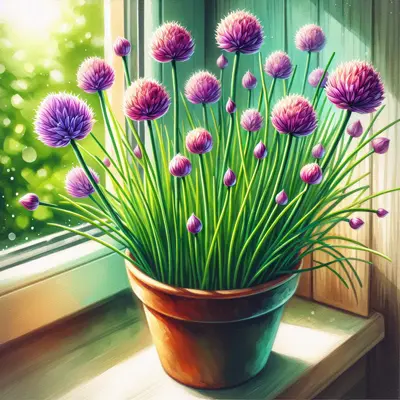
Common Chives (Allium schoenoprasum) are a classic perennial herb featuring slender, tubular green leaves that grow in dense clumps and reach 12-18 inches tall. Delicate purple-pink pompom flowers appear in spring, adding ornamental appeal. Ready to harvest at 75-85 days from seed, though established plants provide year-round cutting. This hardy heirloom offers mild, delicate onion flavor with subtle sharpness, making it ideal for finishing dishes, garnishing soups, and creaming into sauces. Unlike stronger alliums, chives complement rather than overpower. Extremely cold-hardy and low-maintenance.
Harvest
75-85d
Days to harvest
Sun
Full sun to partial shade
Zones
4–8
USDA hardiness
Height
12-18 inches
Planting Timeline
Showing dates for Common Chives in USDA Zone 7
All Zone 7 allium →Zone Map
Click a state to update dates
Common Chives · Zones 4–8
Growing Details
Complete Growing Guide
The Purly cultivar's upright growth habit makes it exceptionally suited for container gardening and tight spacing, requiring less frequent leaf tucking than spreading varieties like Staro. Plant in spring for summer harvesting, targeting the 75-85 day window for peak productivity. This variety prefers consistently moist but well-draining soil and full sun to part shade, though afternoon shade in hot climates prevents premature bolting—a common tendency in chives during intense heat. Purly shows excellent disease resistance when given adequate air circulation, but watch for spider mites in dry conditions. The straighter leaf structure means easier harvesting without untangling sprawling growth. For optimal productivity, pinch flower buds regularly unless you're specifically cultivating for edible blooms, which extends the harvest season while maintaining tender leaf quality.
Light: Full sun (6 or more hours of direct sunlight a day), Partial Shade (Direct sunlight only part of the day, 2-6 hours). Soil: Clay, Loam (Silt), Sand, Shallow Rocky. Drainage: Good Drainage, Moist, Occasionally Dry. Height: 1 ft. 0 in. - 1 ft. 6 in.. Spread: 1 ft. 0 in. - 1 ft. 5 in.. Spacing: Less than 12 inches, 12 inches-3 feet. Growth rate: Medium. Maintenance: Low. Propagation: Division, Seed. Regions: Coastal, Mountains, Piedmont.
Harvesting
Common Chives reach peak harvest readiness when the hollow green leaves stand fully upright and measure 6-8 inches tall with a vibrant, deep green color and firm texture that snaps cleanly when bent. For continuous harvests throughout the growing season, pinch or cut leaves from the outer edges of the plant rather than harvesting the entire clump at once, allowing the center to regenerate for repeated yields. Begin harvesting once plants are established at around 60 days, timing your cuts in early morning after dew dries to maximize flavor intensity and ensure the leaves remain crisp and tender for immediate use in culinary applications.
3-valved capsule opens in summer to disperse many seeds
Type: Capsule. Length: < 1 inch. Width: < 1 inch.
Harvest time: Summer
Storage & Preservation
Fresh chives store best in the refrigerator, lasting 7-10 days when wrapped loosely in damp paper towels inside a plastic bag. For optimal flavor retention, avoid washing until ready to use, as excess moisture accelerates deterioration.
Freezing preserves chives' flavor remarkably well—simply chop fresh leaves and freeze in ice cube trays with a little water, then transfer frozen cubes to freezer bags. This method maintains their bright flavor for up to 6 months. Alternatively, flash-freeze chopped chives on a baking sheet before storing in freezer containers.
For year-round seasoning, dry chives by hanging small bundles in a warm, well-ventilated area away from direct sunlight. Once crispy (5-7 days), crumble leaves into airtight containers. While dried chives lack the punch of fresh ones, they're excellent for soups and cooked dishes. The edible flowers can be frozen in ice cubes for elegant drink garnishes or dried for herbal teas.
History & Origin
Allium schoenoprasum, commonly known as chives, originated in temperate regions across the Northern Hemisphere, including Europe, Asia, and North America, where wild populations have been documented for centuries. The herb was cultivated by medieval European gardeners and has been integrated into culinary traditions across multiple continents. While specific breeding records for modern cultivars like "Purly" are limited in readily available documentation, the variety likely emerged through conventional selection within seed company breeding programs during the twentieth century, focusing on traits such as upright growth habit and leaf straightness. The exact breeder and introduction year remain unclear, but the cultivar represents ongoing refinement of this ancient species for contemporary horticultural and culinary applications.
Origin: Temperate Northern Hemisphere
Advantages
- +Easy to grow with minimal difficulty for beginner gardeners
- +Very disease resistant with only occasional rust in humid conditions
- +Edible flowers add mild, sweet onion flavor to many dishes
- +Ready to harvest in just 75-85 days from planting
- +Upright growth habit makes harvesting and maintenance convenient
Considerations
- -Susceptible to aphids and thrips pest infestations
- -Rust disease can develop in consistently humid growing conditions
- -Mild flavor may be too subtle for some culinary applications
Companion Plants
Chives earn their keep next to carrots, roses, and tomatoes mostly through smell. The sulfur compounds in the foliage confuse aphids and carrot rust fly (Psila rosae), and rose growers have tucked them at the base of bushes for generations to cut down on aphid pressure — anecdotal, but consistent enough that I do it too. With cabbage and lettuce, chives work as a low border that doesn't compete underground; chive roots stay in the top 6 inches, so they share a bed politely with brassicas and greens. Strawberries get a mild bonus against Botrytis from the alliums nearby.\n\nThe problem with beans, peas, and asparagus is straight allelopathy. Alliums leak compounds that suppress the Rhizobium bacteria legumes need to fix nitrogen, so your bush beans sulk and yellow within a few weeks. Around here in the southeast where the spring pea window closes by mid-May anyway, it's not worth the gamble — give chives their own corner 3-4 feet from the legume bed.
Plant Together
Tomatoes
Chives repel aphids and may improve tomato flavor and growth
Carrots
Chives deter carrot fly and other root pests while improving carrot flavor
Roses
Chives help prevent black spot and aphids on roses, classic companion pairing
Cabbage
Repels cabbage worms, aphids, and other brassica pests
Lettuce
Chives deter aphids and slugs while providing natural pest control
Strawberries
Helps repel slugs, ants, and aphids that commonly attack strawberry plants
Peppers
Deters aphids and may enhance pepper growth and flavor
Parsley
Compatible herbs that don't compete and may mutually enhance growth
Keep Apart
Beans
Chives can inhibit bean growth and nitrogen fixation
Peas
Alliums can stunt pea growth and interfere with their development
Asparagus
Chives may inhibit asparagus spear development and overall plant vigor
Nutrition Facts
Per 100g serving. % Daily Value based on 2,000 calorie diet. Source: USDA FoodData Central (FDC #169994)
Pests & Disease Resistance
Resistance
Excellent disease resistance
Common Pests
Aphids, thrips (rarely problematic)
Diseases
Very disease resistant, occasional rust in humid conditions
Troubleshooting Common Chives
What you'll see, why it happens, and what to do about it.
Clusters of small green or gray insects on the flower stalks and leaf tips in late spring
Likely Causes
- Aphids (usually Neotoxoptera formosana, the onion aphid) drawn to soft new growth
- Nearby aphid-heavy crops like roses or kale acting as a reservoir
What to Do
- 1.Blast them off with a hard spray of water in the morning — chive leaves are tough and bounce back
- 2.Cut the whole clump to 2 inches if infestation is heavy; fresh regrowth comes in clean within 10-14 days
- 3.Leave some flowers for hoverflies and lacewings, which will mop up the rest
Orange or rusty-brown pustules on the leaves during humid stretches in July and August
Likely Causes
- Leek rust (Puccinia allii), which thrives above 70°F with prolonged leaf wetness
- Crowded clumps with poor airflow — chives left undivided for 3+ years
What to Do
- 1.Shear the clump to the ground and bag the infected foliage (don't compost it)
- 2.Divide clumps every 3 years in early spring, replanting divisions 8 inches apart
- 3.Water at the base in the morning, never overhead in the evening
Frequently Asked Questions
How long do chives take to grow from seed?▼
Can you grow chives in containers?▼
Are chives good for beginner gardeners?▼
What do chive flowers taste like?▼
When should I divide my chive plants?▼
Do chives come back every year?▼
Zone-by-Zone Planting Calendar
| Zone | Indoor Start | Transplant | Direct Sow | Harvest |
|---|---|---|---|---|
| Zone 1 | — | — | June – July | August – September |
| Zone 2 | — | — | May – July | August – September |
| Zone 11 | — | — | January – February | March – December |
| Zone 12 | — | — | January – February | March – December |
| Zone 13 | — | — | January – February | March – December |
| Zone 3 | — | — | May – June | July – October |
| Zone 4 | — | — | April – June | July – October |
| Zone 5 | — | — | April – May | July – November |
| Zone 6 | — | — | April – May | June – November |
| Zone 7 | — | — | March – May | June – November |
| Zone 8 | — | — | March – April | May – December |
| Zone 9 | — | — | February – March | April – December |
| Zone 10 | — | — | January – March | April – December |
Growing Guides from Wind River Greens
Sources & References
External authority sources used in compiling this guide.
See the Methodology page for how this data is sourced, what's AI-assisted, and known limitations.