Colorado Star
Cynara cardunculus var. scolymus
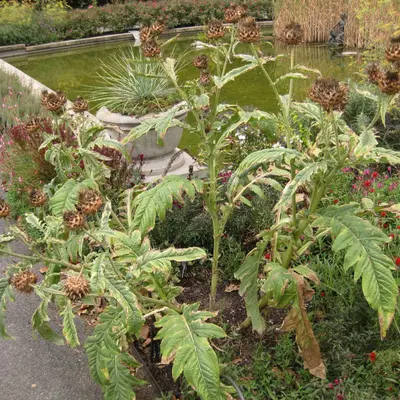
A very early artichoke specifically bred for annual production from seed. The 1-3' tall plants vary from upright to prostrate, but all produce high yields of purple to greenish-purple buds. Typically 1-3 primary buds are produced that are 2 1/2-3 1/2" in diameter followed by 5-7 secondary buds ranging from 2-2 1/2" in diameter. Developed by Keith Mayberry, who also bred Imperial Star. Plants are spiny. Perennial in Zone 7 and warmer; otherwise treat as an annual. NOTE: Amount of purpling may vary from plant to plant; some buds will be all purple, while others only show purple-tinged bracts.
Harvest
75d
Days to harvest
Sun
Full sun
Zones
7–10
USDA hardiness
Height
3-6 feet
Planting Timeline
Showing dates for Colorado Star in USDA Zone 7
All Zone 7 flower →Zone Map
Click a state to update dates
Colorado Star · Zones 7–10
Growing Details
Succession Planting
Colorado Star artichoke isn't a succession crop — each plant produces its main flush of buds and that's largely it for the season. Start seeds indoors in February or March (zone 7), transplant in April through early May, and put your energy into getting one planting established well. If you want a longer window of cut flowers or edible buds, stagger a second small planting 3-4 weeks after your first, but don't push past mid-May in zone 7 — heat above 90°F cuts into bud quality before late-planted starts ever hit their stride.
Complete Growing Guide
A very early artichoke specifically bred for annual production from seed. The 1-3' tall plants vary from upright to prostrate, but all produce high yields of purple to greenish-purple buds. Typically 1-3 primary buds are produced that are 2 1/2-3 1/2" in diameter followed by 5-7 secondary buds ranging from 2-2 1/2" in diameter. Developed by Keith Mayberry, who also bred Imperial Star. Plants are spiny. Perennial in Zone 7 and warmer; otherwise treat as an annual. NOTE: Amount of purpling may vary from plant to plant; some buds will be all purple, while others only show purple-tinged bracts. According to Johnny's Selected Seeds, Colorado Star is 75 days to maturity, annual, open pollinated. Notable features: Use for Cut Flowers and Bouquets, Ideal for Drying and Crafts.
Light: Full sun (6 or more hours of direct sunlight a day). Soil: Clay, High Organic Matter, Sand, Shallow Rocky. Soil pH: Acid (<6.0), Alkaline (>8.0), Neutral (6.0-8.0). Drainage: Good Drainage, Moist, Occasionally Dry. Height: 3 ft. 0 in. - 6 ft. 0 in.. Spread: 2 ft. 0 in. - 3 ft. 0 in.. Spacing: 3 feet-6 feet. Growth rate: Rapid. Maintenance: Low. Propagation: Division, Root Cutting, Seed. Regions: Coastal, Piedmont.
Harvesting
Colorado Star reaches harvest at 75 days from sowing per Johnny's Selected Seeds. Expect 2 1/2-3 1/2" at peak. As an annual, harvest continues until frost ends the season.
White to brown cylindrical fruits with numerous bristles are attached at the base.
Color: Brown/Copper, White. Length: < 1 inch. Width: < 1 inch.
Harvest time: Fall
Edibility: Leaf stalks are blanched, harvested, and cooked as a vegetable. Roots may also be cooked and eaten.
Storage & Preservation
Store fresh artichoke buds in the refrigerator at 32-50°F in a high-humidity environment (90%+ humidity) for 7-10 days. Keep them in a plastic bag or perforated container to maintain moisture while allowing air circulation. For longer preservation, freeze buds after blanching for 3-4 minutes and cooling in ice water—they'll keep 8-12 months. Alternatively, pickle the buds in vinegar brine for an acidic, tangy preservation lasting several months. Drying is also viable; air-dry or use a dehydrator at 95-115°F until papery, then store in airtight containers for 6+ months.
History & Origin
Colorado Star is open-pollinated, meaning seed saved from healthy plants will produce true-to-type offspring. Listed in the Johnny's Selected Seeds catalog.
Origin: Europe, Africa
Advantages
- +Very early maturity at 75 days enables annual production from seed
- +High yields with 1-3 primary buds plus 5-7 secondary buds per plant
- +Purple to greenish-purple buds are visually attractive and marketable
- +Easy to grow with straightforward cultivation requirements
- +Compact 1-3' height suits small gardens and intensive planting
Considerations
- -Spiny plants require careful handling during harvest and maintenance
- -Color purpling varies significantly plant-to-plant, affecting visual consistency
- -Perennial only in Zone 7+, limiting year-round production in cold climates
- -Plant form variability from upright to prostrate complicates uniform spacing
Companion Plants
Marigolds — French types like 'Petite Gold' work well at close range — repel aphids and confuse whiteflies with their scent; plant a row within 12 inches of your artichokes. Nasturtiums pull aphid pressure away from the main plant, acting as a trap crop you can pinch and discard once they're colonized. Sweet alyssum tucked at the base draws parasitic wasps that target aphid colonies, which matters in our zone 7 Georgia summers when aphid pressure spikes in May and again in September. Keep black walnut at a hard distance — its juglone disrupts root function in Cynara species specifically, and the damage shows up as slow collapse rather than any obvious leaf symptom you'd catch early.
Plant Together
Marigolds
Repel nematodes and aphids while attracting beneficial insects
Lavender
Deters pests with aromatic oils and attracts pollinators
Nasturtiums
Act as trap crops for aphids and cucumber beetles
Sweet Alyssum
Attracts beneficial insects like lacewings and parasitic wasps
Zinnias
Attract beneficial pollinators and predatory insects
Cosmos
Provide habitat for beneficial insects and improve soil structure
Yarrow
Attracts ladybugs and parasitic wasps while improving soil health
Catmint
Repels ants, aphids, and rodents while attracting pollinators
Keep Apart
Black Walnut
Produces juglone toxin that inhibits growth of many plants
Eucalyptus
Releases allelopathic compounds that suppress nearby plant growth
Sunflowers
Can inhibit growth through allelopathy and compete aggressively for resources
Pests & Disease Resistance
Common Pests
Artichoke plume moth, thistle caterpillar, spider mites, aphids
Diseases
Powdery mildew, root rot in poorly drained soils, bacterial spot
Troubleshooting Colorado Star
What you'll see, why it happens, and what to do about it.
Silvery streaking or stippling on leaves, with fine webbing on the undersides, especially during dry spells
Likely Causes
- Spider mites (Tetranychus urticae) — thrive when temps push above 85°F and humidity drops
- Water stress making the plant more susceptible
What to Do
- 1.Blast the undersides of leaves with a strong stream of water every 2-3 days to knock mite populations down
- 2.Apply insecticidal soap or neem oil in the early morning — full coverage on leaf undersides is what matters
- 3.Keep soil consistently moist; a stressed plant draws mites faster than a healthy one
White powdery coating on upper leaf surfaces, usually showing up in late summer or when nights cool below 65°F
Likely Causes
- Powdery mildew (Golovinomyces cichoracearum) — worse with crowded planting and poor airflow
- Overhead watering that keeps foliage damp overnight
What to Do
- 1.Space plants at least 18-24 inches apart — crowding is the main setup for this disease
- 2.Switch to drip or base watering; keep water off the foliage
- 3.Apply a diluted baking soda spray (1 tablespoon per gallon) or potassium bicarbonate at first sign — don't wait until it's covering half the plant
Tunneling damage inside the bud or stalk, with frass (sawdust-like droppings) visible near the crown at harvest
Likely Causes
- Artichoke plume moth (Platyptilia carduidactyla) larvae — the moth lays eggs near the crown, and larvae bore into stalks and buds before you notice them
- Missing the early instar larvae before they tunnel inside
What to Do
- 1.Inspect the crown and lower stalks weekly from transplant onward — catch larvae on the surface before they bore in
- 2.Apply Bacillus thuringiensis (Bt) as a drench around the crown when larvae are young (under 1/4 inch); it won't reach them once they're inside
- 3.Cut and destroy any heavily infested stalks — don't compost them
Frequently Asked Questions
How long does it take Colorado Star artichokes to produce buds?▼
Can you grow Colorado Star artichokes in containers?▼
Is Colorado Star a good artichoke variety for beginners?▼
When should I plant Colorado Star artichoke seeds?▼
What do Colorado Star artichokes taste like?▼
How much do Colorado Star artichokes produce per plant?▼
Zone-by-Zone Planting Calendar
| Zone | Indoor Start | Transplant | Direct Sow | Harvest |
|---|---|---|---|---|
| Zone 1 | May – June | July – August | July – September | — |
| Zone 2 | April – May | June – July | June – August | — |
| Zone 11 | January – January | January – February | January – March | — |
| Zone 12 | January – January | January – February | January – March | — |
| Zone 13 | January – January | January – February | January – March | — |
| Zone 3 | April – May | June – July | June – August | — |
| Zone 4 | March – April | June – June | June – July | — |
| Zone 5 | March – April | May – June | May – July | — |
| Zone 6 | March – April | May – June | May – July | — |
| Zone 7 | February – March | April – May | April – June | — |
| Zone 8 | February – March | April – May | April – June | — |
| Zone 9 | January – February | March – April | March – May | — |
| Zone 10 | January – January | February – March | February – April | — |
Growing Guides from Wind River Greens
Sources & References
External authority sources used in compiling this guide.
- ExtensionNC State Extension
- BreederJohnny's Selected Seeds
See the Methodology page for how this data is sourced, what's AI-assisted, and known limitations.