Chervil
Anthriscus cerefolium
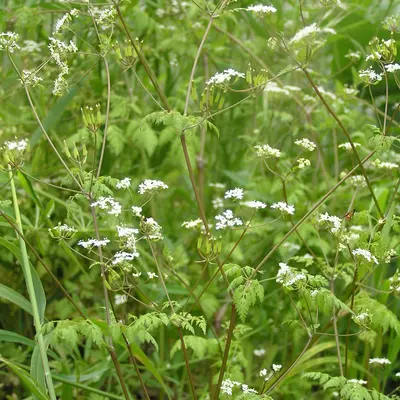
Intricate green leaves and stems. A traditional French herb used to flavor egg, potato, fish, and poultry dishes.
Harvest
26-30d
Days to harvest
Sun
Full sun to partial shade
Zones
1–11
USDA hardiness
Height
12-24 inches
Planting Timeline
Showing dates for Chervil in USDA Zone 7
All Zone 7 microgreen →Zone Map
Click a state to update dates
Chervil · Zones 1–11
Growing Details
Succession Planting
Chervil bolts fast once daytime temperatures climb above 75°F, so succession sowing is the only way to keep a steady supply. As a microgreen harvested at 26 to 30 days, sow a fresh tray every 10 to 14 days — indoors under lights this works year-round, since chervil has no true dormancy requirement across its wide USDA range (zones 1–11). Outdoors in zone 7, run successions from late February through early April and again from late September through November; skip the summer window unless you have a reliably cool, shaded indoor setup.
Complete Growing Guide
Intricate green leaves and stems. A traditional French herb used to flavor egg, potato, fish, and poultry dishes. According to Johnny's Selected Seeds, Chervil is 26 - 30 days to maturity, annual, open pollinated. Notable features: Hydroponic Performer.
Light: Full sun (6 or more hours of direct sunlight a day), Partial Shade (Direct sunlight only part of the day, 2-6 hours). Soil: Clay, Loam (Silt), Sand. Soil pH: Neutral (6.0-8.0). Drainage: Good Drainage, Moist. Height: 1 ft. 0 in. - 2 ft. 0 in.. Spread: 1 ft. 0 in. - 1 ft. 6 in.. Spacing: 12 inches-3 feet. Growth rate: Rapid. Maintenance: Medium. Propagation: Seed. Regions: Mountains, Piedmont.
Harvesting
Chervil reaches harvest at 26 - 30 days from sowing per Johnny's Selected Seeds. As an annual, harvest continues until frost ends the season.
Garden value: Edible
Edibility: Leaves common, but flowers and seeds as well; Use leaves in salads, soups, sauces, teas, and butters. Leaves can be harvested throughout the summer and fall.
Storage & Preservation
Freshly harvested chervil microgreens keep best in a breathable container lined with paper towels, stored at 32–40°F with 85–95% humidity—a standard refrigerator's vegetable drawer works well. Expect 5–7 days of quality before the delicate fronds begin to wilt and lose their subtle anise notes. For longer preservation, freezing is most practical: blanch briefly in boiling water for 90 seconds, shock in ice water, pat dry thoroughly, and freeze in airtight bags or ice cube trays with a splash of water. Dried chervil retains flavor reasonably well when air-dried in a warm, dark space, though the fresh quality never fully returns. Chervil's tender texture makes it poor for canning. One useful note: chervil microgreens are exceptionally prone to moisture-related decay, so prioritize rapid cooling after harvest and avoid storing near ethylene-producing fruits like apples or avocados.
History & Origin
Chervil is open-pollinated, meaning seed saved from healthy plants will produce true-to-type offspring. Listed in the Johnny's Selected Seeds catalog.
Origin: Middle East, Russia and the Caucasus
Advantages
- +Delicate anise flavor elevates French cuisine dishes beautifully
- +Ready to harvest in just 26-30 days
- +Minimal growing difficulty makes it ideal for beginners
- +Intricate leaves add sophisticated visual appeal to plates
- +Grows well in cooler temperatures other greens struggle with
Considerations
- -Seeds have low germination rates requiring careful handling
- -Susceptible to damping-off disease in humid conditions
- -Thin stems make harvesting and handling somewhat delicate
- -Yields smaller volume compared to heartier microgreen varieties
Companion Plants
Chervil sits comfortably next to lettuce, radishes, and spinach — all shallow-rooted, low-canopy crops that won't shade it out or pull hard from the same soil depth. Carrots and parsley share the Apiaceae family with chervil and want similar cool, moist conditions, so they make practical row neighbors. Fennel is the one to avoid: it releases allelopathic compounds through its roots that suppress germination and stunt nearby seedlings, and chervil's delicate root system is particularly susceptible. Mint is a different problem — it doesn't poison anything, it just colonizes; in our zone 7 Georgia garden it'll swallow a whole bed by midsummer if it's not in a container. Tomatoes conflict less chemically and more practically — they demand full sun and heat that chervil can't tolerate past April.
Plant Together
Lettuce
Similar growing conditions and shallow roots, won't compete for space
Radishes
Quick-growing companion that helps break up soil and deters pests
Carrots
Deep roots complement chervil's shallow root system, mutual pest deterrence
Parsley
Similar cultural requirements and both benefit from partial shade
Spinach
Compatible cool-season crop with similar water and light needs
Peas
Nitrogen fixation benefits chervil, both prefer cooler temperatures
Chives
Natural pest deterrent that protects delicate chervil from aphids
Cilantro
Similar growing requirements and harvest timing for microgreen production
Keep Apart
Fennel
Allelopathic compounds inhibit germination and growth of most herbs
Tomatoes
Heavy feeders that overshadow and outcompete delicate chervil microgreens
Mint
Aggressive spreader that can overwhelm chervil and alter soil chemistry
Nutrition Facts
Per 100g serving. % Daily Value based on 2,000 calorie diet. Source: USDA FoodData Central (FDC #171318)
Pests & Disease Resistance
Common Pests
Minimal pest pressure; occasionally affected by aphids under stress
Diseases
Rare in well-managed plants; powdery mildew possible in humid conditions with poor air circulation
Troubleshooting Chervil
What you'll see, why it happens, and what to do about it.
Seedlings are leggy and pale, stretching toward the light within the first 10 days
Likely Causes
- Insufficient light — chervil needs at least 4 hours of indirect or filtered light as a microgreen
- Tray placed too far from a grow light (more than 4 inches above canopy)
What to Do
- 1.Move trays closer to the light source — 2 to 3 inches under a fluorescent or LED grow light works well
- 2.Rotate trays 180° every day or two if using a windowsill to even out the lean
- 3.If growing indoors year-round, run lights for 14 to 16 hours per day on a timer
Seeds sitting on the medium for more than 14 days with no germination
Likely Causes
- Chervil seed viability drops off fast — seeds older than one season often fail
- Dry medium surface causing the seed coat to desiccate before the radicle can emerge
- Temperature too high — germination stalls above 70°F
What to Do
- 1.Use seeds from the current season; if buying bulk, check the pack date
- 2.Mist the medium surface twice daily and cover the tray with a humidity dome until sprouts appear
- 3.Move trays to a cooler spot — 60 to 65°F is the target range for chervil germination
White powdery coating on older leaves at or after day 20, especially when trays are crowded
Likely Causes
- Powdery mildew (Erysiphe heraclei or a close relative) — thrives in stagnant air with high humidity
- Trays packed too densely, blocking airflow between seedlings
What to Do
- 1.Harvest immediately — at the microgreen stage, cut below the affected tissue; the lower stems are still table-ready
- 2.Add a small fan to circulate air around trays for future rounds
- 3.Drop seeding density to roughly 1 to 1.5 teaspoons of seed per 10x20 tray on your next sow
Leaves developing a washed-out, stippled look with tiny moving dots on the underside
Likely Causes
- Aphids (commonly Myzus persicae or Macrosiphum euphorbiae) clustering on stressed seedlings
- Low airflow and warm indoor conditions encouraging aphid buildup
What to Do
- 1.Blast the undersides of leaves with a sharp stream of water from a spray bottle
- 2.If the infestation is heavy on a tray near harvest, just cut and wash — rinse greens thoroughly in cold water before eating
- 3.Isolate affected trays from other microgreen crops immediately to slow spread
Frequently Asked Questions
How long does chervil take to grow from seed to harvest?▼
Can you grow chervil in containers or pots?▼
Why does my chervil bolt so quickly?▼
What does chervil taste like, and how is it used in cooking?▼
Is chervil good for beginners?▼
Can you regrow chervil after cutting, or is it a one-time harvest?▼
Zone-by-Zone Planting Calendar
| Zone | Indoor Start | Transplant | Direct Sow | Harvest |
|---|---|---|---|---|
| Zone 3 | January – December | — | — | January – December |
| Zone 4 | January – December | — | — | January – December |
| Zone 5 | January – December | — | — | January – December |
| Zone 6 | January – December | — | — | January – December |
| Zone 7 | January – December | — | — | January – December |
| Zone 8 | January – December | — | — | January – December |
| Zone 9 | January – December | — | — | January – December |
| Zone 10 | January – December | — | — | January – December |
| Zone 1 | January – December | — | — | January – December |
| Zone 2 | January – December | — | — | January – December |
| Zone 11 | January – December | — | — | January – December |
| Zone 12 | January – December | — | — | January – December |
| Zone 13 | January – December | — | — | January – December |
Growing Guides from Wind River Greens
Sources & References
External authority sources used in compiling this guide.
- ExtensionNC State Extension
- BreederJohnny's Selected Seeds
- USDAUSDA FoodData Central
See the Methodology page for how this data is sourced, what's AI-assisted, and known limitations.