Kiwi Blue
Cerinthe major purpurascens
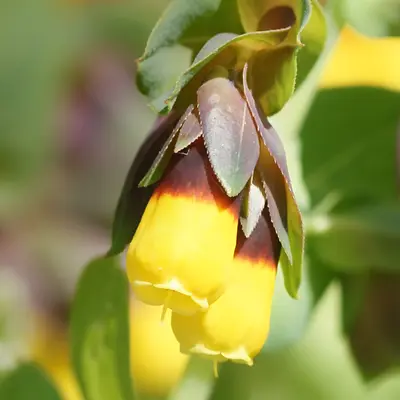
The drooping habit of the flowers makes an elegant addition to bouquets. The brilliant-blue flowers are complemented by the gray-green foliage. Attracts bees and hummingbirds. Also known as honeywort.
Harvest
65-70d
Days to harvest
Sun
Full sun
Zones
1–11
USDA hardiness
Height
18-24 inches
Planting Timeline
Showing dates for Kiwi Blue in USDA Zone 7
All Zone 7 flower →Zone Map
Click a state to update dates
Kiwi Blue · Zones 1–11
Growing Details
Succession Planting
Cerinthe blooms for 4 to 6 weeks per planting — a decent run, but not self-renewing the way a cut-and-come-again crop is. For continuous color, sow indoors every 3 weeks starting in February, or direct sow every 3 weeks from April through early June. Stop once daytime highs are consistently above 80°F; cerinthe bolts fast in real heat and the foliage turns dull before the plant even finishes flowering.
In zones 7 and warmer, a fall succession is worth attempting: direct sow in late August or early September for bloom in October and November. Fall-sown plants tend to hold their color longer and stay tidier than spring ones pushed through summer heat.
Complete Growing Guide
Growing Kiwi Blue (Cerinthe major purpurascens) flower. Light: Full sun. Hardy in USDA zones 1 to 11. Days to maturity: 65. Difficulty: Easy.
Harvesting
Kiwi Blue reaches harvest at 65 - 70 days from sowing per Johnny's Selected Seeds. As an annual, harvest continues until frost ends the season.
This is an ornamental variety — not grown for harvest. Enjoy in the garden landscape.
Storage & Preservation
For cut flowers, store Kiwi Blue in a cool location between 65-70°F with moderate humidity, preferably in a vase with fresh water and flower food. Change water every 2-3 days and remove lower leaves to prevent bacterial growth. Cut flowers typically last 7-10 days indoors. Preservation methods include air-drying by hanging bunches upside-down in a dark, well-ventilated space for 1-2 weeks to create long-lasting dried arrangements. Alternatively, press flowers between parchment paper under heavy books for 2-3 weeks to create flat specimens for crafts or framing. Silica gel drying preserves color and shape beautifully for immediate use in decorative displays.
History & Origin
Cerinthe is a genus of flowering plants in the family Boraginaceae, known as honeyworts. The genus is characterised by a calyx made up of separate, rather than fused, sepals, a tubular corolla, and the schizocarpic fruit that divides into two parts at maturity, unlike most members of the family, where the fruit splits into four nutlets. The genus has a circum-Mediterranean distribution, ranging from the Irano-Turanian Region in the east to Morocco in the west.
Advantages
- +Stunning brilliant-blue flowers with elegant drooping habit for sophisticated bouquets
- +Gray-green foliage provides attractive contrast and visual interest throughout growing season
- +Attracts both bees and hummingbirds, supporting pollinator populations in gardens
- +Achieves full maturity in just 65-70 days, allowing multiple succession plantings
- +Easy to grow with minimal care requirements, ideal for beginner gardeners
Considerations
- -Short vase life limits commercial cut flower viability and home arrangement longevity
- -Prefers well-draining soil and may struggle in heavy clay or waterlogged conditions
- -Drooping flowers can appear fragile and require careful handling during transport
Companion Plants
Marigolds (especially Tagetes patula) and calendula are the strongest companions here — both pull in pollinators during the same bloom window as cerinthe, and Tagetes roots put out exudates that suppress soil nematodes in the surrounding bed. Sweet alyssum planted at the base fills in at 6-8 inches and draws parasitic wasps, which help keep aphid pressure from building before it reaches your cerinthe. Catmint and lavender work well as border plants simply because they share cerinthe's preference for lean, well-drained soil and won't muscle it out for moisture.
Keep sunflowers at least 12 feet away — they release allelopathic compounds from both their roots and their decomposing leaf litter, and cerinthe is sensitive enough that stunting shows up visibly. Black walnut is a harder limit: juglone from walnut roots moves through the soil and can affect plants well beyond the drip line. If there's a walnut on your property, put cerinthe somewhere the roots plainly don't reach.
Plant Together
Marigold
Repels nematodes and aphids while attracting beneficial insects
Lavender
Deters pests with aromatic oils and attracts pollinators
Sweet Alyssum
Attracts beneficial insects and provides ground cover to retain moisture
Nasturtium
Acts as trap crop for aphids and cucumber beetles
Catmint
Repels ants, aphids, and rodents while attracting beneficial insects
Calendula
Attracts beneficial insects and helps repel whiteflies
Chives
Repels aphids and other soft-bodied insects with sulfur compounds
Cosmos
Attracts beneficial insects and provides complementary colors
Keep Apart
Black Walnut
Produces juglone toxin that inhibits growth of many plants
Eucalyptus
Releases allelopathic chemicals that can stunt nearby plant growth
Sunflower
Competes aggressively for nutrients and water, may release growth inhibitors
Troubleshooting Kiwi Blue
What you'll see, why it happens, and what to do about it.
Seedlings collapse at soil level — stems look pinched or rotted just above the roots, around days 7-14 after germination
Likely Causes
- Damping off (Pythium or Rhizoctonia spp.) — fungal rot triggered by cold, soggy soil with poor airflow
- Overwatering in a heavy seed-starting mix that doesn't drain well
What to Do
- 1.Toss the affected tray — there's no saving damped-off seedlings
- 2.Start fresh in a sterile, well-draining seed-starting mix and water only when the top half-inch is dry
- 3.Run a small fan near seedlings for 30 minutes a day to improve air circulation
Leaves developing silvery streaks or stippling, sometimes with tiny black specks on the undersides
Likely Causes
- Thrips (Frankliniella occidentalis) — common on cerinthe grown under row cover or in polytunnels where airflow is low
- Spider mites (Tetranychus urticae) — more likely if conditions are hot and dry
What to Do
- 1.Spray the undersides of leaves with insecticidal soap (2 tsp per quart of water) every 5-7 days for 3 applications
- 2.Remove and bag any heavily infested stems — don't compost them
- 3.Introduce predatory mites (Phytoseiulus persimilis) if you're growing in an enclosed space
Plants stretching to 24+ inches with thin stems and sparse foliage before day 50, no sign of bud set
Likely Causes
- Insufficient light — fewer than 6 hours of direct sun daily causes etiolation in cerinthe
- Transplanting into warm soil above 70°F pushes fast, weak vegetative growth before the plant has rooted in
What to Do
- 1.Pinch the central growing tip back 2-3 inches to force branching — cerinthe responds well to this
- 2.Move containers to a spot with a full 6-8 hours of direct sun
- 3.Next season, get transplants in the ground earlier; cerinthe settles in best when soil temps are between 55-65°F
Frequently Asked Questions
How long do Kiwi Blue flowers last in a vase?▼
Is Kiwi Blue a good choice for beginner gardeners?▼
Can you grow Kiwi Blue flowers in containers?▼
When should I plant Kiwi Blue seeds?▼
What pollinators does Kiwi Blue attract?▼
Why is Kiwi Blue also called honeywort?▼
Zone-by-Zone Planting Calendar
| Zone | Indoor Start | Transplant | Direct Sow | Harvest |
|---|---|---|---|---|
| Zone 3 | April – May | June – July | June – August | — |
| Zone 4 | March – April | June – June | June – July | — |
| Zone 5 | March – April | May – June | May – July | — |
| Zone 6 | March – April | May – June | May – July | — |
| Zone 7 | February – March | April – May | April – June | — |
| Zone 8 | February – March | April – May | April – June | — |
| Zone 9 | January – February | March – April | March – May | — |
| Zone 10 | January – January | February – March | February – April | — |
| Zone 1 | May – June | July – August | July – September | — |
| Zone 2 | April – May | June – July | June – August | — |
| Zone 11 | January – January | January – February | January – March | — |
| Zone 12 | January – January | January – February | January – March | — |
| Zone 13 | January – January | January – February | January – March | — |
Growing Guides from Wind River Greens
Sources & References
External authority sources used in compiling this guide.
- BreederJohnny's Selected Seeds
See the Methodology page for how this data is sourced, what's AI-assisted, and known limitations.