Royal Wedding
Lathyrus odoratus
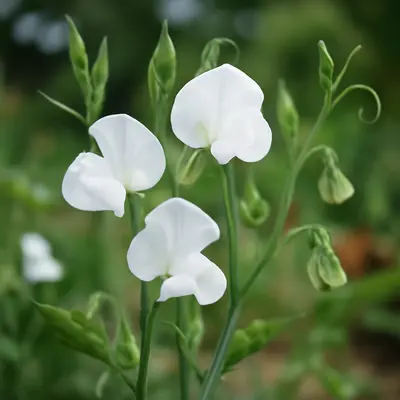
From the Spencer series. Slightly ruffled, pure white blooms with a hint of cream color. NOTE: Spencer series sweet peas are known as late-flowering because they require at least 12 hours of daylight, unlike more modern sweet pea varieties bred for winter production, which may require only 10-11 hours of daylight. Attracts hummingbirds.
Harvest
75-85d
Days to harvest
Sun
Full sun
Zones
2–11
USDA hardiness
Height
3-8 feet
Planting Timeline
Showing dates for Royal Wedding in USDA Zone 7
All Zone 7 flower →Zone Map
Click a state to update dates
Royal Wedding · Zones 2–11
Growing Details
Succession Planting
Sweet peas are worth succession sowing if you want continuous cutting, but the window is shorter than you'd think. In zone 7, direct sow every 3 weeks starting April 1, stopping by mid-May — once daytime highs are regularly hitting 80°F, germination stalls and plants that do come up bolt quickly without setting many buds. Royal Wedding runs 75–85 days to bloom, so a mid-May sowing is right at the edge of usefulness before summer heat shuts things down.
To stretch the season in the other direction, start seeds indoors in late February, 6–8 weeks before last frost, nicking the seed coat with a file first to speed germination. Transplant out in April once nights are reliably above 40°F. That indoor-started batch will flower 3–4 weeks ahead of any April direct sow, giving you a real gap to bridge with a second outdoor planting rather than everything coming in at once.
Complete Growing Guide
Royal Wedding sweet peas are best started indoors about six to eight weeks before your last spring frost date, giving them a strong head start for their 75-day journey to abundant blooms. You can also direct sow seeds outdoors two to three weeks before your last frost, as these hardy annuals tolerate cool soil and will germinate reliably in spring temperatures. If starting indoors, soak seeds in room-temperature water for 24 hours before planting to improve germination rates, then sow them about half an inch deep in seed-starting mix. Transplant seedlings outdoors after the last frost danger has passed, choosing a location that receives at least six to eight hours of full sun daily.
Prepare your soil by working in compost or well-rotted manure to improve drainage and fertility. Space Royal Wedding plants about six inches apart along a sturdy trellis or support structure, as these vigorous vines will reach three to eight feet tall depending on your growing conditions and support system. Plant seeds just under the soil surface, pressing them gently into place. Sweet peas prefer slightly alkaline to neutral soil with a pH between 6.5 and 7.5, so amend with lime if your soil tends toward acidity.
Water consistently throughout the season, providing about one inch per week through rainfall or irrigation, keeping the soil evenly moist but never waterlogged. Feed every two to three weeks with a balanced, dilute liquid fertilizer once flowering begins, or use a slow-release granular fertilizer at planting time. Avoid high-nitrogen formulations, which promote leaf growth at the expense of flowers.
Royal Wedding's Spencer-series heritage requires specific attention to daylight conditions. These late-flowering varieties need at least 12 hours of daylight to set buds reliably, making them ideal for spring and summer gardening but unsuitable for winter greenhouse production. If you live in a region with very short spring days, starting seeds indoors earlier helps ensure plants are established when daylength becomes adequate for flowering.
Watch for spider mites and aphids, which can colonize sweet pea foliage quickly, causing stippling and distortion. Powdery mildew occasionally appears in humid conditions, so ensure good air circulation around your plants. The most common issue specific to Royal Wedding and other Spencer varieties is premature flowering cessation due to heat stress. Once temperatures consistently exceed 75°F, flowering naturally declines, so succession planting every two weeks from late winter through early spring ensures continuous blooms rather than a single flush.
Pinch out the growing tips when plants reach about six inches tall to encourage branching and fuller growth. Deadhead spent flowers religiously every two to three days to extend the blooming season and maintain the plant's vigor. Provide a sturdy trellis or netting for climbing, as these tall-growing vines require reliable support to prevent damage from wind and their own weight when laden with flowers.
Harvesting
Royal Wedding reaches harvest at 75 - 85 days from sowing per Johnny's Selected Seeds. As an annual, harvest continues until frost ends the season.
Type: Legume.
Edibility: Sweet pea fruits are inedible and poisonous to humans.
Storage & Preservation
Fresh-cut Royal Wedding stems last 10-14 days in a vase with proper care. Use a clean vase, cool water, and commercial cut-flower food (the sugar feeds blooms; biocide prevents bacterial growth). Change water every 2-3 days and recut stems at a 45-degree angle. Keep the vase away from ripening fruit, direct sunlight, and heating vents.
Sweet pea flowers are primarily ornamental and not edible, so preservation methods differ from culinary crops. For extended enjoyment, dry flowers for permanent arrangements: gather stems in small bundles, hang upside-down in a warm, dark, well-ventilated space for 2-3 weeks until papery-dry. Dried Royal Wedding retains its white color and delicate form for months in a dry environment, though fragrance fades.
Press individual flowers between absorbent paper under heavy books for 2-3 weeks to create pressed flowers for crafts, cards, or botanical displays. Avoid moisture and direct light during drying to preserve color quality. Pressed flowers remain vibrant for years when stored in dry conditions.
History & Origin
Royal Wedding is open-pollinated, meaning seed saved from healthy plants will produce true-to-type offspring. Listed in the Johnny's Selected Seeds catalog.
Origin: Southern Italy, Sicily, Crete
Advantages
- +Pure white blooms with cream hint create elegant, classic garden displays
- +Spencer series produces highly ruffled, premium-quality cut flowers for arrangements
- +Attracts hummingbirds, adding wildlife interest and pollinator activity to gardens
- +Easy difficulty level makes Royal Wedding suitable for beginner gardeners
- +75-85 day timeline provides reliable flowering within a reasonable growing season
Considerations
- -Requires at least 12 hours of daylight, limiting spring and fall planting
- -Late-flowering trait makes winter production impossible in most climates
- -Spencer series sweet peas are prone to powdery mildew in humidity
- -Needs consistent support structures and regular deadheading for optimal blooms
Companion Plants
Marigolds — French marigolds (Tagetes patula) specifically — are the most useful thing you can tuck alongside Royal Wedding. Their root secretions deter nematodes in the soil, and their scent confuses aphids, which are the pest you'll fight most with this variety. Plant them 8–10 inches away so they don't shade the base of the sweet peas. Sweet alyssum is worth adding at the front of the bed: its tiny flowers draw hoverflies and parasitic wasps that prey on aphid colonies, and it stays low enough not to compete for trellis space.
Nasturtiums pull double duty as a trap crop — aphid colonies will preferentially land on them, which means you can deal with the infestation in one concentrated spot rather than chasing it across your whole planting. Catmint (Nepeta) and lavender both repel thrips to some degree and don't compete aggressively for root space, which matters because sweet peas push roots 12–18 inches deep looking for consistent moisture. In our zone 7 Georgia gardens, lavender pairs naturally with sweet peas since both want sharp drainage and at least 6 hours of sun — you're not making any real trade-offs by growing them together.
The plants to avoid are worth understanding rather than just memorizing. Black walnut releases juglone — a compound that interferes with cellular respiration in sensitive plants — through its roots and decomposing leaf litter, and sweet peas are susceptible to it. Eucalyptus works through a different set of allelopathic compounds leached from its leaf litter, with a similar result. Sunflowers are less chemically aggressive but cause a practical problem: they'll overtop a sweet pea trellis fast once they clear 5 feet, shading out a crop that needs full sun to set buds.
Plant Together
Marigolds
Repel aphids, whiteflies, and nematodes while attracting beneficial insects
Sweet Alyssum
Attracts beneficial insects like hoverflies and provides ground cover
Nasturtiums
Act as trap crops for aphids and cucumber beetles while repelling ants
Lavender
Repels moths, fleas, and mosquitoes while attracting pollinators
Catmint
Deters ants, aphids, and rodents while attracting beneficial insects
Cosmos
Attracts beneficial insects and provides complementary colors and heights
Chives
Repel aphids and other soft-bodied insects with their sulfur compounds
Zinnia
Attracts butterflies and beneficial predatory insects while providing color contrast
Keep Apart
Black Walnut
Produces juglone which is toxic to many flowering plants and inhibits growth
Eucalyptus
Releases allelopathic compounds that suppress growth of nearby plants
Sunflowers
Can create too much shade and compete aggressively for nutrients and water
Pests & Disease Resistance
Common Pests
Aphids, spider mites, thrips
Diseases
Powdery mildew, root rot, fusarium wilt
Troubleshooting Royal Wedding
What you'll see, why it happens, and what to do about it.
White powdery coating on upper leaf surfaces, usually starting mid-season when nights cool and days stay humid
Likely Causes
- Powdery mildew (Erysiphe pisi) — airborne fungal spores, thrives when humidity is high but leaves stay dry
- Crowded planting at less than 6-inch spacing blocking air circulation
What to Do
- 1.Cut off and bag the worst-affected stems — don't compost them
- 2.Spray remaining foliage with a diluted potassium bicarbonate solution (1 tablespoon per gallon) every 7 days
- 3.Next season, don't skip the trellis — vertical growth dries out faster than a tangled pile on the ground
Seedlings or young plants wilting and collapsing at the soil line, roots look brown and mushy when you pull them
Likely Causes
- Root rot from Pythium or Phytophthora species — almost always triggered by waterlogged soil or overwatering
- Heavy clay soil with poor drainage holding moisture too long around the crown
What to Do
- 1.Pull the affected plant — it won't recover, and leaving it spreads spores
- 2.Amend the bed with 2–3 inches of coarse compost or perlite worked in 12 inches deep before replanting
- 3.Water only when the top inch of soil is dry, and never let water pool at the base of the stem
Stems yellowing from the base up, plant looks stunted and off-color despite normal watering, and pulling reveals discolored brown vascular tissue inside
Likely Causes
- Fusarium wilt (Fusarium oxysporum) — soil-borne pathogen that blocks water uptake by colonizing the vascular system
- Reusing soil from a bed where sweet peas or other legumes previously showed wilt symptoms
What to Do
- 1.Remove the entire plant including as much root as you can reach, and dispose of it in the trash — not the compost
- 2.Don't replant sweet peas or other legumes in that spot for at least 3 years
- 3.Solarize the bed the following summer — clear plastic sheeting held down for 6–8 weeks in full sun kills a significant portion of soil-borne Fusarium
Curling or distorted new growth, sticky residue on stems, and small clusters of soft-bodied insects visible on shoot tips — OR silvery streaking on petals with no visible stickiness
Likely Causes
- Aphids (commonly Acyrthosiphon pisum, the pea aphid) — populations explode fast in warm, still weather; leave the honeydew that makes stems sticky
- Thrips feeding, which causes similar leaf distortion but with silvery petal streaking rather than stickiness
What to Do
- 1.Knock aphids off with a strong stream of water from the hose — do it in the morning so foliage dries before evening
- 2.For heavier aphid pressure, apply insecticidal soap (2 teaspoons per quart of water) directly to colonies, coating the undersides of leaves
- 3.For thrips, remove and bag any heavily silvered or distorted flowers, then apply spinosad per label directions
Frequently Asked Questions
Do Royal Wedding sweet peas need 12 hours of daylight?▼
How long do Royal Wedding sweet pea flowers last in a vase?▼
Can I grow Royal Wedding sweet peas in containers?▼
Is Royal Wedding sweet pea easy to grow from seed?▼
What zone is best for growing Royal Wedding sweet peas?▼
Why does my Royal Wedding sweet pea stop flowering in mid-summer?▼
Zone-by-Zone Planting Calendar
| Zone | Indoor Start | Transplant | Direct Sow | Harvest |
|---|---|---|---|---|
| Zone 1 | May – June | July – August | July – September | — |
| Zone 2 | April – May | June – July | June – August | — |
| Zone 11 | January – January | January – February | January – March | — |
| Zone 12 | January – January | January – February | January – March | — |
| Zone 13 | January – January | January – February | January – March | — |
| Zone 3 | April – May | June – July | June – August | — |
| Zone 4 | March – April | June – June | June – July | — |
| Zone 5 | March – April | May – June | May – July | — |
| Zone 6 | March – April | May – June | May – July | — |
| Zone 7 | February – March | April – May | April – June | — |
| Zone 8 | February – March | April – May | April – June | — |
| Zone 9 | January – February | March – April | March – May | — |
| Zone 10 | January – January | February – March | February – April | — |
Growing Guides from Wind River Greens
Sources & References
External authority sources used in compiling this guide.
- BreederJohnny's Selected Seeds
See the Methodology page for how this data is sourced, what's AI-assisted, and known limitations.