Sweet Alyssum
Lobularia maritima
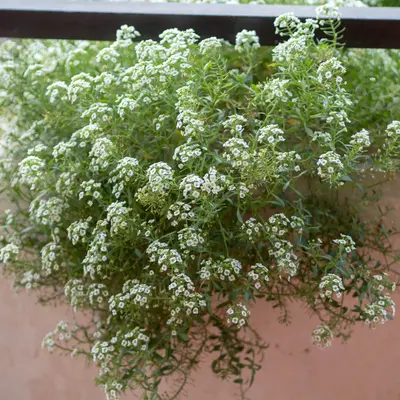
Sweet Alyssum is a delicate, low-growing flowering plant prized for its tiny, fragrant clustered blooms in white, pink, purple, or bicolor varieties. Reaching maturity in 50-60 days, it produces abundant flowers throughout the season. The defining characteristic is its sweet honey-like fragrance, which makes it exceptional for borders, containers, and pollinator gardens. Easy to grow and tolerant of poor soil, it thrives in full sun to partial shade and becomes a cheerful ground cover or edging plant. Heirloom varieties offer reliable performance and self-seeding capability.
Harvest
50-60d
Days to harvest
Sun
Full sun to partial shade
Zones
5–9
USDA hardiness
Height
3-10 inches
Planting Timeline
Showing dates for Sweet Alyssum in USDA Zone 7
All Zone 7 flower →Zone Map
Click a state to update dates
Sweet Alyssum · Zones 5–9
Growing Details
Succession Planting
Alyssum is a tender perennial but almost always behaves as an annual in zones 5–7 — it may self-sow, but don't build a plan around it. Start seeds indoors in February or March (6-8 weeks before last frost), or direct sow from April through June once soil temps hold above 55°F. Sowing a new round every 3-4 weeks through June keeps fresh plants coming in if early plantings go leggy or stall in midsummer heat.
If plants thin out and stop blooming in July, shear them back by half rather than pulling them. They'll push new growth and rebloom in 2-3 weeks once daytime highs drop back below 85°F in late summer — essentially a built-in second flush without any extra seed starting.
Complete Growing Guide
Sweet Alyssum can be started either indoors or direct sown into the garden, giving you flexibility based on your growing timeline. For indoor sowing, start seeds 6-8 weeks before your last spring frost date. Direct sowing outdoors works equally well and can be done after the danger of frost has passed, typically around your last frost date or even a few weeks after, since Sweet Alyssum germinates quickly and grows fast enough to bloom within 50-60 days. The seeds are tiny, so avoid burying them deeply; simply press them onto moist soil surface and mist gently to maintain moisture during germination, which typically occurs within 7-10 days.
Prepare your planting area with well-draining soil, mixing in compost or aged organic matter to improve structure and drainage. Sweet Alyssum tolerates poor soil reasonably well, but loose, friable soil promotes the best growth. Space plants 6-12 inches apart depending on whether you want them to fill in densely or have more individual form. The variety thrives in full sun to partial shade (4-6+ hours minimum), and adequate light ensures maximum flower production and robust plant development.
Water consistently to keep soil evenly moist but not waterlogged, especially during establishment and hot periods. Once established, Sweet Alyssum shows good drought tolerance compared to many bedding plants, though flowering remains heaviest with regular moisture. Feed monthly with a balanced, diluted liquid fertilizer, or use a slow-release granular option mixed into the soil at planting. Avoid excessive nitrogen, which promotes foliage at the expense of flowers.
Sweet Alyssum is notably pest and disease-resistant, which contributes to its reputation as trouble-free. However, watch for flea beetles, which occasionally chew small holes in foliage; they rarely cause serious damage but can be deterred with row covers on young plants. Powdery mildew may appear in warm, humid conditions with poor air circulation; ensure adequate spacing and avoid overhead watering to prevent fungal issues.
For best performance, pinch or deadhead spent flower clusters regularly to encourage continuous blooming throughout the season. The sprawling habit means minimal pruning is needed, though a light trim in midsummer can rejuvenate plants and promote bushier growth. Succession planting works well with Sweet Alyssum; sow new seeds every 3-4 weeks from spring through early summer for continuous bloom, especially in cooler climates.
The most common mistake gardeners make is underestimating how much Sweet Alyssum spreads and self-seeds. What looks like a modest transplant quickly becomes a dense, sprawling mat that can overtake adjacent plants if not monitored. Deadheading prevents excessive self-seeding, and allowing some plants to go to seed rewards you with volunteer seedlings the following season.
Harvesting
Sweet alyssum reaches peak harvest readiness 50–60 days after planting, when flower clusters display full, vibrant color—typically white, pink, or purple depending on your variety—and the individual florets feel papery to the touch rather than soft or wilted. The blooms should appear densely packed on each spike with no browning or transparent petals.
Harvest in early morning after dew dries but before afternoon heat stresses the plant. The cooler temperatures help flowers stay turgid and last longer in arrangements.
Use sharp scissors or garden snips to cut stems at a 45-degree angle just above a set of healthy leaves, removing 6–8 inches of stem. Avoid damaging the remaining foliage, as sweet alyssum regenerates quickly from leaf nodes. Never pull or twist stems, which can tear woody growth and invite disease.
Deadhead spent flower clusters consistently throughout the season—this is crucial for sweet alyssum. Remove faded blooms every 3–5 days to encourage continuous branching and flowering through fall frost. If plants become leggy or flower production slows in midsummer, cut back the entire plant by half to rejuvenate it. Continue harvesting until the first hard freeze kills the tender annual.
Storage & Preservation
Sweet Alyssum flowers are best enjoyed fresh and do not require traditional storage. Fresh cut flowers should be placed in cool water immediately after picking and stored in a cool location (50-65°F) away from direct sunlight and ripening fruits, with a vase life of 5-7 days. For preservation, air-dry flower clusters by hanging them upside down in a warm, well-ventilated area for 2-3 weeks to create dried arrangements. Alternatively, press flowers between parchment paper under heavy books for 2-3 weeks for decorative uses. Freeze individual flower clusters in ice cube trays with water for unique garnishing options that last up to 3 months.
History & Origin
Sweet Alyssum (Lobularia maritima) is native to the Mediterranean region, where it grows as a coastal plant in rocky and sandy habitats. The genus Lobularia was formally established in the 19th century, though the plant has been cultivated in European gardens since at least the 1600s. Its common name "sweet alyssum" reflects both its delicate fragrance and historical taxonomic classification under the genus Alyssum, though it was reclassified to Lobularia in modern botanical practice. The specific cultivars and compact varieties widely available today were developed throughout the 20th century by commercial seed companies, particularly those in Europe and North America, selecting for improved growth habits and flower density. Modern breeding has emphasized its hardy, low-maintenance character and prolific flowering, making it increasingly valued in sustainable agriculture for supporting beneficial insect populations.
Advantages
- +Fast-growing and low-maintenance, perfect for beginner gardeners
- +Attracts beneficial insects like lacewings and parasitic wasps effectively
- +Thrives in containers and greenhouses with minimal space requirements
- +Dense flower clusters provide continuous blooms for 50-60 days
- +Low cost seeds make it economical for large plantings
Considerations
- -Tender perennial requiring replanting annually in colder zones
- -Susceptible to powdery mildew in humid greenhouse conditions
- -Prefers well-draining soil and struggles in heavy clay
- -Plants may decline quickly once temperatures exceed 85°F consistently
Companion Plants
Alyssum pulls its weight near tomatoes, brassicas, and carrots mainly by feeding beneficial insects. The flowers open at 50-60 days and hold for weeks — that flat, open structure is exactly what parasitic wasps like Trichogramma spp. need to access nectar, and those wasps lay eggs in aphid and caterpillar pests on neighboring crops. Plant it within 12-18 inches of whatever you're trying to protect, not just somewhere in the general vicinity. Lettuce and strawberries fit well too, partly because alyssum's 3-6 inch height doesn't shade them, and the dense mat cuts down on weed pressure around low crowns.
Black walnut is a hard no — juglone leaches from the roots and will stunt or kill alyssum well before you figure out what's wrong. Skip large sunflowers for a simpler reason: they drop enough shade to push alyssum into sparse, non-blooming growth, and this plant needs at least 4-6 hours of direct sun to flower at all. Mint stays off the list because it spreads by runners and will physically crowd out a low grower like alyssum within one season.
Plant Together
Tomatoes
Sweet alyssum attracts beneficial insects that control tomato pests like aphids and hornworms
Cabbage
Acts as a living mulch and attracts beneficial insects that control cabbage worms and aphids
Broccoli
Attracts hover flies and parasitic wasps that control aphids and caterpillars on brassicas
Lettuce
Provides ground cover and attracts beneficial insects while not competing for nutrients
Strawberries
Attracts beneficial insects and serves as living mulch without competing with shallow-rooted strawberries
Marigolds
Both attract beneficial insects and complement each other in pest control strategies
Carrots
Attracts beneficial insects that control carrot fly and other pests while providing ground cover
Roses
Attracts beneficial insects that control aphids and other rose pests while providing attractive ground cover
Keep Apart
Black Walnut
Produces juglone which is toxic to sweet alyssum and inhibits its growth
Large Sunflowers
Creates excessive shade and competes aggressively for water and nutrients
Mint
Aggressive spreading habit can overwhelm and crowd out delicate sweet alyssum plants
Pests & Disease Resistance
Common Pests
Aphids, slugs, spider mites
Diseases
Root rot, powdery mildew
Troubleshooting Sweet Alyssum
What you'll see, why it happens, and what to do about it.
Stems collapsing at soil level, lower leaves yellowing and mushy, plant pulls up easily with rotted roots
Likely Causes
- Root rot (Pythium or Phytophthora spp.) from consistently waterlogged soil or poor drainage
- Overwatering in heavy clay — alyssum wants regular moisture but not wet feet
What to Do
- 1.Pull and discard affected plants — they won't recover once the crown is gone
- 2.Improve drainage before replanting: work in coarse sand or compost to break up compacted soil
- 3.Water only when the top inch of soil is dry, and avoid overhead watering late in the day
White powdery coating on leaves and stems, usually appearing mid-summer when plants are crowded
Likely Causes
- Powdery mildew (Erysiphe cruciferarum) — common on Brassicaceae family plants, and alyssum sits in that same family
- Poor airflow from tight spacing under 6 inches, or plants shaded by neighboring crops
What to Do
- 1.Thin or cut back affected plants to open up airflow — 6 inches between plants is the minimum
- 2.Spray with a diluted baking soda solution (1 tablespoon per gallon of water) every 7 days as a mild suppressive
- 3.In serious cases, shear the whole plant back by half; alyssum will rebloom in 2-3 weeks and the new growth usually comes in clean
Tiny soft-bodied insects clustered on new growth and flower buds, sticky residue on leaves below
Likely Causes
- Aphids — often Brevicoryne brassicae (cabbage aphid), which targets Brassicaceae hosts including alyssum
- Ant colonies actively farming aphid colonies on the plant, moving them to fresh growth
What to Do
- 1.Knock aphids off with a strong stream of water — do this in the morning so foliage dries before evening
- 2.If the infestation is heavy, spray with insecticidal soap (2 teaspoons per quart of water), coating the undersides of leaves
- 3.Check for ant trails at the base; disrupting ant access often breaks up the aphid colony within a week
Frequently Asked Questions
How long does it take for Sweet Alyssum to flower?▼
Is Sweet Alyssum good for beginners?▼
Can you grow Sweet Alyssum in containers?▼
When should I plant Sweet Alyssum?▼
What is Sweet Alyssum used for in gardens?▼
How much sun does Sweet Alyssum need?▼
Zone-by-Zone Planting Calendar
| Zone | Indoor Start | Transplant | Direct Sow | Harvest |
|---|---|---|---|---|
| Zone 1 | May – June | July – August | July – September | — |
| Zone 2 | April – May | June – July | June – August | — |
| Zone 11 | January – January | January – February | January – March | — |
| Zone 12 | January – January | January – February | January – March | — |
| Zone 13 | January – January | January – February | January – March | — |
| Zone 3 | April – May | June – July | June – August | — |
| Zone 4 | March – April | June – June | June – July | — |
| Zone 5 | March – April | May – June | May – July | — |
| Zone 6 | March – April | May – June | May – July | — |
| Zone 7 | February – March | April – May | April – June | — |
| Zone 8 | February – March | April – May | April – June | — |
| Zone 9 | January – February | March – April | March – May | — |
| Zone 10 | January – January | February – March | February – April | — |
Growing Guides from Wind River Greens
Sources & References
External authority sources used in compiling this guide.
- BreederJohnny's Selected Seeds
See the Methodology page for how this data is sourced, what's AI-assisted, and known limitations.