Blossom Pearl
Agrostemma githago
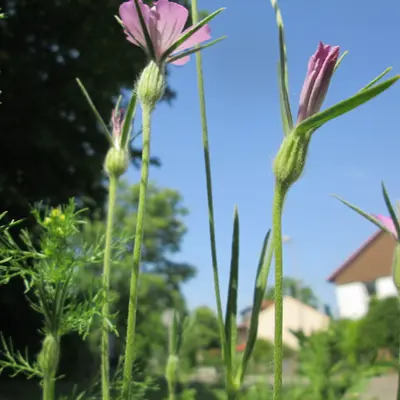
1-2" wide pale pink blooms. Silvery-gray foliage and long stems. Prefers cool growing conditions.
Harvest
70-85d
Days to harvest
Sun
Full sun to partial shade
Zones
1–11
USDA hardiness
Height
2-3 feet
Planting Timeline
Showing dates for Blossom Pearl in USDA Zone 7
All Zone 7 flower →Zone Map
Click a state to update dates
Blossom Pearl · Zones 1–11
Growing Details
Succession Planting
Direct sow every 3–4 weeks from April through early June in zone 7, stopping once daytime highs are consistently above 85°F — heat stalls germination and shortens bloom time noticeably. An indoor sow in late February or early March gives you a head start on that 70–85 day window to first flowers, with transplants going out in April once frost risk has passed. For a continuous cut-flower supply, stagger at least 2–3 small batches rather than putting everything in the ground at once.
Complete Growing Guide
1-2" wide pale pink blooms. Silvery-gray foliage and long stems. Prefers cool growing conditions. According to Johnny's Selected Seeds, Blossom Pearl is 70 - 85 days to maturity, annual, open pollinated. Notable features: Use for Cut Flowers and Bouquets.
Light: Full sun (6 or more hours of direct sunlight a day), Partial Shade (Direct sunlight only part of the day, 2-6 hours). Soil: Loam (Silt), Sand. Soil pH: Acid (<6.0), Neutral (6.0-8.0). Drainage: Good Drainage, Moist, Occasionally Dry. Height: 2 ft. 0 in. - 3 ft. 0 in.. Spread: 1 ft. 0 in. - 1 ft. 6 in.. Spacing: 12 inches-3 feet. Growth rate: Rapid. Maintenance: Medium. Propagation: Seed. Regions: Coastal, Mountains, Piedmont.
Harvesting
Blossom Pearl reaches harvest at 70 - 85 days from sowing per Johnny's Selected Seeds. Expect 1-2" at peak. As an annual, harvest continues until frost ends the season.
Fruit is a capsule with numerous black, pitted seeds.
Color: Black. Type: Capsule.
Harvest time: Fall
Storage & Preservation
Store fresh Blossom Pearl blooms in the refrigerator at 35-40°F with 85-90% humidity for optimal longevity; keep stems in water or wrapped in moist paper towels. Shelf life is 7-14 days when refrigerated. For preservation: (1) Air-dry stems upside-down in a cool, dark space for 1-2 weeks to create dried arrangements lasting months. (2) Press flowers between parchment paper under heavy weight for 2-3 weeks to preserve for crafts and scrapbooking. (3) Freeze blooms in ice cubes with water for decorative use in beverages, lasting several months when stored at 0°F.
History & Origin
Blossom Pearl is open-pollinated, meaning seed saved from healthy plants will produce true-to-type offspring. Listed in the Johnny's Selected Seeds catalog.
Origin: Europe
Advantages
- +Pale pink blooms create delicate, romantic garden arrangements and bouquets
- +Long stems ideal for cutting and extending vase life significantly
- +Silvery-gray foliage provides attractive contrast even before flowers appear
- +Blooms prolifically in cool seasons when many flowers struggle
- +Easy to grow from seed with minimal care requirements
Considerations
- -Prefers cool conditions; struggles and bolts in hot climates
- -Toxic to livestock and pets; requires careful garden placement
- -Short bloom window of only 70-85 days limits season length
- -Self-seeds aggressively; can become weedy without deadheading management
Companion Plants
Marigolds and Sweet Alyssum are the most practical companions here — marigolds deter aphids and whiteflies through root secretions and scent, while alyssum draws in parasitic wasps and hoverflies that knock back soft-bodied pest populations. Cosmos and Zinnia fit naturally in the same bed because they share similar water and light requirements without crowding Blossom Pearl's root zone, and they extend pollinator traffic across the planting. Black Walnut is the one to avoid outright: it releases juglone into the surrounding soil and will stunt or kill most annuals planted within roughly 50–60 feet of the trunk.
Plant Together
Marigolds
Repel aphids, whiteflies, and nematodes while attracting beneficial insects
Sweet Alyssum
Attracts beneficial insects like lacewings and provides ground cover
Nasturtiums
Act as trap crops for aphids and cucumber beetles, protecting nearby flowers
Lavender
Repels moths, fleas, and mosquitoes while attracting pollinators
Petunias
Repel aphids, tomato hornworms, and squash bugs
Catmint
Deters ants, aphids, and rodents while attracting beneficial insects
Cosmos
Attract beneficial insects and provide structural support without competing heavily
Zinnia
Attract ladybugs and other beneficial predators that control garden pests
Keep Apart
Black Walnut
Produces juglone, a natural herbicide that stunts or kills many flowering plants
Sunflowers
Allelopathic compounds inhibit growth of nearby smaller flowering plants
Eucalyptus
Releases chemicals that suppress germination and growth of most garden plants
Troubleshooting Blossom Pearl
What you'll see, why it happens, and what to do about it.
Stems collapsing at soil level on seedlings, plants falling over and dying within days of germination
Likely Causes
- Damping off (Pythium or Rhizoctonia solani) — fungal rot triggered by overwatering and poor drainage
- Sowing too densely, which traps moisture and blocks airflow between stems
What to Do
- 1.Don't water again until the top inch of soil is dry — these plants tolerate dry conditions far better than wet
- 2.Thin seedlings to at least 9–12 inches apart as soon as they're big enough to handle
- 3.If starting indoors, use a sterile seed-starting mix and make sure trays have drainage holes
Plants reach 18–24 inches but flower buds fail to open, or blooms are sparse compared to neighboring plants getting more light
Likely Causes
- Insufficient direct sun — Blossom Pearl needs at least 4–6 hours, and blooms suffer noticeably below that
- Overcrowding shading out lower growth as plants reach the 2–3 foot mark
What to Do
- 1.Move container plants to the sunniest spot available, or note this bed for a sun-loving crop next season
- 2.Cut back neighboring plants that are shading the row — even 1 extra hour of direct sun makes a visible difference in bud count
- 3.Deadhead spent flowers every 3–4 days to keep the plant putting energy into new buds rather than seed set
Frequently Asked Questions
How long do Blossom Pearl flowers last after cutting?▼
Is Blossom Pearl a good flower for beginners?▼
Can you grow Blossom Pearl in containers?▼
When should I plant Blossom Pearl flowers?▼
What makes Blossom Pearl different from other pink flowers?▼
How do you dry Blossom Pearl flowers for arrangements?▼
Zone-by-Zone Planting Calendar
| Zone | Indoor Start | Transplant | Direct Sow | Harvest |
|---|---|---|---|---|
| Zone 3 | April – May | June – July | June – August | — |
| Zone 4 | March – April | June – June | June – July | — |
| Zone 5 | March – April | May – June | May – July | — |
| Zone 6 | March – April | May – June | May – July | — |
| Zone 7 | February – March | April – May | April – June | — |
| Zone 8 | February – March | April – May | April – June | — |
| Zone 9 | January – February | March – April | March – May | — |
| Zone 10 | January – January | February – March | February – April | — |
| Zone 1 | May – June | July – August | July – September | — |
| Zone 2 | April – May | June – July | June – August | — |
| Zone 11 | January – January | January – February | January – March | — |
| Zone 12 | January – January | January – February | January – March | — |
| Zone 13 | January – January | January – February | January – March | — |
Growing Guides from Wind River Greens
Sources & References
External authority sources used in compiling this guide.
- BreederJohnny's Selected Seeds
See the Methodology page for how this data is sourced, what's AI-assisted, and known limitations.