Ring of Fire
Helianthus annuus
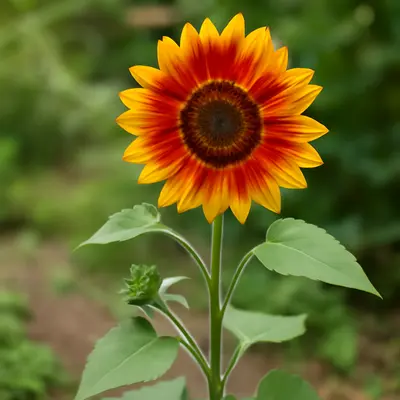
Unique bicolor flower pattern sets this beauty ablaze with autumn colors. Blooms average 5-6" across, but with tight spacing will be slightly smaller. Stem length is 16-34". Day-length neutral. Minimal pollen. Branching. AAS Winner.Edible Flowers: Flower buds can be fried and the petals used as a garnish in salads and desserts; the flavor is bittersweet.
Harvest
70-80d
Days to harvest
Sun
Full sun
Zones
2–11
USDA hardiness
Height
1-10 feet
Planting Timeline
Showing dates for Ring of Fire in USDA Zone 7
All Zone 7 flower →Zone Map
Click a state to update dates
Ring of Fire · Zones 2–11
Growing Details
Succession Planting
Ring of Fire blooms once per stem and doesn't rebloom, so succession planting is the only way to keep flowers coming all season. Direct sow every 14-21 days from your last frost date through early July; in zone 7, that's roughly April 1 through July 10. Stop sowing when daytime highs are consistently above 90°F — germination drops off sharply and seedlings struggle to establish in that heat. A May 1 sow paired with a June 1 sow will give you two solid overlapping waves that carry well into late summer.
Complete Growing Guide
Ring of Fire sunflowers offer a spectacular display of autumn-colored blooms that brighten any garden with their unique bicolor petals. These easy-to-grow annuals thrive when started at the right time and given proper care throughout their 70-day growing season.
You can start Ring of Fire seeds indoors 4-6 weeks before your last spring frost, or direct sow them outdoors once soil temperatures reach 50°F and frost danger has passed. Direct sowing is often preferred for sunflowers since they have sensitive taproots that dislike transplanting, but careful indoor starting works fine if you use biodegradable pots. Plant seeds about one inch deep in warm, well-draining soil enriched with compost or aged manure. This variety's variable height range—from 1.5 feet to 10 feet—means soil quality significantly impacts final plant stature, so invest time in soil preparation for taller specimens.
Space Ring of Fire plants 12-18 inches apart; tighter spacing naturally produces the smaller blooms mentioned in the variety description, which can actually create a more balanced garden composition. The soil should drain well to prevent root rot, and a pH between 6.0 and 7.5 is ideal. Work in balanced fertilizer before planting, as these branching sunflowers demand consistent nutrition.
Water deeply but infrequently, aiming for about one inch per week through irrigation or rainfall. Avoid wetting foliage to prevent fungal issues, particularly powdery mildew, which occasionally affects sunflowers in humid conditions. Once established, Ring of Fire is quite drought-tolerant, but regular watering produces sturdier stems and larger blooms. Feed every three weeks with a balanced, water-soluble fertilizer once plants reach 12 inches tall.
The minimal pollen characteristic of Ring of Fire makes it excellent for cut arrangements and reduces allergen issues, but watch for spider mites in hot, dry conditions—they particularly target low-pollen varieties. Inspect leaf undersides regularly and spray with water or neem oil if populations appear. Sunflower beetles occasionally damage foliage; handpick them early in the season for best control.
The branching nature of this variety means you can pinch the central stem when plants reach 12 inches to encourage a fuller, bushier form with multiple blooms. This technique extends the flowering period and creates a more dramatic display. Consider succession planting every two weeks through midsummer for continuous blooms into fall.
One critical mistake gardeners make with Ring of Fire is underestimating its structural needs. Even dwarf sunflowers benefit from gentle staking or support, especially in windy locations or after heavy rain. The branching habit and moderate stem lengths make these plants top-heavy once blooms develop, so stake early before plants reach full height. Regular deadheading of spent flowers encourages continued blooming throughout the season and prevents excessive self-seeding.
Harvesting
Ring of Fire reaches harvest at 70 - 80 days from sowing per Johnny's Selected Seeds. Expect 5-6" at peak. As an annual, harvest continues until frost ends the season.
Seeds are ovoid and somewhat flattened
Color: Black, Brown/Copper. Type: Achene. Length: < 1 inch. Width: < 1 inch.
Garden value: Edible
Harvest time: Fall
Edibility: Seeds are used for cooking oil, livestock feed, and as a snack food or garnish. Petals are edible and young flower buds can be steamed like artichokes.
Storage & Preservation
For fresh flowers, keep "Ring of Fire" in a cool location (65-72°F) away from direct sunlight and ripening fruit, which emit ethylene gas. Store in a vase with clean, room-temperature water changed daily for maximum vase life of 7-10 days. For preservation, press petals between parchment paper under books for 1-2 weeks to create dried floral decorations. Alternatively, dry whole flower heads upside-down in a dark, well-ventilated area for 2-3 weeks, then store in airtight containers. For edible use, freeze cleaned petals in ice cube trays with water for 3-4 months.
History & Origin
Ring of Fire is open-pollinated, meaning seed saved from healthy plants will produce true-to-type offspring. Listed in the Johnny's Selected Seeds catalog.
Origin: Western United States
Advantages
- +Stunning bicolor autumn-colored blooms make dramatic garden focal points year-round
- +AAS winner designation confirms superior quality and performance in trials
- +Minimal pollen reduces allergies and keeps bees safer while visiting
- +Branching habit produces multiple flowers from single plant for abundance
- +Day-length neutral flowering allows reliable blooms regardless of growing location
Considerations
- -5-6 inch blooms shrink noticeably when planted too close together
- -Tall 16-34 inch stems require staking in windy locations for support
- -Edible flowers have bittersweet taste limiting culinary appeal for some palates
Companion Plants
Marigolds and nasturtiums earn the front row here — marigolds push out aphids and whiteflies through root and foliar compounds, while nasturtiums draw aphids onto themselves and off your sunflowers. Borage and alyssum pull in hoverflies and parasitic wasps that knock back pest pressure without much effort on your part. Give Ring of Fire a wide berth from black walnut (Juglans nigra): juglone leaches through the root zone and will stunt or kill nearby plants within 50-60 feet. Skip planting next to tall sunflower varieties too — they'll shade these out and crowd the root zone before the 70-day mark.
Plant Together
Marigolds
Repel nematodes and aphids while attracting beneficial insects
Nasturtiums
Act as trap crops for aphids and cucumber beetles, repel squash bugs
Borage
Attracts pollinators and beneficial predatory insects, improves soil
Alyssum
Attracts hover flies and parasitic wasps that control pest insects
Calendula
Repels aphids, whiteflies, and thrips while attracting beneficial insects
Dill
Attracts beneficial wasps and ladybugs that prey on garden pests
Cosmos
Attracts beneficial insects and provides habitat for natural pest predators
Zinnia
Attracts butterflies, bees, and beneficial predatory insects
Keep Apart
Black Walnut
Produces juglone toxin that inhibits growth and can kill sensitive plants
Eucalyptus
Releases allelopathic compounds that suppress nearby plant growth
Large Sunflowers
Create excessive shade and compete aggressively for nutrients and water
Troubleshooting Ring of Fire
What you'll see, why it happens, and what to do about it.
Seedling stems pinch off at soil level, whole plant topples over
Likely Causes
- Damping off (Pythium or Rhizoctonia spp.) — fungal rot triggered by cold, waterlogged soil
- Sowing too deep in heavy clay that stays wet
What to Do
- 1.Don't water again until the top inch of soil is dry — overwatering is the main driver here
- 2.Scratch a thin layer of sand or perlite around the base of surviving seedlings to improve surface drainage
- 3.Start fresh in a sterile seed-starting mix; don't reuse last year's tray soil
Leaves stippled silver-gray, fine webbing visible on undersides, plants look dusty and tired
Likely Causes
- Two-spotted spider mite (Tetranychus urticae) — population explosions happen fast in hot, dry spells above 85°F
- Plants under drought stress are hit harder and recover slower
What to Do
- 1.Blast the undersides of leaves with a firm stream of water three days in a row — it physically removes mites and breaks the cycle
- 2.Apply insecticidal soap or neem oil at dusk, coating the undersides thoroughly; repeat every 5-7 days for two to three rounds
- 3.Water consistently — a sunflower that's been dry for a week can't outgrow a mite infestation the way a well-watered one can
Tall plants leaning or snapping at the stem after wind or heavy rain, well before 70 days
Likely Causes
- Spacing under 18 inches causes stems to etiolate and stay thin as plants compete for light
- Excess nitrogen early on pushes fast, weak shoot growth with insufficient lignification
What to Do
- 1.Stake plants individually with a bamboo cane once they hit 18 inches tall — don't wait for them to fall
- 2.Drop high-nitrogen fertilizers after the first 30 days; switch to a lower-nitrogen bloom formula or just stop feeding altogether
- 3.Next sowing, hold to at least 18-inch spacing — thicker stems come from good light and airflow, not from extra feeding
Frequently Asked Questions
How long do 'Ring of Fire' flowers last in a vase?▼
Is 'Ring of Fire' a good flower for beginners to grow?▼
Can I grow 'Ring of Fire' flowers in containers?▼
What does 'Ring of Fire' taste like and how do I use it in cooking?▼
When should I plant 'Ring of Fire' seeds?▼
How far apart should I space 'Ring of Fire' plants?▼
Zone-by-Zone Planting Calendar
| Zone | Indoor Start | Transplant | Direct Sow | Harvest |
|---|---|---|---|---|
| Zone 1 | May – June | July – August | July – September | — |
| Zone 2 | April – May | June – July | June – August | — |
| Zone 11 | January – January | January – February | January – March | — |
| Zone 12 | January – January | January – February | January – March | — |
| Zone 13 | January – January | January – February | January – March | — |
| Zone 3 | April – May | June – July | June – August | — |
| Zone 4 | March – April | June – June | June – July | — |
| Zone 5 | March – April | May – June | May – July | — |
| Zone 6 | March – April | May – June | May – July | — |
| Zone 7 | February – March | April – May | April – June | — |
| Zone 8 | February – March | April – May | April – June | — |
| Zone 9 | January – February | March – April | March – May | — |
| Zone 10 | January – January | February – March | February – April | — |
Growing Guides from Wind River Greens
Sources & References
External authority sources used in compiling this guide.
- BreederJohnny's Selected Seeds
See the Methodology page for how this data is sourced, what's AI-assisted, and known limitations.