Amara
Brassica carinata
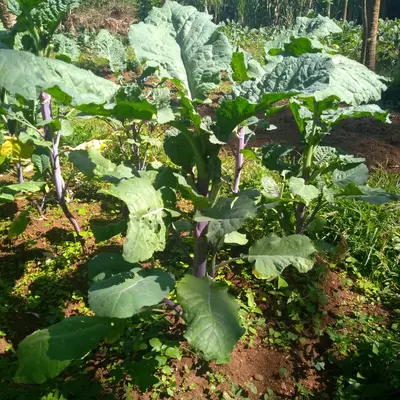
The attractive dark green leaves are gently savoyed with a scalloped margin; tender and succulent; and have a rich, savory flavor. Good in salads or as a cooked green. While technically a mustard, Amara is known as Ethiopian kale, Highland kale, Abyssinian mustard, and Texsel greens. Plant Variety Protected.
Harvest
21d
Days to harvest
Sun
Full sun to part shade
Zones
6–9
USDA hardiness
Height
0 ft. 10 in. - 2 ft. 0 in.
Planting Timeline
Showing dates for Amara in USDA Zone 7
All Zone 7 lettuce →Zone Map
Click a state to update dates
Amara · Zones 6–9
Growing Details
Succession Planting
In zone 7, direct sow Amara every 14 days starting around March 1 and keep going through early May. Once daytime highs are consistently hitting 80°F — which in Georgia can happen by late May — the leaves turn bitter and tough quickly, so don't bother with a late-spring sowing if you've already missed the window. Pick it back up in late August for a fall run, sowing every 2 weeks through early October; flavor actually improves after the first light frost pulls some of the sharpness out.
Each sowing turns around in 21 days, so even a single 4-foot row planted every two weeks gives you a near-continuous cut without any one planting bolting all at once.
Complete Growing Guide
The attractive dark green leaves are gently savoyed with a scalloped margin; tender and succulent; and have a rich, savory flavor. Good in salads or as a cooked green. While technically a mustard, Amara is known as Ethiopian kale, Highland kale, Abyssinian mustard, and Texsel greens. Plant Variety Protected. According to Johnny's Selected Seeds, Amara is 21 baby to maturity, open pollinated. Notable features: Plant Variety Protected, Hydroponic Performer.
Light: Full sun (6 or more hours of direct sunlight a day), Partial Shade (Direct sunlight only part of the day, 2-6 hours). Soil: Clay, Loam (Silt), Sand. Soil pH: Acid (<6.0), Neutral (6.0-8.0). Drainage: Good Drainage, Moist. Height: 0 ft. 10 in. - 2 ft. 0 in.. Spread: 1 ft. 0 in. - 2 ft. 0 in.. Spacing: 12 inches-3 feet. Growth rate: Medium. Maintenance: Medium. Propagation: Seed, Stem Cutting. Regions: Coastal, Mountains, Piedmont.
Harvesting
Amara reaches harvest at 21 baby from sowing per Johnny's Selected Seeds.
The fruits dry and split when ripe.
Color: Brown/Copper, Green. Type: Siliqua. Length: > 3 inches.
Garden value: Edible
Harvest time: Fall, Summer
Bloom time: Spring, Summer
Edibility: The foliage is edible raw or cooked but when cooked can emit an unpleasant odor.
Storage & Preservation
Harvest Amara lettuce at peak tenderness (around 21 days) and cool immediately in the refrigerator to slow respiration. Store in a perforated plastic bag or breathable container at 32–35°F with 95% humidity; properly chilled heads keep 2–3 weeks. For longer preservation, freezing works best for cooked applications—blanch briefly in boiling water (2 minutes), shock in ice water, drain thoroughly, and freeze in airtight containers for up to 10 months. Amara's robust, slightly peppery leaves also dry exceptionally well; hang-dry in a warm, dark space or use a dehydrator at 95–105°F until crisp, then store in sealed jars. Fermentation is another option: shred and salt at 2–3% by weight, pack tightly, and refrigerate under brine for a tangy preserve lasting several months.
History & Origin
Brassica carinata is a species of flowering plant in the Brassicaceae family. It is referred to by the common names Ethiopian Kale, Ethiopian rape or Ethiopian mustard. It is believed to be a hybrid between Brassica nigra and Brassica oleracea.
Advantages
- +Attractive dark green savoyed leaves with scalloped edges enhance visual appeal
- +Quick 21-day harvest makes Amara ideal for succession planting and fast turnover
- +Versatile use in both raw salads and cooked applications increases culinary options
- +Rich, savory mustard flavor distinguishes it from mild conventional lettuce varieties
- +Tender and succulent texture provides excellent eating quality when harvested promptly
Considerations
- -Plant Variety Protected status may limit seed saving and increase annual seed costs
- -Mustard family heritage means potential susceptibility to cabbage moths and flea beetles
- -Savoyed leaf texture can trap soil and require thorough washing before consumption
- -Prefers consistent moisture; irregular watering may cause bitterness or premature bolting
Companion Plants
Radishes and carrots make good row neighbors for Amara — radishes in particular draw flea beetles away from the brassica leaves, and their shallow roots don't compete with Amara's feeding zone. Marigolds (Tagetes patula) planted at the bed edges put off enough of a scent to confuse aphids and cabbage moths on approach. Nasturtiums pull double duty: they attract aphid colonies onto themselves, keeping pressure off the main crop, and they're edible if you want to throw them in a salad box alongside the Amara. Garlic and chives at the corners add another layer of pest confusion without taking up meaningful space.
Broccoli is the pairing to skip. Both are brassicas, and stacking them together concentrates flea beetles and cabbage moths in one spot — in zone 7 Georgia, where flea beetle pressure shows up hard by late March, that kind of clustering gets expensive fast. Sunflowers and tomatoes both compete aggressively for water and cast enough shade to stunt a low-growing crop that only needs 21 days to reach harvest.
Plant Together
Carrots
Deep roots don't compete with shallow lettuce roots, maximizes garden space
Radishes
Quick-growing radishes help break up soil and can be harvested before lettuce needs space
Marigolds
Natural pest deterrent, repels nematodes and aphids while attracting beneficial insects
Spinach
Similar growing requirements and harvest times, efficient use of garden space
Garlic
Strong scent deters slugs, snails, and aphids that commonly attack lettuce
Nasturtiums
Acts as trap crop for aphids and cucumber beetles, protecting lettuce
Dill
Attracts beneficial predatory insects like ladybugs and lacewings
Chives
Repels aphids and other soft-bodied insects that damage lettuce leaves
Keep Apart
Broccoli
Heavy feeder that competes for nutrients and can shade out lettuce
Sunflowers
Allelopathic compounds inhibit lettuce growth and tall plants create excessive shade
Tomatoes
Large root system competes for water and nutrients needed by shallow-rooted lettuce
Nutrition Facts
Per 100g serving. % Daily Value based on 2,000 calorie diet. Source: USDA FoodData Central (FDC #2346388)
Pests & Disease Resistance
Common Pests
Flea beetles, aphids, cabbage moths
Diseases
Downy mildew, leaf spot, damping off
Troubleshooting Amara
What you'll see, why it happens, and what to do about it.
Seedlings collapse at soil level within the first 7–10 days after germination, sometimes with a white fuzzy mold on the soil surface nearby
Likely Causes
- Damping off — a complex of soil-borne fungi (Pythium spp., Rhizoctonia solani) that thrive in cold, wet, poorly drained soil
- Overwatering combined with low airflow around seedlings
What to Do
- 1.Don't reuse old potting mix for starts — fresh, sterile seed-starting mix cuts the risk significantly
- 2.Water from below when possible, and let the top of the soil dry slightly between waterings
- 3.Thin to one seedling per cell immediately after germination so air can move between plants — NC State's IPM guidance on damping off points to crowding as a key aggravating factor
Tiny, irregular shot-holes scattered across young leaves, most visible on seedlings under 4 inches tall
Likely Causes
- Flea beetles (Phyllotreta spp.) — small, jumping beetles that chew through leaf tissue and are worst in dry spring weather
What to Do
- 1.Cover transplants or direct-sown beds with row cover immediately — flea beetles find hosts by smell and sight, and physical exclusion beats any spray for consistent control
- 2.Leave the cover on until plants clear 6 inches and the foliage toughens up
- 3.If pressure is already heavy, a spinosad-based spray applied in the evening will knock populations back without harming beneficial insects
Pale yellow angular patches on upper leaf surface with gray-purple fuzzy growth on the underside, spreading across multiple leaves
Likely Causes
- Downy mildew (Bremia lactucae or related strains on brassica-family crops) — favored by cool nights, high humidity, and overhead irrigation
What to Do
- 1.Switch to drip irrigation or water at the base of plants early in the morning so leaves dry before nightfall
- 2.Strip affected leaves and dispose of them in the trash, not the compost pile
- 3.Rotate Amara out of the same bed for at least one full season — the pathogen overwinters in soil and plant debris
Small water-soaked spots on leaves that turn tan or brown with a yellow halo, progressing from older leaves upward
Likely Causes
- Leaf spot — likely Cercospora or Alternaria spp., both of which splash up from soil and worsen after rain events
- Dense planting at less than 12-inch spacing that traps moisture around foliage
What to Do
- 1.Mulch beds with 2–3 inches of straw to stop soil splash during rain
- 2.Space plants at the full 12–18 inch recommendation so leaves aren't touching neighbors
- 3.At first sign, pull and bag the affected leaves — waiting for the whole plant to go means the spores have already spread
Frequently Asked Questions
How long does it take to grow Amara lettuce?▼
Is Amara lettuce good for beginners?▼
Can you grow Amara in containers?▼
What does Amara lettuce taste like?▼
How much light does Amara need?▼
When should I plant Amara lettuce?▼
Zone-by-Zone Planting Calendar
| Zone | Indoor Start | Transplant | Direct Sow | Harvest |
|---|---|---|---|---|
| Zone 1 | — | — | June – July | June – September |
| Zone 2 | — | — | May – July | June – September |
| Zone 11 | — | — | January – February | January – December |
| Zone 12 | — | — | January – February | January – December |
| Zone 13 | — | — | January – February | January – December |
| Zone 3 | — | — | May – June | May – October |
| Zone 4 | — | — | April – June | May – October |
| Zone 5 | — | — | April – May | May – November |
| Zone 6 | — | — | April – May | April – November |
| Zone 7 | — | — | March – May | April – November |
| Zone 8 | — | — | March – April | March – December |
| Zone 9 | — | — | February – March | February – December |
| Zone 10 | — | — | January – March | February – December |
Growing Guides from Wind River Greens
Sources & References
External authority sources used in compiling this guide.
- BreederJohnny's Selected Seeds
- USDAUSDA FoodData Central
See the Methodology page for how this data is sourced, what's AI-assisted, and known limitations.