Fancy Smokey Eyes
Consolida ajacis
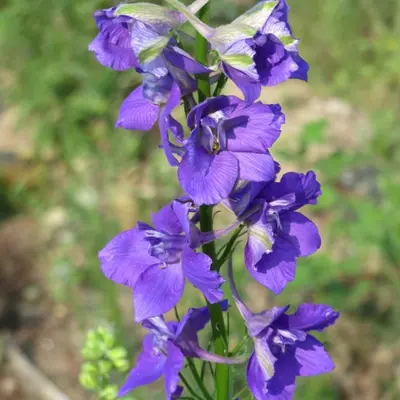
Features tall spires of dense florets. Unique, silvery white blooms with lavender centers and subtle lavender blush. Produces mostly double blooms with a small percentage of singles. 1 1/2-1 3/4" florets on 9-12" flower spikes. Attracts hummingbirds.
Harvest
80-90d
Days to harvest
Sun
Full sun
Zones
1–11
USDA hardiness
Height
3-4 feet
Planting Timeline
Showing dates for Fancy Smokey Eyes in USDA Zone 7
All Zone 7 flower →Zone Map
Click a state to update dates
Fancy Smokey Eyes · Zones 1–11
Growing Details
Succession Planting
Larkspur blooms once per plant — it puts up its spike, sets seed, and it's finished, all within an 80–90 day window. To stretch that into a longer display, direct sow every 3 weeks from early spring through early summer, stopping when daytime highs are consistently above 80°F. Past that threshold, germination drops off sharply and plants that do come up tend to bolt fast without putting on much of a show.
A fall sowing is worth trying in zone 7: put seed in the ground in October and let it cold-stratify naturally over winter. Those overwintered plants tend to break dormancy earlier and bloom harder than anything direct-sown in spring — often by 2 to 3 weeks.
Complete Growing Guide
Fancy Smokey Eyes thrives in full sun with cool growing conditions, so timing your planting is the single biggest factor in success. In zones 7 and warmer, sow seeds outdoors in fall or very early spring — larkspur seeds need cold stratification to germinate well. In colder zones (3–6), refrigerate seeds in a damp paper towel for 1–2 weeks before sowing, then direct sow as soon as the soil can be worked, even if frost is still expected. Larkspur actively dislikes heat, and seedlings established during cool weather will reward you with the tallest, most floriferous spikes.
Choose a site with well-drained, fertile soil. Work in 2–3 inches of compost before planting, along with a balanced organic fertilizer. Larkspur resents soggy roots, so amend heavy clay with coarse sand or aged bark. The seeds are slow and finicky to germinate (14–28 days), so be patient and keep the seedbed consistently moist but never waterlogged. Direct sowing is strongly preferred over transplanting — larkspur has a sensitive taproot that resents disturbance.
Thin seedlings to 8–12 inches apart once they're 2–3 inches tall. Crowded plants produce weak, short spikes prone to flopping. As plants reach 12 inches, side-dress with a light feeding of balanced fertilizer (a 5-5-5 works well) or a diluted fish emulsion every 3–4 weeks. Avoid heavy nitrogen, which produces lush foliage at the expense of bloom spikes.
Because Fancy Smokey Eyes sends up tall, dense spires, staking is highly recommended in windy locations. Install Hortonova netting horizontally at 12 inches before plants reach that height, or use individual bamboo stakes with soft ties. Once buds form, water consistently at the base — overhead watering invites powdery mildew and can topple top-heavy spikes.
The most common mistake gardeners make is sowing too late. Larkspur planted after soil temperatures climb above 65°F will germinate poorly or bolt without producing quality blooms. The second mistake is overcrowding; resist the urge to skip thinning. To maximize yield, harvest spikes regularly — cutting encourages secondary side shoots, extending your bloom window by 2–3 weeks.
In zones 7+, allow a few spikes to set seed at the end of the season and self-sow; you'll often have volunteer seedlings the following spring with no extra effort. All parts of larkspur are toxic if ingested, so plant away from areas where pets or livestock graze.
Harvesting
Harvest Fancy Smokey Eyes when roughly one-third of the florets on a spike have opened and the remaining buds show color but haven't yet unfurled. Spikes harvested too tight will fail to open in the vase; those cut too late will shatter quickly. Cut in the cool of early morning when stems are fully turgid, using sharp, clean snips. Make your cut deep into the plant — at least 12–18 inches down the stem — to encourage longer side shoots for subsequent harvests. Immediately plunge stems into cool water with floral preservative and allow them to hydrate in a cool, dark spot for at least two hours before arranging. Strip any foliage that will sit below the waterline to prevent bacterial buildup. For dried arrangements, harvest when about half the florets are open and hang upside down in a dark, well-ventilated space for 2–3 weeks. Wear gloves when handling — larkspur sap can irritate sensitive skin.
Storage & Preservation
Fresh-cut Fancy Smokey Eyes spikes last 5–8 days in the vase when handled properly. Store cut stems in clean water with floral preservative at 38–40°F if you need to hold them; cover loosely with a plastic sleeve to maintain humidity and prevent floret drop. Recut stems every 2–3 days and refresh the water to maximize vase life. For long-term preservation, air-drying is the gold standard: bundle 4–6 stems loosely with rubber bands and hang upside down in a dark, dry room with good airflow for 2–3 weeks. Dried spikes retain their smoky lavender tones beautifully for over a year. Silica gel drying preserves more vibrant color and three-dimensional form, though it works best on individual florets. Pressed larkspur florets also work wonderfully in botanical art and resin crafts.
History & Origin
Fancy Smokey Eyes is a modern selection within the larkspur family (Consolida ajacis), a group of annuals with a long horticultural history dating back to European cottage gardens of the 16th and 17th centuries. Larkspur takes its name from the spurred shape of each individual floret, said to resemble a lark's claw. Cultivated heirloom larkspurs were beloved Victorian-era cut flowers, valued for their tall spikes and long vase life. Fancy Smokey Eyes was developed and popularized by specialty cut flower seed companies — most notably introduced through Floret Flower Farm and similar small-scale breeders — as part of a broader revival of romantic, vintage-toned cut flowers among artisan flower farmers. Its smoky, dusky-lavender coloration was specifically selected to fit the muted, antique palette favored in modern wedding florals and editorial design work, distinguishing it from the brighter, more saturated larkspurs of older catalogs.
Advantages
- +Unique smoky silver-white-and-lavender coloration that's hard to find in other larkspurs
- +Tall 9–12" flower spikes ideal for cut flower production and bouquet work
- +Predominantly double florets give spikes a fuller, more luxurious appearance
- +Reliably attracts hummingbirds and pollinators
- +Self-sows readily in zones 7+, returning year after year with no replanting
- +Excellent for both fresh and dried floral arrangements, retaining color when dried
- +Cold-hardy seedlings tolerate light spring frosts, allowing very early planting
Considerations
- -Slow, erratic germination requires cold stratification and patience
- -Resents transplanting due to a sensitive taproot — direct sowing only
- -All plant parts are toxic if ingested, making it unsuitable around grazing pets or livestock
- -Tall spikes flop without staking or netting in windy or rainy conditions
- -Performs poorly in hot summers; bolts and declines once temps consistently exceed 80°F
Companion Plants
Marigolds and sweet alyssum do the most work here. French marigolds (like 'Petit Bouquet') repel aphids through scent and pull in parasitic wasps that keep pest pressure down. Sweet alyssum draws hoverflies, whose larvae eat aphids directly — and since larkspur's soft new growth is exactly what aphid colonies want, having alyssum planted within a foot or two of your larkspur is genuinely useful rather than decorative. Cosmos and zinnias round things out nicely in a cutting bed: they attract beneficials without muscling in on root space.
Fennel actively suppresses neighboring annuals through allelopathic root secretions — keep it on a completely different part of the property. Black walnut is a harder problem: its roots produce juglone, a compound toxic to a wide range of plants, and larkspur isn't going to shrug that off. If you have a walnut on your land, don't plant larkspur anywhere its roots might reach. Eucalyptus leaf litter carries similar compounds; avoid using it as mulch anywhere near this bed.
Plant Together
Marigolds
Repel aphids, whiteflies, and nematodes while attracting beneficial insects
Sweet Alyssum
Attracts beneficial insects like lacewings and provides ground cover
Nasturtiums
Act as trap crops for aphids and cucumber beetles, repel squash bugs
Lavender
Repels moths, fleas, and mosquitoes while attracting pollinators
Cosmos
Attract beneficial insects and provide habitat for predatory insects
Zinnia
Attract butterflies and beneficial insects while providing color contrast
Catmint
Repels aphids, ants, and rodents while attracting beneficial pollinators
Salvia
Attracts pollinators and hummingbirds while deterring harmful insects
Keep Apart
Fennel
Releases allelopathic compounds that suppress growth of nearby flowers
Eucalyptus
Produces allelopathic chemicals that inhibit seed germination and plant growth
Black Walnut
Produces juglone toxin that inhibits growth of most flowering plants
Pests & Disease Resistance
Common Pests
Aphids, slugs, snails
Diseases
Powdery mildew, crown rot, bacterial leaf spot
Troubleshooting Fancy Smokey Eyes
What you'll see, why it happens, and what to do about it.
White powdery coating on upper leaf surfaces, usually showing up mid-season when plants are 18–24 inches tall
Likely Causes
- Powdery mildew (Erysiphe spp.) — thrives in warm days with cool nights and poor airflow
- Crowded spacing below the recommended 8 inches, trapping humidity around foliage
What to Do
- 1.Cut out the worst-affected stems and dispose of them — don't compost
- 2.Thin plants to at least 10 inches apart if you planted dense
- 3.Spray with a diluted neem oil solution (2 tsp per quart of water) every 7 days until it stops spreading
Stems collapsing at soil level, plant wilts and dies quickly even when soil isn't dry
Likely Causes
- Crown rot (Sclerotium rolfsii or Phytophthora spp.) — almost always tied to waterlogged soil or heavy clay that holds moisture against the crown
- Planting too deep, burying the crown at transplant
What to Do
- 1.Pull and trash the affected plant — there's no saving it once the crown is gone
- 2.Improve drainage before replanting: work in perlite or coarse compost to raise the bed 2–3 inches
- 3.Don't replant larkspur in the same spot for at least one full season
Ragged, irregular holes in lower leaves and young stems overnight, slime trails visible in the morning
Likely Causes
- Slugs or snails — worst in cool, wet springs, especially where mulch or debris gives them daytime cover
What to Do
- 1.Scatter iron phosphate bait (Sluggo or equivalent) around the base of plants at first sign of damage
- 2.Pull mulch back 3–4 inches from stems to reduce hiding spots
- 3.Set out a shallow dish of beer at soil level — slugs go in and don't come out
Frequently Asked Questions
How long does Fancy Smokey Eyes larkspur take to grow?▼
Is Fancy Smokey Eyes good for beginners?▼
Can you grow Fancy Smokey Eyes in containers?▼
When should I plant Fancy Smokey Eyes seeds?▼
Why won't my larkspur seeds germinate?▼
Does Fancy Smokey Eyes come back every year?▼
Zone-by-Zone Planting Calendar
| Zone | Indoor Start | Transplant | Direct Sow | Harvest |
|---|---|---|---|---|
| Zone 1 | May – June | July – August | July – September | — |
| Zone 2 | April – May | June – July | June – August | — |
| Zone 11 | January – January | January – February | January – March | — |
| Zone 12 | January – January | January – February | January – March | — |
| Zone 13 | January – January | January – February | January – March | — |
| Zone 3 | April – May | June – July | June – August | — |
| Zone 4 | March – April | June – June | June – July | — |
| Zone 5 | March – April | May – June | May – July | — |
| Zone 6 | March – April | May – June | May – July | — |
| Zone 7 | February – March | April – May | April – June | — |
| Zone 8 | February – March | April – May | April – June | — |
| Zone 9 | January – February | March – April | March – May | — |
| Zone 10 | January – January | February – March | February – April | — |
Growing Guides from Wind River Greens
Sources & References
External authority sources used in compiling this guide.
- BreederJohnny's Selected Seeds
See the Methodology page for how this data is sourced, what's AI-assisted, and known limitations.