Oklahoma Salmon
Zinnia elegans
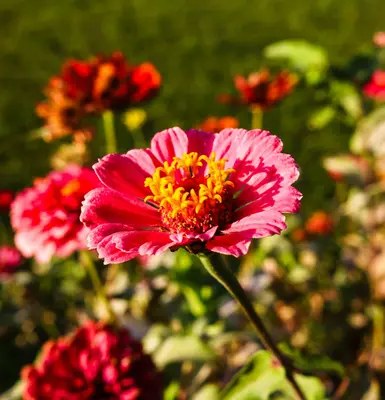
Blooms are 1 1/2-2 1/2", double and semidouble. These petite, yet sturdy, blooms make excellent, reliable accent flowers for market bouquets, wedding flowers, and event work. Cut-and-come-again flower, yielding multiple cuts over the season.
Harvest
75-90d
Days to harvest
Sun
Full sun
Zones
2–11
USDA hardiness
Height
0-3 feet
Planting Timeline
Showing dates for Oklahoma Salmon in USDA Zone 7
All Zone 7 flower →Zone Map
Click a state to update dates
Oklahoma Salmon · Zones 2–11
Growing Details
Succession Planting
Oklahoma Salmon produces continuously once it starts flowering — deadhead regularly and it'll keep going until frost, so you don't need to succession sow the way you would with lettuce or radishes. A staggered start does give you an extended window of peak-quality cuts, though. In zone 7, direct sow a first round in mid-April once soil temps hit 60°F, then put in a second round in late May or early June. That second planting carries you hard into September and October when the first planting starts to look ratty.
Stop direct sowing by late June — seeds sown after that germinate into daytime highs above 90°F and tend to produce smaller plants that never quite catch up before fall. If you want flowers right up to first frost, set out transplants in late July instead of direct sowing.
Complete Growing Guide
Blooms are 1 1/2-2 1/2", double and semidouble. These petite, yet sturdy, blooms make excellent, reliable accent flowers for market bouquets, wedding flowers, and event work. Cut-and-come-again flower, yielding multiple cuts over the season. According to Johnny's Selected Seeds, Oklahoma Salmon is 75 - 90 days to maturity, annual, open pollinated. Notable features: Grows Well in Containers, Use for Cut Flowers and Bouquets.
Light: Full sun (6 or more hours of direct sunlight a day). Soil: High Organic Matter, Loam (Silt). Soil pH: Acid (<6.0), Alkaline (>8.0), Neutral (6.0-8.0). Drainage: Good Drainage, Occasionally Dry. Height: 0 ft. 6 in. - 3 ft. 0 in.. Spread: 0 ft. 8 in. - 1 ft. 0 in.. Spacing: 12 inches-3 feet. Growth rate: Rapid. Maintenance: Medium. Propagation: Seed. Regions: Coastal, Mountains, Piedmont.
Harvesting
Oklahoma Salmon reaches harvest at 75 - 90 days from sowing per Johnny's Selected Seeds. Expect 1 1/2-2 1/2" at peak. As an annual, harvest continues until frost ends the season.
Type: Achene.
Storage & Preservation
For cut Oklahoma Salmon flowers, place stems in clean water immediately after harvest and store in a cool location, ideally 35-40°F refrigerator with 80-90% humidity. Shelf life is typically 7-10 days with proper care. Preservation methods include: (1) Air-drying by hanging bundles upside down in a cool, dry, dark space for 2-3 weeks to create long-lasting dried arrangements; (2) Pressing flowers between absorbent paper under weight for 2-3 weeks for craft and scrapbooking projects; (3) Glycerin conditioning by replacing water with a glycerin solution to extend freshness and add subtle sheen while maintaining natural color longer than water alone.
History & Origin
Oklahoma Salmon is open-pollinated, meaning seed saved from healthy plants will produce true-to-type offspring. Listed in the Johnny's Selected Seeds catalog.
Origin: Mexico
Advantages
- +Petite double blooms perfect for wedding and event floral arrangements
- +Reliable cut-and-come-again producer yields multiple harvests throughout season
- +Sturdy flowers maintain quality in market bouquets without premature wilting
- +Easy to grow with minimal care requirements for commercial growers
- +Attractive salmon color provides unique accent distinct from common zinnia shades
Considerations
- -Smaller bloom size limits use as statement flowers in arrangements
- -Susceptible to powdery mildew in humid or poorly ventilated growing conditions
- -Requires consistent deadheading to maintain prolonged cut-and-come-again productivity
Companion Plants
Marigolds and nasturtiums earn their spot for different reasons. French marigolds (like 'Petite Gold') push out root secretions that suppress soil nematodes, and their scent confuses aphids and whiteflies well enough to reduce pressure on nearby zinnias. Nasturtiums work more as a decoy — aphids hit them hard and fast, which at least concentrates the damage somewhere you can knock it back with a jet of water or insecticidal soap. Alyssum and borage both pull in parasitic wasps and hoverflies that prey on caterpillars and aphid colonies, so they're worth planting along the border edges. In our zone 7 Georgia garden, that beneficial insect activity matters most from June onward, once pest pressure climbs with the humidity.
Black walnut is the one to keep well away from — juglone, the compound its roots release, moves through the soil far enough that zinnias planted within the drip line will stunt or die without any obvious explanation. Fennel is a subtler problem: it produces anethole and other root exudates that suppress neighboring annuals, and it tends to draw swallowtail caterpillars that don't stay put.
Plant Together
Marigolds
Repel nematodes and aphids while attracting beneficial insects
Nasturtiums
Act as trap crops for aphids and cucumber beetles, add nitrogen to soil
Alyssum
Attracts beneficial insects like lacewings and provides ground cover
Zinnias
Attract pollinators and beneficial predatory insects while providing complementary colors
Petunias
Repel aphids, tomato hornworms, and other garden pests
Lavender
Repels moths, fleas, and mosquitoes while attracting pollinators
Cosmos
Attract beneficial insects and provide structure without competing for nutrients
Borage
Attracts pollinators and may improve growth of nearby flowering plants
Keep Apart
Black Walnut
Releases juglone toxin that inhibits growth of many flowering plants
Eucalyptus
Allelopathic compounds suppress growth of nearby plants
Fennel
Inhibits growth of most garden plants through allelopathy
Troubleshooting Oklahoma Salmon
What you'll see, why it happens, and what to do about it.
White powdery coating on leaves and stems, usually showing up mid-summer after plants have been in the ground 6-8 weeks
Likely Causes
- Powdery mildew (Erysiphe cichoracearum) — a fungal disease that thrives when nights cool down but days stay warm and humid
- Poor airflow from crowding plants closer than 12 inches
What to Do
- 1.Strip and trash affected leaves — don't compost them
- 2.Space new plantings at least 15-18 inches apart to improve airflow
- 3.Apply a diluted neem oil spray (2 tsp per quart of water) every 7 days until symptoms stop spreading
Stems collapsing at soil level on seedlings, usually within the first 2 weeks after germination
Likely Causes
- Damping off — most commonly caused by Pythium or Rhizoctonia fungi in overly wet, poorly draining seed-starting mix
- Overwatering or trays left sitting in standing water
What to Do
- 1.Let the top inch of seed-starting mix dry out between waterings
- 2.Use a sterile seed-starting mix rather than garden soil or reused potting mix
- 3.If starting indoors in February or March, run a small fan near the seedlings for 30 minutes a day to dry surface moisture
Flower heads developing gray-brown fuzzy rot, especially after a stretch of rainy days
Likely Causes
- Botrytis blight (Botrytis cinerea) — a gray mold that attacks spent or damaged petals first, then spreads to healthy tissue
- Deadheading neglected too long, leaving rotting petals attached to the plant
What to Do
- 1.Deadhead every 5-7 days — cut the stem back to the next lateral bud, not just the spent flower head
- 2.Pick flowers in the morning once dew has dried, and avoid wetting blooms when irrigating
- 3.Remove and trash any fully infected stems; Botrytis cinerea spreads fast once humidity stays above 85% for more than a day or two
Frequently Asked Questions
How long do Oklahoma Salmon cut flowers last in a vase?▼
Is Oklahoma Salmon a good flower variety for beginners?▼
When should I plant Oklahoma Salmon flowers?▼
Can you grow Oklahoma Salmon flowers in containers?▼
What are Oklahoma Salmon flowers best used for?▼
How much space do Oklahoma Salmon flowers need between plants?▼
Zone-by-Zone Planting Calendar
| Zone | Indoor Start | Transplant | Direct Sow | Harvest |
|---|---|---|---|---|
| Zone 1 | May – June | July – August | July – September | — |
| Zone 2 | April – May | June – July | June – August | — |
| Zone 11 | January – January | January – February | January – March | — |
| Zone 12 | January – January | January – February | January – March | — |
| Zone 13 | January – January | January – February | January – March | — |
| Zone 3 | April – May | June – July | June – August | — |
| Zone 4 | March – April | June – June | June – July | — |
| Zone 5 | March – April | May – June | May – July | — |
| Zone 6 | March – April | May – June | May – July | — |
| Zone 7 | February – March | April – May | April – June | — |
| Zone 8 | February – March | April – May | April – June | — |
| Zone 9 | January – February | March – April | March – May | — |
| Zone 10 | January – January | February – March | February – April | — |
Growing Guides from Wind River Greens
Sources & References
External authority sources used in compiling this guide.
- BreederJohnny's Selected Seeds
See the Methodology page for how this data is sourced, what's AI-assisted, and known limitations.