Basil Microgreens
Ocimum basilicum
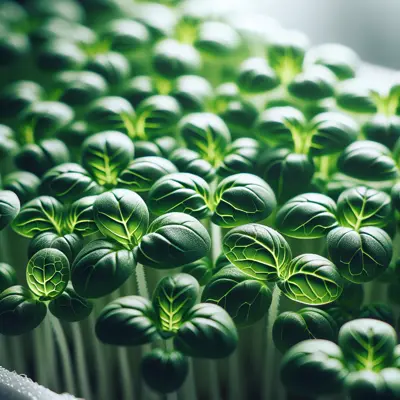
Basil Microgreens are tender young shoots harvested at 10-14 days of growth, featuring delicate green cotyledons and emerging true leaves. These heirloom microgreens mature in 10-14 days under controlled conditions (faster than the listed 74-day timeline for mature plants). Their defining characteristic is the intense basil aroma with complex sweet, peppery notes and subtle anise undertones—delivering concentrated basil flavor in miniature form. Ideal for garnishing salads, soups, pasta, and Mediterranean dishes, they add visual appeal and aromatic depth without the cooking time required for mature basil. Best grown in well-draining potting mix under full sun to partial shade (4-6+ hours daily).
Harvest
74d
Days to harvest
Sun
Full sun to partial shade
Zones
10–10
USDA hardiness
Height
0-3 feet
Planting Timeline
Showing dates for Basil Microgreens in USDA Zone 7
All Zone 7 microgreen →Zone Map
Click a state to update dates
Basil Microgreens · Zones 10–10
Growing Details
Succession Planting
Basil microgreens turn around fast — typically 10–14 days from sow to harvest, not the 74-day figure that applies to full-size basil. Stagger trays every 3–4 days to keep a continuous supply coming. Sow one tray, wait 3 days, sow the next. Because this is an indoor grow, there's no true seasonal cutoff — you can run it year-round as long as you have a consistent light source (a T5 or LED grow light at 14–16 hours per day is enough).
The one variable that will throw off your cadence is temperature. Basil germinates best between 70°F and 80°F; drop below 65°F and germination stretches past the usual 3–7 days, with noticeably uneven sprouting. Keep trays off cold windowsills in winter and away from AC vents in summer, and your 3-to-4-day stagger will stay predictable.
Complete Growing Guide
Starting Basil Microgreens indoors gives you the best control over this moderately challenging cultivar. Begin seeds indoors 6 to 8 weeks before your last spring frost date, or direct sow outdoors after all frost danger has passed and soil temperatures reach at least 70°F. Since this variety takes approximately 74 days to reach harvest maturity, planning your sowing date backward from your desired harvest window ensures you'll have flowers and foliage at peak ornamental value. Indoor starting under grow lights or in a bright, south-facing window will establish stronger seedlings than outdoor sowing in cooler climates.
Prepare a lightweight, well-draining seed-starting mix rich in organic matter for optimal germination. Basil Microgreens seeds should be sown just barely covered—press them gently into the soil surface and cover with only a thin layer of vermiculite or fine compost. Space seedlings 6 to 8 inches apart once they develop their first true leaves, as this variety grows to 16 to 20 inches tall and needs adequate air circulation. The large, dramatically dark foliage requires room to develop without crowding, which helps prevent moisture-related diseases.
Water consistently to keep soil evenly moist but never waterlogged, as Basil Microgreens is particularly susceptible to damping off during the seedling stage. Water early in the morning at soil level rather than overhead to minimize fungal issues. Once established, feed every two weeks with a balanced, diluted liquid fertilizer. Reduce nitrogen slightly once flower buds appear to encourage the striking purple flowers and intensify the red leaf coloration that makes this cultivar so visually appealing.
Watch vigilantly for aphids and spider mites, which are drawn to the tender growth of basil varieties and can quickly colonize the dense foliage. Inspect the undersides of those distinctive large leaves weekly. Fungus gnats thrive in consistently moist conditions, so allow the top inch of soil to dry between waterings and improve air circulation with a small fan running 12 to 16 hours daily alongside your grow lights.
Damping off remains the primary disease threat for Basil Microgreens seedlings, so use sterile soil and avoid overwatering. Fusarium wilt can devastate plants mid-season; if you notice sudden wilting despite adequate moisture, remove and destroy affected plants immediately to prevent spread. Bacterial leaf spot causes dark lesions on foliage—always water at soil level and sanitize pruning tools between cuts.
The most common mistake gardeners make with Basil Microgreens is harvesting too early. Resist picking leaves until the plant has developed substantial height and the purple flowers have appeared. Pinch off flower clusters only if you prefer to redirect energy into leaf production, but these edible flowers possess intense basil flavor and create stunning garnishes that justify their presence on the mature plant.
Harvesting
Basil microgreens reach peak harvest readiness when the distinctive purple flowers emerge and the leaves develop their characteristic deep purple-red coloration, typically around 10-14 days after sprouting. The 2-3 inch leaves should feel tender yet sturdy, with a waxy texture indicating optimal nutrient concentration. For continuous harvests, pinch off the top growth regularly to encourage branching and extend productivity, or perform a single complete harvest by cutting just above the soil line when the first true leaves fully unfurl. Timing your harvest in the morning after the plants have fully hydrated overnight ensures maximum flavor intensity and the most vibrant color contrast between the dark foliage and bright flowers.
Edibility: Leaves and flowers in tea, as flavoring
Storage & Preservation
Fresh basil microgreens are incredibly delicate and best used within hours of harvest for peak flavor and texture. For short-term storage, place unwashed microgreens in a slightly damp paper towel, then seal in a perforated plastic bag. Store in your refrigerator's crisper drawer at 35-40°F—they'll maintain quality for 3-5 days maximum.
Never store basil microgreens wet, as excess moisture causes rapid blackening and decay. The high oil content in basil makes these microgreens particularly susceptible to temperature fluctuations, so avoid leaving them at room temperature.
For preservation, dehydrating works best—spread microgreens on dehydrator trays at 95°F for 4-6 hours until crisp. Store dried microgreens in airtight containers for up to 6 months. You can also freeze them in ice cubes with olive oil for easy addition to cooked dishes, though this destroys their delicate texture. Basil microgreen powder made from dried greens creates an intensely flavored seasoning that stores well in the freezer.
History & Origin
Basil microgreens derive from Ocimum basilicum, the common culinary basil species domesticated thousands of years ago in tropical regions of central Africa and Southeast Asia. While the specific breeding line for this dark purple variety is not well-documented in readily available literature, it represents modern microgreen cultivation techniques applied to basil germplasm. The distinctive nearly black foliage and purple flowers suggest selection within ornamental or specialty basil lines, possibly developed by seed companies focusing on microgreen production during the expansion of the microgreens industry in the early 2000s. The exact parentage and breeding details remain unclear, though the variety exemplifies contemporary work in enhancing visual appeal and flavor intensity for culinary applications.
Origin: Tropical Africa and Asia
Advantages
- +Striking dark purple-black foliage creates visually stunning garnish presentations
- +Intense basil flavor with sweet, peppery, anise notes enhances dishes
- +Edible flowers add elegant decoration to salads, drinks, and desserts
- +Large 2-3 inch leaves provide substantial portions per harvest
Considerations
- -Moderate difficulty level requires careful environmental control and attention
- -Susceptible to multiple pests including aphids, spider mites, fungus gnats
- -74-day growing cycle is longer than many other microgreen varieties
- -Vulnerable to damping off, fusarium wilt, and bacterial leaf spot diseases
Companion Plants
Basil microgreens are usually grown indoors in trays, so in-ground companion logic doesn't apply directly — but it matters if you're running a mixed indoor setup or eventually moving seedlings outside. Tomatoes and peppers share basil's preference for heat and bright light, which makes co-locating them on the same rack practical. There's decent evidence that basil's volatile oils (linalool, eugenol) interfere with aphid host-finding, which is useful since both crops attract the same pest pressure. Marigolds (Tagetes spp.) nearby can help knock back fungus gnats — a persistent problem for any tray-based operation — because the scent disrupts adult egg-laying. Lettuce and cilantro work well on a shared rack because they tolerate the same bottom-watering cadence without complaint.
Keep basil away from common sage and rue. Both produce volatile compounds that suppress basil's growth through documented allelopathic interference — not gardening folklore. Fennel earns the same exclusion; it's broadly allelopathic to most crops, and even a tray sitting nearby has been reported to slow germination in sensitive herbs.
Plant Together
Tomato
Basil repels tomato hornworms and aphids while potentially improving tomato flavor
Pepper
Basil deters aphids, spider mites, and thrips that commonly attack pepper plants
Oregano
Both herbs have similar growing requirements and complementary pest-repelling properties
Marigold
Attracts beneficial insects and repels nematodes that could affect basil root systems
Lettuce
Basil provides natural pest protection for lettuce while both prefer similar light conditions
Cilantro
Compatible growing conditions and cilantro attracts beneficial predatory insects
Chives
Chives repel aphids and other soft-bodied insects that target basil
Parsley
Similar water and light requirements, and parsley attracts beneficial insects like hoverflies
Keep Apart
Rue
Produces allelopathic compounds that can inhibit basil seed germination and growth
Common Sage
Can stunt basil growth through competitive allelopathy and different moisture requirements
Fennel
Releases growth-inhibiting compounds that negatively affect most herbs including basil
Nutrition Facts
Per 100g serving. % Daily Value based on 2,000 calorie diet. Source: USDA FoodData Central (FDC #172232)
Pests & Disease Resistance
Resistance
Susceptible to damping off and fungal issues in humid conditions
Common Pests
Aphids, spider mites, fungus gnats
Diseases
Damping off, fusarium wilt, bacterial leaf spot
Troubleshooting Basil Microgreens
What you'll see, why it happens, and what to do about it.
Seedlings collapsing at the soil line, stems pinching off and turning brown within the first 5–7 days after germination
Likely Causes
- Damping off (Pythium or Rhizoctonia fungi) — triggered by overwatering and poor airflow
- Seeding too thickly, which traps moisture between stems
What to Do
- 1.Switch to bottom watering exclusively — fill the tray beneath and let the medium wick up what it needs
- 2.Run a small fan on low nearby to keep air moving across the surface
- 3.Start fresh; damping off spreads fast and the affected tray is usually a loss
Tiny slow-moving white or yellow insects on the undersides of cotyledons, or fine webbing between stems around day 10–14
Likely Causes
- Spider mites (Tetranychus urticae) — thrive in warm, dry indoor conditions
- Aphids — can hitch in on recycled trays or from nearby houseplants
What to Do
- 1.Harvest immediately if the tray is close to ready — basil microgreens at day 10–14 are often harvestable a day or two early without much loss
- 2.For trays that need more time, spray the canopy once with a diluted neem oil solution (2 tsp per quart of water)
- 3.Sanitize all trays and tools between grows; spider mites overwinter on dirty equipment
Tiny black flies hovering around the tray, seedlings growing slowly or unevenly despite correct watering
Likely Causes
- Fungus gnats (Bradysia spp.) — larvae feed on roots and germinating seeds in consistently moist media
- Overwatering that keeps the top layer of growing medium wet for extended periods
What to Do
- 1.Let the top surface of the medium dry out slightly between waterings — once roots are established, basil microgreens don't need the top to stay wet
- 2.Place yellow sticky traps at tray level to catch adults and get a read on infestation size
- 3.Use fresh, sterile growing medium for each new tray; reusing spent media is the most common entry point
Frequently Asked Questions
How long do basil microgreens take to grow?▼
Can you grow basil microgreens without soil?▼
Why are my basil microgreens falling over and dying?▼
What do basil microgreens taste like compared to regular basil?▼
Do basil microgreens regrow after cutting?▼
Are basil microgreens good for beginners?▼
Zone-by-Zone Planting Calendar
| Zone | Indoor Start | Transplant | Direct Sow | Harvest |
|---|---|---|---|---|
| Zone 1 | January – December | — | — | January – December |
| Zone 2 | January – December | — | — | January – December |
| Zone 11 | January – December | — | — | January – December |
| Zone 12 | January – December | — | — | January – December |
| Zone 13 | January – December | — | — | January – December |
| Zone 3 | January – December | — | — | January – December |
| Zone 4 | January – December | — | — | January – December |
| Zone 5 | January – December | — | — | January – December |
| Zone 6 | January – December | — | — | January – December |
| Zone 7 | January – December | — | — | January – December |
| Zone 8 | January – December | — | — | January – December |
| Zone 9 | January – December | — | — | January – December |
| Zone 10 | January – December | — | — | January – December |
Growing Guides from Wind River Greens
Sources & References
External authority sources used in compiling this guide.
See the Methodology page for how this data is sourced, what's AI-assisted, and known limitations.