Early Flat Dutch Cabbage
Brassica oleracea var. capitata 'Early Flat Dutch'
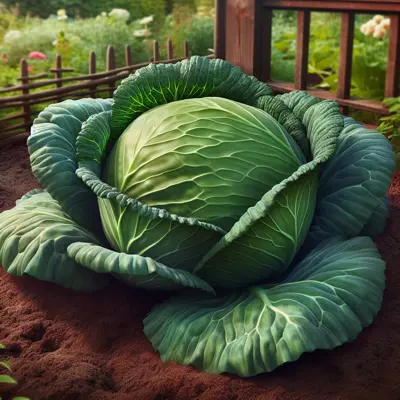
A classic heirloom cabbage dating back to the 1840s, prized for its large, flattened heads that can weigh 10-15 pounds. This reliable variety produces solid, sweet heads with excellent storage qualities and is perfect for making sauerkraut or coleslaw.
Harvest
100-110d
Days to harvest
Sun
Full sun to partial shade
Zones
6–9
USDA hardiness
Height
10-24 inches
Planting Timeline
Showing dates for Early Flat Dutch Cabbage in USDA Zone 7
All Zone 7 brassica →Zone Map
Click a state to update dates
Early Flat Dutch Cabbage · Zones 6–9
Growing Details
Succession Planting
Early Flat Dutch runs 100-110 days to harvest, so you don't get multiple cuts off one plant — plan your plantings accordingly. Start seeds indoors in February to March, transplant in April to May for a summer-to-fall harvest window running July through November. Two successions work well: one transplanted in April (harvest July-August) and a second started in late June or early July for fall heads before hard frost. Avoid transplanting after mid-July — heads forming during sustained daytime highs above 80°F are slower to size up and more prone to splitting after heavy rain.
Complete Growing Guide
This heirloom requires careful timing since its 100–110 day maturity means spring plantings must account for late-season heat that triggers bolting; start seeds indoors 6–8 weeks before your last spring frost or direct-seed in mid-summer for a fall harvest, which produces superior heads. Early Flat Dutch demands consistent moisture and rich soil amended with compost to support those hefty 10–15 pound heads, though it tolerates cooler temperatures better than many cabbage varieties. Watch closely for cabbage worms and imported cabbageworms, which favor this cultivar's tender leaves; row covers at planting prevent major infestations. The variety shows moderate susceptibility to clubroot in acidic soils, so maintain pH above 7.0 if possible. A practical approach: succession-plant every 2–3 weeks in late summer to stagger harvests and ensure consistent supply for storage and fermentation projects through winter.
Light: Full sun (6 or more hours of direct sunlight a day), Partial Shade (Direct sunlight only part of the day, 2-6 hours). Soil: Clay, Loam (Silt), Sand. Soil pH: Acid (<6.0), Neutral (6.0-8.0). Drainage: Good Drainage, Moist. Height: 0 ft. 10 in. - 2 ft. 0 in.. Spread: 1 ft. 0 in. - 2 ft. 0 in.. Spacing: 12 inches-3 feet. Growth rate: Medium. Maintenance: Medium. Propagation: Seed, Stem Cutting. Regions: Coastal, Mountains, Piedmont.
Harvesting
Harvest Early Flat Dutch Cabbage when heads feel firm and dense to the squeeze, typically weighing 10-15 pounds with a flat-topped appearance and deep green color. The heads are ready once the outer leaves begin to separate slightly from the solid interior, signaling peak maturity around day 100-110 from transplant. This variety suits single-harvest timing rather than continuous picking, as the entire head is the desired product. For optimal storage and sauerkraut production, cut heads in the morning after dew dries but before afternoon heat, using a sharp knife to sever the stem just below the head. Wait until soil conditions are relatively dry before harvesting, as this improves keeping quality and reduces disease risk during storage.
The fruits dry and split when ripe.
Color: Brown/Copper, Green. Type: Siliqua. Length: > 3 inches.
Garden value: Edible
Harvest time: Fall, Summer
Edibility: The foliage is edible raw or cooked but when cooked can emit an unpleasant odor.
Storage & Preservation
Fresh Early Flat Dutch cabbage stores exceptionally well when handled properly. Remove outer damaged leaves but leave several wrapper leaves for protection. Store unwashed heads in perforated plastic bags in your refrigerator's crisper drawer at 32-40°F with high humidity. Properly stored heads maintain quality for 2-4 months.
This variety excels at fermentation – its sweet flavor and dense texture make superior sauerkraut. Shred and salt at a ratio of 5 pounds cabbage to 3 tablespoons salt, then ferment in clean jars at room temperature. For freezing, blanch shredded cabbage for 90 seconds, cool in ice water, drain thoroughly, and freeze in portions. The variety also pressure cans well as whole leaves for stuffed cabbage or chopped for soups and stews.
History & Origin
The Early Flat Dutch cabbage emerged from the broader Dutch cabbage breeding tradition that dominated European vegetable development in the nineteenth century. While precise breeder attribution remains unclear, the variety's origins trace to Dutch and German seed-growing regions known for cultivating flat-headed cabbage types. The "Early Flat Dutch" designation, documented in American seed catalogs by the 1840s, reflects both its geographic lineage and selection for earlier maturity compared to later-maturing storage varieties. The heirloom status indicates it has been maintained through open-pollination and seed-saving practices rather than modern hybrid techniques, preserving characteristics valued by nineteenth-century gardeners and farmers.
Origin: W. Europe
Advantages
- +Large 10-15 pound heads provide substantial yields per plant
- +Excellent storage quality keeps harvested heads fresh for months
- +Sweet, mild flavor makes it ideal for sauerkraut and coleslaw
- +Proven heirloom variety with 180+ years of reliable growing history
- +Solid heads resist splitting better than many modern varieties
Considerations
- -100-110 day maturity requires long growing season in cool climates
- -Highly susceptible to clubroot, requiring careful soil management and rotation
- -Multiple pest pressures including cabbage worms and root maggots demand vigilance
- -Moderate difficulty rating means beginners may struggle with consistent success
Companion Plants
Onions and garlic get recommended as insect repellants — NC State Extension notes that interplanting can dilute the attractive odor of preferred host plants, which may slow pest spread across a brassica patch, though the evidence for garlic as a true repellant is mixed at best. Marigolds break up the visual and chemical cues that cabbage moths and aphids use to locate a solid block of plants. Dill and nasturtiums pull double duty by drawing in beneficial wasps and serving as aphid trap crops, respectively. Tomatoes and pole beans belong on the far side of the garden — both compete hard for the consistent 1–1.5 inches of weekly moisture that Early Flat Dutch needs to size up a decent head.
Plant Together
Dill
Attracts beneficial insects like parasitic wasps that control cabbage worms
Onions
Repel cabbage root fly, aphids, and cabbage worms with strong sulfur compounds
Marigolds
Repel nematodes and aphids, act as trap crop for whiteflies
Nasturtiums
Act as trap crop for aphids and flea beetles, repel cucumber beetles
Celery
Repels cabbage white butterflies and improves cabbage flavor
Thyme
Repels cabbage worms and flea beetles with aromatic oils
Lettuce
Provides ground cover and efficient space use without competing for nutrients
Garlic
Repels aphids, cabbage root fly, and cabbage loopers with sulfur compounds
Keep Apart
Strawberries
Compete for nutrients and may stunt cabbage growth
Tomatoes
May inhibit cabbage growth and both attract similar pests like hornworms
Pole Beans
Can shade cabbage and compete for soil nutrients, reducing head formation
Nutrition Facts
Per 100g serving. % Daily Value based on 2,000 calorie diet. Source: USDA FoodData Central (FDC #169975)
Pests & Disease Resistance
Resistance
Moderate disease resistance, good storage qualities
Common Pests
Cabbage worms, aphids, flea beetles, cabbage root maggots
Diseases
Clubroot, black rot, fusarium yellows
Troubleshooting Early Flat Dutch Cabbage
What you'll see, why it happens, and what to do about it.
Yellow-brown lesions at leaf edges working inward — sometimes V-shaped, sometimes not — usually noticed around day 60-80 after transplant
Likely Causes
- Black rot (Xanthomonas campestris) — a bacterium that enters through leaf margins and water pores, spreads fast in wet weather
- Infected transplants or seed stock carrying the pathogen in before it ever hits your soil
What to Do
- 1.Pull and bag affected plants immediately — don't compost them, black rot spreads through debris
- 2.Switch to certified disease-free seed next season; soak seed in hot water (122°F for 25 minutes) before sowing if your source is uncertain
- 3.Rotate brassicas out of that bed for at least 3 years — Xanthomonas campestris persists in soil and on plant residue
Ragged holes chewed through outer leaves, sometimes down to the midrib, with small green caterpillars visible on the undersides
Likely Causes
- Imported cabbageworm (Pieris rapae) — the larva of that small white butterfly you see fluttering around the bed
- Cabbage looper (Trichoplusia ni) — slightly larger, loops its body as it moves, same damage pattern
What to Do
- 1.Spray Bt (Bacillus thuringiensis var. kurstaki) directly on leaves, including undersides — it only works on larvae, so apply when you spot small caterpillars, not after they're fully grown
- 2.Cover transplants with floating row cover immediately after setting out; Early Flat Dutch takes 100-110 days to head up, so your exposure window is long
- 3.Hand-pick eggs (pale yellow, upright ovals on leaf undersides) and crush them before they hatch
Frequently Asked Questions
How long does Early Flat Dutch cabbage take to grow from seed?▼
Can you grow Early Flat Dutch cabbage in containers?▼
What does Early Flat Dutch cabbage taste like compared to regular cabbage?▼
When should I plant Early Flat Dutch cabbage for fall harvest?▼
Is Early Flat Dutch cabbage good for beginners?▼
Early Flat Dutch vs Copenhagen Market cabbage – what's the difference?▼
Zone-by-Zone Planting Calendar
| Zone | Indoor Start | Transplant | Direct Sow | Harvest |
|---|---|---|---|---|
| Zone 1 | April – May | June – July | June – July | September – September |
| Zone 2 | April – May | June – July | May – July | September – September |
| Zone 11 | January – January | January – February | January – February | April – December |
| Zone 12 | January – January | January – February | January – February | April – December |
| Zone 13 | January – January | January – February | January – February | April – December |
| Zone 3 | March – April | May – June | May – June | August – October |
| Zone 4 | March – April | May – June | April – June | August – October |
| Zone 5 | February – March | April – May | April – May | July – November |
| Zone 6 | February – March | April – May | April – May | July – November |
| Zone 7 | February – March | April – May | March – May | July – November |
| Zone 8 | January – February | March – April | March – April | June – December |
| Zone 9 | January – January | February – March | February – March | May – December |
| Zone 10 | January – January | February – March | January – March | May – December |
Growing Guides from Wind River Greens
Sources & References
External authority sources used in compiling this guide.
See the Methodology page for how this data is sourced, what's AI-assisted, and known limitations.