Aurora
Zinnia elegans
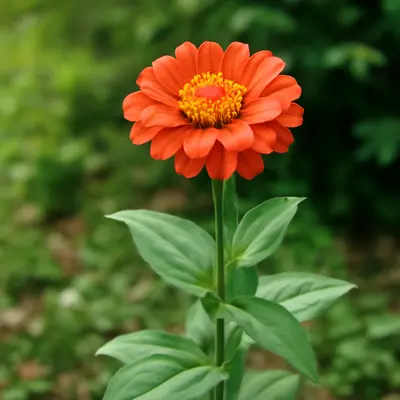
In 2019, Johnny's Breeding Team started selecting Aurora for its unique two-tone flowers with contrasting centers. Early flowering plants produce 4-6" wide dahlia-shaped double blooms. Hues of apricot, butter yellow, coral, gold, orange, and pink give this special mix a nuanced vintage look that sets it apart. May yield a small percentage of semidouble or single blooms and approximately 5% cactus-flowered blooms.
Harvest
75-85d
Days to harvest
Sun
Full sun
Zones
2–11
USDA hardiness
Height
0-3 feet
Planting Timeline
Showing dates for Aurora in USDA Zone 7
All Zone 7 flower →Zone Map
Click a state to update dates
Aurora · Zones 2–11
Growing Details
Succession Planting
Aurora zinnias bloom continuously on a single planting once they hit their stride, but if you want a steady cut-flower supply rather than one big flush, stagger direct sows every 3 weeks from your last frost date through early June (in zone 7, that's roughly April through early June). Don't push direct sowing past the point where daytime highs are consistently above 90°F — germination rate drops off and seedlings stall out.
For zones 2–4, where the season is short, start indoors 4–6 weeks before last frost and transplant out once nights stay above 50°F. In zones 9–11, you can direct sow as late as August for a fall flush before the first cool spell. One sowing every 21 days is usually enough — Aurora's 75–85 day window means two or three staggered plantings will cover most of a warm season without gaps.
Complete Growing Guide
In 2019, Johnny's Breeding Team started selecting Aurora for its unique two-tone flowers with contrasting centers. Early flowering plants produce 4-6" wide dahlia-shaped double blooms. Hues of apricot, butter yellow, coral, gold, orange, and pink give this special mix a nuanced vintage look that sets it apart. May yield a small percentage of semidouble or single blooms and approximately 5% cactus-flowered blooms. According to Johnny's Selected Seeds, Aurora is 75 - 85 days to maturity, annual, open pollinated. Notable features: Easy Choice, Developed by Johnny's, Use for Cut Flowers and Bouquets.
Light: Full sun (6 or more hours of direct sunlight a day). Soil: High Organic Matter, Loam (Silt). Soil pH: Acid (<6.0), Alkaline (>8.0), Neutral (6.0-8.0). Drainage: Good Drainage, Occasionally Dry. Height: 0 ft. 6 in. - 3 ft. 0 in.. Spread: 0 ft. 8 in. - 1 ft. 0 in.. Spacing: 12 inches-3 feet. Growth rate: Rapid. Maintenance: Medium. Propagation: Seed. Regions: Coastal, Mountains, Piedmont.
Harvesting
Aurora reaches harvest at 75 - 85 days from sowing per Johnny's Selected Seeds. Expect 4-6" at peak. As an annual, harvest continues until frost ends the season.
Type: Achene.
Storage & Preservation
Aurora dahlias are best stored in a cool room at 60-65°F with moderate humidity for 7-10 days as fresh cut flowers. Keep stems in clean water and change daily. For preservation, hang-dry blooms in a warm, dark, well-ventilated space for 2-3 weeks to create long-lasting dried flowers. Alternatively, press individual petals between absorbent paper in a heavy book for 4-6 weeks for botanical crafts. Glycerin preservation (submerging stems in a water-glycerin solution) retains color and flexibility for 2-3 weeks. Store dried flowers in airtight containers away from direct light.
History & Origin
Aurora is open-pollinated, meaning seed saved from healthy plants will produce true-to-type offspring. Listed in the Johnny's Selected Seeds catalog.
Origin: Mexico
Advantages
- +Two-tone flowers with contrasting centers provide stunning visual interest and uniqueness
- +Early flowering at 75-85 days ensures blooms before late-season frost arrives
- +Large 4-6 inch dahlia-shaped double blooms make excellent cut flowers
- +Vintage color palette of apricot, coral, and gold suits diverse garden designs
- +Easy difficulty level makes Aurora accessible to novice and experienced gardeners
Considerations
- -Approximately 5% cactus-flowered blooms may disappoint growers wanting consistent dahlia forms
- -Small percentage of semidouble or single blooms reduces uniformity in mixed plantings
- -Two-tone coloring may not develop consistently across all plants or seasons
Companion Plants
Marigolds are the most practical neighbor for Aurora zinnias — they deter aphids and whiteflies through root secretions (thiophenes, specifically), and both crops share the same full-sun, warm-season window without competing for soil depth. Sweet alyssum planted at the front edge of the bed draws in parasitic wasps (Braconidae and Chalcididae families) that knock back aphid populations before they get established. Nasturtiums work as a trap crop, pulling aphids off zinnias onto themselves — and their shallow roots don't crowd zinnia's zone at all. Cosmos is a natural fit too: same watering cadence, same heat tolerance, and the two together extend your cut-flower yield across the whole season.
Black walnut is the plant to exclude from any planting plan. Its roots release juglone — a compound that interferes with cellular respiration in sensitive plants — and zinnias don't handle it well. Sunflowers are a subtler problem: not chemistry, just physics. A 6-foot sunflower throws enough shade to drop Aurora below its 6-hour sun threshold, which means fewer flowers and a longer wait on that 75–85 day clock.
Plant Together
Marigolds
Repel aphids, whiteflies, and nematodes while attracting beneficial insects
Sweet Alyssum
Attracts beneficial insects like lacewings and provides ground cover
Nasturtiums
Act as trap crops for aphids and cucumber beetles, protecting nearby plants
Lavender
Repels moths, fleas, and mosquitoes while attracting pollinators
Zinnia
Attracts beneficial insects and butterflies, provides color contrast
Cosmos
Attracts beneficial insects and provides natural support structure
Catmint
Repels ants, aphids, and rodents while attracting pollinators
Petunias
Repel aphids, tomato hornworms, and other garden pests
Keep Apart
Black Walnut
Releases juglone toxin that inhibits growth of many flowering plants
Sunflowers
Allelopathic compounds can inhibit germination and growth of smaller flowers
Eucalyptus
Produces allelopathic chemicals that suppress growth of nearby plants
Troubleshooting Aurora
What you'll see, why it happens, and what to do about it.
White powdery coating on leaves and stems, usually appearing mid-summer once plants are well established
Likely Causes
- Powdery mildew (Erysiphe cichoracearum) — a fungal disease that thrives in warm days with cool nights and poor airflow
- Crowded spacing under 18 inches, trapping humidity around foliage
What to Do
- 1.Strip the worst-affected leaves and bin them — don't compost
- 2.Thin or cut back neighboring plants to open up airflow around the canopy
- 3.Spray foliage with a diluted neem oil solution (2 tsp per quart of water) every 7 days until symptoms stop spreading
Flower petals ragged or chewed, with small shiny beetles visible on blooms, especially in July and August
Likely Causes
- Japanese beetles (Popillia japonica) — skeletonize petals and can demolish a planting fast in peak summer
- Earwigs (Forficula auricularia) feeding nocturnally on open flowers
What to Do
- 1.Hand-pick Japanese beetles into a jar of soapy water early in the morning when they're sluggish
- 2.Skip Japanese beetle bag traps near the planting — they pull in more beetles than they capture
- 3.Set out rolled damp newspaper near the base of plants overnight to catch earwigs; dispose of them in the morning
Seedlings collapsing at the soil line within the first 10-14 days after germination, stems look pinched and water-soaked at the base
Likely Causes
- Damping off — typically caused by Pythium or Rhizoctonia fungi in overly wet, poorly drained seed-starting mix
- Overwatering combined with low airflow around trays indoors
What to Do
- 1.Don't try to salvage collapsed seedlings — pull them and resow in fresh, sterile seed-starting mix
- 2.Water from below by setting trays in a shallow pan rather than overhead, and let the surface dry slightly between waterings
- 3.Run a small fan near seedling trays for a few hours a day to improve surface airflow
Frequently Asked Questions
How long do Aurora dahlia flowers last in a vase?▼
Are Aurora dahlias good for beginners?▼
Can you grow Aurora dahlias in containers?▼
When should I plant Aurora dahlia seeds?▼
What do Aurora dahlia flowers look like?▼
How far apart should I plant Aurora dahlias?▼
Zone-by-Zone Planting Calendar
| Zone | Indoor Start | Transplant | Direct Sow | Harvest |
|---|---|---|---|---|
| Zone 1 | May – June | July – August | July – September | — |
| Zone 2 | April – May | June – July | June – August | — |
| Zone 11 | January – January | January – February | January – March | — |
| Zone 12 | January – January | January – February | January – March | — |
| Zone 13 | January – January | January – February | January – March | — |
| Zone 3 | April – May | June – July | June – August | — |
| Zone 4 | March – April | June – June | June – July | — |
| Zone 5 | March – April | May – June | May – July | — |
| Zone 6 | March – April | May – June | May – July | — |
| Zone 7 | February – March | April – May | April – June | — |
| Zone 8 | February – March | April – May | April – June | — |
| Zone 9 | January – February | March – April | March – May | — |
| Zone 10 | January – January | February – March | February – April | — |
Growing Guides from Wind River Greens
Sources & References
External authority sources used in compiling this guide.
- BreederJohnny's Selected Seeds
See the Methodology page for how this data is sourced, what's AI-assisted, and known limitations.