Black Tip Wheat
Triticum durum
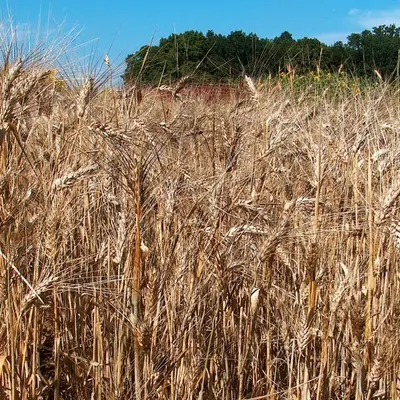
Very fancy white glumes (kernels) offset by long black awns. Easy textural element for fresh and dried bouquets. Also known as durum wheat.
Harvest
75-80d
Days to harvest
Sun
Full sun
Zones
1–11
USDA hardiness
Height
2 ft. 0 in. - 4 ft. 0 in.
Planting Timeline
Showing dates for Black Tip Wheat in USDA Zone 7
All Zone 7 grass →Zone Map
Click a state to update dates
Black Tip Wheat · Zones 1–11
Growing Details
Succession Planting
Black Tip Wheat isn't a succession crop the way radishes or lettuce are — you sow it once, the stand heads out, and you harvest all of it. Timing that single sowing matters a lot, though. In zone 7, direct sow between late February and mid-March so the plants head up before consistent daytime highs push past 90°F. Sowing as late as May is possible but pushes grain fill into early summer heat, and you'll see it in the kernel weight.
If you want the bed to keep producing after wheat harvest, put in a fast-maturing warm-season cover like buckwheat or cowpeas immediately — the ground will be bare by late May or June and there's plenty of season left. That's not succession planting in the classic sense, but it beats leaving the bed fallow through the hottest stretch of the year.
Complete Growing Guide
Very fancy white glumes (kernels) offset by long black awns. Easy textural element for fresh and dried bouquets. Also known as durum wheat. According to Johnny's Selected Seeds, Black Tip Wheat is 75 - 80 days to maturity, annual, open pollinated. Notable features: Use for Cut Flowers and Bouquets, Ideal for Drying and Crafts.
Light: Full sun (6 or more hours of direct sunlight a day). Soil: Clay, High Organic Matter, Loam (Silt), Sand. Soil pH: Neutral (6.0-8.0). Drainage: Good Drainage, Moist, Occasionally Dry. Height: 2 ft. 0 in. - 4 ft. 0 in.. Spread: 0 ft. 6 in. - 1 ft. 0 in.. Spacing: Less than 12 inches. Growth rate: Rapid. Maintenance: Low. Propagation: Seed. Regions: Coastal, Mountains, Piedmont.
Harvesting
Black Tip Wheat reaches harvest at 75 - 80 days from sowing per Johnny's Selected Seeds. As an annual, harvest continues until frost ends the season.
Edibility: The grain is edible when cooked.
Storage & Preservation
Store fresh Black Tip Wheat stalks in a cool, dry location away from direct sunlight at room temperature (60-70°F) with low humidity to prevent mold. Fresh bouquets last 2-3 weeks when kept dry. For preservation: (1) Air-dry bundles upside-down in a well-ventilated space for 2-3 weeks to create lasting dried arrangements; (2) Silica gel drying preserves color and texture in 7-10 days for premium floral displays; (3) Freeze-drying maintains the striking black awns and white glumes for year-round floral use. Store dried material in airtight containers in cool, dry conditions for 6-12 months.
History & Origin
Black Tip Wheat is open-pollinated, meaning seed saved from healthy plants will produce true-to-type offspring. Listed in the Johnny's Selected Seeds catalog.
Origin: Turkey through Iran to India
Advantages
- +Edible: The grain is edible when cooked.
- +Fast-growing
- +Low maintenance
Companion Plants
The legumes — red clover, crimson clover, field peas, alfalfa, and vetch — are the companions that actually move the needle here. All of them fix atmospheric nitrogen through root nodules (via Rhizobium bacteria), which feeds the wheat directly without bagged fertilizer. The standard move is to undersow clover or vetch into the wheat stand around the 4–6 week mark, once the wheat is tall enough that the clover won't shade it out. The legume holds the ground layer, adds nitrogen as it grows, and when you turn it in after wheat harvest, the bed gets a green manure shot for whatever crop comes next.
Yarrow and chicory pull their weight differently. Yarrow draws in parasitic wasps and predatory beetles — natural enemies of the bird cherry-oat aphid (Rhopalosiphum padi), which is one of the more realistic yield threats during heading. Chicory's deep taproot, sometimes reaching 18 inches or more, breaks compaction in bed edges and pathways without competing much with wheat roots, which stay comparatively shallow.
The weeds listed as harmful — wild oats (Avena fatua), Johnson grass (Sorghum halepense), Canada thistle, and quackgrass — all fight the wheat for water and nutrients at nearly the same root depth. In our zone 7 Georgia garden, Johnson grass is the one to stay ahead of; it spreads by rhizome and can overrun a wheat stand quickly if you let it get a foothold in the bed edges before the wheat closes the canopy.
Plant Together
Red Clover
Fixes nitrogen in soil, improving wheat nutrition and soil fertility
Alfalfa
Deep taproot brings nutrients from subsoil, adds nitrogen through nitrogen fixation
White Clover
Ground cover that fixes nitrogen and suppresses weeds around wheat
Crimson Clover
Winter cover crop that adds nitrogen and organic matter when tilled under
Field Peas
Nitrogen-fixing legume that enriches soil for wheat growth
Vetch
Climbs wheat stalks, fixes nitrogen, and provides ground cover
Yarrow
Attracts beneficial insects and may improve wheat's disease resistance
Chicory
Deep taproot breaks up compacted soil and brings up minerals
Keep Apart
Wild Oats
Competes aggressively for nutrients and water, difficult to separate from wheat harvest
Johnson Grass
Allelopathic effects inhibit wheat germination and growth
Canada Thistle
Aggressive perennial weed that competes for nutrients and space
Quackgrass
Spreads rapidly through rhizomes, competing with wheat for resources
Troubleshooting Black Tip Wheat
What you'll see, why it happens, and what to do about it.
Tan, water-soaked lesions on lower stems at soil level, plants lodging (falling over) in patches around day 50–60
Likely Causes
- Crown rot (Fusarium culmorum or F. graminearum) — favored by wet soils and heavy clay that stays saturated after spring rains
- Planting too deep, burying the crown more than 1–1.5 inches
What to Do
- 1.Pull and discard affected plants — don't compost them
- 2.Improve drainage before the next planting; work in compost or coarse sand if you're in heavy clay
- 3.Plant shallowly next time — seeds at 1 to 1.5 inches deep, not deeper
Grain heads partially filled or nearly empty at harvest (around day 75–80), kernels shriveled or absent on portions of the spike
Likely Causes
- Heat stress during pollination — durum wheat pollinates in a narrow window and temperatures above 90°F during heading can abort grain set
- Aphid feeding (primarily bird cherry-oat aphid, Rhopalosiphum padi) during flag leaf stage, draining plant energy before heading
What to Do
- 1.Shift your direct sow date earlier — aim for late February or early March in zone 7 so heading happens before the worst May heat arrives
- 2.Scout flag leaves for aphid colonies; a hard spray of water knocks populations back without chemicals if you catch it early
- 3.Accept partial yield and harvest anyway — shriveled kernels still have flavor and grind fine for home use
Frequently Asked Questions
How long does Black Tip Wheat take to grow from seed to harvest?▼
Can you grow Black Tip Wheat in containers?▼
Is Black Tip Wheat good for beginners?▼
When should I plant Black Tip Wheat?▼
What makes Black Tip Wheat different from regular wheat varieties?▼
How should I harvest and dry Black Tip Wheat for arrangements?▼
Zone-by-Zone Planting Calendar
| Zone | Indoor Start | Transplant | Direct Sow | Harvest |
|---|---|---|---|---|
| Zone 1 | — | July – September | June – August | — |
| Zone 2 | — | July – August | May – July | — |
| Zone 11 | — | February – March | January – February | — |
| Zone 3 | — | June – August | May – July | — |
| Zone 4 | — | June – July | April – June | — |
| Zone 5 | — | May – July | April – June | — |
| Zone 6 | — | May – July | April – June | — |
| Zone 7 | — | May – June | March – May | — |
| Zone 8 | — | April – June | March – May | — |
| Zone 9 | — | March – May | February – April | — |
| Zone 10 | — | March – April | January – March | — |
Growing Guides from Wind River Greens
Sources & References
External authority sources used in compiling this guide.
- BreederJohnny's Selected Seeds
See the Methodology page for how this data is sourced, what's AI-assisted, and known limitations.