Topcrop Bush Bean
Phaseolus vulgaris 'Topcrop'
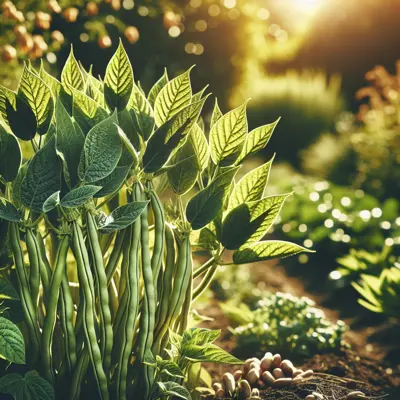
A classic All-America Selections winner from 1950 that remains one of the most reliable bush beans for home gardeners. This prolific variety produces straight, stringless pods with excellent flavor and texture. Known for its concentrated harvest period and exceptional disease resistance, making it perfect for both fresh eating and preserving.
Harvest
50-55d
Days to harvest
Sun
Full sun
Zones
2–11
USDA hardiness
Difficulty
Easy
Planting Timeline
Showing dates for Topcrop Bush Bean in USDA Zone 7
All Zone 7 bean →Zone Map
Click a state to update dates
Topcrop Bush Bean · Zones 2–11
Growing Details
Succession Planting
Direct sow every 14 days starting April 1 in zone 7, and keep going through mid-June — that gets you 3 to 4 staggered picks before summer heat peaks. Stop once daytime highs are consistently above 90°F; pod set drops off sharply above that threshold and you end up with a lot of empty shells. The UGA Vegetable Garden Calendar flags May as the window for a third planting of snap beans, which fits cleanly: an April 1 sow, an April 15 sow, and a May 1 sow will cover July and most of August. At 50–55 days to harvest, count back from your first expected 90°F week — that's your cutoff date.
Complete Growing Guide
Topcrop Bush Bean seeds are best direct sown into the garden once soil temperatures reach a consistent 60°F, ideally waiting until after your last spring frost date when the soil has warmed further. Unlike many vegetables, these beans resent transplanting, so skip the indoor sowing and sow seeds directly into prepared beds. Time your planting for about one week after your last frost, when soil conditions are ideal for germination. For succession harvests throughout the season, sow new batches every two to three weeks until approximately eight weeks before your first fall frost.
Prepare your beds with well-draining soil enriched with compost or aged manure worked into the top 6-8 inches. Topcrop Bush Beans prefer slightly acidic to neutral soil with a pH between 6.0 and 7.0. Space seeds about 4-6 inches apart in rows that are 18-24 inches apart, pressing them 1 to 1.5 inches deep into moist soil. Once seedlings emerge, thin them to 6 inches apart if they're crowded, ensuring good air circulation around each plant.
Water consistently throughout the growing season, aiming for about 1 inch per week through rainfall or irrigation. Water at soil level rather than overhead to minimize fungal disease pressure, particularly important since Topcrop is susceptible to white mold and rust. Avoid watering late in the day when foliage may remain wet overnight. Feed with a balanced, low-nitrogen fertilizer once plants begin flowering, or use a light application of compost mid-season if your soil is lean. Excess nitrogen promotes leafy growth at the expense of pod production.
Topcrop Bush Beans are notably susceptible to Mexican bean beetles, which can decimate plants quickly. Scout plants daily during the growing season, handpicking beetles and their distinctive yellow egg clusters from leaf undersides. Neem oil or spinosad sprays work effectively for heavy infestations. Aphids and spider mites may also appear during hot, dry spells; increase watering and spray with insecticidal soap if needed. Cutworms occasionally damage young seedlings at soil level; create physical barriers with collars around young plants.
The variety's concentrated harvest period means most pods mature within a two-week window, making it ideal for preserving but potentially overwhelming for fresh use. Stagger plantings every two weeks if you prefer continuous harvests rather than one large picking.
The most common mistake gardeners make with Topcrop is harvesting pods too late. Pick beans when they're 5-6 inches long and snap cleanly in half, before they become visibly plump with mature seeds. Harvesting at this stage encourages the plant to produce more flowers and extend the productive season significantly.
Harvesting
Topcrop bush beans reach peak harvest when pods are bright green, approximately 5-6 inches long, and snap cleanly when bent—they should feel firm but not bulging with mature beans inside. Unlike pole varieties, Topcrop produces its main crop in a concentrated flush over 2-3 weeks, though consistent picking every 2-3 days will encourage additional smaller flushes of tender pods. To maximize yield and quality, harvest in the early morning after dew dries but before heat stress sets in, as pods picked during cooler hours maintain superior crispness and flavor for longer storage.
The boat-shaped seed pods are bilaterally symmetrical and can be green, yellow, white, or purple at maturity. There is a wide variety of color and shape choices among cultivars.
Color: Gold/Yellow, Green, Purple/Lavender, White. Type: Legume. Length: > 3 inches. Width: < 1 inch.
Garden value: Edible, Good Dried
Harvest time: Fall, Summer
Storage & Preservation
Fresh Topcrop beans stay crisp for 4-5 days when stored unwashed in perforated plastic bags in your refrigerator's crisper drawer. Don't wash until ready to use, as excess moisture promotes decay.
For freezing, blanch whole pods in boiling water for 3 minutes, then immediately plunge into ice water. Drain thoroughly and pack in freezer bags—they'll maintain quality for 8-10 months. Topcrop's firm texture makes it excellent for canning using a pressure canner following USDA guidelines.
This variety also excels at preservation through pickling—the straight, uniform pods fit perfectly in canning jars for dilly beans. You can also let some pods mature fully on the plant to harvest the dried beans inside for winter storage, though this stops fresh pod production on those plants.
History & Origin
Topcrop Bush Bean emerged as an All-America Selections winner in 1950, representing the post-war era's drive to develop reliable home garden vegetables. While specific breeder attribution remains poorly documented in readily available sources, Topcrop belongs to the lineage of improved stringless bush bean cultivars that gained prominence through mid-twentieth-century American seed companies and university breeding programs. The variety embodies breeding work aimed at concentrating pod maturity for efficient home canning and preserving—priorities that shaped vegetable development during the 1940s and 1950s. Its disease resistance traits suggest deliberate selection within established breeding lines, though the precise genetic parents and institutional origin require deeper archival research to confirm.
Origin: Tropical America
Advantages
- +Proven All-America Selections winner with seven decades of reliable home garden performance
- +Concentrated harvest period allows efficient picking and preserving of large yields simultaneously
- +Excellent stringless pod quality delivers tender, crisp beans with classic fresh flavor
- +Outstanding disease resistance to multiple bean pathogens reduces preventative spraying requirements
- +Exceptionally fast maturity at fifty to fifty-five days enables multiple succession plantings
Considerations
- -Vulnerable to bean mosaic virus and bacterial blight during wet, humid growing seasons
- -Susceptible to white mold in poorly-drained soil or crowded planting conditions
- -Attracts bean beetles and spider mites requiring regular pest monitoring and control
- -Concentrated ripening period means missing harvest window results in overmatured stringy pods
Companion Plants
Marigolds along the bed edge help deter Mexican bean beetle adults through scent disruption — not foolproof, but they earn the 6 inches. Corn and summer squash are good neighbors because their root systems pull from different depths than beans do, and beans return the favor by fixing nitrogen at the 2–4 inch zone through Rhizobium bacteria. Radishes tucked in at 4-inch spacing can slow aphid pressure and give you something to pull before beans close the canopy. Onions and fennel belong on the other side of the garden: onions chemically suppress bean root development, and fennel is broadly allelopathic — it stunts most vegetables it grows near, beans included.
Plant Together
Marigold
Repels bean beetles, aphids, and nematodes while attracting beneficial insects
Basil
Deters aphids, spider mites, and thrips that commonly attack beans
Carrots
Loosen soil for bean roots and beans fix nitrogen that carrots can utilize
Corn
Provides natural support structure and beans fix nitrogen for corn
Summer Squash
Ground cover reduces weeds and retains soil moisture for beans
Nasturtium
Acts as trap crop for aphids and cucumber beetles while attracting pollinators
Radish
Quick-growing companion that breaks up soil and deters bean beetles
Lettuce
Shallow roots don't compete and benefits from nitrogen fixed by beans
Keep Apart
Onions
Can stunt bean growth and development through root competition and chemical interactions
Sunflower
Allelopathic compounds inhibit bean germination and growth
Fennel
Produces allelopathic chemicals that inhibit bean growth and development
Nutrition Facts
Per 100g serving. % Daily Value based on 2,000 calorie diet. Source: USDA FoodData Central (FDC #2346400)
Pests & Disease Resistance
Resistance
Good resistance to mosaic virus and bacterial diseases
Common Pests
Bean beetles, aphids, spider mites, cutworms
Diseases
Bean mosaic virus, bacterial blight, white mold, rust
Troubleshooting Topcrop Bush Bean
What you'll see, why it happens, and what to do about it.
Leaves with ragged chunks missing and visible orange-and-black beetles or skeletonized patches, typically appearing 4–6 weeks after germination
Likely Causes
- Mexican bean beetle (Epilachna varivestis) — adults and larvae feed on leaf undersides
- Bean leaf beetle (Cerotoma trifasciata) — chews irregular holes through leaf tissue
What to Do
- 1.Handpick adults, larvae, and yellow egg clusters from leaf undersides and drop them in soapy water
- 2.Apply spinosad or pyrethrin if populations are heavy, targeting leaf undersides where larvae concentrate
- 3.Rotate this bed out of beans and other legumes for at least 2 seasons — both beetles overwinter in nearby debris and return to the same spots
Water-soaked brown or black lesions on leaves, pods, or stems — sometimes with a yellow halo — appearing after wet or humid weather
Likely Causes
- Bacterial blight (Pseudomonas syringae pv. phaseolicola or Xanthomonas axonopodis pv. phaseoli) — spreads through rain splash and overhead irrigation
- Working in the bed when foliage is wet, which moves bacteria from plant to plant on hands and tools
What to Do
- 1.Switch to a soaker hose or drip line — Topcrop's tag even says to avoid overhead watering, and this is why
- 2.Remove and trash (not compost) infected leaves and pods immediately
- 3.Stay out of the bed until plants dry; bacterial blight moves fast once you start touching wet foliage
Mottled yellow-and-green mosaic pattern on young leaves, leaves puckered or distorted, plants noticeably shorter than healthy neighbors
Likely Causes
- Bean common mosaic virus (BCMV) — transmitted by aphids, particularly Myzus persicae and Acyrthosiphon pisum
- Planting saved seed from an infected crop
What to Do
- 1.Pull and trash infected plants — there is no cure once a plant has it
- 2.Hit aphid colonies with insecticidal soap or a hard water spray to slow spread to healthy plants nearby
- 3.Use certified disease-free seed next season; Topcrop carries some BCMV tolerance, but that tolerance doesn't hold up under sustained aphid pressure
Frequently Asked Questions
How long does Topcrop bush bean take to grow?▼
Can you grow Topcrop beans in containers?▼
Is Topcrop bush bean good for beginners?▼
What does Topcrop bush bean taste like?▼
When should I plant Topcrop bush beans?▼
How often should I harvest Topcrop beans?▼
Zone-by-Zone Planting Calendar
| Zone | Indoor Start | Transplant | Direct Sow | Harvest |
|---|---|---|---|---|
| Zone 3 | — | — | June – July | August – October |
| Zone 4 | — | — | June – July | August – October |
| Zone 5 | — | — | May – June | August – September |
| Zone 6 | — | — | May – June | July – September |
| Zone 7 | — | — | April – June | July – August |
| Zone 8 | — | — | April – May | June – August |
| Zone 9 | — | — | March – April | May – July |
| Zone 10 | — | — | February – April | May – June |
| Zone 1 | — | — | July – August | September – August |
| Zone 2 | — | — | June – August | September – September |
| Zone 11 | — | — | January – March | April – May |
| Zone 12 | — | — | January – March | April – May |
| Zone 13 | — | — | January – March | April – May |
Growing Guides from Wind River Greens
Sources & References
External authority sources used in compiling this guide.
See the Methodology page for how this data is sourced, what's AI-assisted, and known limitations.