Storage #4 Rutabaga
Brassica napus 'American Purple Top'
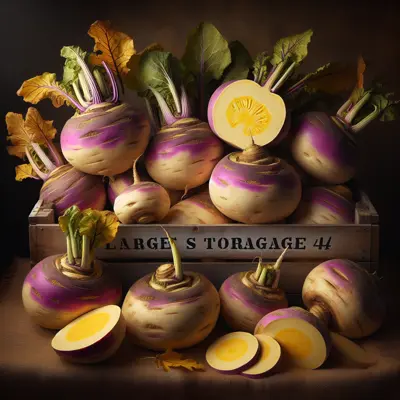
The ultimate winter keeper rutabaga that actually improves in flavor during months of cold storage, developing incredible sweetness and creamy texture. This reliable variety produces large, uniform roots with classic purple shoulders and yellow flesh that becomes butter-smooth when cooked. A staple crop that can feed families through winter while providing exceptional nutrition and comfort-food satisfaction.
Harvest
90-110d
Days to harvest
Sun
Full sun
Zones
8–9
USDA hardiness
Height
4 feet
Planting Timeline
Showing dates for Storage #4 Rutabaga in USDA Zone 7
All Zone 7 root-vegetable →Zone Map
Click a state to update dates
Storage #4 Rutabaga · Zones 8–9
Growing Details
Succession Planting
Rutabaga takes 90-110 days and doesn't keep producing after you pull it, but one well-timed sow per season is usually enough. Count back roughly 100-115 days from your first hard frost and direct sow then — roots that size up in soil above 75°F turn pithy and bitter. NC State Extension's harvesting guidelines note that mulched roots left in the ground can be pulled as needed through winter, so there's little reason to rush them all at once. A second sow in early spring works if seeds go in while soil temps are still below 65°F and you can get to harvest before summer heat arrives — in zones 8-9 that window is tight, maybe 2-3 weeks in late February to early March.
Complete Growing Guide
Storage #4 rutabaga thrives in the cooling temperatures of late summer, so timing your planting is crucial for success. You'll want to direct sow seeds in mid-July to early August, ensuring soil temperatures have dropped below 75°F. Hot soil will cause poor germination and bitter roots, so patience pays off here.
Prepare your planting bed by working in 2-3 inches of well-aged compost or rotted manure to a depth of 12 inches. Rutabagas develop large taproots and need loose, fertile soil to form properly. Test your soil pH and aim for 6.0-6.8 – slightly acidic conditions prevent clubroot disease that can devastate brassica crops. If your soil is heavy clay, consider raised beds or mounded rows to improve drainage.
Sow seeds ½ inch deep in rows spaced 18 inches apart, dropping seeds every 2 inches. Don't worry about precision – you'll be thinning later. Keep soil consistently moist until germination occurs in 7-10 days. Once seedlings develop their first true leaves, thin to 6 inches apart, keeping the strongest plants. Those thinned seedlings make excellent microgreens.
Fertilize with a balanced 10-10-10 fertilizer at planting, then switch to lower nitrogen feeding (5-10-10) once roots begin swelling around 6 weeks after emergence. Too much nitrogen late in the season creates leafy tops at the expense of root development. Side-dress with compost monthly rather than high-nitrogen fertilizers.
Consistent moisture is critical – irregular watering causes woody, split roots. Provide 1 inch of water weekly, using drip irrigation or soaker hoses to avoid wetting foliage. Mulch around plants once they're established to retain moisture and suppress weeds.
The biggest mistake new growers make is harvesting too early. Storage #4 needs those cool fall nights to develop its signature sweetness. Let plants experience several light frosts before harvesting – this converts starches to sugars and dramatically improves flavor. In zones 3-5, harvest before hard freeze. Zones 6-7 can often overwinter roots in the ground with heavy mulch protection.
Harvesting
Storage #4 rutabagas are ready when roots reach 4-6 inches in diameter and have experienced several light frosts, typically 90-110 days from seeding. The shoulders should show deep purple coloring, and the root should feel firm and heavy when gently pulled. Unlike turnips, rutabagas won't get woody if left in the ground a few extra weeks – they actually improve with cold exposure.
Harvest on a dry day after soil has had time to drain, making lifting easier and reducing soil contamination. Loosen soil around each root with a spading fork, working 8 inches away from the plant to avoid puncturing the root. Grasp the top firmly and lift straight up – properly mature roots should come up cleanly. If resistance is felt, loosen soil further rather than forcing.
Trim tops to 1 inch immediately after harvest, but leave the taproot intact. Brush off excess soil but don't wash unless using immediately – moisture promotes rot in storage. Sort roots by size and condition, using any damaged ones first. Perfect, unblemished roots store longest and maintain the best texture through winter months.
Storage & Preservation
Fresh Storage #4 rutabagas store exceptionally well in cool, humid conditions that mimic root cellars. Optimal storage temperature is 32-35°F with 90-95% humidity. In modern homes, store unwashed roots in perforated plastic bags in the refrigerator crisper drawer, where they'll maintain quality for 4-6 months. For larger harvests, layer roots in damp sand or peat moss in boxes kept in unheated garages or basements.
For long-term preservation, blanch 1-inch cubes for 3 minutes, then freeze in portions. Frozen rutabaga works perfectly for mashing and soups. Alternatively, ferment grated rutabaga with salt to create a probiotic-rich condiment similar to sauerkraut. Dehydrated rutabaga chips make excellent storage for camping or emergency food supplies. The key to successful preservation is starting with cold-sweetened roots – those harvested before frost exposure never develop the same creamy texture and complex flavors that make Storage #4 special.
History & Origin
Storage #4 rutabaga represents the culmination of generations of careful seed selection by northern European farmers who needed reliable winter food sources. This variety traces its lineage to Swedish farmers of the 18th century, where rutabagas (called 'swedes') became so important they were known as 'Swedish turnips.' The '#4' designation comes from early 20th century American seed catalogs that numbered their best storage varieties for easy ordering.
Developed through decades of selecting the best-keeping roots from each harvest, Storage #4 was specifically bred for its ability to maintain sweetness and texture through months of cold storage – a critical trait when fresh vegetables weren't available from November through March. Scandinavian immigrants brought these superior storage strains to the upper Midwest, where they became staple crops for surviving harsh winters.
This variety gained renewed attention during World War II victory garden campaigns, when its exceptional storage ability and nutritional density made it invaluable for food security. Today's Storage #4 maintains those same genetics that sustained northern communities through countless winters, representing true heritage genetics adapted to cold-climate growing.
Advantages
- +Actually improves in flavor during 4-6 months of cold storage, developing remarkable sweetness
- +Exceptional cold tolerance allows harvesting after multiple hard frosts without damage
- +Large, uniform root size (4-6 inches) provides substantial yield from small garden space
- +Develops creamy, butter-smooth texture when cooked that surpasses modern hybrid varieties
- +Outstanding storage life in proper conditions maintains eating quality through entire winter
- +Reliable germination and growth even in challenging cool-season conditions
- +Superior nutritional density with high vitamin C content that increases after frost exposure
Considerations
- -Long growing season (90-110 days) requires early planning and limits growing regions
- -Susceptible to flea beetle damage on young seedlings without row cover protection
- -Requires consistent soil moisture throughout growing season or roots become woody and split
- -Heavy soil requirements mean poor performance in sandy or rocky garden sites
- -Storage requires specific temperature and humidity conditions that modern homes don't provide naturally
Companion Plants
Onions and garlic are the most practical companions here — their sulfur compounds confuse the aphids and cabbage root maggots (Delia radicum) that target brassica roots. Peas fix nitrogen in the top 6-8 inches of soil, which suits a crop that needs 90-110 days to finish. Nasturtiums pull double duty: flea beetles (Phyllotreta spp.) reliably prefer them over the rutabaga, and the sprawling foliage cuts down on soil moisture loss mid-season. Pole beans and tomatoes both compete hard for water at the same root depth, and cycling nightshades or large-rooted legumes through a brassica bed year after year builds up the shared pest load NC State Extension warns against.
Plant Together
Peas
Fix nitrogen in soil which rutabagas need for leafy growth
Onions
Repel root maggots and flea beetles that commonly attack rutabagas
Garlic
Natural pest deterrent against root flies and aphids
Nasturtiums
Trap crop for flea beetles and aphids, protecting rutabaga leaves
Lettuce
Shallow roots don't compete with deep rutabaga roots, efficient space use
Spinach
Cool season companion with different root depth, maximizes garden space
Radishes
Quick harvest breaks up soil for rutabaga root development
Marigolds
Repel nematodes and various garden pests harmful to root vegetables
Keep Apart
Pole Beans
Heavy nitrogen fixation can cause excessive leaf growth at expense of root development
Tomatoes
Both are heavy feeders competing for same nutrients, different watering needs
Sunflowers
Allelopathic compounds inhibit growth of nearby brassica family plants
Nutrition Facts
Per 100g serving. % Daily Value based on 2,000 calorie diet. Source: USDA FoodData Central (FDC #168454)
Pests & Disease Resistance
Resistance
Excellent cold tolerance and storage ability
Common Pests
Flea beetles, cabbage root maggots, aphids
Diseases
Clubroot, black rot, soft rot
Troubleshooting Storage #4 Rutabaga
What you'll see, why it happens, and what to do about it.
Seedlings collapse at soil level, stems pinched and dark, within the first 10-14 days after germination
Likely Causes
- Damping off — a complex of soil-borne pathogens (Pythium, Rhizoctonia) that thrive in cold, waterlogged soil
- Overwatering or poor drainage in the seedbed
What to Do
- 1.Pull and discard affected seedlings immediately — they won't recover
- 2.Let the soil surface dry slightly between waterings; rutabaga seed doesn't need constant wet to germinate
- 3.If it keeps recurring in the same bed, rotate to a fresh spot — NC State Extension recommends keeping brassicas out of the same soil for at least 3-4 years
Leaves shot through with tiny holes, seedlings look sandblasted, worst in the first 3-4 weeks after direct sow
Likely Causes
- Flea beetles (Phyllotreta spp.) — they overwinter in soil and leaf litter and hit young brassicas fast
- Dry, warm spells in early fall or spring that favor beetle activity
What to Do
- 1.Cover the bed with row cover immediately after sowing — flea beetles can't find what they can't smell
- 2.Once plants are past 4-5 true leaves and stems have toughened up, pressure usually drops on its own
- 3.Sow nasturtiums at the bed edge as a trap crop; beetles tend to pile onto them and leave the rutabaga alone
Roots are stunted and lumpy with swollen, club-shaped growths; plants wilt on warm afternoons even with adequate water
Likely Causes
- Clubroot (Plasmodiophora brassicae) — a soil-borne pathogen that can persist for up to 20 years in acidic soil
- Soil pH below 6.0, which favors clubroot spore germination
What to Do
- 1.Pull and bag infected plants — do not compost them
- 2.Lime the bed to bring pH up to at least 6.8-7.0 before replanting brassicas; clubroot pressure drops significantly above this range
- 3.Rotate brassicas out of the affected bed for a minimum of 3-4 years, per NC State Extension's disease management guidance
Frequently Asked Questions
How long does Storage #4 rutabaga take to grow?▼
Can you grow Storage #4 rutabaga in containers?▼
When should I plant Storage #4 rutabaga seeds?▼
What does Storage #4 rutabaga taste like compared to turnips?▼
Is Storage #4 rutabaga good for beginning gardeners?▼
How do you store Storage #4 rutabaga for winter?▼
Zone-by-Zone Planting Calendar
| Zone | Indoor Start | Transplant | Direct Sow | Harvest |
|---|---|---|---|---|
| Zone 3 | — | — | May – June | August – October |
| Zone 4 | — | — | April – June | August – October |
| Zone 5 | — | — | April – May | July – November |
| Zone 6 | — | — | April – May | July – November |
| Zone 7 | — | — | March – May | June – November |
| Zone 8 | — | — | March – April | June – December |
| Zone 9 | — | — | February – March | May – December |
| Zone 10 | — | — | January – March | April – December |
| Zone 1 | — | — | June – July | September – September |
| Zone 2 | — | — | May – July | August – September |
| Zone 11 | — | — | January – February | March – December |
| Zone 12 | — | — | January – February | March – December |
| Zone 13 | — | — | January – February | March – December |
Growing Guides from Wind River Greens
Sources & References
External authority sources used in compiling this guide.
See the Methodology page for how this data is sourced, what's AI-assisted, and known limitations.