Giant of Italy
Petroselinum crispum
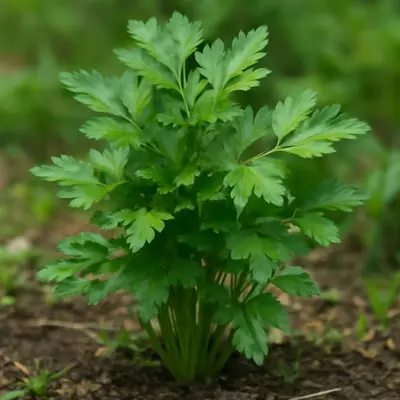
Huge dark green leaves with great flavor. Strong, upright stems make Giant of Italy one of the best parsley varieties for fresh-market sales. Very high-yielding flat-leaf type. Ht. 18-20".
Harvest
75d
Days to harvest
Sun
Full sun
Zones
3–11
USDA hardiness
Height
0-3 feet
Planting Timeline
Showing dates for Giant of Italy in USDA Zone 7
All Zone 7 herb →Zone Map
Click a state to update dates
Giant of Italy · Zones 3–11
Growing Details
Succession Planting
Giant of Italy is a biennial and a slow starter — 75 days to harvest means you want transplants in the ground by late April or May in zone 7 to get a solid first-year cutting season running through November. Start seeds indoors in February or March, since germination alone takes 7–14 days and soaking the seeds overnight before sowing speeds things up noticeably. One planting carries most gardeners through the season fine; harvest the outer stems and leave the crown intact and the plant keeps producing.
If you want fresh parsley into the colder months without a gap, start a second tray in late June for an August transplant — that young stand will overwinter and bolt to flower the following spring. Don't bother starting after mid-July; seedlings sown in peak Georgia heat germinate poorly and rarely establish well before first frost.
Complete Growing Guide
Huge dark green leaves with great flavor. Strong, upright stems make Giant of Italy one of the best parsley varieties for fresh-market sales. Very high-yielding flat-leaf type. Ht. 18-20". According to Johnny's Selected Seeds, Giant of Italy is 75 days to maturity, biennial, open pollinated. Notable features: Easy Choice.
Light: Full sun (6 or more hours of direct sunlight a day). Soil: Clay, Loam (Silt), Sand. Soil pH: Acid (<6.0), Neutral (6.0-8.0). Drainage: Good Drainage, Moist. Height: 0 ft. 8 in. - 3 ft. 0 in.. Spread: 0 ft. 8 in. - 1 ft. 0 in.. Spacing: 12 inches-3 feet. Growth rate: Medium. Maintenance: Medium. Propagation: Seed. Regions: Coastal, Mountains, Piedmont.
Harvesting
Giant of Italy reaches harvest at 75 days from sowing per Johnny's Selected Seeds. Expect 18-20". at peak.
The small, ridged seeds are formed in the second year from July to September. The fruit and seeds are poisonous to birds.
Type: Schizocarp.
Harvest time: Fall, Summer
Edibility: Leaves as flavoring and garnish
Storage & Preservation
Fresh Giant of Italy parsley keeps best in the refrigerator at 32–40°F in a sealed plastic bag or container with a paper towel to absorb excess moisture; expect 7–10 days before noticeable wilting. For longer storage, freezing is your most practical option—chop the leaves, pack them into ice cube trays with a little water, then transfer frozen cubes to freezer bags for up to three months. Alternatively, dry the entire stems in a warm, well-ventilated space or use a dehydrator set to 95–115°F until brittle, then crumble and store in airtight jars away from light. The broad, tender leaves of this Italian heirloom can also be blanched briefly before freezing to preserve color and flavor better than raw freezing alone. Avoid canning parsley, as its low acidity makes safe preservation difficult without additional acid.
History & Origin
Giant of Italy is open-pollinated, meaning seed saved from healthy plants will produce true-to-type offspring. Listed in the Johnny's Selected Seeds catalog.
Origin: Europe
Advantages
- +Huge dark green leaves deliver exceptional flavor for culinary use
- +Strong upright stems reduce lodging and simplify harvesting and bundling
- +Very high yield makes Giant of Italy profitable for commercial growers
- +Flat-leaf type appeals to fresh-market customers over curly varieties
- +Quick 75-day maturity enables multiple harvests per growing season
Considerations
- -Tall 18-20 inch height requires staking in windy locations
- -Susceptible to root rot in poorly drained or waterlogged soil
- -Large leaf size makes it more prone to pest damage exposure
- -Prefers consistent moisture; drought stress causes rapid bolting and decline
Companion Plants
Tomatoes and peppers are the most practical neighbors — Giant of Italy tucks in at their feet without competing for light, and its shallow roots don't fight the deeper root zones of either crop. Marigolds nearby pull double duty: they help deter aphids and, as NC State Extension notes, a dense planting of French marigolds is a reliable tool against soil nematodes that would otherwise stress your nightshades. Around here in zone 7 Georgia, running a row of chives alongside parsley between pepper plants seems to reduce aphid pressure enough to be worth the bed space. Rue and sage are the ones to avoid — both release volatile compounds that suppress parsley's growth, and sage in particular has documented allelopathic effects on neighboring herbs.
Plant Together
Tomatoes
Basil repels tomato hornworms and aphids while improving tomato flavor
Peppers
Basil deters aphids, spider mites, and thrips that commonly attack pepper plants
Oregano
Both Mediterranean herbs have similar growing requirements and oregano repels cucumber beetles
Marigolds
Repel nematodes and aphids while attracting beneficial insects like ladybugs
Lettuce
Basil provides light shade for lettuce and repels aphids and leaf miners
Carrots
Basil improves soil structure and repels carrot flies and aphids
Chives
Repel aphids and enhance basil growth through improved soil nutrients
Parsley
Compatible growing requirements and parsley attracts beneficial insects like hoverflies
Keep Apart
Rue
Inhibits basil growth through allelopathic compounds and can cause leaf burn
Sage
Competes for nutrients and can inhibit basil growth when planted too closely
Thyme
Can stunt basil growth due to different water requirements and potential allelopathy
Nutrition Facts
Per 100g serving. % Daily Value based on 2,000 calorie diet. Source: USDA FoodData Central (FDC #172232)
Pests & Disease Resistance
Common Pests
Parsley worms, spider mites, aphids
Diseases
Leaf spot, powdery mildew, septoria blight
Troubleshooting Giant of Italy
What you'll see, why it happens, and what to do about it.
White powdery coating on leaves and stems, usually showing up in late summer when nights cool down
Likely Causes
- Powdery mildew — a fungal disease that spreads by airborne spores and thrives when humidity is high but leaf surfaces are dry
- Crowded planting that restricts airflow around the foliage
What to Do
- 1.Pull any heavily coated leaves off and trash them — don't compost them
- 2.Space plants at least 9–12 inches apart and thin if you've gotten crowded
- 3.A spray of diluted neem oil (2 tbsp per gallon of water) every 7–10 days can slow spread once you catch it early
Fat green caterpillars, up to 2 inches long, stripping stems down to bare stalks almost overnight
Likely Causes
- Parsley worm — the larva of the black swallowtail butterfly (Papilio polyxenes); they're specific to plants in the carrot family (Apiaceae)
What to Do
- 1.Hand-pick them and relocate to a wild patch of Queen Anne's lace if you can — they turn into swallowtails, so killing them is a waste
- 2.If the population is heavy enough to wipe out the planting, apply Bt (Bacillus thuringiensis) as a targeted spray directly on the foliage
- 3.Plant extra — a few parsley worms won't kill an established clump of Giant of Italy, and the crowns usually push new growth within two weeks if you leave them intact
Frequently Asked Questions
How long does Giant of Italy parsley take to harvest?▼
Is Giant of Italy parsley good for beginners?▼
Can you grow Giant of Italy parsley in containers?▼
What does Giant of Italy parsley taste like?▼
When should I plant Giant of Italy parsley?▼
Why choose Giant of Italy over other parsley varieties?▼
Zone-by-Zone Planting Calendar
| Zone | Indoor Start | Transplant | Direct Sow | Harvest |
|---|---|---|---|---|
| Zone 3 | April – May | June – July | — | July – October |
| Zone 4 | March – April | June – July | — | July – October |
| Zone 5 | March – April | May – June | — | June – October |
| Zone 6 | March – April | May – June | — | June – November |
| Zone 7 | February – March | April – June | — | June – November |
| Zone 8 | February – March | April – May | — | May – December |
| Zone 9 | January – February | March – April | — | April – December |
| Zone 10 | January – January | February – April | — | April – December |
| Zone 11 | January – January | January – March | — | March – December |
Growing Guides from Wind River Greens
Sources & References
External authority sources used in compiling this guide.
- BreederJohnny's Selected Seeds
- USDAUSDA FoodData Central
See the Methodology page for how this data is sourced, what's AI-assisted, and known limitations.