Black Beauty
Solanum melongena 'Black Beauty'
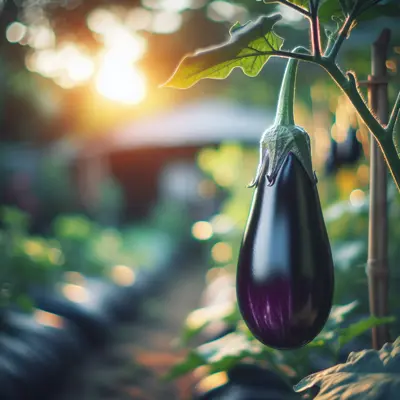
Black Beauty is a classic heirloom eggplant known for its glossy, deep purple-black skin and elongated oval shape. Reaching maturity in 90-100 days, this variety produces firm, creamy-textured fruit with a mild flavor and minimal bitterness. The tender, smooth flesh makes it ideal for roasting, grilling, and Mediterranean dishes. A reliable producer in full sun conditions, Black Beauty remains a gardener favorite for its consistent yields and superior culinary quality.
Harvest
90-100d
Days to harvest
Sun
Full sun
Zones
4–11
USDA hardiness
Height
2-3 feet
Planting Timeline
Showing dates for Black Beauty in USDA Zone 7
All Zone 7 eggplant →Zone Map
Click a state to update dates
Black Beauty · Zones 4–11
Growing Details
Succession Planting
Black Beauty runs 90–100 days to harvest and keeps setting fruit all season once it hits its stride, so succession sowing doesn't apply the way it would for lettuce or radishes. You get one planting window per year: start seeds indoors in February or early March, transplant after last frost in April or May, and work the harvest from July through September.
The timing decision that actually matters is how early in that window you start. Seed in mid-March instead of February and you're pushing first harvest into late August — which in zone 7 means you're racing the first cool nights of October with fruit still sizing up on the vine. Get seeds in the ground indoors by the first week of March at the latest to give the plants a full run before the season closes.
Complete Growing Guide
Almost black, 1 1/2-2 1/2" blooms stand tall on strong, slender stems. Also known as mourningbride. According to Johnny's Selected Seeds, Black Beauty is 90 - 100 days to maturity, annual, open pollinated. Notable features: Organic Seeds, Plants, and Supplies, Cold Tolerant, Use for Cut Flowers and Bouquets, Attracts Beneficial Insects.
Light: Full sun (6 or more hours of direct sunlight a day). Soil: High Organic Matter, Loam (Silt), Sand. Soil pH: Alkaline (>8.0), Neutral (6.0-8.0). Drainage: Good Drainage. Height: 2 ft. 0 in. - 3 ft. 0 in. Spread: 0 ft. 9 in. - 1 ft. 0 in. Spacing: Less than 12 inches. Growth rate: Medium. Maintenance: Low. Propagation: Seed. Regions: Coastal, Mountains, Piedmont.
Harvesting
Harvest Black Beauty eggplants when the skin is glossy and deep purple-black, typically 60-70 days after transplanting. Test readiness by gently pressing the skin—it should spring back slightly when ripe. Avoid harvesting when fruit becomes dull or soft, as overmaturity leads to bitterness and seeds. Pick fruit in early morning or late afternoon when temperatures are cooler to minimize plant stress. Use sharp pruning shears or a knife to cut the stem cleanly, leaving 1-2 inches of stem attached to prevent bruising. Never pull fruit directly, as this can damage branches. Continue harvesting regularly—every 2-3 days—to encourage continued production throughout the season. Smaller fruit (6-8 inches) typically offers superior tenderness and flavor compared to larger specimens.
Storage & Preservation
Store freshly harvested Black Beauty eggplants at room temperature for 2-3 days maximum, as they're sensitive to cold and will develop brown spots and bitter flavors if refrigerated immediately. For longer storage, place in the vegetable crisper drawer at 50-54°F with high humidity, where they'll keep for up to one week.
For preservation, blanch cubed eggplant in boiling water for 4 minutes, then freeze in portion-sized containers for up to 8 months—perfect for adding to winter stews and casseroles. Alternatively, slice and salt eggplant rounds for 30 minutes to draw out moisture, then roast until tender and freeze in single layers. The creamy texture of Black Beauty also makes it excellent for making and freezing baba ganoush or caponata. Avoid canning fresh eggplant, as it becomes mushy, but pickled eggplant preserves well using a tested recipe with proper acidity levels.
History & Origin
Black Beauty is open-pollinated, meaning seed saved from healthy plants will produce true-to-type offspring. Listed in the Johnny's Selected Seeds catalog.
Origin: Southern Europe, Western Asia and Northern Africa
Advantages
- +Almost black blooms create striking visual appeal in gardens and arrangements
- +Strong slender stems support tall flowers without staking or support needed
- +Mild creamy texture with minimal bitterness makes it versatile for cooking
- +90-100 day maturity allows reasonable harvest window in most climates
Considerations
- -Susceptible to multiple serious diseases including verticillium wilt and bacterial wilt
- -Vulnerable to several common garden pests including flea beetles and spider mites
- -Requires consistent warm temperatures and may struggle in cooler growing seasons
Companion Plants
Basil planted 12–18 inches out from your Black Beauty may help confuse thrips and aphids with its volatile oils — that claim gets repeated a lot, and the evidence is mixed, but basil at that distance also means you're harvesting them at the same time for the same dish, which is reason enough. Marigolds (specifically Tagetes patula, the French dwarf type) are worth a row along the bed edge; their root secretions suppress root-knot nematodes, and that matters in Georgia clay where nematode pressure can quietly stunt a planting before you figure out what's wrong. Nasturtiums pull double duty as a trap crop for aphids — let a few plants get colonized at the bed edge and the main eggplant stays cleaner.
Fennel needs to stay out of this bed entirely. It releases allelopathic compounds from its roots that stunt most vegetables, and eggplant doesn't get a pass. Pole beans look reasonable on paper — legumes fix nitrogen, after all — but NC State Extension's rotation guidance treats nightshades and legumes as a sequence, not a pairing. Planting them together just puts two crops competing for the same 18-inch root zone, and neither one wins.
Plant Together
Basil
Repels aphids, spider mites, and hornworms while potentially improving eggplant flavor
Tomatoes
Share similar growing conditions and can confuse pests that target nightshades
Peppers
Compatible nightshade family members with similar soil and water requirements
Marigolds
Repel nematodes, aphids, and flea beetles that commonly attack eggplants
Nasturtiums
Act as trap crops for aphids and flea beetles, drawing pests away from eggplants
Oregano
Repels aphids and provides ground cover to retain soil moisture
Hot Peppers
Deter larger pests like rabbits and deer from eating eggplant leaves
Catnip
Repels flea beetles, ants, and aphids that damage eggplant foliage
Keep Apart
Fennel
Produces allelopathic compounds that inhibit eggplant growth and development
Black Walnut
Releases juglone toxin that causes wilting and stunted growth in eggplants
Pole Beans
Can climb and shade eggplants, reducing their heat and sunlight requirements
Nutrition Facts
Per 100g serving. % Daily Value based on 2,000 calorie diet. Source: USDA FoodData Central (FDC #169228)
Pests & Disease Resistance
Resistance
Moderate resistance to common eggplant diseases
Common Pests
Flea beetles, Colorado potato beetle, aphids, spider mites
Diseases
Verticillium wilt, bacterial wilt, phomopsis blight, early blight
Troubleshooting Black Beauty
What you'll see, why it happens, and what to do about it.
Tiny round holes scattered across leaves, especially on young transplants in May and June
Likely Causes
- Flea beetles (Epitrix fuscula and related species) — adult beetles overwinter in soil and leaf litter, then emerge hungry right when you're setting transplants out
- Stress from transplant shock makes plants slower to outgrow the damage
What to Do
- 1.Cover transplants immediately with row cover (Agribon AG-19 or similar) and leave it on until plants hit 12 inches tall and are putting on new growth fast
- 2.If damage is heavy and plants are stalled, apply spinosad or pyrethrin as a foliar spray — do it in the evening to reduce bee contact
- 3.Next season, harden transplants off fully before setting out; vigorous plants tolerate flea beetle pressure far better than stressed ones
Plant wilts suddenly and completely during the day, doesn't recover overnight, and eventually dies — no obvious root rot when you dig it up
Likely Causes
- Bacterial wilt (Ralstonia solanacearum) — soil-borne, spreads via contaminated tools and infected transplants; NC State Extension notes it persists in soil indefinitely once introduced
- Verticillium wilt (Verticillium dahliae) — similar collapse, though usually slower; survives in soil for years and hits the whole nightshade family
What to Do
- 1.Pull and bag the entire plant — roots included — and put it in the trash, not the compost
- 2.Don't plant eggplant, tomatoes, peppers, or potatoes in that bed for at least 3 years; if your space is tight, move to containers with fresh potting mix
- 3.Wipe down any tools that touched the root zone with a 10% bleach solution before using them elsewhere in the garden
Dark, sunken lesions on the fruit skin, sometimes with grayish mold in the center; lower leaves showing brown spots with yellow halos around the same time
Likely Causes
- Phomopsis blight (Phomopsis vexans) — hits fruit and foliage both; warm, wet summers push it hard
- Early blight (Alternaria solani) — primarily on foliage, but can contribute to fruit spotting under the same humid conditions
What to Do
- 1.Remove and trash all affected fruit and leaves immediately — don't let them sit on the ground or go into the compost pile
- 2.Mulch the bed with 3–4 inches of straw to stop rain splash from carrying spores up from the soil surface
- 3.Apply a copper-based fungicide on a 7–10 day schedule once you see the first symptoms; it slows spread rather than curing what's already infected
Frequently Asked Questions
How long does Black Beauty eggplant take to grow?▼
Is Black Beauty eggplant good for beginners?▼
Can you grow Black Beauty eggplant in containers?▼
What does Black Beauty eggplant taste like?▼
When should I plant Black Beauty eggplant?▼
How big do Black Beauty eggplants get?▼
Zone-by-Zone Planting Calendar
| Zone | Indoor Start | Transplant | Direct Sow | Harvest |
|---|---|---|---|---|
| Zone 1 | May – May | July – August | — | October – August |
| Zone 2 | April – May | June – July | — | October – September |
| Zone 11 | January – January | January – February | — | May – July |
| Zone 12 | January – January | January – February | — | May – July |
| Zone 13 | January – January | January – February | — | May – July |
| Zone 3 | April – April | June – July | — | September – October |
| Zone 4 | March – April | June – June | — | September – October |
| Zone 5 | March – March | May – June | — | August – October |
| Zone 6 | March – March | May – June | — | August – October |
| Zone 7 | February – March | April – May | — | July – September |
| Zone 8 | February – February | April – May | — | July – September |
| Zone 9 | January – January | March – April | — | June – August |
| Zone 10 | January – January | February – March | — | May – July |
Growing Guides from Wind River Greens
Sources & References
External authority sources used in compiling this guide.
- BreederJohnny's Selected Seeds
- USDAUSDA FoodData Central
See the Methodology page for how this data is sourced, what's AI-assisted, and known limitations.