Versailles Red
Cosmos bipinnatus
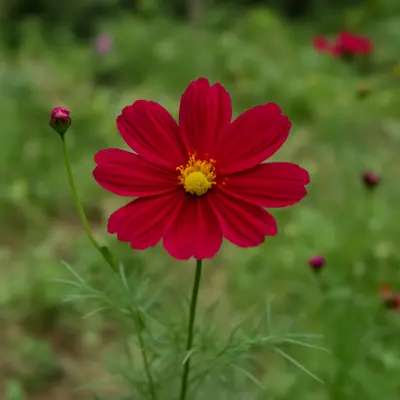
Blooms are 2 1/2" across and are a beautiful, dark burgundy/magenta red color. Strong, straight stems can withstand considerable handling. Produces under short days.
Harvest
90-110d
Days to harvest
Sun
Full sun to partial shade
Zones
2–11
USDA hardiness
Height
2-4 feet
Planting Timeline
Showing dates for Versailles Red in USDA Zone 7
All Zone 7 flower →Zone Map
Click a state to update dates
Versailles Red · Zones 2–11
Growing Details
Succession Planting
Direct sow Versailles Red every 3 weeks from your last frost date through mid-June in zones 6–8, stopping once daytime highs are reliably above 85°F. Germination doesn't fail outright in heat, but it drops off sharply, and your earlier plantings will already be flowering by then anyway. Each sowing blooms for 6–8 weeks with consistent deadheading, so staggered rounds keep color running from midsummer through first frost.
Cosmos germinates fast — 7 to 10 days at soil temperatures above 60°F — so indoor starts don't need more than 4 weeks of lead time. A late-May direct sowing will typically catch up to a February-started transplant within two to three weeks of germination.
Complete Growing Guide
Blooms are 2 1/2" across and are a beautiful, dark burgundy/magenta red color. Strong, straight stems can withstand considerable handling. Produces under short days. According to Johnny's Selected Seeds, Versailles Red is 90 - 110 days to maturity, annual, open pollinated. Notable features: Easy Choice, Use for Cut Flowers and Bouquets, Attracts Beneficial Insects.
Light: Full sun (6 or more hours of direct sunlight a day), Partial Shade (Direct sunlight only part of the day, 2-6 hours). Soil: Clay, Loam (Silt), Sand. Soil pH: Alkaline (>8.0), Neutral (6.0-8.0). Drainage: Good Drainage, Occasionally Dry. Height: 2 ft. 0 in. - 4 ft. 0 in.. Spread: 2 ft. 0 in. - 3 ft. 0 in.. Spacing: 12 inches-3 feet. Growth rate: Rapid. Maintenance: Low. Propagation: Seed. Regions: Coastal, Mountains, Piedmont.
Harvesting
Versailles Red reaches harvest at 90 - 110 days from sowing per Johnny's Selected Seeds. Expect 2 1/2" at peak. As an annual, harvest continues until frost ends the season.
Type: Capsule.
Storage & Preservation
Store fresh cut blooms in a cool location (55-65°F) away from direct sunlight and ripening fruit, which emit ethylene gas. For maximum vase life (7-10 days), keep in cool water and change daily. For preservation, try air-drying by hanging bundles upside-down in a warm, dry, dark space for 2-3 weeks to retain color. Alternatively, press flowers between parchment paper under books for 3-4 weeks for floral arrangements. Silica gel drying offers faster results (3-5 days) and better color retention for decorative or craft use.
History & Origin
Versailles Red is open-pollinated, meaning seed saved from healthy plants will produce true-to-type offspring. Listed in the Johnny's Selected Seeds catalog.
Origin: Mexico and southwest North America
Advantages
- +Dark burgundy blooms are striking and distinctive in floral arrangements
- +Strong straight stems reduce need for support or conditioning techniques
- +Performs reliably in short-day conditions for consistent production
- +Relatively easy to grow making it suitable for beginners
Considerations
- -90-110 days to bloom requires significant growing time investment
- -2.5 inch flowers are smaller than some premium cosmos varieties
Companion Plants
Marigolds and alyssum are worth planting closest to Versailles Red. French marigold varieties like 'Petite Gold' deter whiteflies and aphids through foliar and root emissions, and their bloom timing overlaps cleanly with cosmos from midsummer through fall. Alyssum stays under 6 inches, so it doesn't shade anything out, and its nectar pulls in parasitic wasps (Braconidae) and hoverflies — exactly the insects that prey on the aphids drawn to cosmos buds. Nasturtiums can serve as a sacrificial trap crop, pulling aphid pressure away from your cosmos, though you'll need to cut them back hard once they get overwhelmed.
Black walnut, fennel, and eucalyptus all need to stay well clear. Fennel is subtly allelopathic and stunts most annuals planted within a foot or two of it — it's a bad neighbor for nearly everything in an annual bed. Eucalyptus causes similar problems through root exudates and decomposing leaf litter. Black walnut releases juglone into the surrounding soil; depending on the tree's size, that chemical zone can extend 50 feet or more from the trunk, and cosmos won't thrive inside it.
Plant Together
Marigolds
Repel nematodes and aphids while attracting beneficial insects
Alyssum
Attracts beneficial insects and provides ground cover to retain soil moisture
Nasturtiums
Act as trap crop for aphids and cucumber beetles while adding vibrant color contrast
Petunias
Repel aphids, tomato hornworms, and squash bugs with natural compounds
Lavender
Deters pests with strong fragrance and attracts pollinators
Zinnia
Attracts beneficial predatory insects and provides complementary flower colors
Cosmos
Attracts beneficial insects and provides height variation in garden design
Catnip
Repels mosquitoes, ants, and rodents more effectively than DEET
Keep Apart
Black Walnut
Produces juglone toxin that inhibits growth and can kill sensitive flowering plants
Eucalyptus
Releases allelopathic compounds that suppress growth of nearby plants
Fennel
Inhibits growth of most garden plants through allelopathic root secretions
Troubleshooting Versailles Red
What you'll see, why it happens, and what to do about it.
Seedlings topple over at soil level, stems look pinched or rotted just below the surface
Likely Causes
- Damping off (Pythium or Rhizoctonia spp.) — fungal pathogens that thrive in cold, wet, poorly drained seed-starting mix
- Overwatering combined with low airflow around trays
What to Do
- 1.Toss affected trays — there's no recovering a damped-off flat
- 2.Start fresh in a sterile, well-draining seed-starting mix and water only when the top layer is dry
- 3.Run a small fan nearby to keep air moving; it makes a real difference
Powdery white coating on leaves, usually appearing mid-to-late summer on established plants
Likely Causes
- Powdery mildew (Erysiphe cichoracearum) — common on cosmos once nights cool and humidity rises
- Crowded planting that restricts airflow between stems
What to Do
- 1.Thin plants to at least 12 inches apart at the start of the season to prevent the problem before it starts
- 2.Strip and trash heavily affected leaves; don't compost them
- 3.A diluted baking soda spray (1 tablespoon per gallon of water) can slow spread on mildly affected plants
Plants stall around 18 inches with buds forming but no real upward push — well short of the 2–4 foot expectation on the label
Likely Causes
- Overly rich or heavily amended soil — cosmos are native to poor Mexican highland soils and redirect energy into foliage when nitrogen runs high
- Root-bound transplants moved too late; cosmos don't like their roots disturbed once they've settled in
What to Do
- 1.Skip the fertilizer entirely; Versailles Red genuinely performs better in lean ground
- 2.Direct sow where you want them to grow, or transplant early when seedlings are no taller than 3 inches
- 3.If they're already stunted, leave them alone — they'll flower, just at half the height
Dense aphid clusters on new growth and buds, with ants running up and down the stems
Likely Causes
- Aphids (Aphididae) — soft-bodied insects that colonize tender growing tips; the ants are farming them for honeydew and not the actual culprit
- Absence of nearby predatory insect habitat, which lets populations spike unchecked
What to Do
- 1.Knock aphids off with a strong stream of water from the hose; repeat every 2–3 days until populations drop
- 2.Plant alyssum within a few feet — it draws in parasitic wasps (Braconidae) that do most of the real biological control work
- 3.Avoid broad-spectrum insecticides; they'll wipe out the lacewings and wasps that would otherwise keep aphid numbers in check
Frequently Asked Questions
How long do Versailles Red cut flowers last in a vase?▼
Is Versailles Red a good flower for beginners?▼
Can you grow Versailles Red in containers?▼
When should I plant Versailles Red flowers?▼
What makes Versailles Red different from other red cut flowers?▼
How much sunlight does Versailles Red need?▼
Zone-by-Zone Planting Calendar
| Zone | Indoor Start | Transplant | Direct Sow | Harvest |
|---|---|---|---|---|
| Zone 1 | May – June | July – August | July – September | — |
| Zone 2 | April – May | June – July | June – August | — |
| Zone 11 | January – January | January – February | January – March | — |
| Zone 12 | January – January | January – February | January – March | — |
| Zone 13 | January – January | January – February | January – March | — |
| Zone 3 | April – May | June – July | June – August | — |
| Zone 4 | March – April | June – June | June – July | — |
| Zone 5 | March – April | May – June | May – July | — |
| Zone 6 | March – April | May – June | May – July | — |
| Zone 7 | February – March | April – May | April – June | — |
| Zone 8 | February – March | April – May | April – June | — |
| Zone 9 | January – February | March – April | March – May | — |
| Zone 10 | January – January | February – March | February – April | — |
Growing Guides from Wind River Greens
Sources & References
External authority sources used in compiling this guide.
- BreederJohnny's Selected Seeds
See the Methodology page for how this data is sourced, what's AI-assisted, and known limitations.