Chives Microgreens
Allium schoenoprasum
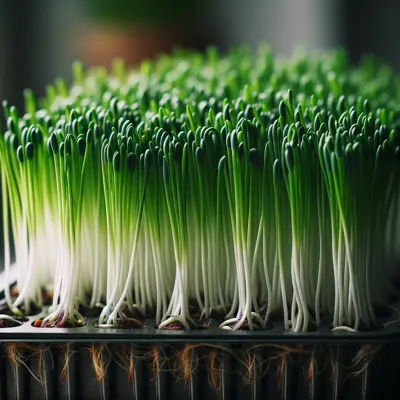
Chives microgreens are tender, slender green shoots with a mild onion flavor and fresh, aromatic profile. These delicate microgreens mature in 75-85 days and are ideal for culinary applications requiring a subtle allium taste without pungency. They thrive in fine seed starting mix or soilless medium under full sun to partial shade (4-6+ hours daily). The heirloom variety offers a distinctly fresh character perfect for garnishing, salads, and dishes where gentle onion notes enhance rather than dominate. Moderate difficulty indoor growing requires vigilance against fungus gnats and thrips, making proper ventilation essential for success.
Harvest
75-85d
Days to harvest
Sun
Full sun to partial shade
Zones
4–8
USDA hardiness
Height
12-18 inches
Planting Timeline
Showing dates for Chives Microgreens in USDA Zone 7
All Zone 7 microgreen →Zone Map
Click a state to update dates
Chives Microgreens · Zones 4–8
Growing Details
Complete Growing Guide
With a 75-85 day maturation window, Purly chives microgreens require patience compared to faster-growing varieties, so plan your succession sowings accordingly to maintain consistent harvests. This cultivar's notably upright growth habit and straighter leaves mean better air circulation between plants, reducing fungal disease risk—a key advantage when growing indoors where humidity tends to concentrate. Sow seeds densely but ensure they don't clump, as crowding can trigger premature bolting, especially under warm conditions above 70°F. Provide consistent moisture without waterlogging, and maintain 12-14 hours of bright indirect light daily to prevent stretching. Unlike sprawling chives varieties, Purly's vertical tendency makes it ideal for shallow trays, allowing you to maximize space efficiency while minimizing the leaf diseases common in dense microgreen beds. Harvest just before flower buds form to capture peak flavor and tenderness.
Light: Full sun (6 or more hours of direct sunlight a day), Partial Shade (Direct sunlight only part of the day, 2-6 hours). Soil: Clay, Loam (Silt), Sand, Shallow Rocky. Drainage: Good Drainage, Moist, Occasionally Dry. Height: 1 ft. 0 in. - 1 ft. 6 in.. Spread: 1 ft. 0 in. - 1 ft. 5 in.. Spacing: Less than 12 inches, 12 inches-3 feet. Growth rate: Medium. Maintenance: Low. Propagation: Division, Seed. Regions: Coastal, Mountains, Piedmont.
Harvesting
Chives microgreens reach peak readiness when their upright stems display a vibrant green color and develop their characteristic straight leaves, typically between 10-14 days of growth. At this stage, the microgreens feel tender yet sturdy enough to harvest cleanly. You can employ either a single-harvest approach by cutting all stems at soil level or opt for continuous harvesting by selectively removing outer leaves while allowing the center growth to mature further. For optimal flavor development, harvest in the morning after moisture has dried from the leaves, as this timing maximizes the fresh, aromatic onion notes and ensures the microgreens retain their crisp texture longer after cutting.
3-valved capsule opens in summer to disperse many seeds
Type: Capsule. Length: < 1 inch. Width: < 1 inch.
Harvest time: Summer
Storage & Preservation
Store freshly harvested chives microgreens immediately in the refrigerator at 35-40°F with high humidity. Place them in a sealed container lined with slightly damp paper towels, which maintains moisture without creating condensation. Properly stored chives microgreens maintain quality for 5-7 days, though flavor peaks within the first 3 days.
For preservation, gentle dehydration works best—spread microgreens on dehydrator trays at 95°F for 2-4 hours until crisp. Store dried microgreens in airtight containers away from light for up to 6 months. Freezing is less ideal as it destroys the delicate cellular structure, though frozen chives microgreens can be used in cooked applications like soups or egg dishes. For immediate use, pack in ice water for 10 minutes to crisp up any wilted stems before serving.
History & Origin
Chives microgreens derive from Allium schoenoprasum, a species with ancient roots in temperate regions across Asia and Europe where wild populations were gathered and subsequently domesticated. The culinary use of chives dates back centuries in European and Asian cuisines. Modern chive microgreens represent a contemporary cultivation technique rather than a distinct botanical variety, applying established microgreens growing methods to standard chive germplasm. Documentation of the specific breeder, introduction year, or seed company origins of "Chives Microgreens" as a named variety is sparse. These microgreens likely emerged organically from the broader microgreens industry's expansion in the late twentieth and early twenty-first centuries, as growers recognized the potential of sprouting common culinary herbs for tender, nutrient-dense harvests.
Origin: Temperate Northern Hemisphere
Advantages
- +Mild, sweet onion flavor works well in diverse culinary applications
- +Edible flowers add visual appeal and versatility to dishes
- +Upright plant habit makes harvesting and handling easier than sprawling varieties
- +Fresh, aromatic taste enhances salads, soups, and potato dishes
- +Moderate difficulty level makes growing accessible to most gardeners
Considerations
- -Susceptible to fungus gnats and thrips in indoor growing conditions
- -Root rot risk requires careful watering management and drainage
- -Long growing period of 75-85 days demands patience and space
Companion Plants
Chives push sulfur compounds into the air and soil that physically deter aphids — it's a documented chemical effect, not garden mythology — which is why tomatoes, peppers, and roses all benefit from proximity. Carrots get some protection from carrot fly (Psila rosae), and lettuce and brassicas coexist fine because chive roots stay shallow while those crops run deeper, so there's no real nutrient contest. Beans, peas, and asparagus are a different story: allium-family root exudates suppress nitrogen fixation in legumes and exchange the favor with asparagus by stunting both plants over a single season.
Plant Together
Tomatoes
Chives repel aphids and may improve tomato flavor and growth
Carrots
Chives help deter carrot fly and other root pests
Roses
Chives repel aphids and black spot, classic rose companion
Lettuce
Compatible growing conditions and chives deter aphids that attack lettuce
Peppers
Chives repel aphids and may enhance pepper growth
Brassicas
Chives deter flea beetles and cabbage worms from brassica crops
Strawberries
Chives improve strawberry flavor and repel harmful insects
Parsley
Compatible herbs with similar growing requirements
Keep Apart
Beans
Chives may inhibit bean growth and nitrogen fixation
Peas
Alliums like chives can stunt pea growth and development
Asparagus
Chives may compete aggressively and inhibit asparagus spear development
Nutrition Facts
Per 100g serving. % Daily Value based on 2,000 calorie diet. Source: USDA FoodData Central (FDC #169994)
Pests & Disease Resistance
Resistance
Generally disease resistant
Common Pests
Fungus gnats, thrips (indoor growing)
Diseases
Root rot if overwatered
Troubleshooting Chives Microgreens
What you'll see, why it happens, and what to do about it.
Seedlings damping off at the soil line, stems going translucent and collapsing around day 10-14
Likely Causes
- Root rot from overwatering — Allium microgreens need moisture but sit in it badly
- Fungus gnats (Bradysia spp.) — larvae chew roots and spread Pythium in the growing medium
What to Do
- 1.Cut misting back to twice daily and make sure your tray has drainage; standing water is the main culprit
- 2.Set yellow sticky traps above the trays to catch adult fungus gnats and break the egg-laying cycle
- 3.If gnats are already established, drench the medium once with a diluted hydrogen peroxide solution (1 part 3% H₂O₂ to 4 parts water) to knock back larvae
Pale, thin shoots with yellowing tips after day 20, growth stalling well below the expected 12-18 inch harvest height
Likely Causes
- Insufficient light — chives are slower than most microgreens and need 4-6 hours of direct light or a grow light held 2-3 inches above the canopy
- Thrips (Frankliniella occidentalis) feeding on young leaf tissue, leaving silver streaking before any insects are visible to the naked eye
What to Do
- 1.Move trays to a south-facing window or drop your grow light to within 2-3 inches of the canopy for 14-16 hours per day
- 2.Check the undersides of shoots with a hand lens for thrips; if found, discard that tray — they spread fast in a grow room
- 3.For future trays, keep your grow space ventilated; stagnant air makes Frankliniella populations climb quickly
Frequently Asked Questions
How long do chives microgreens take to grow?▼
Can you grow chives microgreens without soil?▼
What do chives microgreens taste like compared to mature chives?▼
Are chives microgreens good for beginners?▼
Do chives microgreens need special lighting?▼
Can you regrow chives microgreens after cutting?▼
Zone-by-Zone Planting Calendar
| Zone | Indoor Start | Transplant | Direct Sow | Harvest |
|---|---|---|---|---|
| Zone 1 | January – December | — | — | January – December |
| Zone 2 | January – December | — | — | January – December |
| Zone 11 | January – December | — | — | January – December |
| Zone 12 | January – December | — | — | January – December |
| Zone 13 | January – December | — | — | January – December |
| Zone 3 | January – December | — | — | January – December |
| Zone 4 | January – December | — | — | January – December |
| Zone 5 | January – December | — | — | January – December |
| Zone 6 | January – December | — | — | January – December |
| Zone 7 | January – December | — | — | January – December |
| Zone 8 | January – December | — | — | January – December |
| Zone 9 | January – December | — | — | January – December |
| Zone 10 | January – December | — | — | January – December |
Growing Guides from Wind River Greens
Sources & References
External authority sources used in compiling this guide.
- ExtensionNC State Extension
- USDAUSDA FoodData Central
See the Methodology page for how this data is sourced, what's AI-assisted, and known limitations.