Violette di Firenze
Solanum melongena 'Violette di Firenze'
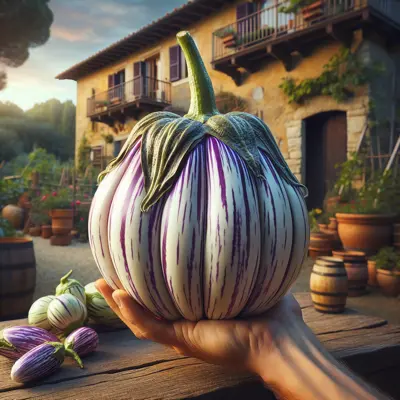
A treasured Italian heirloom from Florence that produces large, ribbed fruits with stunning light purple skin and distinctive white stripes. This variety has been grown in Tuscan gardens for generations, prized for its meaty texture and rich flavor that's perfect for traditional Italian dishes. The dramatic ribbed shape and beautiful coloring make it as ornamental as it is delicious.
Harvest
80-90d
Days to harvest
Sun
Full sun
Zones
9–12
USDA hardiness
Height
2-4 feet
Planting Timeline
Showing dates for Violette di Firenze in USDA Zone 7
All Zone 7 eggplant →Zone Map
Click a state to update dates
Violette di Firenze · Zones 9–12
Growing Details
Complete Growing Guide
This heirloom demands warmer soil and air temperatures than standard eggplants—wait until soil reaches at least 70°F and nighttime temperatures stay above 60°F before transplanting, typically 2–3 weeks later than common varieties. Violette di Firenze is particularly susceptible to early bolting and flower drop in cool conditions, so consistent warmth is non-negotiable for fruit set. The large ribbed fruits are heavier than typical eggplants, requiring sturdy stakes or cages to prevent branch breakage once laden with marble-sized developing fruits. Watch closely for spider mites and flea beetles, which find the tender young growth irresistible in Mediterranean-warm climates. One essential tip: prune selectively to 2–3 main stems early in the season rather than letting plants sprawl; this directs energy into fewer, showier fruits and improves air circulation to reduce fungal issues. Consistent moisture prevents blossom-end rot on these temperamental fruits.
Light: Full sun (6 or more hours of direct sunlight a day). Soil: Loam (Silt), Sand. Soil pH: Acid (<6.0). Drainage: Good Drainage, Moist. Height: 2 ft. 0 in. - 4 ft. 0 in.. Spread: 1 ft. 0 in. - 3 ft. 0 in.. Spacing: 3 feet-6 feet. Growth rate: Medium. Maintenance: Medium. Propagation: Seed.
Harvesting
Harvest Violette di Firenze when the skin deepens to a rich, saturated purple with crisp white striping and the fruit reaches 6-8 inches in length, indicating peak maturity. The eggplant should feel firm and slightly yielding when gently squeezed, with a glossy skin surface; avoid waiting until the skin becomes dull or wrinkled, which signals overripeness and bitter flavor development. This variety responds well to continuous harvesting—picking fruits at their prime encourages the plant to produce additional blooms throughout the season rather than focusing energy on fewer mature fruits. For best results, harvest in early morning when the fruit is cool and hydrated, using a sharp knife or pruners to cut the stem cleanly rather than pulling, which protects the delicate plant structure.
The fruit is a berry that is egg-shaped, smooth and has glossy skin. The fruit may measure 4 to 8 inches long. It ranges in color from green to white, to purple-black when immature and when it should be eaten. As the fruit matures it gets stringy and bitter. Fruit contains numerous small, flat, pale yellow to brown seeds.
Color: Black, Gold/Yellow, Green, Purple/Lavender, White. Type: Berry. Length: > 3 inches.
Garden value: Edible, Showy
Harvest time: Fall, Summer
Edibility: The immature fruit is edible and best used in food preparation. As the fruit matures, it becomes stringy and bitter. The fruits are usually cooked and served as a vegetable. They may be prepared and eaten by frying, steaming, grilling, roasting, or stewing. They may also be stir-fried, pickled, stuffed, and fried with a light breading.
Storage & Preservation
Fresh Violette di Firenze eggplants store best at room temperature for 3-4 days, developing optimal flavor as they rest. For longer storage, refrigerate in the crisper drawer wrapped in perforated plastic bags—they'll keep 7-10 days but may develop brown spots and bitter flavors if stored below 50°F.
For preservation, this variety's meaty texture makes it exceptional for freezing after cooking. Slice and salt for 30 minutes, then sauté until tender before freezing in portions—perfect for winter melanzane parmigiana. The firm flesh also excels in pressure canning as part of ratatouille or caponata recipes.
Dehydrating works well for this variety's dense flesh. Slice into ¼-inch rounds, salt briefly, then dehydrate at 135°F until leathery. Rehydrate dried slices in warm broth for stews and curries. The high moisture content makes this variety less suitable for oil-packing compared to smaller Italian varieties.
History & Origin
This Florentine heirloom emerges from centuries of cultivation in the gardens and markets surrounding Florence, Italy, though precise documentation of its origin point remains elusive. Like many Italian eggplant varieties, it likely developed through farmer-led selection within Tuscany's agricultural tradition rather than through formal breeding programs. The variety reflects the region's long history of eggplant cultivation dating to the Renaissance, when the crop gained prominence in Italian cuisine. "Violette di Firenze" became established within Tuscan seed-saving networks and was preserved and propagated by gardeners who valued its distinctive ribbed morphology and striped coloration alongside its culinary qualities, securing its place as a regional heirloom passed through generations of Italian growers.
Origin: China South-Central, Laos, Malaya, Myanmar, Thailand, Vietnam
Advantages
- +Stunning light purple skin with white stripes makes an ornamental garden statement.
- +Large, meaty fruits deliver rich, complex flavor perfect for authentic Italian cuisine.
- +Distinctive ribbed shape creates impressive presentation for farmers markets and table.
- +Moderate 80-90 day maturity allows reliable harvest in most growing seasons.
- +Treasured heirloom status appeals to gardeners seeking historical, flavorful varieties.
Considerations
- -Moderate to challenging difficulty requires experienced growers for consistent success.
- -Vulnerable to multiple serious diseases including verticillium wilt and bacterial wilt.
- -Prone to flea beetles, spider mites, and European corn borer infestations requiring management.
Companion Plants
Basil and French marigolds (Tagetes patula) are the two worth planting closest to Violette di Firenze. Basil doesn't compete for root space, sits comfortably in the same 6.0–7.0 pH range, and pulls double duty in the kitchen — the pest-repellent claims against aphids and spider mites are modest at best, but the plant earns its spot anyway. French marigolds are better documented: their roots produce thiophenes that suppress root-knot nematodes, which cause real yield losses in the warm soils where this variety does its best work. Nasturtiums are worth tucking in at the bed edges — they pull aphid pressure away from the main planting and can be pulled and discarded when they get overrun.
Fennel, brassicas, and black walnut are the three to keep out. Fennel releases allelopathic compounds that stunt neighboring vegetables, nightshades included. Brassicas compete hard for nutrients and drag in their own pest complex — harlequin bugs and cabbage worms don't stay put. Black walnut is the hardest no: juglone, which leaches from roots and decomposing hulls, is acutely toxic to plants in the Solanaceae family, and the damage radius from a mature tree can extend 50–60 feet.
Plant Together
Basil
Repels aphids and whiteflies, may improve flavor
Tomatoes
Similar growing requirements and pest management, shared beneficial insects
Peppers
Compatible nightshade family members with similar care needs
Marigolds
Repel nematodes and other soil pests, attract beneficial insects
Oregano
Deters pests like spider mites and aphids with aromatic oils
Thyme
Repels hornworms and other caterpillars that damage eggplant
Nasturtiums
Act as trap crop for aphids and cucumber beetles
Catnip
Repels flea beetles which commonly attack eggplant leaves
Keep Apart
Black Walnut
Produces juglone which is toxic to nightshade family plants
Fennel
Inhibits growth of most garden plants through allelopathy
Brassicas
Compete for nutrients and may attract pests harmful to eggplant
Nutrition Facts
Per 100g serving. % Daily Value based on 2,000 calorie diet. Source: USDA FoodData Central (FDC #169228)
Pests & Disease Resistance
Resistance
Moderate disease tolerance, susceptible to cool weather stress
Common Pests
Flea beetles, aphids, spider mites, European corn borer
Diseases
Verticillium wilt, bacterial wilt, anthracnose, phomopsis blight
Troubleshooting Violette di Firenze
What you'll see, why it happens, and what to do about it.
Plant wilts suddenly in midsummer even after watering, with no obvious root damage visible above soil
Likely Causes
- Bacterial wilt (Ralstonia solanacearum) — soil-borne, spreads fast in warm, wet conditions
- Verticillium wilt (Verticillium dahliae) — also soil-borne, more common in cooler soils but persists for years
What to Do
- 1.Cut a wilted stem near the base and look for brown discoloration inside — that points to a vascular wilt, not drought stress
- 2.Dig up and destroy the entire plant, roots included — don't compost it
- 3.As NC State Extension notes, these pathogens persist in soil for years, so rotate nightshades (eggplant, tomatoes, peppers) out of that bed for at least 3 seasons
Small ragged holes punched through leaves on young transplants, especially in the first 2–3 weeks after setting out
Likely Causes
- Flea beetles (Epitrix spp.) — tiny, fast-jumping beetles that feed heavily on eggplant seedlings
- Transplant stress making plants slow to outgrow the damage
What to Do
- 1.Cover transplants immediately with row cover (floating fabric) and seal the edges — flea beetles will find any gap
- 2.Remove the cover once plants hit 12 inches tall and have a few true leaves; by that point they can handle moderate feeding pressure
- 3.If populations are severe, spinosad or pyrethrin are labeled options — check current product labels for rates
Fruit develops sunken, dark, water-soaked spots that expand and rot, often near the blossom end or on the side facing the sun
Likely Causes
- Anthracnose (Colletotrichum melongenae) — fungal, spreads through rain splash and overhead irrigation
- Phomopsis blight (Phomopsis vexans) — can cause similar fruit lesions, sometimes with a lighter center
What to Do
- 1.Pick and trash any affected fruit immediately — leaving it on the plant spreads spores
- 2.Apply 2–3 inches of straw or shredded-leaf mulch under the plants to stop rain from splashing soil-borne spores onto lower fruit
- 3.Switch to drip irrigation if you're overhead watering; keeping foliage dry cuts fungal pressure significantly
Frequently Asked Questions
How long does Violette di Firenze take to grow from seed?▼
Can you grow Violette di Firenze eggplant in containers?▼
Is Violette di Firenze good for beginners?▼
What does Violette di Firenze eggplant taste like?▼
When should I plant Violette di Firenze seeds?▼
How big do Violette di Firenze eggplants get?▼
Zone-by-Zone Planting Calendar
| Zone | Indoor Start | Transplant | Direct Sow | Harvest |
|---|---|---|---|---|
| Zone 3 | April – April | June – July | — | September – October |
| Zone 4 | March – April | June – June | — | September – October |
| Zone 5 | March – March | May – June | — | August – October |
| Zone 6 | March – March | May – June | — | August – October |
| Zone 7 | February – March | April – May | — | July – September |
| Zone 8 | February – February | April – May | — | July – September |
| Zone 9 | January – January | March – April | — | June – August |
| Zone 10 | January – January | February – March | — | May – July |
| Zone 1 | May – May | July – August | — | October – August |
| Zone 2 | April – May | June – July | — | September – September |
| Zone 11 | January – January | January – February | — | April – June |
| Zone 12 | January – January | January – February | — | April – June |
| Zone 13 | January – January | January – February | — | April – June |
Growing Guides from Wind River Greens
Sources & References
External authority sources used in compiling this guide.
See the Methodology page for how this data is sourced, what's AI-assisted, and known limitations.