Fernleaf Dill
Anethum graveolens
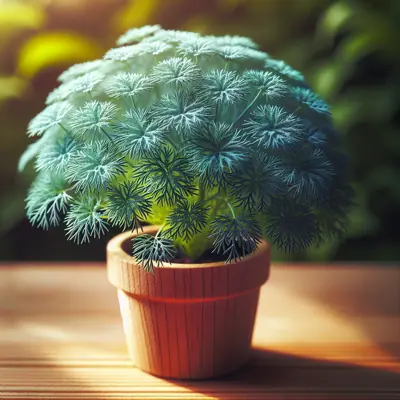
Abundant dark blue-green foliage. Great in containers or in small spaces. AAS Winner. Ht. 6-8".
Harvest
40-50d
Days to harvest
Sun
Full sun to partial shade
Zones
2–11
USDA hardiness
Height
2-5 feet
Planting Timeline
Showing dates for Fernleaf Dill in USDA Zone 7
All Zone 7 herb →Zone Map
Click a state to update dates
Fernleaf Dill · Zones 2–11
Growing Details
Succession Planting
Dill bolts fast once daytime highs push past 85°F — the plant shifts energy to flower and seed production, and the foliage turns bitter and sparse. For a steady supply of harvestable leaves, direct sow every 2–3 weeks starting in early spring (soil temp at least 50°F) through early summer, then pick back up in late August or early September once the heat breaks. Most zones with a long enough fall window can get a solid second run of foliage before first frost.
Don't bother transplanting — dill has a taproot and resents being moved. Direct sow in place at a depth of about ¼ inch, thin to 6–9 inches once seedlings hit 2 inches tall, and commit each batch to the spot where you want it to stay. If you let one planting go to seed, you'll get volunteers the following year, though they tend to come up on their own schedule rather than yours.
Complete Growing Guide
Fernleaf Dill's compact 6–8 inch mature size makes it ideal for containers and tight garden spots, unlike taller dill varieties that demand substantial space. Sow seeds directly in cool-season soil (40–50 days to harvest), timing successive plantings every two weeks for continuous supply rather than relying on a single crop. This cultivar thrives in full sun with well-draining soil and moderate moisture—avoid overwatering, which encourages root rot in confined containers. Fernleaf Dill bolts less aggressively than standard varieties in moderate temperatures, but still prefers cool conditions; plant in spring or fall to minimize early flowering. Watch for spider mites in hot, dry indoor environments and ensure good air circulation to prevent fungal issues. A practical tip: pinch off the central flower head as soon as it forms to redirect energy into leaf production and extend the harvest window by two to three weeks, maximizing your yield from this space-efficient cultivar.
Light: Full sun (6 or more hours of direct sunlight a day), Partial Shade (Direct sunlight only part of the day, 2-6 hours). Soil: High Organic Matter, Loam (Silt), Sand. Soil pH: Acid (<6.0), Neutral (6.0-8.0). Drainage: Good Drainage, Moist. Height: 2 ft. 6 in. - 5 ft. 0 in.. Spread: 2 ft. 0 in. - 3 ft. 0 in.. Spacing: 12 inches-3 feet. Growth rate: Medium. Maintenance: Low. Propagation: Seed. Regions: Coastal, Mountains, Piedmont.
Harvesting
Fernleaf Dill reaches peak harvest readiness when its feathery, dark blue-green fronds display full color intensity and feel delicate yet firm to the touch, typically around 40-50 days from planting. For continuous harvests throughout the season, pinch off the outer fronds regularly starting when the plant reaches 6-8 inches tall, which encourages bushier growth and prevents premature flowering. If you prefer a single, larger harvest, wait until the plant approaches its mature height of 2-5 feet and the foliage appears most robust before cutting. A crucial timing tip: harvest in early morning after dew dries but before afternoon heat intensifies the essential oils, capturing the peak fresh and aromatic flavor with those characteristic anise notes that make Fernleaf Dill a culinary favorite.
Dill fruits are oval, compressed with ridges and progress from bright green color to dark brown with age. They have a pleasant aromatic odor.
Color: Brown/Copper, Green. Type: Schizocarp. Length: < 1 inch. Width: < 1 inch.
Garden value: Edible, Fragrant
Harvest time: Fall, Spring, Summer
Edibility: Leaves (dill weed), seeds, and flowers are edible (used in teas, pickling, and as culinary seasoning). Dill herb and dill seed oils are steam-distilled and used by the food industry as seasonings. Add to pickles, mince in butter, and cook with salmon, borscht, fish, and soups. Dill can be used in teas and as seasoning for butter, cakes, bread, vinegars, soups, fish, pickles, salads, etc.
Storage & Preservation
# Storage and Preservation
Fresh Fernleaf dill keeps best in the refrigerator at 35–40°F with moderate humidity. Wrap stems loosely in a damp paper towel, place in a plastic bag, and store in the crisper drawer for up to two weeks. For longer-term preservation, freezing works exceptionally well—chop the fronds and freeze them in ice cube trays with a little water, then transfer to freezer bags for up to three months. Dried dill also preserves the aromatic quality; hang small bundles upside down in a warm, dark location for one to two weeks, then store in airtight containers away from light. Because Fernleaf dill has delicate, feathery foliage, it loses texture when thawed, making frozen cubes ideal for cooked dishes like soups and sauces rather than fresh applications. The seeds dry naturally on the plant and store in paper envelopes in cool, dark conditions for up to two years, providing your own seed stock for next season.
History & Origin
Fernleaf Dill represents a compact cultivar within the Anethum graveolens species, which has been cultivated for thousands of years across Mediterranean and Asian regions. While specific breeder attribution and introduction date remain undocumented in readily available sources, Fernleaf emerged during the twentieth-century expansion of home gardening and container cultivation trends. The variety likely descends from traditional dill germplasm, selectively bred for its notably dwarf habit and finely dissected foliage—traits that distinguish it from standard tall dill varieties. Its AAS (All-America Selections) award recognition confirms formal evaluation by American horticulturists, though the variety's exact breeding origins within seed company programs or university research remain obscure in published literature.
Origin: Mediterranean, southern Russia, northern and western Africa
Advantages
- +Compact 6-8 inch height makes it ideal for container gardening and small spaces
- +Dark blue-green foliage is visually attractive in herb gardens or landscapes
- +Quick 40-50 day harvest window provides fresh dill for culinary use rapidly
- +AAS award winner indicates superior performance and reliability for home gardeners
- +Classic fresh dill flavor with aromatic anise notes enhances diverse cuisines
Considerations
- -Parsley worms and aphids frequently infest fernleaf dill requiring pest management attention
- -Downy mildew susceptibility can damage foliage in humid or poorly ventilated conditions
- -Small plant size limits total leaf production compared to standard dill varieties
Companion Plants
Dill in full flower is a magnet for predatory wasps in the Braconidae family, which parasitize hornworm larvae and aphid colonies — which is why it pulls real weight near tomatoes and brassicas like cabbage and broccoli. Those crops take constant aphid pressure through summer, and having a stand of blooming dill nearby means you're running a free biological control program rather than reaching for a spray bottle every week. NC State Extension's IPM notes recommend French marigolds as a cultural tool against soil nematodes in affected beds; pair them with dill and you're covering above-ground and below-ground pest pressure at the same time. Lettuce tucks in well under dill's open, airy canopy — low enough to catch partial shade without competing at the root zone.
Keep dill well away from fennel (Foeniculum vulgare): the two cross-pollinate freely when both are flowering, and the seeds that result won't taste like either one. Carrots are in the same Apiaceae family as dill, and planting them together concentrates parsley worm pressure — Papilio polyxenes will find both crops, and you've just made its job easier. Grow carrots in a separate bed, and let each planting of dill go to seed on its own terms.
Plant Together
Tomatoes
Dill repels tomato hornworms and aphids, while tomatoes provide shade for dill
Cabbage
Dill attracts beneficial insects that control cabbage worms and other brassica pests
Cucumbers
Dill repels cucumber beetles and attracts predatory wasps
Lettuce
Dill provides light shade and attracts beneficial insects while lettuce doesn't compete for space
Onions
Both plants repel different pest insects, creating a protective effect
Broccoli
Dill attracts parasitic wasps that control cabbage loopers and other brassica pests
Corn
Corn provides wind protection for delicate dill fronds while dill attracts beneficial predators
Marigolds
Both plants attract beneficial insects and have pest-repelling properties
Keep Apart
Carrots
Can cross-pollinate with dill since both are in the carrot family, affecting seed quality
Fennel
Can cross-pollinate with dill and may inhibit dill's growth through allelopathic effects
Cilantro
Competes for similar growing conditions and attracts the same pests
Nutrition Facts
Per 100g serving. % Daily Value based on 2,000 calorie diet. Source: USDA FoodData Central (FDC #172233)
Pests & Disease Resistance
Resistance
Good general disease resistance, slow to bolt extends harvest window
Common Pests
Parsley worms, aphids, spider mites
Diseases
Downy mildew, bacterial blight (uncommon)
Troubleshooting Fernleaf Dill
What you'll see, why it happens, and what to do about it.
Leaves covered in a gray-purple fuzz on the undersides, with yellowing on top, usually after a stretch of cool, humid nights
Likely Causes
- Downy mildew — a fungus-like oomycete that thrives when temps stay between 50–65°F and foliage stays wet overnight
- Overcrowded planting that traps moisture and kills airflow
What to Do
- 1.Pull and trash infected stems — don't compost them
- 2.Space plants at least 9–12 inches apart to let air move through
- 3.Water at soil level in the morning so foliage dries before dark; overhead watering in the evening is the fastest way to make this worse
Frass (dark green or black pellets) on the foliage and large sections of leaf stripped down to the stem, usually showing up fast — plants can look fine one morning and chewed up by afternoon
Likely Causes
- Parsley worm (Papilio polyxenes larva) — the caterpillar of the black swallowtail butterfly, which actively seeks out plants in the Apiaceae family
- Missing the eggs or early-instar caterpillars because they're small and well-camouflaged
What to Do
- 1.Handpick caterpillars and relocate them to a wild carrot or Queen Anne's lace patch if you can — they're butterfly larvae and worth keeping around off your crop
- 2.If the population is too large to manage by hand, apply Bacillus thuringiensis (Bt) as a targeted spray; it won't harm beneficial insects that aren't actively eating treated foliage
- 3.Check plants every 2–3 days during summer; a single large caterpillar can defoliate a dill plant in under a week
Stippled, pale, or bronze-looking foliage — leaves look dusty or faintly silvered, sometimes with fine webbing on stems or leaf axils during hot, dry stretches
Likely Causes
- Spider mites (Tetranychus urticae) — population explosions happen fast when temps exceed 85°F and humidity drops
- Plants stressed by drought or inconsistent watering, which lowers their natural defenses
What to Do
- 1.Blast the foliage with a strong stream of water — undersides of leaves especially — on two or three consecutive days to knock mite populations back
- 2.Keep plants watered consistently at 1 inch per week; drought-stressed dill is far more susceptible
- 3.If webbing is heavy and the infestation is established, apply insecticidal soap or neem oil in the early morning when temps are below 80°F to avoid leaf burn
Frequently Asked Questions
How long does fernleaf dill take to grow?▼
Can you grow fernleaf dill in containers?▼
Is fernleaf dill good for beginners?▼
What does fernleaf dill taste like?▼
When should I plant fernleaf dill?▼
Fernleaf dill vs regular dill—what's the difference?▼
Zone-by-Zone Planting Calendar
| Zone | Indoor Start | Transplant | Direct Sow | Harvest |
|---|---|---|---|---|
| Zone 2 | April – May | June – August | — | August – September |
| Zone 11 | January – January | January – March | — | March – December |
| Zone 3 | April – May | June – July | — | July – October |
| Zone 4 | March – April | June – July | — | July – October |
| Zone 5 | March – April | May – June | — | June – October |
| Zone 6 | March – April | May – June | — | June – November |
| Zone 7 | February – March | April – June | — | June – November |
| Zone 8 | February – March | April – May | — | May – December |
| Zone 9 | January – February | March – April | — | April – December |
| Zone 10 | January – January | February – April | — | April – December |
Growing Guides from Wind River Greens
Sources & References
External authority sources used in compiling this guide.
See the Methodology page for how this data is sourced, what's AI-assisted, and known limitations.