Luna Rossa
Cichorium intybus
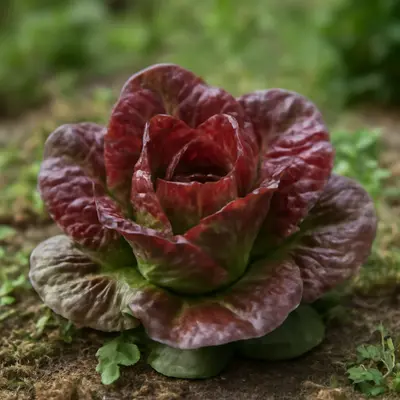
Improved Costarossa type with better color expression, more uniform plants, and less susceptibility to tipburn. Unique rib color ranges from pink to dark red. In the North, slot for late fall harvest. In the South, grow during winter or overwinter. Not suitable for spring planting.
Harvest
120d
Days to harvest
Sun
Full sun
Zones
3–8
USDA hardiness
Height
3-4 feet
Planting Timeline
Showing dates for Luna Rossa in USDA Zone 7
All Zone 7 lettuce →Zone Map
Click a state to update dates
Luna Rossa · Zones 3–8
Growing Details
Succession Planting
Direct sow every 14–18 days starting March 1 in zone 7, running the cadence through early May. Luna Rossa is a chicory, not a true lettuce, so it tolerates summer heat better than most leafy greens — but bitterness sharpens noticeably once daytime highs are consistently above 85°F and the plant starts pushing toward its 3–4 foot mature height. For fall production, pick back up with sowings in late August through September; cooler nights mellow the flavor considerably, and working backward from the 120-day maturity count, a late-August sow should be harvest-ready by late November in most zones.
Complete Growing Guide
Improved Costarossa type with better color expression, more uniform plants, and less susceptibility to tipburn. Unique rib color ranges from pink to dark red. In the North, slot for late fall harvest. In the South, grow during winter or overwinter. Not suitable for spring planting. According to Johnny's Selected Seeds, Luna Rossa is 120 days to maturity, open pollinated. Notable features: Cold Tolerant.
Light: Full sun (6 or more hours of direct sunlight a day). Soil: Clay, High Organic Matter, Loam (Silt), Sand, Shallow Rocky. Soil pH: Alkaline (>8.0), Neutral (6.0-8.0). Drainage: Good Drainage, Moist, Occasionally Dry. Height: 3 ft. 0 in. - 4 ft. 0 in.. Spread: 1 ft. 6 in. - 2 ft. 0 in.. Spacing: 12 inches-3 feet. Growth rate: Rapid. Maintenance: High, Medium. Propagation: Seed. Regions: Coastal, Mountains, Piedmont.
Harvesting
Luna Rossa reaches harvest at 120 days from sowing per Johnny's Selected Seeds.
Brown oblong and 5-ribbed achene with blunt ends. The wider end has a bristles across the top.
Color: Brown/Copper, Cream/Tan. Type: Achene.
Edibility: Leaves can be used in salads or cooked to reduce bitter flavor. Roots can be dried and used as a coffee substitute.
Storage & Preservation
Luna Rossa chicory should be harvested at full maturity (around day 120) and stored immediately at 32–40°F in a perforated plastic bag within the crisper drawer, maintaining 95% humidity to prevent wilting. Fresh heads will keep for 2–3 weeks under these conditions. For longer preservation, blanch whole heads for 3 minutes, cool in ice water, then freeze in airtight containers for up to 8 months—this method works particularly well for Luna Rossa's tender leaves. Alternatively, slice and dry in a low oven (120–140°F) for 6–8 hours to create crispy chips suitable for tea infusions; the red variety holds its color well when dried. Fermentation is also viable: slice heads, layer with salt (3% by weight), and pack into jars for 3–4 weeks at room temperature, yielding a tangy condiment. Luna Rossa's deep red pigmentation intensifies slightly during fermentation, making it both functional and visually appealing for long-term storage.
History & Origin
Luna Rossa is open-pollinated, meaning seed saved from healthy plants will produce true-to-type offspring. Listed in the Johnny's Selected Seeds catalog.
Origin: Europe
Advantages
- +Improved color expression with unique pink to dark red rib coloring
- +Better uniformity across plants compared to standard Costarossa types
- +Reduced tipburn susceptibility makes it more reliable for growers
- +Excellent for late fall harvest in northern climates
- +Winter or overwintering option provides southern growers extended seasons
Considerations
- -Not suitable for spring planting limits growing season flexibility
- -120-day maturity requires significant time commitment before harvest
- -Requires specific seasonal timing; cannot be grown year-round in most regions
Companion Plants
Garlic and chives pull real weight here — both disrupt aphid host-finding with sulfur compounds, and aphids are the primary vector for lettuce mosaic virus on Luna Rossa. Radishes do double duty: they draw flea beetles away from the chicory and, if you let a few bolt, the flowers bring in predatory wasps. Tagetes patula specifically has documented nematode-suppressing root exudates, and slugs tend to give the plants a wide berth. Keep fennel at least 10 feet out — its allelopathic root chemistry stunts most vegetables nearby, and chicory is no exception.
Plant Together
Basil
Repels aphids and whiteflies while improving lettuce flavor
Chives
Deters aphids and slugs with strong scent compounds
Carrots
Deep roots don't compete with shallow lettuce roots, maximizes space
Radishes
Quick harvest breaks soil for lettuce and repels flea beetles
Marigolds
Natural pest deterrent against nematodes and aphids
Spinach
Similar growing requirements and helps maximize cool-season garden space
Garlic
Strong scent repels aphids, slugs, and other soft-bodied pests
Nasturtiums
Acts as trap crop for aphids and cucumber beetles
Keep Apart
Fennel
Releases allelopathic compounds that inhibit lettuce germination and growth
Broccoli
Large leaves create excessive shade and compete for nutrients
Sunflowers
Allelopathic effects suppress lettuce growth and development
Nutrition Facts
Per 100g serving. % Daily Value based on 2,000 calorie diet. Source: USDA FoodData Central (FDC #2346388)
Pests & Disease Resistance
Common Pests
Aphids, slugs, snails
Diseases
Downy mildew, lettuce mosaic virus
Troubleshooting Luna Rossa
What you'll see, why it happens, and what to do about it.
Seedlings collapse and die within 7–10 days of going in the ground; fuzzy white mold visible on soil surface near the base
Likely Causes
- Damping off — typically Pythium or Rhizoctonia solani — a soilborne fungal disease that thrives in cold, wet, poorly drained soil
- Replanting the same bed with lettuce or chicory for 3+ consecutive seasons without rotation, allowing pathogen buildup
What to Do
- 1.Pull and trash the dead seedlings; do not compost them
- 2.Let the bed dry out between waterings — damping off accelerates in saturated soil
- 3.Rotate out of that bed for at least one season; start replacements in a fresh spot with good drainage
White-gray fuzzy coating on the undersides of outer leaves, with pale yellow patches showing on the upper surface
Likely Causes
- Downy mildew (Bremia lactucae) — spreads fast in cool, humid weather, especially when nights stay below 65°F and leaf surfaces stay wet
What to Do
- 1.Remove affected leaves immediately and throw them away — don't let them sit on the soil
- 2.Water at the base, not overhead, and water in the morning so foliage dries before dark
- 3.Space plants to the full 10–12 inches to keep air moving through the bed
Leaves show irregular mosaic patterning — light and dark green mottling — with some leaf distortion or stunting
Likely Causes
- Lettuce mosaic virus (LMV), transmitted by aphids feeding on infected plants and moving to healthy ones
What to Do
- 1.Check the undersides of leaves for aphid colonies; knock them off with a firm spray of water or apply insecticidal soap
- 2.Pull and bag any severely infected plants — there's no cure once the virus is established in the tissue
- 3.Lay reflective silver mulch around transplants, which disorients incoming aphids and cuts early infection rates
Frequently Asked Questions
How long does Luna Rossa lettuce take to mature?▼
When should I plant Luna Rossa lettuce?▼
Is Luna Rossa lettuce good for beginners?▼
Can you grow Luna Rossa in containers?▼
What does Luna Rossa lettuce taste like?▼
What makes Luna Rossa different from regular Costarossa lettuce?▼
Zone-by-Zone Planting Calendar
| Zone | Indoor Start | Transplant | Direct Sow | Harvest |
|---|---|---|---|---|
| Zone 1 | — | — | June – July | October – September |
| Zone 2 | — | — | May – July | September – September |
| Zone 11 | — | — | January – February | April – December |
| Zone 12 | — | — | January – February | April – December |
| Zone 13 | — | — | January – February | April – December |
| Zone 3 | — | — | May – June | September – October |
| Zone 4 | — | — | April – June | August – October |
| Zone 5 | — | — | April – May | August – November |
| Zone 6 | — | — | April – May | August – November |
| Zone 7 | — | — | March – May | July – November |
| Zone 8 | — | — | March – April | July – December |
| Zone 9 | — | — | February – March | June – December |
| Zone 10 | — | — | January – March | May – December |
Growing Guides from Wind River Greens
Sources & References
External authority sources used in compiling this guide.
- BreederJohnny's Selected Seeds
- USDAUSDA FoodData Central
See the Methodology page for how this data is sourced, what's AI-assisted, and known limitations.