Victoria Blue
Salvia farinacea
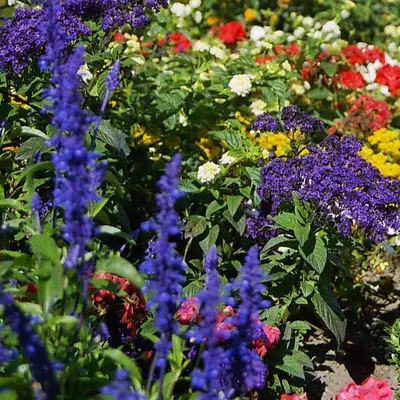
A bit shorter, a week later to flower, and a deeper blue than Gruppenblau. Uniform plants tolerate heat, humidity, and poor soils. Well-suited for mass plantings. Strong, thin stems are harvested fresh or dried when bottom 3-4 flowers open. Also known as mealycup sage and mealy-cup sage. Tender perennial in Zones 8-10.
Harvest
125-130d
Days to harvest
Sun
Full sun
Zones
8–10
USDA hardiness
Height
1-3 feet
Planting Timeline
Showing dates for Victoria Blue in USDA Zone 7
All Zone 7 flower →Zone Map
Click a state to update dates
Victoria Blue · Zones 8–10
Growing Details
Succession Planting
Victoria Blue takes 125-130 days to first bloom, which means a single indoor sow in February or March gets you to midsummer color, and the plant keeps flowering through frost if you deadhead the spent spikes every week or two. There's no payoff to staggering plantings the way you would with lettuce or radishes — one start per season is the right call.
The real succession question is whether to overwinter or start fresh. In zones 8-10, plants can stay in the ground year-round. In zone 7 and colder, dig a few plants in early October before the first hard frost, cut them back by about half, and overwinter them in containers in a cool but frost-free spot — a garage or unheated basement that stays above 28°F works fine. You'll get blooms 4-6 weeks earlier the following season compared to starting from seed again.
Complete Growing Guide
Light: Full sun (6 or more hours of direct sunlight a day). Soil: Clay, Loam (Silt), Sand. Soil pH: Acid (<6.0). Drainage: Good Drainage, Moist, Occasionally Dry. Height: 1 ft. 6 in. - 3 ft. 0 in.. Spread: 1 ft. 0 in. - 2 ft. 0 in.. Spacing: 12 inches-3 feet. Growth rate: Medium. Maintenance: Low. Propagation: Seed, Stem Cutting. Regions: Coastal, Mountains, Piedmont.
Harvesting
Schizocarp has 4 segments with 1 nutlet each
Color: Brown/Copper. Type: Schizocarp. Length: < 1 inch. Width: < 1 inch.
Storage & Preservation
For fresh Victoria Blue sage, store stems in a cool location or refrigerator (32-40°F) in a water-filled container, which extends shelf life to 1-2 weeks. Keep away from ethylene-producing fruits. For preservation, hang-dry bundles in a warm, well-ventilated space (65-75°F) away from direct sunlight for 7-10 days until brittle, then store in airtight containers. Alternatively, strip leaves and freeze in oil-filled ice cube trays for convenient portioning. Water-based freezing also works—blanch briefly before freezing in containers for up to 3 months. Dried flowers and stems maintain color and potency for 6-12 months in dark, dry storage.
History & Origin
Origin: S. Central U.S.A. to NE. Mexico
Advantages
- +Deeper, richer blue color than Gruppenblau variety appeals to designers
- +Uniform plant habit makes Victoria Blue ideal for formal mass plantings
- +Tolerates heat, humidity, and poor soil conditions exceptionally well
- +Strong, thin stems excellent for fresh and dried flower arrangements
- +Flowers reliably within 125-130 days with minimal growing difficulty
Considerations
- -Tender perennial requiring winter protection outside Zones 8-10 limits use
- -One week later flowering than Gruppenblau delays market availability slightly
- -Thin stems may require staking or support in windy conditions
Companion Plants
Marigolds and Alyssum do the most practical work here. French marigolds (Tagetes patula) release thiophenes from their roots — compounds that suppress soil nematodes — and their scent disrupts aphid host-finding. Alyssum stays low at 6-8 inches, so it doesn't shade out the Salvia, and it pulls in parasitic wasps and hoverflies whose larvae eat soft-bodied pests like aphids and thrips. Both bloom on a roughly similar schedule to Victoria Blue, so the bed doesn't look like an afterthought.
Lavender and Rosemary make sense if you're working a dry, well-drained bed — they share a preference for lean soil and won't compete aggressively for the same root zone. Catmint (Nepeta) is worth adding if flea beetles have been a problem; it's a known deterrent and stays in a size range that doesn't crowd the Salvia out.
Black Walnut is a hard no — the roots produce juglone, a compound toxic to many plants, and Salvia farinacea is sensitive enough that even proximity within the canopy drip line can stunt or kill it. Fennel creates a different kind of problem: it doesn't produce a direct toxin, but it chemically inhibits the establishment of nearby plants and tends to pull beneficial insects toward itself rather than letting them work the rest of your bed. Neither is worth working around — just site Victoria Blue away from both.
Plant Together
Marigolds
Repel aphids, whiteflies, and other pests that commonly attack salvias
Nasturtiums
Act as trap crops for aphids and cucumber beetles, protecting nearby plants
Lavender
Similar growing conditions and repels moths, fleas, and mosquitoes
Rosemary
Deters carrot flies, cabbage moths, and enhances growth of nearby flowering plants
Petunias
Repel aphids, tomato hornworms, and squash bugs while providing complementary colors
Alyssum
Attracts beneficial insects like hoverflies and parasitic wasps for natural pest control
Catmint
Repels ants, aphids, and rodents while attracting pollinators
Zinnia
Attracts beneficial predatory insects and provides complementary blooming periods
Keep Apart
Black Walnut
Produces juglone toxin that inhibits growth and can kill sensitive flowering plants
Fennel
Releases allelopathic compounds that stunt growth of most companion plants
Eucalyptus
Secretes growth-inhibiting chemicals and competes aggressively for water and nutrients
Troubleshooting Victoria Blue
What you'll see, why it happens, and what to do about it.
Seedlings damping off at soil level — stems pinch and collapse within the first 2-3 weeks after germination
Likely Causes
- Pythium or Rhizoctonia fungal rot — triggered by soggy seed-starting mix and poor airflow
- Sowing too deep (Victoria Blue seeds need light to germinate; burying them slows emergence and increases rot risk)
What to Do
- 1.Press seeds onto the surface of a pre-moistened, well-draining seed-starting mix — don't cover them, just press in
- 2.Run a small fan near the seedling tray 2-3 hours a day to keep surface moisture from sitting
- 3.If damping off appears, remove affected seedlings immediately and let the mix dry down before watering again
White powdery coating on leaves, usually showing up mid-summer when nights cool down below 65°F
Likely Causes
- Powdery mildew (Erysiphe cichoracearum) — common on Salvia species, especially in crowded plantings with low airflow
- Spacing plants less than 12 inches apart
What to Do
- 1.Strip and bag heavily infected leaves — don't compost them
- 2.Apply a diluted neem oil spray (2 tsp per quart of water with a few drops of dish soap) every 7 days until symptoms stop spreading
- 3.At replanting, give each plant the full 18-inch spacing — this alone cuts incidence significantly
Pale, washed-out leaf color and weak, leggy stems on transplants set out in spring
Likely Causes
- Insufficient hardening off — plants moved from indoor grow lights directly to full sun without a transition period
- Nitrogen deficiency in sandy or heavily leached soils
What to Do
- 1.Harden off seedlings over 7-10 days: start with 2 hours of outdoor shade, gradually increase sun exposure before transplanting
- 2.Side-dress with a balanced granular fertilizer (something in the 10-10-10 range) about 3 weeks after transplant
- 3.If stems are already stretched, pinch the top 1-2 inches to encourage branching before the plant puts energy into flower spikes
Frequently Asked Questions
How long does Victoria Blue sage take to flower from seed?▼
Is Victoria Blue sage good for beginners?▼
Can you grow Victoria Blue sage in containers?▼
When should I plant Victoria Blue sage seeds?▼
How do you harvest Victoria Blue sage flowers?▼
What makes Victoria Blue different from Gruppenblau sage?▼
Zone-by-Zone Planting Calendar
| Zone | Indoor Start | Transplant | Direct Sow | Harvest |
|---|---|---|---|---|
| Zone 3 | April – May | June – July | June – August | — |
| Zone 4 | March – April | June – June | June – July | — |
| Zone 5 | March – April | May – June | May – July | — |
| Zone 6 | March – April | May – June | May – July | — |
| Zone 7 | February – March | April – May | April – June | — |
| Zone 8 | February – March | April – May | April – June | — |
| Zone 9 | January – February | March – April | March – May | — |
| Zone 10 | January – January | February – March | February – April | — |
| Zone 1 | May – June | July – August | July – September | — |
| Zone 2 | April – May | June – July | June – August | — |
| Zone 11 | January – January | January – February | January – March | — |
| Zone 12 | January – January | January – February | January – March | — |
| Zone 13 | January – January | January – February | January – March | — |
Growing Guides from Wind River Greens
Sources & References
External authority sources used in compiling this guide.
- ExtensionNC State Extension
- BreederJohnny's Selected Seeds
See the Methodology page for how this data is sourced, what's AI-assisted, and known limitations.