Aalsmeer King Size Mix
Viola x wittrockiana
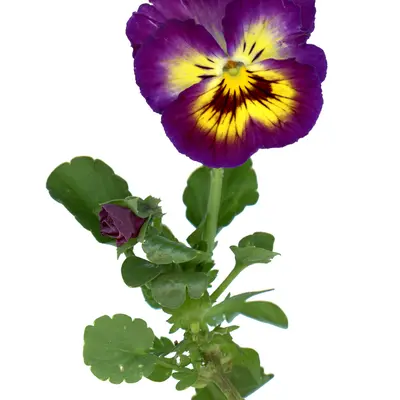
Cheerful, 2 1/2-3 1/2" bicolor blooms in shades of gold, purple, plum, lavender, rose, and white. Mildly fragrant blooms. We found Aalsmeer King Size Mix to be one of the fastest varieties to reach a height tall enough for cutting in our overwintered trials. In our unheated tunnel (Zone 5), it yielded 16-22" long stems that are perfect for mixing with tulips and daffodils in early spring bouquets. Also known as pansy, Johnny jump-up, European field pansy, heart's ease, and hybrid violet.Edible Flowers: Decorative and edible garnish for salads and desserts with slight wintergreen flavor. While a popular choice for brightening up salad mix, the flowers are also good for candying.
Harvest
70-80d
Days to harvest
Sun
Full sun to partial shade
Zones
1–10
USDA hardiness
Height
6–10 inches (rosette form), stems 16–22 inches when mature for cutting
Planting Timeline
Showing dates for Aalsmeer King Size Mix in USDA Zone 7
All Zone 7 flower →Zone Map
Click a state to update dates
Aalsmeer King Size Mix · Zones 1–10
Growing Details
Succession Planting
Aalsmeer King Size Mix performs best as a cool-to-warm season cut flower in zone 7. Start seeds indoors under lights in February or early March — germination takes 7–14 days at soil temperatures around 65–70°F. Transplant out in April once nighttime lows are reliably above 40°F, and make a second sowing in late May or early June for a fall flush. Direct sowing works, but indoor starts give you a meaningful head start on stem length, and these violas push 16–22 inch stems at maturity — that extra inch or two matters in a vase.
Stop succession sowing once daytime highs are consistently above 85°F. Violas don't die outright in summer heat, but stem length and flower count drop off sharply and the plants get leggy fast. Deadhead or cut every 3–5 days at peak bloom; a plant left to set seed shuts down production quickly, and you'll lose weeks of viable cutting time before you notice.
Complete Growing Guide
Cheerful, 2 1/2-3 1/2" bicolor blooms in shades of gold, purple, plum, lavender, rose, and white. Mildly fragrant blooms. We found Aalsmeer King Size Mix to be one of the fastest varieties to reach a height tall enough for cutting in our overwintered trials. In our unheated tunnel (Zone 5), it yielded 16-22" long stems that are perfect for mixing with tulips and daffodils in early spring bouquets. Also known as pansy, Johnny jump-up, European field pansy, heart's ease, and hybrid violet.Edible Flowers: Decorative and edible garnish for salads and desserts with slight wintergreen flavor. While a popular choice for brightening up salad mix, the flowers are also good for candying. According to Johnny's Selected Seeds, Aalsmeer King Size Mix is 70 - 80 days to maturity, annual, open pollinated. Notable features: Use for Cut Flowers and Bouquets, Edible Flowers, Fragrant, Attracts Beneficial Insects.
Light: Dappled Sunlight (Shade through upper canopy all day), Full sun (6 or more hours of direct sunlight a day), Partial Shade (Direct sunlight only part of the day, 2-6 hours). Soil: High Organic Matter, Loam (Silt). Soil pH: Neutral (6.0-8.0). Drainage: Good Drainage, Moist, Occasionally Wet. Spacing: Less than 12 inches. Growth rate: Rapid. Maintenance: Low. Propagation: Division, Seed, Stem Cutting. Regions: Mountains, Piedmont.
Harvesting
Aalsmeer King Size Mix reaches harvest at 70 - 80 days from sowing per Johnny's Selected Seeds. Expect 2 1/2-3 1/2" at peak. As an annual, harvest continues until frost ends the season.
During the summer cleistogamous flower buds that never open but that produce fertile seeds. Fruit capsules split open by way of three valves. The seeds are often transported by ants.
Color: Brown/Copper. Type: Capsule.
Harvest time: Summer
Edibility: Violet leaves are high in Vitamin C and can be used in salads or cooked. The flowers can be made into candies or jellies.
Storage & Preservation
Fresh cut stems last 7–10 days in a cool room (65–70°F) with clean water changed every 2–3 days. For culinary use, refrigerate fresh petals in an airtight container lined with paper towels for up to 3 days.
For candying, brush petals with egg white, dust with fine sugar, and dry on parchment paper at room temperature for 2–3 days until crisp; store in an airtight container for up to 2 weeks. For drying whole flowers, hang bundles upside down in a warm, dark, well-ventilated space (65–75°F) for 7–10 days, then store in airtight containers away from light. Frozen petals lose texture and are unsuitable for most uses. Candied pansies are the preferred preservation method, offering both visual appeal and shelf stability for decorating cakes and desserts.
History & Origin
Aalsmeer King Size Mix is open-pollinated, meaning seed saved from healthy plants will produce true-to-type offspring. Listed in the Johnny's Selected Seeds catalog.
Origin: The genus is worldwide.
Advantages
- +Fast-growing variety reaches cutting height quicker than most pansy types
- +Large 2.5-3.5 inch bicolor blooms provide excellent visual impact in arrangements
- +Produces exceptionally long 16-22 inch stems ideal for spring bouquet mixing
- +Edible flowers offer dual purpose for culinary garnishes and desserts
- +Mildly fragrant blooms add subtle fragrance to cut flower arrangements
Considerations
- -Bicolor patterns may fade or blur in intense heat or direct sun
- -Requires consistent moisture; prone to wilting during dry spells without irrigation
- -Blooms decline significantly once temperatures consistently exceed 75°F in summer
Companion Plants
Marigolds (Tagetes spp.) are the most practical companion here — their root secretions deter soil nematodes, and they draw in hoverflies that knock back aphid populations. Since Aalsmeer King Size Mix violas are already aphid-prone, planting French marigolds within 12–18 inches is a low-effort insurance policy. Sweet Alyssum is worth tucking in at the edges: it flowers constantly, draws parasitic wasps, and tops out around 4–6 inches so it won't compete for light. Nasturtiums pull double duty — they act as a decoy crop, pulling aphids away from the violas, and the two look good together in a cutting arrangement, which matters when you're packing a CSA box and want stem variety.
Dill is listed as beneficial, and that's fair — it attracts predatory insects — but position it carefully. Dill hits 36 or more inches fast, and violas need 4–6 hours of direct sun; plant dill upwind of the prevailing shade and you'll undercut your own cut-flower production without realizing why.
The three to avoid are straightforward. Black walnut produces juglone, a root exudate toxic to a wide range of ornamentals — keep violas at least 50–60 feet from the canopy drip line, per NC State Extension guidance. Eucalyptus has a similar allelopathic effect through decomposing leaf litter. Fennel is antagonistic to most things you'd want to grow and should live in its own isolated corner; in our zone 7 Georgia gardens, it self-seeds so aggressively that containment is already a reason to keep it away from production beds.
Plant Together
Marigolds
Repel nematodes and aphids while attracting beneficial insects
Sweet Alyssum
Attracts hover flies and parasitic wasps that control pests
Nasturtiums
Act as trap crops for aphids and cucumber beetles
Petunias
Repel aphids, tomato hornworms, and squash bugs
Cosmos
Attract beneficial pollinators and predatory insects
Zinnias
Attract ladybugs and other beneficial predators
Lavender
Repels moths, fleas, and mosquitoes while attracting pollinators
Dill
Attracts beneficial wasps and predatory insects
Keep Apart
Black Walnut
Produces juglone which is toxic to many flowering plants
Eucalyptus
Releases allelopathic compounds that inhibit growth of nearby plants
Fennel
Inhibits growth of most garden plants through allelopathy
Pests & Disease Resistance
Common Pests
Aphids, spider mites, slugs
Diseases
Powdery mildew, leaf spot, root rot in waterlogged soil
Troubleshooting Aalsmeer King Size Mix
What you'll see, why it happens, and what to do about it.
Sticky, distorted new growth and curled leaves, often with a shiny residue on stems or nearby surfaces
Likely Causes
- Aphid colonies (commonly Myzus persicae or Aphis gossypii) clustering on tender growing tips
- Soft new growth encouraged by excess nitrogen — overfeeding makes the plant a magnet
What to Do
- 1.Knock aphids off with a hard spray of water from a hose; repeat every 2–3 days for a week
- 2.If the infestation is heavy, apply insecticidal soap directly to colonies — coat the undersides of leaves
- 3.Hold off on any nitrogen-heavy fertilizer until populations come down
White powdery coating on upper leaf surfaces, starting on older leaves and spreading fast in humid weather
Likely Causes
- Powdery mildew (Golovinomyces orontii) — common in late spring and fall when nights cool down but days stay warm
- Poor airflow from crowded spacing or overhead watering late in the day
What to Do
- 1.Remove and trash (don't compost) the most affected leaves immediately
- 2.Spray remaining foliage with a diluted potassium bicarbonate solution or neem oil — do it in the evening to avoid leaf scorch
- 3.Space plants at least 12 inches apart and water at the base, not overhead
Irregular, ragged holes chewed in petals and lower leaves overnight, with silvery slime trails on soil or nearby mulch
Likely Causes
- Slugs (Deroceras reticulatum most likely) — they feed at night and hide under mulch or debris during the day
- Overly moist soil surface, especially after stretches of rain
What to Do
- 1.Set out beer traps at soil level — check and empty them every morning
- 2.Scatter diatomaceous earth around the base of plants and reapply after rain
- 3.Pull mulch back 3–4 inches from the crown of each plant to deny slugs their daytime cover
Wilting despite moist soil, yellowing from the base up, with dark or mushy roots when you pull the plant
Likely Causes
- Root rot from Pythium or Phytophthora — both thrive when soil stays waterlogged for more than a day or two
- Planting in low spots that collect water after rain, or pots without drainage holes
What to Do
- 1.Pull and dispose of any plant with mushy roots — there's no saving it once rot is established
- 2.Improve drainage before replanting: work in a 2–3 inch layer of compost or coarse perlite, or raise the bed 4–6 inches
- 3.Water deeply but infrequently — let the top inch of soil dry out between waterings
Frequently Asked Questions
How long does Aalsmeer King Size Mix take to grow from seed to first flowers?▼
Can you grow Aalsmeer King Size Mix in containers or pots?▼
Is Aalsmeer King Size Mix good for beginners?▼
Are Aalsmeer King Size Mix flowers really edible, and what do they taste like?▼
When should you plant Aalsmeer King Size Mix seeds?▼
Does Aalsmeer King Size Mix produce longer stems than standard pansy varieties?▼
Zone-by-Zone Planting Calendar
| Zone | Indoor Start | Transplant | Direct Sow | Harvest |
|---|---|---|---|---|
| Zone 1 | May – June | July – August | July – September | — |
| Zone 2 | April – May | June – July | June – August | — |
| Zone 11 | January – January | January – February | January – March | — |
| Zone 12 | January – January | January – February | January – March | — |
| Zone 13 | January – January | January – February | January – March | — |
| Zone 3 | April – May | June – July | June – August | — |
| Zone 4 | March – April | June – June | June – July | — |
| Zone 5 | March – April | May – June | May – July | — |
| Zone 6 | March – April | May – June | May – July | — |
| Zone 7 | February – March | April – May | April – June | — |
| Zone 8 | February – March | April – May | April – June | — |
| Zone 9 | January – February | March – April | March – May | — |
| Zone 10 | January – January | February – March | February – April | — |
Growing Guides from Wind River Greens
Sources & References
External authority sources used in compiling this guide.
- ExtensionNC State Extension
- BreederJohnny's Selected Seeds
See the Methodology page for how this data is sourced, what's AI-assisted, and known limitations.