Country Gentleman
Zea mays 'Country Gentleman'
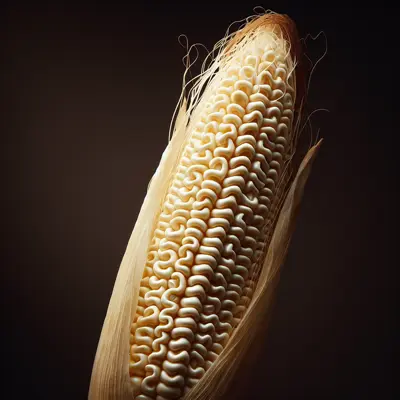
This unique heirloom variety produces ears with an irregular 'shoe peg' kernel arrangement rather than traditional rows, creating maximum sweetness in every bite. Dating back to the 1890s, Country Gentleman offers old-fashioned corn flavor with tender, cream-colored kernels that are perfect for cutting off the cob. A conversation starter that delivers both novelty and exceptional taste.
Harvest
90-100d
Days to harvest
Sun
Full sun
Zones
2–11
USDA hardiness
Height
5-8 feet
Planting Timeline
Showing dates for Country Gentleman in USDA Zone 7
All Zone 7 corn →Zone Map
Click a state to update dates
Country Gentleman · Zones 2–11
Growing Details
Succession Planting
Country Gentleman takes 90-100 days from direct sow to harvest and needs to be planted in blocks — not single rows — for adequate pollination, so you're committing a solid chunk of space for most of the summer. In zone 7, two rounds are realistic: first sowing in late April, second around June 1, putting your harvests in early August and late September respectively. Don't push past mid-June; corn started after that won't finish before frost in most of zone 7, and ears sizing up in October cold tend to be starchy and underfilled.
One thing worth planning around: don't sow two blocks at the same time if they're within 25-30 feet of each other. Country Gentleman is open-pollinated, and simultaneous silking between nearby blocks means free cross-pollination — fine if you're eating everything, but a problem if you're saving seed. Stagger sowings by at least 14 days, or put real distance between blocks.
Complete Growing Guide
Country Gentleman's longer 90-100 day maturity demands patience and strategic timing—sow seeds only after soil reaches 60°F and all frost danger has passed, as early planting in cold soil often results in poor germination and stunted growth. This heirloom thrives in full sun with consistently moist, well-draining soil rich in organic matter, requiring regular deep watering during kernel development to prevent the kernels from becoming tough rather than tender. The irregular shoe-peg kernel arrangement, while distinctive, creates slightly more vulnerability to corn earworm damage; monitor ears closely in mid to late summer and consider protective bagging of developing ears in high-pressure areas. A practical advantage: Country Gentleman typically produces shorter stalks than many 90-day varieties, making it less prone to wind lodging despite its moderate height, but staking taller plants in windy locations provides insurance for your harvest.
Light: Full sun (6 or more hours of direct sunlight a day). Soil: Clay, High Organic Matter, Loam (Silt). Soil pH: Acid (<6.0), Neutral (6.0-8.0). Drainage: Good Drainage. Height: 5 ft. 0 in. - 8 ft. 0 in.. Spread: 1 ft. 0 in. - 2 ft. 0 in.. Spacing: 12 inches-3 feet. Growth rate: Rapid. Maintenance: Medium. Propagation: Seed. Regions: Coastal, Mountains, Piedmont.
Harvesting
Harvest Country Gentleman when the husks turn dry and brown while the silk darkens to chocolate brown, and gently press a kernel to confirm milky fluid releases rather than clear liquid. The ears reach peak sweetness at this stage, typically around 20 days after silking appears. This variety produces multiple ears per stalk, allowing for staggered harvesting across two to three weeks rather than a single picking, which extends your fresh corn supply considerably. Twist ears downward sharply to detach cleanly from the stalk, and use Country Gentleman within hours of picking since the sugars convert to starch rapidly—refrigerating unhusked ears immediately preserves that signature creamy tenderness that defines this heirloom.
Color: Gold/Yellow. Type: Caryopsis. Length: > 3 inches. Width: 1-3 inches.
Garden value: Edible, Showy
Harvest time: Fall
Edibility: Edibile
Storage & Preservation
Fresh Country Gentleman corn should be used immediately for best flavor, as its high sugar content converts to starch quickly. If storing, leave husks on and refrigerate for up to 3 days at 32-35°F with high humidity.
For freezing, blanch whole kernels for 4 minutes after cutting from cob, then cool quickly in ice water before packaging. Country Gentleman's fine texture makes it exceptional for cream-style corn - scrape cobs after cutting kernels to capture the sweet milk.
This variety excels in pressure canning due to its traditional corn flavor that intensifies with processing. The irregular kernel shape creates natural pockets that hold seasonings well. Dehydrating works but requires longer drying times due to higher moisture content than modern varieties.
History & Origin
Country Gentleman emerged in the 1890s as an American heirloom variety, though precise documentation of its breeder and exact origin point remains sparse in historical records. The variety likely developed through careful selection within American seed-growing traditions rather than formal university breeding programs of that era. Its distinctive shoe-peg kernel arrangement—an irregular, densely packed pattern rather than uniform rows—suggests intentional breeding for sweetness and eating quality, traits highly valued by home gardeners and market growers of the late nineteenth century. The variety gained popularity through seed catalogs and regional cultivation, becoming established within American corn-growing heritage as a novelty and flavor favorite that persists today.
Origin: Mexico
Advantages
- +Unique shoe peg kernel arrangement creates exceptional sweetness and tenderness throughout
- +Heirloom variety offers authentic old-fashioned corn flavor that modern hybrids cannot match
- +Cream-colored kernels are ideal for fresh eating and creamed corn preparations
- +Novelty appearance makes it an excellent conversation starter in home gardens
Considerations
- -Moderate difficulty and 90-100 day maturity requires longer growing season than standard varieties
- -Vulnerable to multiple serious diseases including smut, Stewart's wilt, and corn leaf blight
- -Susceptible to three major corn pests requiring consistent monitoring and management
- -Irregular kernel arrangement may make mechanical harvesting impractical for larger plantings
Companion Plants
The Three Sisters combination — beans, squash, and corn — holds up because each plant is doing a different job in the same space. Beans fix nitrogen at their roots, which Country Gentleman draws on steadily over its 90-100 day season as a heavy feeder. Squash spreads across the ground between stalks, shading out weeds and cutting moisture loss from the soil surface — practical on both counts. Marigolds and nasturtiums planted along the border 12-18 inches out are worth including; they pull in aphid predators, and nasturtiums in particular seem to draw aphids away from the corn itself, acting as a trap crop rather than a repellent.
Fennel releases allelopathic root compounds that suppress nearby plants — that's not a theory, it's a documented mechanism — so it has no place in this bed or the one next to it. Tomatoes are less aggressive, but they share earworm moth pressure with corn (Helicoverpa zea hits both), and clustering them together just means one bad earworm season takes out two crops at once. Put them on opposite ends of the garden.
Plant Together
Beans
Fix nitrogen in soil that corn can utilize, part of traditional Three Sisters planting
Squash
Large leaves suppress weeds and retain soil moisture, completes Three Sisters guild
Marigolds
Repel corn earworms, aphids, and other harmful insects
Nasturtiums
Trap crop for aphids and cucumber beetles, repels squash bugs
Sunflowers
Attract beneficial insects and provide windbreak protection for corn
Dill
Attracts beneficial wasps that prey on corn borers and other pests
Cucumbers
Utilize vertical space efficiently and benefit from corn's wind protection
Radishes
Break up compacted soil and deter corn borers when planted early
Keep Apart
Black Walnut
Releases juglone toxin that severely stunts corn growth and development
Tomatoes
Both are heavy nitrogen feeders creating competition, corn attracts tomato fruitworm
Fennel
Allelopathic properties inhibit corn germination and growth
Nutrition Facts
Per 100g serving. % Daily Value based on 2,000 calorie diet. Source: USDA FoodData Central (FDC #168538)
Pests & Disease Resistance
Resistance
Limited disease resistance typical of heirlooms. Susceptible to most common corn diseases.
Common Pests
Corn earworm, European corn borer, corn rootworm, birds
Diseases
Common rust, smut, northern corn leaf blight, Stewart's wilt
Troubleshooting Country Gentleman
What you'll see, why it happens, and what to do about it.
Silks and ear tips chewed or filled with frass and dark pellets, discovered at harvest
Likely Causes
- Corn earworm (Helicoverpa zea) — larvae enter through the silk channel and feed down toward the tip
- European corn borer (Ostrinia nubilalis) — also tunnels into ears and stalks
What to Do
- 1.Apply a few drops of mineral oil to the silk tips 3-5 days after silks emerge — this suffocates newly hatched earworm larvae before they reach the kernels
- 2.Check for entry holes in stalks around 4-5 feet up; if you find frass and tunneling, that's corn borer — Bt (Bacillus thuringiensis) sprays at silk emergence can reduce pressure
- 3.Cut the damaged tip off at harvest — the rest of the ear is usually fine to eat
Swollen, grayish-white galls forming on ears or stalks, turning black and powdery as they mature
Likely Causes
- Corn smut (Ustilago maydis) — a fungal pathogen that infects through wounds or silks, more common after hail, insect feeding, or drought stress
What to Do
- 1.Pull galls before they rupture — bag them and trash them, not the compost pile; once they burst, teliospores persist in soil for years
- 2.Ease up on high-nitrogen fertilizer, which pushes the lush new tissue smut targets
- 3.Rotate corn out of that bed for at least 2 seasons; NC State Extension notes smut spores survive long-term in soil and crop debris
Long tan-to-brown lesions running parallel to leaf veins, starting on lower leaves mid-season
Likely Causes
- Northern corn leaf blight (Exserohilum turcicum) — airborne spores, favored by cool nights around 65°F and sustained humidity
- Tight row spacing that traps moisture and cuts off airflow
What to Do
- 1.Space rows at least 36 inches apart and thin plants to 8-10 inches in-row — Country Gentleman's 5-8 foot height makes airflow genuinely important here
- 2.Strip and trash heavily infected lower leaves to slow spore spread through the planting
- 3.NC State Extension recommends a 3-to-4-year rotation sequence; moving corn out of the same bed annually is the most effective long-term check on residue-borne inoculum
Frequently Asked Questions
How long does Country Gentleman corn take to grow?▼
What does Country Gentleman corn taste like?▼
Is Country Gentleman corn good for beginners?▼
Can you grow Country Gentleman corn in containers?▼
When should I plant Country Gentleman corn?▼
Why are Country Gentleman corn kernels arranged irregularly?▼
Zone-by-Zone Planting Calendar
| Zone | Indoor Start | Transplant | Direct Sow | Harvest |
|---|---|---|---|---|
| Zone 1 | — | — | July – August | November – August |
| Zone 2 | — | — | June – August | October – September |
| Zone 11 | — | — | January – March | May – July |
| Zone 12 | — | — | January – March | May – July |
| Zone 13 | — | — | January – March | May – July |
| Zone 3 | — | — | June – July | October – October |
| Zone 4 | — | — | June – July | September – October |
| Zone 5 | — | — | May – June | September – October |
| Zone 6 | — | — | May – June | September – October |
| Zone 7 | — | — | April – June | August – October |
| Zone 8 | — | — | April – May | August – September |
| Zone 9 | — | — | March – April | July – August |
| Zone 10 | — | — | February – April | June – August |
Growing Guides from Wind River Greens
Sources & References
External authority sources used in compiling this guide.
See the Methodology page for how this data is sourced, what's AI-assisted, and known limitations.