Alderman
Pisum sativum 'Alderman'
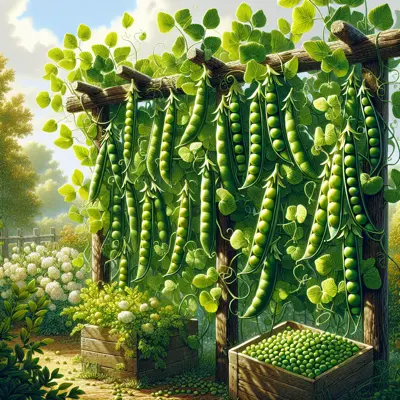
Also known as Tall Telephone, this vigorous heirloom climbing pea from 1891 produces some of the largest and most flavorful shelling peas available. The impressive 6-foot vines yield massive pods packed with 8-10 sweet, large peas perfect for fresh eating or preserving. This variety is ideal for gardeners who want maximum production from minimal space.
Harvest
70-80d
Days to harvest
Sun
Full sun to partial shade
Zones
2–11
USDA hardiness
Height
12-18 inches
Planting Timeline
Showing dates for Alderman in USDA Zone 7
All Zone 7 pea →Zone Map
Click a state to update dates
Alderman · Zones 2–11
Growing Details
Succession Planting
Direct sow Alderman every 14–21 days starting as soon as soil reaches 45°F — often late February or early March in zone 7. Stop by late April: once daytime highs are consistently above 75°F, germination turns spotty and plants that do emerge stall before setting many pods. At 70–80 days to harvest, an April 15 sow in zone 7 is already a gamble against summer heat.
A second window opens in late August through early September for a fall crop — time it so harvest finishes before the first hard frost. Fall sowings often run cleaner than spring ones; powdery mildew pressure drops in cooler air and pea aphid populations thin out considerably once nights fall below 50°F.
Complete Growing Guide
Start by selecting a location with full sun exposure and protection from strong winds, as Alderman's 6-foot vines become top-heavy when loaded with pods. Install your support system before planting—this variety demands a robust trellis, fence, or teepee structure capable of supporting 20+ pounds of mature vines and pods. Chicken wire stretched between posts or a sturdy bean tower works excellently.
Prepare your soil by working in 2-3 inches of compost or well-aged manure to create the rich, organic foundation Alderman craves. These heavy feeders perform best in soil with a pH between 6.0-7.0. Avoid high-nitrogen fertilizers which promote excessive foliage at the expense of pod production.
Direct sow seeds 4-6 weeks before your last frost date when soil temperature reaches 45°F. Plant seeds 2 inches deep and 4-6 inches apart along your support structure. In zones 3-5, you can start a second planting in late summer for fall harvest, timing it 10-12 weeks before your first hard frost. Soak seeds overnight in lukewarm water to improve germination, especially in cooler soil.
Once seedlings emerge, apply a balanced organic fertilizer (10-10-10) sparingly—over-fertilizing leads to lush foliage but fewer pods. Begin training vines to climb when they reach 6 inches tall, gently wrapping tendrils around supports. Mulch around plants with straw or shredded leaves to maintain soil moisture and suppress weeds.
Avoid the common mistake of overcrowding—Alderman needs air circulation to prevent fungal issues. Water deeply but infrequently, focusing on the root zone rather than wetting foliage. During flowering and pod development, maintain consistent moisture but never allow waterlogged conditions.
To maximize yield, harvest pods regularly once they begin producing. This variety can produce for 4-6 weeks when properly maintained, with peak production occurring mid-season. Side-dress with compost halfway through the growing season to sustain the vigorous growth this productive heirloom demands.
Harvesting
Harvest Alderman peas when pods are plump and well-filled but still bright green and glossy. The optimal window occurs when pods reach 4-5 inches long and you can feel the individual peas distinctly through the pod wall. Perform the squeeze test—pods should feel firm and full but still have a slight give when gently pressed. Avoid waiting until pods become pale or matte, as peas will be starchy rather than sweet.
Harvest in early morning when pods are crisp and sugar content peaks. Use both hands when picking—hold the vine with one hand while carefully twisting and pulling pods with the other to avoid damaging the productive stems. The best pods make a crisp snapping sound when broken. Pick every 2-3 days during peak season, as overripe pods left on the vine signal the plant to stop producing. A single Alderman plant can yield 2-3 pounds of pods over its harvest window when picked consistently.
Storage & Preservation
Fresh Alderman peas maintain peak quality for only 2-3 days, so process them quickly after harvest. Store unhulled pods in perforated plastic bags in the refrigerator at 32-35°F. For optimal sweetness, shell and use within 24 hours, as sugars rapidly convert to starch.
For freezing, blanch shelled peas in boiling water for 1.5 minutes, then immediately plunge into ice water. Drain thoroughly and freeze in airtight containers for up to 10 months. Alderman's meaty texture makes it exceptional for this preservation method.
Dehydrate shelled peas at 125°F for 8-12 hours until hard and brittle—perfect for winter soups and stews. The variety's naturally high sugar content concentrates beautifully when dried. Properly stored dried peas last 2-3 years in airtight containers in cool, dark locations.
History & Origin
Alderman, also known as Tall Telephone, traces its lineage to 1891 when it was introduced by British seedsman Carter & Company. This Victorian-era variety emerged during the golden age of pea breeding when gardeners prized both productivity and flavor in their kitchen gardens.
The variety gained its 'Telephone' moniker from the resemblance of its towering vines to the telephone poles that were revolutionizing communication in the late 1800s. British gardeners particularly valued Alderman's ability to produce massive harvests from vertical growing space—crucial in the era's smaller urban gardens.
Alderman represents classic 19th-century breeding priorities: maximum production, exceptional flavor, and garden efficiency. It quickly spread from England to American gardens, where it became a staple in victory gardens during both World Wars due to its reliable heavy yields and superior storage qualities. Today, this heirloom remains largely unchanged from its Victorian origins, offering modern gardeners the same robust genetics that made it a century-spanning favorite.
Advantages
- +Exceptional pod size with 8-10 large peas per pod, among the largest available
- +Outstanding space efficiency producing 2-3 pounds per plant when trellised vertically
- +Superior fresh eating quality with rich, sweet, meaty texture that doesn't become starchy quickly
- +Extended harvest window of 4-6 weeks with consistent production when regularly picked
- +Excellent freezing characteristics that maintain texture and sweetness after thawing
- +Proven genetic stability as an unchanged heirloom variety since 1891
- +Strong vigorous growth that tolerates cooler spring weather better than bush varieties
Considerations
- -Requires substantial support infrastructure due to 6-foot height and heavy pod load
- -Moderate susceptibility to powdery mildew in humid or crowded growing conditions
- -Longer maturation time of 70-80 days compared to early varieties
- -Pods must be harvested frequently or plants stop producing, requiring regular attention
- -Limited disease resistance compared to modern hybrid varieties
Companion Plants
Carrots and radishes are the most practical pairing — their roots work at a shallower depth than pea roots need, so there's no real competition, and radishes double as a quick trap crop for flea beetles. Lettuce and spinach tuck in well at ground level under Alderman's vines, which cast meaningful shade once they hit 12–18 inches, suppressing weeds without pulling much water or fertility. Marigolds and nasturtiums draw predatory wasps that keep pea aphid (Acyrthosiphon pisum) pressure down. Onions and garlic belong on the other side of the garden — alliums are thought to suppress the nitrogen-fixing rhizobia that colonize pea roots, and since that nitrogen fixation is half the agronomic reason to grow peas in rotation, it's a bad trade.
Plant Together
Carrots
Peas improve soil nitrogen which carrots need, carrots don't compete for space
Radishes
Break up soil for pea roots, mature quickly before peas need full space
Lettuce
Benefits from nitrogen fixed by peas, provides ground cover to retain moisture
Spinach
Thrives in nitrogen-rich soil created by peas, cool-season compatibility
Cucumbers
Benefit from nitrogen fixed by peas, can use pea trellises after harvest
Corn
Peas provide nitrogen that corn needs, corn provides natural trellis support
Marigolds
Repel aphids and other pests that commonly attack peas
Nasturtiums
Act as trap crop for aphids, repel cucumber beetles and squash bugs
Keep Apart
Onions
Can inhibit pea growth and nitrogen fixation through root secretions
Garlic
Allelopathic compounds can stunt pea growth and reduce yields
Gladiolus
Competes heavily for nutrients and can harbor thrips that damage pea plants
Nutrition Facts
Per 100g serving. % Daily Value based on 2,000 calorie diet. Source: USDA FoodData Central (FDC #170419)
Pests & Disease Resistance
Resistance
Good vigor but limited disease resistance. May be susceptible to powdery mildew in humid conditions.
Common Pests
Aphids, pea moths, thrips, birds (attracted to sweet peas)
Diseases
Powdery mildew, fusarium wilt, root rot, pea enation mosaic virus
Troubleshooting Alderman
What you'll see, why it happens, and what to do about it.
Leaf tips curling inward, sticky residue on stems, small clusters of soft-bodied insects visible on growing tips
Likely Causes
- Aphid infestation — pea aphids (Acyrthosiphon pisum) colonize new growth fast in cool, moist spring conditions
- Thrips feeding, which NC State Extension notes can cause leaf curling and puckering similar to aphid damage
What to Do
- 1.Knock aphids off with a firm spray of water early in the morning, repeat every 2-3 days
- 2.Plant nasturtiums nearby — they draw predatory wasps that work aphid colonies down without any intervention from you
- 3.If colonies persist past 7-10 days, apply insecticidal soap directly to affected stems, covering undersides of leaves
White powdery coating spreading across upper leaf surfaces, usually appearing after plants have been in the ground 5+ weeks
Likely Causes
- Powdery mildew — a fungal disease that hits peas hard once temperatures swing between cool nights and warm days
- Poor airflow from crowded spacing or dense trellis planting
What to Do
- 1.Strip the worst-affected leaves and dispose of them in the trash, not the compost pile
- 2.If plants are packed tighter than 3 inches apart, thin a few out to open up airflow
- 3.Apply a potassium bicarbonate or diluted neem oil spray at first sign — waiting until it covers half the plant makes control much harder
Plants wilting and yellowing from the base up despite adequate soil moisture, roots showing brown discoloration when pulled
Likely Causes
- Fusarium wilt (Fusarium oxysporum f. sp. pisi) — a soil-borne fungus that blocks water uptake internally
- Root rot from Pythium or Aphanomyces species, typically triggered by waterlogged soil or heavy clay that doesn't drain within 24 hours of rain
What to Do
- 1.Pull and discard affected plants — they won't recover, and leaving them in the ground seeds the pathogen for next year
- 2.Before the next planting, work in 2-3 inches of compost to improve drainage; raised beds are worth the effort if your soil holds standing water
- 3.Rotate peas out of any bed where this appeared for at least 3-4 seasons — Fusarium oxysporum persists in soil long after the crop is gone
Frequently Asked Questions
How long does Alderman pea take to grow?▼
Can you grow Alderman peas in containers?▼
What does Alderman pea taste like?▼
When should I plant Alderman peas?▼
Is Alderman pea good for beginners?▼
How tall do Alderman pea plants get?▼
Zone-by-Zone Planting Calendar
| Zone | Indoor Start | Transplant | Direct Sow | Harvest |
|---|---|---|---|---|
| Zone 3 | — | — | May – June | July – October |
| Zone 4 | — | — | April – June | July – October |
| Zone 5 | — | — | April – May | June – November |
| Zone 6 | — | — | April – May | June – November |
| Zone 7 | — | — | March – May | June – November |
| Zone 8 | — | — | March – April | May – December |
| Zone 9 | — | — | February – March | April – December |
| Zone 10 | — | — | January – March | April – December |
| Zone 1 | — | — | June – July | August – September |
| Zone 2 | — | — | May – July | August – September |
| Zone 11 | — | — | January – February | March – December |
| Zone 12 | — | — | January – February | March – December |
| Zone 13 | — | — | January – February | March – December |
Growing Guides from Wind River Greens
Sources & References
External authority sources used in compiling this guide.
See the Methodology page for how this data is sourced, what's AI-assisted, and known limitations.