Spaghetti Squash
Cucurbita pepo
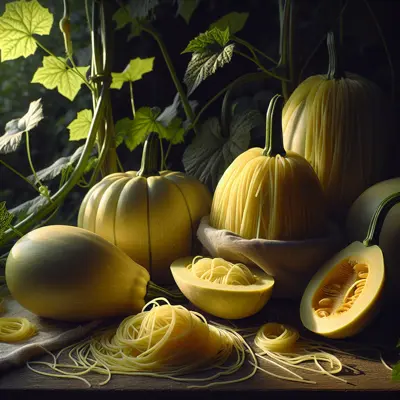
This excellent open-pollinated strain's flesh has the best noodle-like consistency in our trials. Slightly sweet, nutty flavor. Oblong in shape with ivory skin that changes to pale yellow at maturity. An excellent pasta alternative - bake or boil, fork out the flesh, and top the "spaghetti" with your favorite sauce. Short vines. Avg. weight: 3-5 lb.
Harvest
88d
Days to harvest
Sun
Full sun
Zones
3–11
USDA hardiness
Height
1-3 feet
Planting Timeline
Showing dates for Spaghetti Squash in USDA Zone 7
All Zone 7 squash →Zone Map
Click a state to update dates
Spaghetti Squash · Zones 3–11
Growing Details
Succession Planting
Spaghetti squash takes 88 days and a single planting typically produces enough fruit to carry you through storage. That said, staggering two sowings — one in April when soil hits 60°F, and a second in late May — spreads your harvest window and gives you a backup if vine borers take out the first planting in July. The UGA Vegetable Garden Calendar lists May as a solid window for follow-up squash sowings across most of the South.
Stop direct sowing by mid-June in zone 7. Anything in the ground after that won't reach 88 days before October frost closes things down, and immature spaghetti squash doesn't store. If vine borer pressure is a recurring problem in your garden, lean hard toward that April sow — NC State Extension's IPM guidance is clear that earlier planting is the most reliable cultural defense against borers laying eggs in July.
Complete Growing Guide
This excellent open-pollinated strain's flesh has the best noodle-like consistency in our trials. Slightly sweet, nutty flavor. Oblong in shape with ivory skin that changes to pale yellow at maturity. An excellent pasta alternative - bake or boil, fork out the flesh, and top the "spaghetti" with your favorite sauce. Short vines. Avg. weight: 3-5 lb. According to Johnny's Selected Seeds, Spaghetti Squash is 88 days to maturity, annual, open pollinated.
Light: Full sun (6 or more hours of direct sunlight a day). Soil: High Organic Matter, Loam (Silt). Soil pH: Neutral (6.0-8.0). Drainage: Good Drainage, Moist. Height: 1 ft. 0 in. - 3 ft. 0 in.. Spread: 2 ft. 0 in. - 25 ft. 0 in.. Spacing: 12 inches-3 feet. Growth rate: Rapid. Maintenance: High. Propagation: Seed. Regions: Coastal, Mountains, Piedmont.
Harvesting
Spaghetti Squash reaches harvest at 88 days from sowing per Johnny's Selected Seeds. Expect 3-5 lb. at peak. As an annual, harvest continues until frost ends the season.
A type of berry called a pepo that has a hard rind. Fruits may be long or round, large or small, smooth or warty– some have edible flesh and some are too hard or insipid to eat, though the seeds of all are edible. Has a harder, thicker stem compared to other species.
Color: Black, Cream/Tan, Gold/Yellow, Green, Orange, Pink, Red/Burgundy, Variegated, White. Type: Berry. Length: > 3 inches. Width: > 3 inches.
Garden value: Edible, Showy
Harvest time: Fall
Storage & Preservation
Store whole spaghetti squash in a cool (50-55°F), dry location with good air circulation—basements, garages, or pantries work well. Properly cured squash keeps 2-3 months, sometimes longer. Check stored squash monthly and use any showing soft spots immediately.
Once cut, refrigerate unused portions for up to one week. For long-term preservation, cook the squash first, scrape out the strands, then freeze in portions for up to 8 months. Cooked spaghetti squash strands freeze excellently and maintain their texture when thawed.
Dehydrating works well for long-term storage—blanch strands briefly, then dehydrate until crispy. Rehydrate in soups or casseroles. Avoid canning spaghetti squash as the low acid content requires pressure canning, and the texture becomes mushy. For best results, focus on proper fresh storage and freezing cooked portions.
History & Origin
Spaghetti Squash is open-pollinated, meaning seed saved from healthy plants will produce true-to-type offspring. Listed in the Johnny's Selected Seeds catalog.
Origin: North America
Advantages
- +Excellent noodle-like flesh consistency makes authentic pasta alternative at home
- +Mild, slightly sweet flavor pairs well with diverse sauces and cuisines
- +Compact short vines require less garden space than traditional squash varieties
- +Reasonably quick maturation at 88 days provides harvest before frost arrives
- +Open-pollinated strain allows seed saving for future seasons
Considerations
- -Vulnerable to multiple serious pests including squash bugs and vine borers
- -Susceptible to powdery mildew and squash mosaic virus in humid conditions
- -Moderate growing difficulty requires pest management and disease prevention strategies
- -Modest 3-5 pound weight yields fewer servings per plant than larger squashes
Companion Plants
Nasturtiums and marigolds pull their weight here for different reasons. Nasturtiums act as a trap crop, drawing aphids and squash bugs away from the main vines — plant them at the bed edges where you can monitor and yank them when they get hammered. Marigolds (Tagetes spp.) repel cucumber beetles through root and foliar compounds, which matters specifically for spaghetti squash because cucumber beetles are the primary vector for bacterial wilt (Erwinia tracheiphila). Losing a vine to wilt at day 50 is a bad season. Beans interplanted nearby fix nitrogen at the root level, feeding a crop that wants well-amended soil at pH 6.0–6.8, and radishes sown between transplants can disrupt cucumber beetle establishment early on.
Fennel produces allelopathic root compounds that stunt most vegetable crops within a few feet — don't plant it anywhere near squash. Potatoes share overlapping pest pressure and root aggressively at similar depths, making them a poor neighbor in tight beds. Melons are the subtler mistake: they're in the same cucurbit family, so grouping them together just gives squash bugs and cucumber beetles a larger, uninterrupted target.
Plant Together
Nasturtiums
Acts as trap crop for squash bugs and cucumber beetles, repels aphids
Marigolds
Deters squash bugs, cucumber beetles, and nematodes with strong scent
Radishes
Repels squash vine borers and cucumber beetles, breaks up soil
Beans
Fixes nitrogen in soil to benefit heavy-feeding squash plants
Corn
Provides natural trellis support and shares similar growing conditions
Catnip
Repels squash bugs, aphids, and cucumber beetles effectively
Dill
Attracts beneficial insects like parasitic wasps that control squash pests
Sunflowers
Attracts pollinators essential for squash fruit development
Keep Apart
Potatoes
Compete for space and nutrients, may harbor similar fungal diseases
Fennel
Inhibits growth of squash through allelopathic compounds
Melons
Attract same pests like cucumber beetles and compete for growing space
Nutrition Facts
Per 100g serving. % Daily Value based on 2,000 calorie diet. Source: USDA FoodData Central (FDC #169298)
Pests & Disease Resistance
Resistance
Good disease resistance when grown in proper conditions
Common Pests
Squash bugs, cucumber beetles, vine borers
Diseases
Powdery mildew, bacterial wilt, squash mosaic virus
Troubleshooting Spaghetti Squash
What you'll see, why it happens, and what to do about it.
Wilted vines with sawdust-like frass at the base of the stem, usually mid-summer
Likely Causes
- Squash vine borer (Melittia cucurbitae) — larvae tunnel into the stem and eat from the inside out
- Late planting that puts young plants in the ground right when adults are laying eggs in July
What to Do
- 1.Split the stem lengthwise with a knife where you see frass, extract the larvae, then mound soil over the wound to encourage re-rooting
- 2.Wrap the base of young stems in foil or nylon stocking material as a physical barrier before adults arrive — NC State Extension's organic IPM section documents this approach on squash
- 3.Next season, direct sow as early as possible so plants hit 88 days and finish before borer pressure peaks in July
Sudden whole-plant wilt that doesn't recover overnight, no frass visible at the stem
Likely Causes
- Bacterial wilt (Erwinia tracheiphila), transmitted by cucumber beetles (Acalymma vittatum and Diabrotica undecimpunctata)
- Cucumber beetle feeding on seedlings introducing the pathogen directly into vascular tissue
What to Do
- 1.Pull the plant immediately — bacterial wilt has no cure and beetles will keep feeding and spreading it to neighboring vines
- 2.Cut a wilted stem and touch the two cut ends together: if pulling them apart reveals stringy bacterial ooze, that confirms Erwinia
- 3.Rotate cucurbits out of that bed for at least 3 years and turn the soil after the season to disrupt overwintering beetle eggs, as NC State Extension's IPM guidance recommends
White powdery coating on the upper surface of leaves, starting late in the season
Likely Causes
- Powdery mildew (Podosphaera xanthii or Erysiphe cichoracearum) — dry days with cool nights accelerate it
- Dense canopy with poor airflow, which is easy to end up with at 36–48 inch spacing if you let vines run unchecked
What to Do
- 1.Remove the worst-affected leaves and put them in the trash, not the compost pile
- 2.Spray with a diluted baking soda solution (1 tablespoon per gallon of water) or a potassium bicarbonate product — works best at first sign, not once it's widespread
- 3.If the fruit is already close to 88 days and nearly mature, mild mildew late in the season rarely ruins the harvest — spaghetti squash cures well off the vine
Frequently Asked Questions
How long does spaghetti squash take to grow?▼
Can you grow spaghetti squash in containers?▼
Is spaghetti squash good for beginners?▼
When should I plant spaghetti squash?▼
What does spaghetti squash taste like?▼
How do you know when spaghetti squash is ripe?▼
Zone-by-Zone Planting Calendar
| Zone | Indoor Start | Transplant | Direct Sow | Harvest |
|---|---|---|---|---|
| Zone 1 | — | — | July – August | October – August |
| Zone 2 | — | — | June – August | October – September |
| Zone 11 | — | — | January – March | May – June |
| Zone 12 | — | — | January – March | May – June |
| Zone 13 | — | — | January – March | May – June |
| Zone 3 | — | — | June – July | September – October |
| Zone 4 | — | — | June – July | September – October |
| Zone 5 | — | — | May – June | September – October |
| Zone 6 | — | — | May – June | August – October |
| Zone 7 | — | — | April – June | August – September |
| Zone 8 | — | — | April – May | July – September |
| Zone 9 | — | — | March – April | June – August |
| Zone 10 | — | — | February – April | June – July |
Growing Guides from Wind River Greens
Sources & References
External authority sources used in compiling this guide.
- BreederJohnny's Selected Seeds
- USDAUSDA FoodData Central
See the Methodology page for how this data is sourced, what's AI-assisted, and known limitations.