Carpathian Walnut
Juglans regia 'Carpathian'
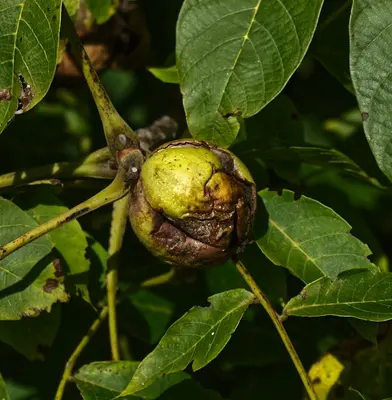
The ultimate cold-hardy walnut that brings nut production to northern climates previously too harsh for English walnuts. Originally from the Carpathian Mountains of Eastern Europe, these hardy trees can withstand temperatures down to -25°F while still producing quality nuts. Each tree grown from seed develops unique characteristics, making every Carpathian walnut tree a one-of-a-kind addition to cold-climate homesteads.
Harvest
160-190d
Days to harvest
Sun
Full sun
Zones
3–7
USDA hardiness
Height
40-60 feet
Planting Timeline
Showing dates for Carpathian Walnut in USDA Zone 7
All Zone 7 nut-tree →Zone Map
Click a state to update dates
Carpathian Walnut · Zones 3–7
Growing Details
Complete Growing Guide
Unlike standard English walnuts, Carpathian varieties thrive in zones 4-6 and actually require sustained cold periods to set nuts properly, so avoid planting in warm regions where chilling hours fall below 800. These trees need full sun and well-draining soil with a pH between 6.0-7.5; poor drainage causes root rot, their primary weakness in wet climates. Plant in spring before bud break, allowing 40-50 feet of spacing since mature trees grow quite large. Watch for walnut husk flies in late summer—they tunnel into husks but don't affect nut quality, though fallen debris should be cleared to reduce populations. A critical practical tip: plant at least two unrelated trees for cross-pollination and superior nut set, since self-fertile specimens produce sparse crops. Thin competing branches in year three to establish strong structure, as seed-grown trees vary widely in form and productivity.
Light: Full sun (6 or more hours of direct sunlight a day). Soil: Clay, High Organic Matter, Loam (Silt). Soil pH: Neutral (6.0-8.0). Drainage: Good Drainage, Moist. Height: 40 ft. 0 in. - 60 ft. 0 in.. Spread: 40 ft. 0 in. - 60 ft. 0 in.. Spacing: more than 60 feet. Maintenance: Medium. Propagation: Grafting, Layering, Seed, Stem Cutting. Regions: Mountains, Piedmont.
Harvesting
Carpathian walnuts reach peak harvest readiness when the outer hull transitions from green to brown and begins splitting naturally, revealing the tan shell beneath, typically occurring in mid to late autumn. The nuts feel lighter in hand as interior moisture decreases, and gentle pressure should cause the hull to crack easily rather than cling stubbornly to the shell. These trees produce nuts in a continuous drop pattern over several weeks rather than all at once, so plan multiple harvest passes through September and October to collect mature nuts before they deteriorate on the ground. A valuable timing tip: harvest after the first hard frost, which accelerates hull separation and makes processing significantly easier, while ensuring you've gathered nuts before winter weather complicates field collection.
The fruit is a round nut that is encased in a green, semi-fleshy husk that turns brown. The nut measures up to 2 inches long. It matures in the fall and has a very thin wrinkled shell. The nut is thin, smooth, and has shallow furrows. The meat of the nut is creamy white and sweet.
Color: Green. Type: Nut. Length: 1-3 inches. Width: 1-3 inches.
Garden value: Edible, Showy
Harvest time: Fall
Edibility: The nuts are edible. They may be eaten fresh, roasted, and salted.
Storage & Preservation
Freshly harvested Carpathian walnuts keep best in cool, dry conditions between 32–50°F with humidity around 60–70%; store them in breathable mesh bags or wooden crates rather than sealed containers to prevent mold. In-shell nuts remain fresh for up to eight months under these conditions, while shelled kernels last two to three months refrigerated. For longer storage, freezing is reliable—vacuum-seal shelled nuts and they'll keep a year or more at 0°F. Drying is also effective; spread kernels in a warm, well-ventilated space until brittle, then store in airtight containers. The richer oil content of Carpathian varieties makes them excellent candidates for cold-pressing, with extracted oil lasting six months in a cool cupboard. A useful practice specific to this strain is blanching kernels briefly before freezing, which helps preserve their slightly more intense flavor profile better than storing raw.
History & Origin
The Carpathian Walnut represents a cold-hardy selection of English walnut (Juglans regia) originating from the Carpathian Mountains of Eastern Europe, where natural selection favored trees capable of surviving harsh winters. Rather than a formally bred cultivar with documented breeding records, this variety emerged from a heritage tradition of seed selection and cultivation across Eastern European populations. The trees were preserved and propagated by local growers and subsequently introduced to North American nurseries in the mid-twentieth century as awareness grew for cold-hardy nut production. While specific breeding documentation remains limited, the Carpathian lineage reflects the adaptation of English walnuts to continental climates over generations of natural and deliberate selection.
Origin: Europe to Central Asia
Advantages
- +Extreme cold hardiness to -25°F enables walnut growing in northern regions
- +Rich, intense walnut flavor rivals or exceeds standard English walnut varieties
- +Each seed-grown tree develops unique characteristics for distinctive homestead addition
- +Fewer pest pressures in northern climates reduce management needs significantly
- +Generally disease resistant with only occasional walnut blight in humid conditions
Considerations
- -Seed-grown trees produce highly variable nut quality and tree characteristics
- -Walnut blight becomes problematic in humid regions and wet springs
- -Slow to mature and establish production, requiring 5-7 years minimum
- -Produces allelopathic juglone that inhibits growth of nearby plants significantly
Companion Plants
Clover and comfrey are the two worth planting under a Carpathian walnut first. Clover fixes nitrogen at root level — useful given how much a 40–60 foot tree draws from the soil across decades — and its low profile doesn't compete for light. Comfrey's taproot can push 6 feet down, pulling up calcium and potassium that shallow-rooted plants can't reach; chop the leaves and leave them as a mulch right under the canopy. Chives and nasturtiums at the outermost drip line do a decent job of slowing aphid pressure on young trees by pulling in beneficials. Wild ginger, elderberry, and black cherry tolerate juglone well, so they're solid choices if you're building a layered planting around the tree.
Tomatoes are among the most juglone-sensitive plants in the garden, and in our zone 7 Georgia summers, heat stress on top of juglone exposure means a tomato plant won't last the season — keep them 80 feet out, minimum. Apple trees are nearly as vulnerable; standard rootstocks like M.9 and M.26 show dieback within a year of exposure. Pine trees are a different problem — they're not poisoned by the walnut, they just compete hard for the same moisture and soil pH range (6.0–7.5) without giving anything back.
Plant Together
Clover
Fixes nitrogen in soil and provides ground cover to suppress weeds
Comfrey
Deep taproot brings up nutrients and leaves make excellent mulch
Chives
Repels aphids and other pests while attracting beneficial insects
Nasturtium
Acts as trap crop for aphids and adds organic matter when composted
Wild Ginger
Thrives in walnut's partial shade and provides natural ground cover
Elderberry
Tolerates juglone and provides beneficial insect habitat
Black Cherry
Compatible with juglone and attracts birds that control insect pests
Rye Grass
Tolerates juglone well and prevents soil erosion under canopy
Keep Apart
Tomato
Highly sensitive to juglone toxin produced by walnut roots
Apple Trees
Susceptible to juglone poisoning causing wilting and stunted growth
Pine Trees
Juglone toxicity causes needle yellowing and eventual death
Nutrition Facts
Per 100g serving. % Daily Value based on 2,000 calorie diet. Source: USDA FoodData Central (FDC #2346394)
Pests & Disease Resistance
Resistance
Excellent cold hardiness, good general disease resistance
Common Pests
Fewer pest issues in northern climates, occasional aphids and scale
Diseases
Generally disease resistant, occasional walnut blight in humid conditions
Troubleshooting Carpathian Walnut
What you'll see, why it happens, and what to do about it.
Dark, water-soaked lesions on young leaves, catkins, and developing nutlets in late spring
Likely Causes
- Walnut blight (Xanthomonas arboricola pv. juglandis) — a bacterial pathogen that thrives when spring rainfall stays above average and temperatures sit between 65–75°F
- Poor air circulation in a densely planted or low-lying site
What to Do
- 1.Apply a copper-based bactericide (copper hydroxide or copper sulfate) at bud break and again at early bloom — late sprays don't stop established infections, so timing against the calendar matters more than the product
- 2.Rake and dispose of infected leaf litter and mummified nutlets in fall; don't compost them
- 3.If you're siting a new tree, pick the highest, most open spot on your property — Carpathian walnut rewards good drainage and airflow
Yellowing leaves with a sticky residue on upper leaf surfaces, sometimes accompanied by black sooty mold
Likely Causes
- Walnut aphid (Chromaphis juglandicola) colonizing the undersides of leaves and excreting honeydew
- Soft scale insects (Parthenolecanium corni or similar) on young stems
What to Do
- 1.Knock aphid colonies off with a strong stream of water from a hose — practical mostly on trees under 10 feet, so catch this in the first few years
- 2.Encourage parasitic wasps (Aphidius species) and ladybugs; avoid broad-spectrum insecticides that wipe out natural predators before they can work
- 3.For scale on young trees, apply horticultural oil in early spring before bud break, coating stems thoroughly
Nearby vegetable plants — especially tomatoes or peppers within 50–80 feet — wilting and declining with no obvious cause
Likely Causes
- Juglone toxicity — Carpathian walnut roots and decomposing husks release juglone (5-hydroxy-1,4-naphthoquinone), which disrupts respiration in sensitive plants
- The affected zone extends roughly 50–80 feet from the trunk on a mature specimen and persists in soil for years after a tree is removed
What to Do
- 1.Before planting anything edible nearby, measure from the drip line outward — not just the trunk — to map your risk area
- 2.Keep fallen leaves, husks, and any walnut wood chips out of vegetable beds entirely
- 3.Relocate Solanaceae and apple rootstocks beyond 80 feet; juglone-tolerant plants like clover, elderberry, and black cherry can stay inside that radius
Frequently Asked Questions
How long does it take to grow Carpathian walnuts from planting to harvest?▼
Is Carpathian walnut a good choice for beginners in cold climates?▼
Can you grow Carpathian walnut in containers?▼
What does Carpathian walnut taste like compared to English walnut?▼
When should I plant Carpathian walnut trees?▼
Does Carpathian walnut have serious pest or disease problems?▼
Zone-by-Zone Planting Calendar
Growing Guides from Wind River Greens
Sources & References
External authority sources used in compiling this guide.
- ExtensionNC State Extension
- USDAUSDA FoodData Central
See the Methodology page for how this data is sourced, what's AI-assisted, and known limitations.