Ghost Pepper 'Bhut Jolokia'
Capsicum chinense 'Bhut Jolokia'
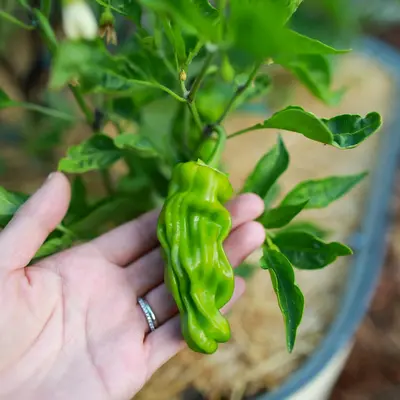
Once the world's hottest pepper, this legendary superhot from Northeast India delivers an intense, building heat that made it famous worldwide. The wrinkled, lantern-shaped pods start green and ripen to orange-red, offering not just extreme heat but also a unique fruity, smoky flavor. Essential for hot sauce makers and thrill-seekers who want to grow their own legendary fire.
Harvest
100-120d
Days to harvest
Sun
Full sun
Zones
10–11
USDA hardiness
Height
12-30 inches
Planting Timeline
Showing dates for Ghost Pepper 'Bhut Jolokia' in USDA Zone 7
All Zone 7 pepper →Zone Map
Click a state to update dates
Ghost Pepper 'Bhut Jolokia' · Zones 10–11
Growing Details
Complete Growing Guide
Ghost Pepper 'Bhut Jolokia' demands an extended growing window of 100–120 days, so start seeds indoors 8–10 weeks before your last frost date to ensure mature fruiting before season's end. This cultivar thrives in consistently warm conditions—daytime temperatures of 75–85°F and nighttime lows above 60°F are non-negotiable, as cooler weather stunts flowering and fruit development. Provide full sun (minimum 8 hours daily), rich, well-draining soil amended with compost, and maintain even moisture without waterlogging, which invites root rot. 'Bhut Jolokia' is particularly susceptible to spider mites and thrips in dry indoor conditions, so monitor foliage closely and increase humidity if growing under lights. The plants often become leggy indoors; pinch growing tips at 6 inches tall to encourage bushier branching and higher yields. One essential practical tip: support heavy fruit clusters with stakes or cages early in the season, as the wrinkled pods are dense and weigh down branches considerably before ripening fully to orange-red.
Light: Full sun (6 or more hours of direct sunlight a day). Soil: Clay, High Organic Matter, Loam (Silt), Sand. Soil pH: Acid (<6.0), Alkaline (>8.0), Neutral (6.0-8.0). Drainage: Good Drainage, Moist. Height: 1 ft. 0 in. - 2 ft. 6 in.. Spread: 1 ft. 0 in. - 2 ft. 0 in.. Spacing: 12 inches-3 feet. Growth rate: Medium. Maintenance: Medium. Regions: Coastal, Mountains, Piedmont.
Harvesting
Harvest Ghost Pepper 'Bhut Jolokia' pods when they reach full orange-red color and develop the characteristic wrinkled, lantern-like texture that signals peak capsaicinoid concentration. The pods should feel firm yet slightly yielding to gentle pressure, typically reaching 2-3 inches in length. For maximum heat potency, wait until the skin has darkened to a deep crimson-orange rather than picking at the lighter red stage. This cultivar supports continuous harvesting throughout the season—prune lower branches strategically to encourage lateral growth and successive flushes of fruit. A crucial timing tip: harvest in the early morning after dew has dried, as the peppers will be at their firmest and easiest to detach cleanly from the woody stems, reducing plant stress and promoting continued productivity.
Fruits are a non-pulpy berry and vary considerably across cultivars in shape and color. Many tend to have a lumpy, crinkled appearance compared to other species. They contain high capsaicin levels.
Color: Gold/Yellow, Green, Orange, Purple/Lavender, Red/Burgundy, White. Type: Berry. Length: 1-3 inches. Width: 1-3 inches.
Garden value: Edible, Good Dried, Showy
Harvest time: Fall, Summer
Storage & Preservation
Store fresh Ghost Peppers at 50–55°F in a humid environment (85–90% humidity) within breathable containers or paper bags; avoid plastic, which traps moisture and promotes rot. They'll keep for two to three weeks under these conditions. For longer preservation, freezing works exceptionally well—wash, dry thoroughly, remove stems, and freeze whole or sliced on trays before transferring to freezer bags for up to eight months. Drying is ideal for this variety's smoky character; hang whole peppers in a warm, well-ventilated space or use a dehydrator at 135°F until completely brittle, then grind into powder for hot sauces and seasoning blends. Fermentation is also viable: pack peppers with salt in glass jars and let sit for several weeks to develop complex flavor before blending into sauces. Because Ghost Peppers retain their potency through processing, always wear nitrile gloves during any preparation, and avoid touching your face or eyes. The extreme heat actually intensifies slightly as peppers age and dry, so store away from children and pets.
History & Origin
Originating in the Assam region of Northeast India, the Ghost Pepper emerged from traditional cultivation practices rather than formal breeding programs, making its exact genealogy somewhat unclear. Known locally as Bhut Jolokia for generations—"bhut" meaning ghost in Assamese—the pepper gained international prominence in the early 2000s when Indian scientists formally documented and verified its exceptional heat levels. While specific breeders remain largely undocumented, the variety represents a natural selection within Capsicum chinense populations adapted to the region's climate. Its rise to fame was solidified when it earned Guinness World Record recognition as the world's hottest pepper in 2007, though this title has since passed to newer superhots developed through deliberate breeding programs.
Origin: Bolivia, northern Brazil, and Peru
Advantages
- +Legendary status makes Ghost Pepper highly sought after by serious hot sauce makers
- +Unique fruity and smoky flavor profile distinguishes it from other superhot peppers
- +Extreme Scoville rating of 1,000,000+ delivers genuine thrill-seeking heat experience
- +Wrinkled lantern-shaped pods ripen to beautiful orange-red color for visual appeal
Considerations
- -Requires 100-120 days to mature, extending growing season in shorter climates
- -High susceptibility to multiple diseases including bacterial leaf spot and anthracnose
- -Difficult cultivation demands precise conditions and experienced pepper gardening knowledge
- -Vulnerable to common pests like aphids, thrips, spider mites, and whiteflies
Companion Plants
Basil and marigolds are the two worth planting close. Basil's volatile oils may confuse aphids and thrips — the evidence is mixed, but at 12–18 inches away it won't compete for water or root space, and you'll cut it for the kitchen regardless. French marigolds (Tagetes patula specifically) are better documented: their roots produce alpha-terthienyl, which suppresses root-knot nematodes in the surrounding soil. Ghost peppers spend 100–120 days in the ground, so nematode pressure accumulates in a way it simply doesn't for a 60-day crop. A border of Tagetes patula planted at the same time as your transplants is cheap, practical insurance. Onions and carrots fill space at different depths — onions stay shallow while carrots work down 6–8 inches — so neither competes much with pepper roots, and onion scent may deter aphids from settling in.
Fennel produces anethole and related allelochemicals from its roots and foliage that suppress growth in most vegetables, peppers included. Give it its own corner at least 3–4 feet away from anything you care about. Brassicas are a different problem: they're heavy nitrogen feeders and share many of the same aphid and whitefly species that target peppers, so planting them together just stacks pest pressure in one spot. There's also a seed-saving wrinkle specific to hot peppers: NC State Extension notes that insect cross-pollination between hot and sweet peppers can transfer the dominant capsaicin gene into sweet pepper seeds. Bhut Jolokia sits above 1,000,000 Scoville units — keep it at least 100 feet from any sweet peppers you're saving seed from, or accept that next year's "sweet" pepper might light your mouth on fire.
Plant Together
Basil
Repels aphids, spider mites, and thrips while potentially enhancing pepper flavor
Marigolds
Repel nematodes, aphids, and whiteflies with their strong scent
Oregano
Deters pests like aphids and spider mites while attracting beneficial insects
Parsley
Attracts beneficial insects like hoverflies and parasitic wasps
Carrots
Help break up soil and don't compete for nutrients, good ground cover
Onions
Repel aphids, thrips, and other pests with their sulfur compounds
Nasturtiums
Act as trap crop for aphids and cucumber beetles, attracting them away from peppers
Spinach
Provides living mulch and cool-season companion that doesn't compete for space
Keep Apart
Fennel
Produces allelopathic compounds that inhibit growth of peppers and most vegetables
Brassicas
Compete heavily for nutrients and can stunt pepper growth
Black Walnut
Produces juglone, a toxic compound that causes wilting and death in peppers
Nutrition Facts
Per 100g serving. % Daily Value based on 2,000 calorie diet. Source: USDA FoodData Central (FDC #169394)
Pests & Disease Resistance
Resistance
Moderate resistance to common pepper diseases
Common Pests
Aphids, thrips, spider mites, whiteflies
Diseases
Bacterial leaf spot, anthracnose, powdery mildew
Troubleshooting Ghost Pepper 'Bhut Jolokia'
What you'll see, why it happens, and what to do about it.
Sunken, dark, leathery patch on the bottom or side of the fruit — shows up as pods are sizing up
Likely Causes
- Blossom end rot — a localized calcium deficiency in the developing fruit, not always from low soil calcium
- Inconsistent watering or drought stress preventing calcium uptake
- Excess ammonium nitrogen fertilizer interfering with calcium movement
What to Do
- 1.Water consistently — 1 to 1.5 inches per week; wild swings between dry and wet are the main trigger
- 2.Get a soil test before adding calcium amendments; if pH is already in the 6.0–6.8 range, calcium is likely present and the problem is uptake, not supply
- 3.Back off high-nitrogen synthetic fertilizers, especially ammonium-based ones, while fruit is setting — NC State Extension's disease notes flag this as a direct contributor
Angular water-soaked spots on leaves that dry to brown with yellow halos, sometimes with lesions spreading to the fruit skin
Likely Causes
- Bacterial leaf spot (Xanthomonas campestris pv. vesicatoria) — splashes up from soil during rain or overhead irrigation
- Crowded plants with poor airflow holding moisture on the foliage
What to Do
- 1.Remove and bag (do not compost) heavily spotted leaves to reduce inoculum in the bed
- 2.Switch to drip irrigation or water at the base — keeping foliage dry slows spread significantly
- 3.Rotate this bed out of all nightshades (tomatoes, eggplant, potatoes) for at least 2 seasons; NC State Extension's organic gardening notes confirm rotation breaks the disease cycle
White powdery coating on upper leaf surfaces, typically appearing in late summer when nights cool but days stay warm
Likely Causes
- Powdery mildew (Leveillula taurica on peppers) — thrives in 68–80°F temps with low humidity on the leaf surface, despite what the visible powder suggests
- Dense canopy trapping stale air around the foliage
What to Do
- 1.Thin out crowded inner branches to open the canopy — ghost peppers can reach 30 inches tall and get genuinely bushy, and the interior stays damp longer than you'd expect
- 2.Apply a potassium bicarbonate or neem oil spray at first sign; once it covers more than 30% of the canopy it's very hard to pull back
- 3.Avoid late-evening watering, which leaves moisture on leaves overnight right when temps are dropping into that favorable range
Frequently Asked Questions
How long does it take to grow ghost peppers from seed?▼
Can you grow ghost peppers in containers?▼
Are ghost peppers good for beginners?▼
What do ghost peppers actually taste like?▼
Ghost pepper vs Carolina Reaper - what's the difference?▼
When should I plant ghost pepper seeds?▼
Zone-by-Zone Planting Calendar
| Zone | Indoor Start | Transplant | Direct Sow | Harvest |
|---|---|---|---|---|
| Zone 3 | April – April | June – July | — | October – October |
| Zone 4 | March – April | June – June | — | September – October |
| Zone 5 | March – March | May – June | — | September – October |
| Zone 6 | March – March | May – June | — | September – November |
| Zone 7 | February – March | April – May | — | August – October |
| Zone 8 | February – February | April – May | — | August – October |
| Zone 9 | January – January | March – April | — | July – September |
| Zone 10 | January – January | February – March | — | June – August |
| Zone 1 | May – May | July – August | — | November – August |
| Zone 2 | April – May | June – July | — | October – September |
| Zone 11 | January – January | January – February | — | May – July |
| Zone 12 | January – January | January – February | — | May – July |
| Zone 13 | January – January | January – February | — | May – July |
Growing Guides from Wind River Greens
Sources & References
External authority sources used in compiling this guide.
See the Methodology page for how this data is sourced, what's AI-assisted, and known limitations.
More Peppers
Carolina Reaper
Sweet Pepper 'Carmen'
Scotch Bonnet 'Scotch Bonnet Orange'
Chocolate Habanero
Sweet Italian Pepper 'Marconi Rosso'
Purple Beauty Bell Pepper
Mad Hatter
Chipotle 'Morita'