Marina di Chioggia Pumpkin
Cucurbita maxima
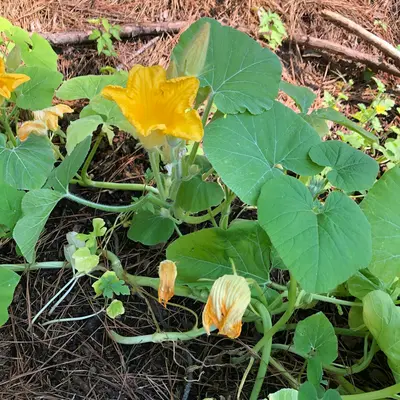
Avg. 6-12 lb. bumpy squashes make a wild, yet subdued ornamental statement for fall. Amy Goldman in her new book, The Compleat Squash, describes this Italian seaside specialty as deliziosa, especially for gnocchi and ravioli, and a culinary revelation.
Harvest
100d
Days to harvest
Sun
Full sun
Zones
3–11
USDA hardiness
Difficulty
Moderate to Advanced
Planting Timeline
Showing dates for Marina di Chioggia Pumpkin in USDA Zone 7
All Zone 7 squash →Zone Map
Click a state to update dates
Marina di Chioggia Pumpkin · Zones 3–11
Growing Details
Succession Planting
Marina di Chioggia needs 100 days and stores for months after harvest, so there's no practical reason to stagger plantings. One sowing per season is the right call. Direct sow from April through early June in zone 7; anything going in the ground after mid-June almost certainly won't cross the finish line before first frost. If you want winter squash spread across more of the fall and winter, grow a second variety with a different days-to-maturity — say, a 85-day butternut alongside this one — rather than trying to succession-plant the same crop.
Complete Growing Guide
With a 100-day maturity and Italian heritage, Marina di Chioggia requires a long, warm growing season—start seeds indoors 3–4 weeks before your last frost and transplant only when soil reaches 70°F or warmer, as this cultivar sulks in cool conditions. Plant in full sun with rich, well-draining soil amended with compost to support vigorous vines and develop the dense, creamy flesh prized for gnocchi. Unlike some winter squashes, Marina di Chioggia is notably susceptible to powdery mildew in humid climates; improve air circulation, avoid overhead watering, and monitor leaves regularly. The sprawling vines also tend to send out aggressive runners that can overwhelm small gardens—consider trellising or strategic pruning to maintain vigor without sacrificing yield. Harvest only when the skin hardens completely and the stem browns; premature picking results in poor storage and disappointing flavor development.
Light: Full sun (6 or more hours of direct sunlight a day). Soil: High Organic Matter, Loam (Silt). Soil pH: Neutral (6.0-8.0). Drainage: Good Drainage, Moist. Spacing: 12 inches-3 feet. Growth rate: Rapid. Maintenance: Medium. Propagation: Seed. Regions: Coastal, Mountains, Piedmont.
Harvesting
Marina di Chioggia pumpkins reach peak harvest readiness when their bumpy skin deepens from green to a mottled slate-gray or bronze-brown, and the fruit feels rock-hard when pressed. Wait until the vine begins to naturally senesce and the stem turns woody and tan, typically around day 100. Since these Italian squashes mature unevenly on the vine, practice continuous harvesting by checking plants every few days rather than waiting for a single-harvest window; this encourages additional fruit development. A critical timing tip: harvest before the first hard frost, as this cultivar's dense flesh is susceptible to chilling damage, which compromises the creamy texture essential for gnocchi and ravioli applications.
Soft or hard-shelled berries called pepos come in a variety of colors, shapes, and sizes and are harvested in the fall. The stems of the fruits generally have a soft corky texture compared to other species.
Color: Blue, Cream/Tan, Gold/Yellow, Gray/Silver, Orange, Pink, Red/Burgundy, Variegated, White. Type: Berry. Length: > 3 inches. Width: > 3 inches.
Garden value: Edible, Long-lasting, Showy
Harvest time: Fall
Storage & Preservation
Store freshly harvested Marina di Chioggia pumpkins in a cool, dry location between 50–60°F with moderate humidity, ideally on shelves or suspended netting rather than stacked directly on concrete. These heirloom squashes cure best with good air circulation. When properly stored, they'll keep for three to four months, though peak flavor develops after two to three weeks of curing. For longer preservation, roast the flesh until tender, then freeze in airtight containers for up to eight months—this method works particularly well given the pumpkin's naturally dense texture and is ideal for soups and risottos. Alternatively, puree and can using tested pressure-canning recipes, or dehydrate thin slices for storage in airtight jars. A practical note specific to this variety: the deeply ribbed, warty skin is quite durable but prone to checking if exposed to temperature swings during storage; maintain consistent cool conditions to prevent surface cracking that can lead to rot.
History & Origin
The Marina di Chioggia pumpkin originates from the Veneto region of northeastern Italy, specifically from the coastal town of Chioggia near Venice, where it has been cultivated as a traditional heirloom variety for generations. Like many Italian squash varieties, its precise breeding history and introduction date remain largely undocumented in modern agricultural records, though it represents a distinct population within the Cucurbita maxima species that has been maintained through careful seed saving by local growers. The variety's development reflects the broader Italian tradition of adapting squash varieties to regional climates and culinary preferences following their introduction to Europe in the sixteenth century, with Chioggia's maritime culture influencing its selection for storage qualities and distinctive appearance.
Origin: Central and South America
Advantages
- +Exceptional sweet, dense, creamy flavor perfect for Italian gnocchi and ravioli dishes
- +Stunning bumpy ornamental appearance adds unique fall garden and table décor
- +Italian heirloom variety offers culinary authenticity and complexity rarely found commercially
- +Moderate 100-day maturity allows reasonable growing season in most climates
Considerations
- -Moderate to advanced difficulty makes this variety challenging for beginning gardeners
- -Highly susceptible to powdery mildew and downy mildew in humid conditions
- -Vulnerable to multiple squash pests including vine borers and squash bugs
- -Requires significant space and resources for 6-12 pound fruit production
Companion Plants
Nasturtiums work as a trap crop, pulling aphids off the squash onto themselves where you can deal with them. French marigolds — planted as a solid block rather than scattered singles — are documented by NC State Extension to suppress root-knot nematodes in the soil over a full season, which matters for a crop that sits in the ground 100 days. Radishes and catnip help confuse cucumber beetles, and that's worth taking seriously here because bacterial wilt (Erwinia tracheiphila) travels exclusively on those beetles — fewer beetles, less wilt. The corn-and-beans pairing gives the sprawling vines some spatial logic and adds nitrogen the heavy-feeding squash will use. Keep potatoes out; both crops share enough soil-borne vulnerabilities that growing them together is just stacking the odds against yourself.
Plant Together
Nasturtiums
Trap crop for squash bugs and cucumber beetles, deters aphids
Marigolds
Repel cucumber beetles, squash bugs, and nematodes with strong scent
Radishes
Deter squash vine borers and cucumber beetles, break up soil
Corn
Provides natural trellis support and shade, part of Three Sisters planting
Beans
Fix nitrogen in soil, complete the Three Sisters companion system
Catnip
Strongly repels squash bugs, cucumber beetles, and other pests
Dill
Attracts beneficial predatory insects that control squash pests
Sunflowers
Attract pollinators essential for fruit set, provide wind protection
Keep Apart
Potatoes
Compete for space and nutrients, both are heavy feeders
Brassicas
Cabbage family plants inhibit cucurbit growth and development
Aromatic herbs
Strong oils from sage, rosemary can inhibit squash growth
Nutrition Facts
Per 100g serving. % Daily Value based on 2,000 calorie diet. Source: USDA FoodData Central (FDC #168448)
Pests & Disease Resistance
Resistance
Moderate resistance, benefits from good air circulation
Common Pests
Squash vine borers, cucumber beetles, squash bugs
Diseases
Powdery mildew, downy mildew, bacterial wilt
Troubleshooting Marina di Chioggia Pumpkin
What you'll see, why it happens, and what to do about it.
Wilting vines with a sawdust-like frass at the base of the stem, usually appearing July or later
Likely Causes
- Squash vine borer (Melittia cucurbitae) — larvae tunnel into the stem and eat from the inside out
- Late planting that put vulnerable young plants directly in the borer egg-laying window
What to Do
- 1.Slit the stem lengthwise with a razor blade where you see the frass, extract the larva, and bury that section of vine under a few inches of moist soil so it can re-root
- 2.Next season, direct sow as early as soil temps allow — NC State Extension notes that squash seeded early can reach maturity before borers begin laying eggs in July
- 3.Row cover the plants from germination through early flowering, removing it only to allow pollination
Overnight wilting of entire vines on otherwise healthy-looking plants, with no visible stem damage
Likely Causes
- Bacterial wilt (Erwinia tracheiphila), transmitted by cucumber beetles (striped or spotted)
- High cucumber beetle pressure — check the undersides of leaves and the base of stems for beetles or their yellow egg clusters
What to Do
- 1.Cut a wilted stem near the base, touch the two cut ends together and pull apart slowly — if stringy threads stretch between them, it's bacterial wilt and there is no cure; pull and trash the plant
- 2.Control cucumber beetles early with row cover or kaolin clay, since the disease only spreads through their feeding
- 3.NC State Extension recommends removing all plant debris at season's end and turning the bed to disrupt overwintering beetle eggs
White powdery coating on upper leaf surfaces, usually on older leaves first, showing up in late summer
Likely Causes
- Powdery mildew (Podosphaera xanthii or Erysiphe cichoracearum) — dry days paired with high nighttime humidity favor it heavily
- Crowded vines with poor airflow between plants
What to Do
- 1.Marina di Chioggia takes 100 days, so if the fruit is already sizing up, moderate mildew in week 14 isn't worth a spray program — the plant has done its job; let it finish
- 2.If mildew arrives before fruit sets, apply potassium bicarbonate or neem oil on a dry morning, coating both leaf surfaces, and repeat every 7–10 days
- 3.Space each plant the full 72–96 inches — compressing that spacing is the fastest way to accelerate mildew from one plant to the next
Frequently Asked Questions
How long does Marina di Chioggia pumpkin take to grow?▼
Is Marina di Chioggia pumpkin good for beginners?▼
Can you grow Marina di Chioggia pumpkin in containers?▼
What does Marina di Chioggia pumpkin taste like?▼
When should I plant Marina di Chioggia pumpkin seeds?▼
Marina di Chioggia vs Cinderella pumpkin - what's the difference?▼
Zone-by-Zone Planting Calendar
| Zone | Indoor Start | Transplant | Direct Sow | Harvest |
|---|---|---|---|---|
| Zone 1 | — | — | July – August | November – August |
| Zone 2 | — | — | June – August | October – September |
| Zone 11 | — | — | January – March | May – July |
| Zone 12 | — | — | January – March | May – July |
| Zone 13 | — | — | January – March | May – July |
| Zone 3 | — | — | June – July | October – October |
| Zone 4 | — | — | June – July | October – October |
| Zone 5 | — | — | May – June | September – October |
| Zone 6 | — | — | May – June | September – October |
| Zone 7 | — | — | April – June | August – October |
| Zone 8 | — | — | April – May | August – September |
| Zone 9 | — | — | March – April | July – August |
| Zone 10 | — | — | February – April | June – August |
Growing Guides from Wind River Greens
Sources & References
External authority sources used in compiling this guide.
See the Methodology page for how this data is sourced, what's AI-assisted, and known limitations.