Blacktail Mountain Watermelon
Citrullus lanatus 'Blacktail Mountain'
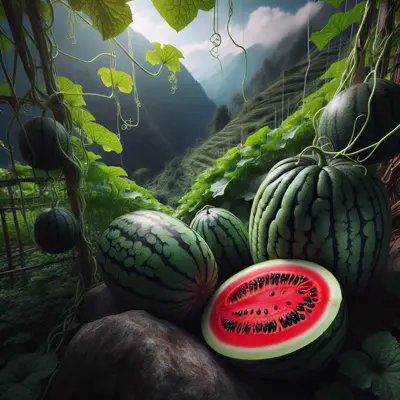
Developed in Idaho for short-season growing, this remarkable heirloom produces full-sized, incredibly sweet watermelons in just 75 days even in cool climates. The round, dark green fruits with subtle stripes contain bright red flesh that rivals any long-season variety for flavor and sweetness. Perfect for northern gardeners who thought they couldn't grow watermelons.
Harvest
70-75d
Days to harvest
Sun
Full sun
Zones
3–8
USDA hardiness
Height
4-8 inches
Planting Timeline
Showing dates for Blacktail Mountain Watermelon in USDA Zone 7
All Zone 7 melon →Zone Map
Click a state to update dates
Blacktail Mountain Watermelon · Zones 3–8
Growing Details
Complete Growing Guide
Blacktail Mountain demands warm soil (at least 70°F) and full sun exposure to hit its impressive 70-75 day maturity, so start seeds indoors 3-4 weeks before your last frost or direct sow only after soil warms thoroughly. Unlike longer-season watermelons, this cultivar cannot tolerate cool springs—premature planting will stunt growth rather than advance harvest. Plant in rich, well-draining soil amended with compost and space vines 3-4 feet apart to allow adequate air circulation, which prevents powdery mildew and wilt diseases that can spread quickly in dense plantings. While generally pest-resistant, monitor for cucumber beetles early in the season, as they vector bacterial wilt; row covers on young plants provide effective protection. One critical practice: thin developing fruit to one melon per vine, as Blacktail Mountain produces multiple flowers but concentrates its sugars better in single fruits, ensuring those prized sweet, full-sized melons rather than multiple undersized ones.
Light: Full sun (6 or more hours of direct sunlight a day). Soil: Loam (Silt). Soil pH: Neutral (6.0-8.0). Drainage: Good Drainage, Moist. Height: 0 ft. 4 in. - 0 ft. 8 in.. Spread: 5 ft. 0 in. - 10 ft. 0 in.. Growth rate: Medium. Maintenance: Medium. Propagation: Seed. Regions: Coastal, Mountains, Piedmont.
Harvesting
Blacktail Mountain watermelons reach peak harvest readiness when the dark green skin develops a dull, matte finish rather than a glossy sheen, and the fruit achieves a diameter of 6–8 inches with a firm, hollow sound when thumped. The underside should display a creamy yellow or pale orange spot indicating full maturity. These plants produce watermelons in a continuous pattern throughout the season rather than a single flush, allowing successive harvests as new fruits develop. Time your harvesting for early morning when temperatures are coolest, as this preserves the crisp, juicy texture and peak sugar content of these remarkably sweet melons. A ripe Blacktail Mountain will detach easily from the vine with gentle pressure—avoid pulling hard, as fruits ready for harvest should separate with minimal resistance.
The plant produces melons which are large modified berries called a pepo. They are rounded to oval mottled green with darker green rind. Black, cream or mottled colored elliptic seeds. Flesh general red or pink but can also be yellowish.
Color: Green. Type: Berry. Length: > 3 inches. Width: > 3 inches.
Garden value: Edible
Harvest time: Summer
Edibility: The fruit can be eaten raw or pickled. The rind is edible after cooking.
Storage & Preservation
Store freshly harvested Blacktail Mountain watermelons at 50–70°F with 80–90% humidity in a well-ventilated space, away from ethylene-producing fruits. Whole melons keep for 2–3 weeks under these conditions; cut fruit lasts 3–5 days when refrigerated in airtight containers. For longer preservation, freeze cubed flesh in airtight bags or containers for up to three months—ideal for smoothies and juices. Canning is viable using established tested recipes for watermelon preserves or jams, though the high water content makes whole-fruit canning impractical. Drying thin slices at low temperature (135–145°F) yields chewy snacks with concentrated sweetness. This variety's thin rind means it bruises more easily than thick-skinned types, so handle carefully during harvest and storage to avoid cracking and premature spoilage.
History & Origin
Developed in Idaho during the mid-20th century, Blacktail Mountain emerged from breeding programs focused on creating short-season watermelon varieties suited to northern climates with limited growing windows. The variety represents a deliberate selection within heirloom watermelon lineages, prioritizing early maturity and cold tolerance while maintaining the sweetness and fruit quality of longer-season types. While specific breeder attribution remains unclear in available documentation, Blacktail Mountain became an iconic regional variety distributed primarily through seed companies serving mountain and northern states. Its success established it as a foundational heirloom for cool-climate gardeners, and the variety remains widely cultivated today through heritage seed networks and commercial seed producers.
Origin: Africa
Advantages
- +Exceptionally short 70-75 day maturity enables northern gardeners to grow watermelons successfully.
- +Produces full-sized melons with excellent sweetness rivaling traditional long-season varieties.
- +Dark green striped skin and bright red flesh create visually striking, attractive fruits.
- +Developed specifically for cool climates and short growing seasons in Idaho.
- +Easy difficulty level makes it accessible for beginner and experienced gardeners alike.
Considerations
- -Susceptible to anthracnose and fusarium wilt, requiring careful disease management practices.
- -Vulnerable to cucumber beetles and squash vine borers that damage vines and fruits.
- -Requires consistent moisture and warm soil temperatures despite cool-climate adaptation.
- -May produce smaller yields compared to traditional long-season watermelon varieties in suboptimal conditions.
Companion Plants
Nasturtiums and marigolds work near watermelons by masking the scent cues that cucumber beetles (Diabrotica spp.) use to locate cucurbit seedlings — not foolproof, but worth the bed space. Radishes tucked at the edges pull double duty: they act as a trap crop for the same beetles and break up any surface crust that can impede water infiltration around shallow transplants. Beans fix nitrogen at a root depth that doesn't compete with watermelon's sprawling lateral roots. Fennel is the one to skip entirely — it releases allelopathic compounds that suppress neighboring vegetables, and tomatoes and potatoes share fusarium wilt strains that will keep that pathogen cycling in your soil long after the season ends.
Plant Together
Nasturtiums
Trap crop for cucumber beetles and squash bugs, repels aphids
Marigolds
Repel nematodes and cucumber beetles with their strong scent
Radishes
Deter cucumber beetles and squash vine borers, mature quickly without competing
Beans
Fix nitrogen in soil to benefit heavy-feeding watermelons
Catnip
Repels ants, aphids, and cucumber beetles more effectively than DEET
Oregano
Repels cucumber beetles and provides ground cover to retain soil moisture
Corn
Provides vertical structure and shade, traditional Three Sisters companion
Sunflowers
Attract beneficial insects and provide windbreak protection
Keep Apart
Fennel
Allelopathic compounds inhibit germination and growth of melons
Tomatoes
Compete for similar nutrients and space, both susceptible to similar fungal diseases
Potatoes
May stunt melon growth and both crops attract similar harmful insects
Nutrition Facts
Per 100g serving. % Daily Value based on 2,000 calorie diet. Source: USDA FoodData Central (FDC #167765)
Pests & Disease Resistance
Resistance
Good cold tolerance, moderate disease resistance
Common Pests
Cucumber beetles, aphids, squash vine borers
Diseases
Anthracnose, fusarium wilt, bacterial fruit blotch
Troubleshooting Blacktail Mountain Watermelon
What you'll see, why it happens, and what to do about it.
Dark, sunken, water-soaked spot on the blossom end of the fruit — sometimes with a moldy secondary growth on the rotted area
Likely Causes
- Blossom-end rot — calcium deficiency in the developing fruit caused by uneven soil moisture
- Overfertilization with high-nitrogen fertilizer, which disrupts calcium uptake
- Soil pH outside the 6.5–6.8 range, reducing calcium availability
What to Do
- 1.Mulch heavily and water on a consistent schedule — 1 to 2 inches per week — to avoid the wet-dry swings that trigger this
- 2.Pull back on any nitrogen-heavy fertilizer once vines are running; side-dress with compost instead
- 3.Soil-test and lime to bring pH up to 6.5–6.8 as NC State Extension recommends; correct pH does more than any foliar spray
Small, circular tan spots with dark purple borders appearing on leaves, then sunken lesions developing on the fruit skin as it sizes up
Likely Causes
- Anthracnose (Colletotrichum orbiculare) — a fungal disease that spreads quickly in warm, wet weather above 70°F
- Rain or overhead irrigation splashing spores from infected soil and debris onto the canopy
What to Do
- 1.Strip and trash (not compost) infected leaves and any visibly lesioned fruit the moment you see them
- 2.Switch to drip irrigation or water at ground level — keeping foliage dry cuts transmission significantly
- 3.Don't plant cucurbits in the same bed for at least 2 seasons; Colletotrichum overwinters in crop debris and comes back ready
Frequently Asked Questions
How long does Blacktail Mountain watermelon take to grow from seed to harvest?▼
Can you grow Blacktail Mountain watermelon in containers?▼
What does Blacktail Mountain watermelon taste like compared to store-bought?▼
When should I plant Blacktail Mountain watermelon seeds?▼
Is Blacktail Mountain watermelon good for beginners?▼
How big do Blacktail Mountain watermelons get?▼
Zone-by-Zone Planting Calendar
| Zone | Indoor Start | Transplant | Direct Sow | Harvest |
|---|---|---|---|---|
| Zone 1 | June – June | July – August | July – September | October – August |
| Zone 2 | May – June | July – July | July – August | September – September |
| Zone 11 | January – January | February – February | February – March | April – June |
| Zone 12 | January – January | February – February | February – March | April – June |
| Zone 13 | January – January | February – February | February – March | April – June |
| Zone 3 | May – May | June – July | June – August | September – October |
| Zone 4 | April – May | June – June | June – July | September – October |
| Zone 5 | April – April | May – June | May – July | August – October |
| Zone 6 | April – April | May – June | May – July | August – September |
| Zone 7 | March – April | May – May | May – June | July – September |
| Zone 8 | March – March | April – May | April – June | July – August |
| Zone 9 | February – February | March – April | March – May | June – July |
| Zone 10 | January – February | March – March | March – April | May – July |
Growing Guides from Wind River Greens
Sources & References
External authority sources used in compiling this guide.
See the Methodology page for how this data is sourced, what's AI-assisted, and known limitations.
More Melons
Charleston Gray Watermelon
Ali Baba Watermelon
Cantaloup Charentais
Watermelon Charleston Gray
Hale's Best Cantaloupe
Cantaloupe Iroquois
Sugar Baby Watermelon
Tiger Baby Watermelon