Beet Microgreens
Beta vulgaris
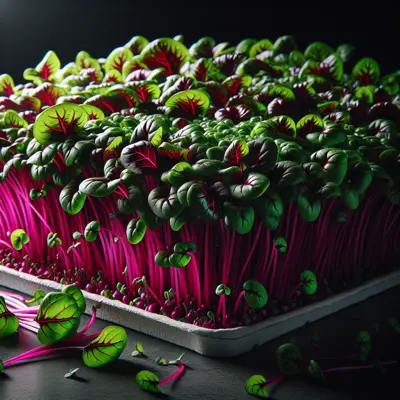
Beet microgreens are delicate seedlings featuring vibrant deep red or burgundy stems with small green cotyledon leaves, typically ready to harvest in 10-14 days of growth. These tender shoots offer a distinctive sweet and earthy flavor with mild beetroot notes, making them an excellent nutritional addition to salads, smoothie bowls, and plated dishes. The microgreens are prized for their visual appeal and subtle beet flavor that adds complexity without overwhelming delicate dishes. Easy to cultivate under grow lights or bright indirect light, they thrive in rich growing mediums and represent an efficient way to access beet's nutritional benefits in concentrated, tender form.
Harvest
55d
Days to harvest
Sun
Indirect bright light
Zones
1–12
USDA hardiness
Height
2-3 inches
Planting Timeline
Showing dates for Beet Microgreens in USDA Zone 7
All Zone 7 microgreen →Zone Map
Click a state to update dates
Beet Microgreens · Zones 1–12
Growing Details
Succession Planting
Beet microgreens go from seed to cut in roughly 8–12 days post-germination (add 3–5 days for germination itself), which makes staggering dead simple. Start a new tray every 3–4 days and you'll pull a steady harvest without any single-day glut. There's no seasonal cutoff to plan around — this is a fully indoor crop with no heat or cold threshold — so the only real limit is how much rack space and light capacity you're working with.
Complete Growing Guide
Growing beet microgreens starts with proper seed preparation since beet seeds have a tough outer hull that benefits from soaking. Submerge your seeds in room temperature water for 8-12 hours before planting to soften this protective coating and ensure more uniform germination.
Prepare your growing trays with 1-2 inches of high-quality microgreen growing medium that drains well but retains moisture. Coconut coir mixed with vermiculite or a specialized microgreen soil blend works exceptionally well. Moisten the medium thoroughly but avoid waterlogging, as overly wet conditions invite damping-off disease.
Broadcast sow your pre-soaked seeds evenly across the surface at a density of approximately 2 ounces per 10x20 inch tray. You want good coverage without overcrowding, which restricts air circulation. Gently press seeds into the growing medium and cover with a thin layer of soil or vermiculite.
Implement a blackout period by covering your trays with another inverted tray or placing them in complete darkness for 3-4 days. This encourages strong root development and proper stem elongation. During blackout, check daily and mist lightly if the surface appears dry, but avoid overwatering.
After the blackout period, expose your emerging microgreens to indirect bright light or LED grow lights for 12-14 hours daily. Direct sunlight can be too intense and may cause wilting. Maintain temperatures between 65-75°F for optimal growth.
Water from the bottom by placing trays in shallow water baths rather than misting from above, which can promote fungal issues. The soil should feel consistently moist but never soggy. In dry climates, you may need to water twice daily, while humid conditions might require less frequent watering.
Avoid these common mistakes: using garden soil (too heavy and may contain pathogens), skipping the seed soak (leads to poor germination), ending blackout too early (results in weak, leggy growth), and overhead watering mature microgreens (increases disease risk). With proper technique, you'll see harvestable microgreens in just 8-12 days with vibrant magenta stems and healthy green cotyledons.
Harvesting
Harvest beet microgreens when they reach 1-2 inches in height and display their characteristic vibrant magenta stems with fully opened green cotyledons, typically 8-12 days after sowing. The first true leaves may just be emerging, but don't wait too long as the tender texture begins to toughen once true leaves fully develop.
Perform the readiness test by gently tugging a few microgreens – they should release easily from the growing medium with their roots intact, indicating proper maturity. The stems should be firm and colorful, not pale or mushy, which would indicate overwatering or poor growing conditions.
Harvest in the morning when moisture content is optimal and flavors are most concentrated. Use clean, sharp scissors or a microgreen harvesting knife to cut stems about ¼ inch above the soil line. Work in sections, cutting only what you need immediately for best quality, as these microgreens maintain better color and texture when harvested fresh. Avoid pulling microgreens from the soil, which damages neighboring plants and introduces soil particles that are difficult to clean.
Storage & Preservation
Store freshly harvested beet microgreens in the refrigerator immediately after cutting to preserve their vibrant colors and crisp texture. Place them in a container lined with paper towels to absorb excess moisture, or use specialized microgreen storage containers with ventilation. Properly stored, they maintain peak quality for 5-7 days.
For best results, keep storage temperature between 32-36°F with moderate humidity. Avoid washing before storage, as excess moisture accelerates deterioration. Instead, rinse gently just before use.
While beet microgreens are best enjoyed fresh, you can preserve them by flash-freezing on parchment-lined trays, then transferring to freezer bags for smoothies and soups. They can also be dehydrated at low temperatures (95°F) to create colorful garnish powders, though this sacrifices much of their nutritional value. Avoid traditional canning methods, as the delicate texture doesn't hold up well to heat processing.
History & Origin
Beet microgreens represent a modern evolution of an ancient crop with roots tracing back over 4,000 years to the Mediterranean region. While beetroots (Beta vulgaris) were cultivated by ancient civilizations including the Babylonians, Greeks, and Romans, the practice of harvesting young seedlings as microgreens is a relatively recent culinary innovation.
The microgreens movement gained momentum in the 1980s in California's fine dining scene, where chefs sought novel ways to add color, nutrition, and unique flavors to their dishes. Beet microgreens quickly became prized for their stunning visual impact – the vibrant magenta stems create one of the most photogenic microgreen varieties available.
Today's beet microgreen varieties are typically derived from traditional beetroot cultivars like Detroit Dark Red or Bull's Blood beets, selected specifically for their colorful stems and mild, sweet flavor in the microgreen stage. The commercial cultivation of beet microgreens has expanded significantly since the 2000s, driven by both gourmet restaurant demand and home gardeners interested in year-round indoor growing. Their combination of striking appearance, nutritional density, and ease of cultivation has made them a staple in the modern microgreens industry.
Advantages
- +Exceptionally vibrant magenta stems that retain color even after harvesting and refrigeration
- +Very fast germination and growth cycle, ready to harvest in just 8-12 days
- +Extremely hardy and disease-resistant, rarely affected by common microgreen problems
- +Requires no special equipment beyond basic microgreen supplies, making it beginner-friendly
- +Commands premium prices in farmers markets due to striking visual appeal
- +Sweet, mild flavor appeals to both adults and children unlike some earthy microgreens
- +Excellent shelf life compared to other microgreen varieties, lasting 5-7 days when properly stored
Considerations
- -Seeds require mandatory 8-12 hour soaking period, adding extra preparation time
- -Large seed size means higher seed costs per tray compared to smaller seeds like broccoli
- -Stems can become tough and fibrous if harvested too late, requiring precise timing
- -Color bleeding from magenta stems can stain hands and cutting surfaces during harvest
- -More sensitive to overwatering than some varieties, prone to damping-off if soil stays too wet
Companion Plants
Beet microgreens grow in trays, not beds, so companion planting here means what shares your rack. Radish microgreens are the most practical neighbor — they're ready to cut by day 7, clearing shelf space right as beet trays are still filling in. Lettuce, arugula, kale microgreens, and spinach all run on the same misting schedule and tolerate the same pH window (6.0–7.5), so they don't pull your conditions in different directions. Keep fennel off the rack entirely; its volatile oils are allelopathic and can suppress germination in trays sitting within a foot or two.
Plant Together
Lettuce
Similar growing conditions and harvest timing, minimal root competition
Radish Microgreens
Fast growing cycle matches beet microgreens, complementary nutrient uptake
Arugula
Similar light and moisture requirements, natural pest deterrent properties
Spinach
Cool season companion with compatible growing conditions and spacing needs
Cilantro
Attracts beneficial insects and helps deter aphids and spider mites
Chives
Natural fungicide properties help prevent damping-off disease in microgreens
Kale Microgreens
Similar Brassicaceae family requirements and complementary growth patterns
Swiss Chard
Same plant family as beets, compatible nutrient and water requirements
Keep Apart
Fennel
Releases allelopathic compounds that inhibit germination and growth of most plants
Mustard Greens
Can attract flea beetles and other pests that also damage beet microgreens
Black Walnut
Produces juglone toxin that severely stunts growth and can kill sensitive plants
Nutrition Facts
Per 100g serving. % Daily Value based on 2,000 calorie diet. Source: USDA FoodData Central (FDC #2685576)
Pests & Disease Resistance
Resistance
Very hardy and disease-resistant variety
Common Pests
Aphids, leaf miners (rare in microgreen production)
Diseases
Damping off if overwatered, generally very disease-resistant
Troubleshooting Beet Microgreens
What you'll see, why it happens, and what to do about it.
Seedlings collapse at the soil line, often in patches, around days 3–6 after germination
Likely Causes
- Damping off (Pythium or Rhizoctonia spp.) — fungal rot triggered by overwatering and poor airflow
- Seeding too densely, which traps moisture between stems
What to Do
- 1.Back off misting immediately — let the top of the medium dry slightly between waterings
- 2.Point a small fan at the tray on low to keep air moving across the canopy
- 3.Start fresh with a sterile growing medium; don't reuse trays without sanitizing them with a 10% bleach solution first
Pale, leggy stems stretching more than 3 inches with washed-out color instead of the expected deep magenta or green
Likely Causes
- Insufficient light — grow lights positioned too far above the tray, or natural light running under 12 hours daily
- Harvest delayed past the cotyledon stage, where stems elongate chasing any available light
What to Do
- 1.Drop grow lights to within 2–4 inches of the tray canopy and run them on a full 14-hour cycle
- 2.Cut at the cotyledon stage — typically day 8–12 depending on temperature — before true leaves push; holding longer doesn't improve flavor or yield, it just gives you a stringier stem
Frequently Asked Questions
How long do beet microgreens take to grow from seed to harvest?▼
Are beet microgreens good for beginners to grow?▼
Do I need to soak beet microgreen seeds before planting?▼
What do beet microgreens taste like compared to regular beets?▼
Can you grow beet microgreens without soil using hydroponic methods?▼
Why are my beet microgreens losing their red color?▼
Zone-by-Zone Planting Calendar
| Zone | Indoor Start | Transplant | Direct Sow | Harvest |
|---|---|---|---|---|
| Zone 1 | January – December | — | — | January – December |
| Zone 2 | January – December | — | — | January – December |
| Zone 11 | January – December | — | — | January – December |
| Zone 12 | January – December | — | — | January – December |
| Zone 13 | January – December | — | — | January – December |
| Zone 3 | January – December | — | — | January – December |
| Zone 4 | January – December | — | — | January – December |
| Zone 5 | January – December | — | — | January – December |
| Zone 6 | January – December | — | — | January – December |
| Zone 7 | January – December | — | — | January – December |
| Zone 8 | January – December | — | — | January – December |
| Zone 9 | January – December | — | — | January – December |
| Zone 10 | January – December | — | — | January – December |
Growing Guides from Wind River Greens
Sources & References
External authority sources used in compiling this guide.
See the Methodology page for how this data is sourced, what's AI-assisted, and known limitations.