Darki Green
Petroselinum crispum
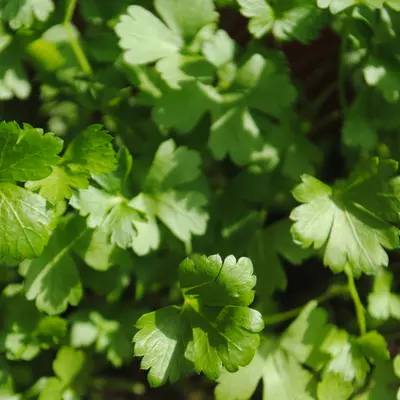
A very dark green selection of the Moss Curled type. Use it for garnishes, salads, and cooking. It performs well in containers and the field, allowing for multiple cuttings per season from one planting. Upright leaves make harvesting easy. Tolerates light frost. Curled-leaf type. Ht. 12-16".
Harvest
75d
Days to harvest
Sun
Full sun
Zones
3–11
USDA hardiness
Height
0-3 feet
Planting Timeline
Showing dates for Darki Green in USDA Zone 7
All Zone 7 herb →Zone Map
Click a state to update dates
Darki Green · Zones 3–11
Growing Details
Succession Planting
Darki Green hits harvestable size around 75 days, so a two-sow approach covers most of the season without overcomplicating things. Start the first batch indoors in February or March and transplant out in April once nighttime lows stay above 28°F. Sow a second round indoors in late June for a fall planting; parsley handles light frost well and will keep producing into November in most climates.
More than two successions isn't worth the effort. Darki Green is biennial, and second-year plants bolt to flower in spring, turning bitter fast — so each season you're essentially starting fresh anyway.
Complete Growing Guide
A very dark green selection of the Moss Curled type. Use it for garnishes, salads, and cooking. It performs well in containers and the field, allowing for multiple cuttings per season from one planting. Upright leaves make harvesting easy. Tolerates light frost. Curled-leaf type. Ht. 12-16". According to Johnny's Selected Seeds, Darki Green is 75 days to maturity, biennial, open pollinated. Notable features: Grows Well in Containers.
Light: Full sun (6 or more hours of direct sunlight a day). Soil: Clay, Loam (Silt), Sand. Soil pH: Acid (<6.0), Neutral (6.0-8.0). Drainage: Good Drainage, Moist. Height: 0 ft. 8 in. - 3 ft. 0 in.. Spread: 0 ft. 8 in. - 1 ft. 0 in.. Spacing: 12 inches-3 feet. Growth rate: Medium. Maintenance: Medium. Propagation: Seed. Regions: Coastal, Mountains, Piedmont.
Harvesting
Darki Green reaches harvest at 75 days from sowing per Johnny's Selected Seeds. Expect 12-16". at peak.
The small, ridged seeds are formed in the second year from July to September. The fruit and seeds are poisonous to birds.
Type: Schizocarp.
Harvest time: Fall, Summer
Edibility: Leaves as flavoring and garnish
Storage & Preservation
Freshly harvested Darki Green parsley keeps best in the refrigerator at 32–40°F in a sealed plastic bag or container lined with paper towels to absorb excess moisture; expect 2–3 weeks of usable freshness. For longer storage, freezing works exceptionally well—chop the leaves finely, pack into ice cube trays with a little water, then transfer frozen cubes to freezer bags for up to three months. Alternatively, dry the sprigs by hanging them in a warm, dark, well-ventilated space for one to two weeks, then crumble and store in airtight glass jars away from light. Darki Green's deeply curled foliage can trap moisture and debris; rinse gently and dry thoroughly before storage to prevent rot and mold development.
History & Origin
Darki Green is open-pollinated, meaning seed saved from healthy plants will produce true-to-type offspring. Listed in the Johnny's Selected Seeds catalog.
Origin: Europe
Advantages
- +Very dark green color makes attractive garnishes and salad presentations
- +Multiple harvests per season from single planting reduces replanting effort
- +Upright leaf structure enables quick, easy harvesting without plant damage
- +Performs well in both container and field growing conditions
- +Tolerates light frost extending harvest into cooler months
Considerations
- -Curled leaves trap dirt and debris requiring thorough washing
- -Requires consistent moisture and may bolt in hot, dry conditions
- -Dense foliage can harbor pests and fungal diseases if overcrowded
Companion Plants
Basil and chives are the most practical neighbors for Darki Green — both stay shallow-rooted and won't compete for moisture at the 12–18 inch spacing parsley needs. Marigolds and nasturtiums attract aphid predators like lacewings and hoverflies, which matters because parsley draws aphid colonies reliably by midsummer. Garlic is worth tucking nearby; its sulfur compounds appear to suppress some soil-borne fungal pressure, including the conditions that favor root rot. Fennel is the problem companion — it releases allelopathic compounds that stunt most herbs growing within a few feet, and parsley is not an exception. Mint is a space hog that out-competes parsley for water; put it in a container if you want both.
Plant Together
Basil
Repels aphids and whiteflies while enhancing flavor development
Chives
Deters aphids and other soft-bodied insects with sulfur compounds
Marigold
Repels nematodes and aphids while attracting beneficial predatory insects
Nasturtium
Acts as trap crop for aphids and cucumber beetles
Parsley
Attracts beneficial insects and doesn't compete for nutrients
Dill
Attracts beneficial wasps and predatory insects for pest control
Oregano
Repels many insect pests and provides ground cover to retain moisture
Garlic
Natural fungicide properties help prevent soil-borne diseases
Keep Apart
Black Walnut
Releases juglone toxin that inhibits growth of most herbs and vegetables
Fennel
Produces allelopathic compounds that stunt growth of nearby plants
Mint
Aggressive spreading roots compete for nutrients and space
Nutrition Facts
Per 100g serving. % Daily Value based on 2,000 calorie diet. Source: USDA FoodData Central (FDC #172232)
Pests & Disease Resistance
Common Pests
Parsley worms, spider mites, aphids
Diseases
Root rot, powdery mildew, septoria leaf spot
Troubleshooting Darki Green
What you'll see, why it happens, and what to do about it.
Seedlings emerge but grow very slowly for the first 3–4 weeks, and germination is patchy across the flat
Likely Causes
- Parsley seed has a naturally long germination window (7–14 days) and a hard seed coat that slows water uptake
- Soil temperature below 50°F, which stalls germination almost completely
What to Do
- 1.Soak seed in warm water for 24 hours before sowing to soften the coat
- 2.Keep soil temperature between 65–70°F — a heat mat under the flat makes a real difference
- 3.Don't thin or give up before day 14; stragglers often catch up
White powdery coating on leaves, starting on upper surfaces, usually mid-summer or in crowded beds
Likely Causes
- Powdery mildew — a fungal disease favored by warm days, cool nights, and poor airflow
- Plants spaced closer than 12 inches, which traps humidity around the foliage
What to Do
- 1.Thin or transplant so plants sit at least 12 inches apart
- 2.Strip and trash affected leaves; don't compost them
- 3.Apply a dilute baking soda spray (1 tablespoon per gallon of water) weekly as a low-input option, or use a labeled potassium bicarbonate fungicide
Small tan or brown spots with yellow halos on older leaves, progressing upward through the plant around days 50–75
Likely Causes
- Septoria leaf spot (Septoria petroselini) — a fungal pathogen that overwinters in soil and old plant debris
- Overhead irrigation or rain that splashes spores from soil onto lower foliage
What to Do
- 1.Remove and trash spotted leaves as soon as you see them — don't leave debris on the soil surface
- 2.Switch to drip irrigation or water at the base to stop splash transmission
- 3.Rotate parsley out of the same bed for at least 2 seasons; Septoria persists in soil
Bright green caterpillars — sometimes 1.5–2 inches long, striped with yellow and black — stripping leaves down to bare stems
Likely Causes
- Parsley worm, the larva of the black swallowtail butterfly (Papilio polyxenes)
- Adults lay single eggs on foliage; larvae hatch and feed aggressively for 2–3 weeks before pupating
What to Do
- 1.Hand-pick larvae and relocate them to wild Queen Anne's lace nearby — they're swallowtail caterpillars, and most gardeners prefer to move them rather than kill them
- 2.If pressure is heavy, apply Bacillus thuringiensis (Bt) to foliage; it's effective on young larvae and won't harm other wildlife
- 3.Plant a row or two extra — a couple of dedicated plants for Papilio polyxenes is a reasonable trade-off for the rest of your crop
Frequently Asked Questions
How long does it take for Darki Green parsley to be ready to harvest?▼
Can you grow Darki Green parsley in containers?▼
Is Darki Green parsley good for beginners?▼
When should I plant Darki Green parsley?▼
What does Darki Green parsley taste like and how do you use it?▼
Does Darki Green parsley need a lot of water?▼
Zone-by-Zone Planting Calendar
| Zone | Indoor Start | Transplant | Direct Sow | Harvest |
|---|---|---|---|---|
| Zone 11 | January – January | January – March | — | March – December |
| Zone 3 | April – May | June – July | — | July – October |
| Zone 4 | March – April | June – July | — | July – October |
| Zone 5 | March – April | May – June | — | June – October |
| Zone 6 | March – April | May – June | — | June – November |
| Zone 7 | February – March | April – June | — | June – November |
| Zone 8 | February – March | April – May | — | May – December |
| Zone 9 | January – February | March – April | — | April – December |
| Zone 10 | January – January | February – April | — | April – December |
Growing Guides from Wind River Greens
Sources & References
External authority sources used in compiling this guide.
- ExtensionNC State Extension
- BreederJohnny's Selected Seeds
- USDAUSDA FoodData Central
See the Methodology page for how this data is sourced, what's AI-assisted, and known limitations.