Sorrel, Red Veined
Rumex sanguineus
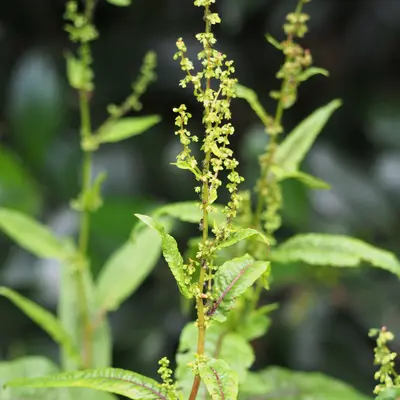
Add color and flavor contrast to microgreen blends. Same sharp, tangy flavor as regular sorrel. An elegant dessert garnish. Based on our yield trial, we recommend seeding 3.5 gm per tray at approx. 8 flats per oz of seed, for very small leaves.
Harvest
26-30d
Days to harvest
Sun
Full sun
Zones
4–8
USDA hardiness
Height
12-18 inches
Planting Timeline
Showing dates for Sorrel, Red Veined in USDA Zone 7
All Zone 7 microgreen →Zone Map
Click a state to update dates
Sorrel, Red Veined · Zones 4–8
Growing Details
Succession Planting
Red Veined Sorrel microgreens turn around in 26–30 days, so the math is simple: start a new tray every 7 days and you'll have a continuous cut without a gap. For a household, two trays staggered 7–10 days apart is usually enough. If you're growing for a small market table, run 3–4 trays in rotation.
Because this variety can be sown indoors every month of the year, heat and cold don't dictate your cadence the way they do with outdoor greens. The main reason to pause succession is a change in your light situation — a long cloudy stretch without supplemental lighting will slow germination and wash out the anthocyanin coloring that makes this variety worth growing. A T5 or LED panel on a 14-hour timer keeps things consistent all twelve months.
Complete Growing Guide
Add color and flavor contrast to microgreen blends. Same sharp, tangy flavor as regular sorrel. An elegant dessert garnish. Based on our yield trial, we recommend seeding 3.5 gm per tray at approx. 8 flats per oz of seed, for very small leaves. According to Johnny's Selected Seeds, Sorrel, Red Veined is 26 - 30 days to maturity, annual, open pollinated. Notable features: Hydroponic Performer.
Light: Full sun (6 or more hours of direct sunlight a day). Drainage: Good Drainage, Moist. Height: 1 ft. 0 in. - 1 ft. 6 in.. Spread: 1 ft. 0 in. - 1 ft. 6 in.. Spacing: 12 inches-3 feet. Maintenance: Low. Propagation: Division, Seed. Regions: Coastal, Mountains, Piedmont.
Harvesting
Sorrel, Red Veined reaches harvest at 26 - 30 days from sowing per Johnny's Selected Seeds. Expect 5 g at peak. As an annual, harvest continues until frost ends the season.
Color: Brown/Copper, Red/Burgundy. Type: Achene.
Edibility: Young leaves are edible raw or cooked, having a tart flavor. Older leaves are bitter and tough. Less commonly grown for eating than other species.
Storage & Preservation
Freshly harvested red veined sorrel microgreens keep best in breathable containers lined with paper towels, stored at 32–40°F with 95% humidity for up to 10 days. Avoid sealed plastic bags, which encourage rot. For longer preservation, freezing works well: blanch briefly in boiling water for 2–3 minutes, shock in ice water, pat dry, and freeze in single layers before bagging. Dried microgreens retain their tart, lemony character effectively—air-dry on screens in a warm, dark space or use a dehydrator at 95–105°F until crisp, then store in airtight containers away from light. Fermentation is also viable; pack into jars with salt brine (3–5% salt by weight) for 3–7 days to develop complexity. The deep red veining intensifies slightly when frozen or dried, making these preparations particularly striking in winter dishes and broths.
History & Origin
Sorrel, Red Veined is open-pollinated, meaning seed saved from healthy plants will produce true-to-type offspring. Listed in the Johnny's Selected Seeds catalog.
Origin: Europe, N. Iran
Advantages
- +Striking red veins add visual contrast to microgreen blend compositions
- +Sharp tangy flavor provides sophisticated taste profile for culinary applications
- +Elegant appearance makes it ideal for upscale dessert garnishing
- +Achieves harvestable size in standard 26-30 day timeline
- +Easy growing difficulty reduces risk for beginner microgreen farmers
Considerations
- -Fine seeds require precise 3.5gm seeding rate per tray
- -Slower germination compared to faster-maturing microgreen varieties
- -Thin delicate leaves prone to damage during harvest and handling
- -Lower yield per tray due to very small leaf size at harvest
Companion Plants
Red Veined Sorrel shares root depth and moisture preferences with lettuce, spinach, and arugula — all shallow-rooted crops that won't undercut it below ground. Growing them in adjacent rows or the same tray keeps the microclimate stable without one plant pulling water or nutrients from another. Radish germinates in 3–5 days and can act as a timing marker in outdoor beds, ready to pull before sorrel is anywhere close to needing that space.
Chives and cilantro earn their spot nearby by releasing volatile sulfur and linalool compounds, respectively, that interfere with aphid host-finding. Sorrel under stress does attract aphids, so having an aromatic crop within a row or two is cheaper than dealing with a colony after the fact. Peas fix atmospheric nitrogen at the root level and won't shade sorrel out if you site them on the north side of the bed.
Fennel is the hard no here — it releases allelopathic compounds from both roots and decomposing leaf litter that suppress germination and stunt nearby greens, and sorrel is sensitive to it. Black walnut operates on a bigger scale: juglone, the compound it exudes through roots and rain-washed hulls, can affect plants 50–80 feet from the trunk. With sorrel, you won't necessarily see a dramatic collapse — just slow, weak growth that doesn't respond to feeding or extra water, which makes it easy to misread as a nutrient problem.
Plant Together
Lettuce
Similar growing conditions and harvest timing, efficient space usage
Spinach
Compatible cool-season leafy greens with similar water and light requirements
Arugula
Complementary peppery flavors and identical growing conditions for microgreen production
Radish
Quick germination helps break soil crust, compatible growth rates for microgreen harvest
Chives
Natural pest deterrent that repels aphids without competing for space
Cilantro
Similar cool-weather preferences and harvest timing for microgreen production
Peas
Nitrogen fixation benefits sorrel growth, compatible planting densities
Kale
Similar nutrient requirements and growing conditions, good microgreen companion
Mustard Greens
Compatible brassica family member with similar growing requirements and harvest timing
Keep Apart
Fennel
Allelopathic compounds inhibit germination and growth of most other plants
Sunflower
Releases allelopathic chemicals that suppress growth of smaller plants like sorrel
Black Walnut
Juglone toxicity severely inhibits growth and can kill sensitive plants like sorrel
Nutrition Facts
Per 100g serving. % Daily Value based on 2,000 calorie diet. Source: USDA FoodData Central (FDC #167782)
Troubleshooting Sorrel, Red Veined
What you'll see, why it happens, and what to do about it.
Seedlings emerge but then topple over at the soil line, stems pinched and discolored, around days 4–7
Likely Causes
- Damping off (Pythium or Rhizoctonia solani) — fungal rot triggered by overwatering and poor airflow
- Sowing too densely, which keeps the surface wet and traps humidity
What to Do
- 1.Back off watering immediately — let the top 1/4 inch of medium dry slightly between waterings
- 2.Run a small fan on low for a few hours a day to move air across the tray
- 3.Next sow, thin your seed rate by about 20% and use a well-draining medium like coconut coir
Leaves are pale green or yellowish overall, growth stalled before day 20
Likely Causes
- Nitrogen depletion in a soilless or low-nutrient medium — microgreens exhaust seed energy fast
- Insufficient light — Red Veined Sorrel needs 6+ hours of strong light or an equivalent grow-light intensity
What to Do
- 1.Bottom-water once with a very dilute liquid kelp or fish emulsion solution (quarter-strength) after the first true leaves appear
- 2.Move trays closer to the light source — aim for 4–6 inches below a T5 or LED grow light if natural light is weak
- 3.If growing indoors in winter, increase photoperiod to 14–16 hours under artificial light
Red veining fades to pink or disappears, leaves turn mostly green
Likely Causes
- Low light intensity — the anthocyanin pigment responsible for the red color requires strong light to develop
- Harvesting too late — color peaks at days 26–30; beyond that, chlorophyll dominates
What to Do
- 1.Move trays to your brightest south-facing window or bump up grow-light intensity
- 2.Cut at the 26–30 day mark — waiting for more size costs you the color you're actually growing this variety for
- 3.A brief cold exposure (50–55°F overnight) can intensify red pigmentation; move trays to a cooler spot the night before harvest
Tiny white or silvery streaks on leaves, or small insects visible near the soil surface around days 15–25
Likely Causes
- Fungus gnats (Bradysia spp.) — larvae damage roots in wet medium; adults are the visible nuisance
- Shore flies — similar in appearance to fungus gnats, also tied to chronically moist growing conditions
What to Do
- 1.Let the medium surface dry out between waterings — this alone disrupts the fungus gnat life cycle faster than any spray
- 2.Place yellow sticky traps just above tray height to monitor and knock back adult populations
- 3.If larvae are confirmed in the medium, a single bottom-water with a Bacillus thuringiensis var. israelensis (Bti) drench is effective and safe for edible microgreens
Frequently Asked Questions
How long does Red Veined Sorrel microgreen take to harvest?▼
Is Red Veined Sorrel microgreen good for beginners?▼
What does Red Veined Sorrel microgreen taste like?▼
How much light does Red Veined Sorrel microgreen need?▼
How should I seed Red Veined Sorrel microgreens?▼
Can I use Red Veined Sorrel microgreen in salads?▼
Zone-by-Zone Planting Calendar
| Zone | Indoor Start | Transplant | Direct Sow | Harvest |
|---|---|---|---|---|
| Zone 3 | January – December | — | — | January – December |
| Zone 4 | January – December | — | — | January – December |
| Zone 5 | January – December | — | — | January – December |
| Zone 6 | January – December | — | — | January – December |
| Zone 7 | January – December | — | — | January – December |
| Zone 8 | January – December | — | — | January – December |
| Zone 9 | January – December | — | — | January – December |
| Zone 10 | January – December | — | — | January – December |
| Zone 1 | January – December | — | — | January – December |
| Zone 2 | January – December | — | — | January – December |
| Zone 11 | January – December | — | — | January – December |
| Zone 12 | January – December | — | — | January – December |
| Zone 13 | January – December | — | — | January – December |
Growing Guides from Wind River Greens
Sources & References
External authority sources used in compiling this guide.
- BreederJohnny's Selected Seeds
- USDAUSDA FoodData Central
See the Methodology page for how this data is sourced, what's AI-assisted, and known limitations.