Purple Top White Globe Turnip
Brassica rapa
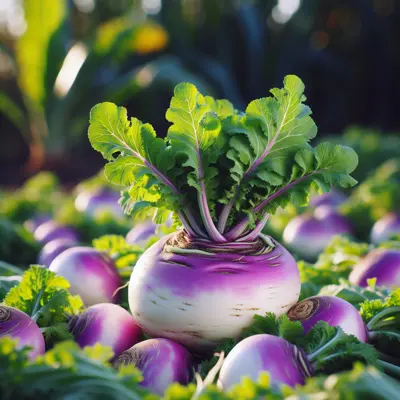
Selected strain of this popular Southern US variety. Smooth, round roots average 3-4" in diameter and are white below the soil line and bright purple above. Large lobed greens are suitable for cooking.
Harvest
50d
Days to harvest
Sun
Full sun to partial shade
Zones
5–9
USDA hardiness
Height
3 feet
Planting Timeline
Showing dates for Purple Top White Globe Turnip in USDA Zone 7
All Zone 7 root-vegetable →Zone Map
Click a state to update dates
Purple Top White Globe Turnip · Zones 5–9
Growing Details
Succession Planting
Direct sow every 2 to 3 weeks starting March 1 through early May for a spring harvest, then pause through summer. Pick back up with a fall succession starting late July through September — turnips handle light frost fine and taste noticeably sweeter after a couple of cold nights. In zone 7, stop fall sowings around mid-September to ensure roots have time to size up before hard freezes arrive in November.
The spring window closes faster than it looks on the calendar. Once daytime temps push consistently past 80°F, turnips bolt and the roots turn pithy and split. If you miss the May cutoff, hold off and plan for fall rather than pushing into June — the fall crop is more reliable anyway.
Complete Growing Guide
Start your Purple Top White Globe turnips from seed, as they don't transplant well due to their sensitive taproot. Choose a site with loose, well-draining soil—heavy clay will cause stunted, misshapen roots. Work in 2-3 inches of compost before planting, but avoid fresh manure which encourages leafy growth at the expense of root development.
For spring crops, direct sow 2-4 weeks before your last frost when soil temperature reaches 45°F. Your main harvest window comes from late summer sowings—plant 10-12 weeks before hard frost for the sweetest, most tender roots. In zones 7-9, you can succession plant every 2-3 weeks through early fall.
Sow seeds ½ inch deep in rows 12-18 inches apart, then thin ruthlessly when seedlings reach 3 inches tall. Crowded turnips never develop proper globes—leave 4-6 inches between plants for full-sized roots. Those thinned seedlings make excellent baby greens, so don't waste them.
Maintain consistent moisture throughout the growing period, especially during root development weeks 3-6. Irregular watering causes woody, cracked roots. A 2-inch mulch layer helps regulate soil moisture and temperature while suppressing weeds that compete aggressively with young turnips.
Fertilize lightly at planting with balanced fertilizer, then side-dress with nitrogen 3 weeks later when plants are actively forming roots. Avoid over-fertilizing—too much nitrogen produces all tops and small, bitter roots.
The biggest mistake gardeners make is letting turnips get too large. Harvest begins at golf ball size for peak sweetness, though they remain good eating up to tennis ball size. Beyond that, they become woody and strongly flavored, better suited for livestock feed than dinner tables.
Harvesting
Begin harvesting Purple Top White Globe turnips when roots reach 2-3 inches across—about the size of a golf ball—for the mildest, sweetest flavor. The purple shoulder should be well-developed and vibrant, with the white portion firm to the touch. Test readiness by gently brushing soil away from the shoulder; if it's tennis ball-sized or larger, harvest immediately before quality declines.
Harvest in the morning when roots are fully hydrated and crisp. Grasp the greens close to the crown and pull straight up with a gentle twisting motion. In heavy soils, loosen around the root with a garden fork first to avoid breaking off the taproot. The entire root should lift cleanly from the soil.
Don't wait for maximum size—roots become woody, pithy, and increasingly peppery as they mature. However, if you prefer stronger turnip flavor for cooking applications like stews, allow them to reach full size. Cut greens to 1 inch above the crown immediately after harvest to prevent moisture loss from the root.
Storage & Preservation
Store freshly harvested Purple Top White Globe turnips in the refrigerator crisper drawer with greens removed—the leaves draw moisture from roots. Properly stored turnip roots keep 3-4 months at 32-35°F with high humidity. Wrap in perforated plastic bags or store in damp sand in a root cellar.
For long-term storage, these turnips freeze exceptionally well. Peel and cube, then blanch for 2 minutes before freezing—they maintain good texture for soups and stews. Alternatively, ferment diced turnips into traditional sauerruben using a 2% salt brine, ready in 3-4 weeks.
Root cellaring works excellently in zones with consistent cold winters. Layer unwashed roots in boxes of barely damp sand or peat moss, storing at 32-40°F. Check monthly and remove any that show soft spots. The greens can be blanched and frozen separately, providing nutritious cooked greens throughout winter months.
History & Origin
Purple Top White Globe turnip emerged in the mid-1800s as American farmers selected the best traits from European turnip varieties brought by early colonists. This variety quickly became the standard commercial and garden turnip across North America due to its reliable performance and excellent storage qualities.
The variety's development coincided with the expansion of root cellaring and winter food storage techniques in rural America. Farmers valued its dual-purpose nature—both roots and greens provided crucial nutrition during long winters when fresh vegetables were scarce. Agricultural publications from the 1870s regularly recommended it as the most dependable turnip for family gardens.
By the early 1900s, Purple Top White Globe had become so ubiquitous that seed catalogs simply listed it as "the standard turnip." Its genetics likely trace back to Germanic and Dutch turnip varieties, refined through decades of selection by American gardeners who prioritized cold hardiness, storage life, and mild flavor. Despite modern hybrid alternatives, this 150-year-old variety remains largely unchanged, testament to its near-perfect adaptation to temperate growing conditions.
Advantages
- +Exceptional cold tolerance allows harvesting through hard frosts and light snow
- +Dual harvest provides both sweet roots and nutritious greens from same plant
- +Superior storage life of 3-4 months in proper root cellar conditions
- +Maintains sweet, mild flavor better than modern varieties when grown in fall
- +Reliable germination even in cool soil temperatures down to 45°F
- +Natural resistance to clubroot disease that devastates other brassicas
- +Adapts to various soil types including heavier soils that challenge other turnips
Considerations
- -Becomes woody and overly peppery if allowed to grow beyond tennis ball size
- -Susceptible to flea beetle damage on young leaves in hot weather
- -Poor heat tolerance makes spring plantings challenging in zones 7+
- -Irregular watering causes cracking and tough, fibrous texture
- -Greens turn bitter and tough once plants begin flowering in long days
Companion Plants
Peas are the most useful planting partner here. They fix nitrogen at their roots, and turnips are heavy feeders that benefit from that slow nitrogen release — plus both crops prefer cool weather, so they share the same planting window without any timing conflict. Onions and garlic are worth adding nearby: their sulfur compounds interfere with the host-location behavior of aphids and cabbage root maggots, making it harder for those pests to zero in on your brassica bed by smell alone. Nasturtiums pull flea beetles and aphids toward themselves and away from the turnips, concentrating the pressure somewhere you can actually see it and manage it.
Don't plant any other brassicas — kale, cabbage, broccoli, arugula — in the same bed or directly adjacent rows. They share clubroot (Plasmodiophora brassicae), black rot (Xanthomonas campestris pv. campestris), and flea beetle pressure, so grouping them turns a manageable problem into a compounding one fast. Black walnut is a hard no within 50 feet; juglone leaches through the soil and reliably stunts brassica root development.
Plant Together
Peas
Fix nitrogen in soil which turnips utilize, and their root systems complement each other
Nasturtiums
Act as trap crops for flea beetles and aphids that commonly attack turnips
Radishes
Break up compacted soil for turnip root development and mature at different times
Lettuce
Provides ground cover and shade for turnip roots while having shallow roots that don't compete
Spinach
Cool season companion with similar growing requirements and minimal root competition
Carrots
Different root depths allow for efficient space usage and soil nutrient utilization
Onions
Repel root maggots and flea beetles that damage turnip roots and leaves
Garlic
Natural pest deterrent against aphids and root flies while improving soil health
Keep Apart
Brassicas
Same family plants compete for nutrients and attract similar pests like clubroot and flea beetles
Black Walnut
Produces juglone which is toxic to turnips and inhibits their growth
Sunflowers
Allelopathic compounds inhibit germination and growth of turnips and other small plants
Nutrition Facts
Per 100g serving. % Daily Value based on 2,000 calorie diet. Source: USDA FoodData Central (FDC #170465)
Pests & Disease Resistance
Resistance
Good general resistance, tolerates clubroot better than related crops
Common Pests
Flea beetles, cabbage root maggot, aphids, cutworms
Diseases
Clubroot, black rot, white rust, downy mildew
Troubleshooting Purple Top White Globe Turnip
What you'll see, why it happens, and what to do about it.
Seedlings collapse at soil level overnight — stems look pinched or water-soaked just below the surface
Likely Causes
- Damping off — typically Pythium or Rhizoctonia fungi thriving in cold, wet soil
- Overwatering or poor drainage keeping the seed bed saturated
What to Do
- 1.Pull and trash the affected seedlings immediately; don't leave them in the bed
- 2.Let the top inch of soil dry slightly between waterings — turnips want consistent moisture, not constant wet
- 3.Sow into well-draining soil and avoid broadcasting seed too thickly; crowded stands hold moisture and make damping off worse
Roots are stunted and club-shaped or swollen with no normal taproot development, leaves yellowing by day 30–40
Likely Causes
- Clubroot (Plasmodiophora brassicae) — a soil-borne pathogen that persists for 15+ years in infected ground
- Acidic soil below pH 6.0, which favors clubroot spore germination
What to Do
- 1.Dig up and bag the infected plants — roots and all — and put them in the trash, not the compost
- 2.Test your soil pH and lime to at least 6.5 to 7.0; NC State Extension notes that raising pH is one of the most effective cultural controls for clubroot
- 3.Keep brassicas out of that bed for at least 3 to 4 years — per NC State Extension's IPM guidance, clubroot spores don't break down on a short timeline
Tiny round holes scattered across young leaves, seedlings look peppered or shredded within the first 2–3 weeks after germination
Likely Causes
- Flea beetles (Phyllotreta species) — small, jumping beetles that feed heavily on brassica seedlings in warm weather
- Bare soil with no mulch or row cover, leaving seedlings fully exposed at emergence
What to Do
- 1.Cover the bed with floating row cover (Agribon-19 or similar) at sowing — flea beetles locate seedlings within days of emergence
- 2.Plant nasturtiums at the bed edges as a trap crop; they draw flea beetles away from the turnips and are easier to sacrifice
- 3.Once plants reach 4–5 true leaves, moderate flea beetle pressure won't hurt yield — concentrate your protection on the first 3 weeks
Frequently Asked Questions
How long does Purple Top White Globe turnip take to grow?▼
Can you grow Purple Top White Globe turnips in containers?▼
What does Purple Top White Globe turnip taste like?▼
When should I plant Purple Top White Globe turnips?▼
Are Purple Top White Globe turnips good for beginners?▼
Can you eat Purple Top White Globe turnip greens?▼
Zone-by-Zone Planting Calendar
| Zone | Indoor Start | Transplant | Direct Sow | Harvest |
|---|---|---|---|---|
| Zone 1 | — | — | June – July | July – September |
| Zone 2 | — | — | May – July | July – September |
| Zone 11 | — | — | January – February | February – December |
| Zone 12 | — | — | January – February | February – December |
| Zone 13 | — | — | January – February | February – December |
| Zone 3 | — | — | May – June | June – October |
| Zone 4 | — | — | April – June | June – October |
| Zone 5 | — | — | April – May | June – November |
| Zone 6 | — | — | April – May | May – November |
| Zone 7 | — | — | March – May | May – November |
| Zone 8 | — | — | March – April | April – December |
| Zone 9 | — | — | February – March | March – December |
| Zone 10 | — | — | January – March | March – December |
Growing Guides from Wind River Greens
Sources & References
External authority sources used in compiling this guide.
See the Methodology page for how this data is sourced, what's AI-assisted, and known limitations.